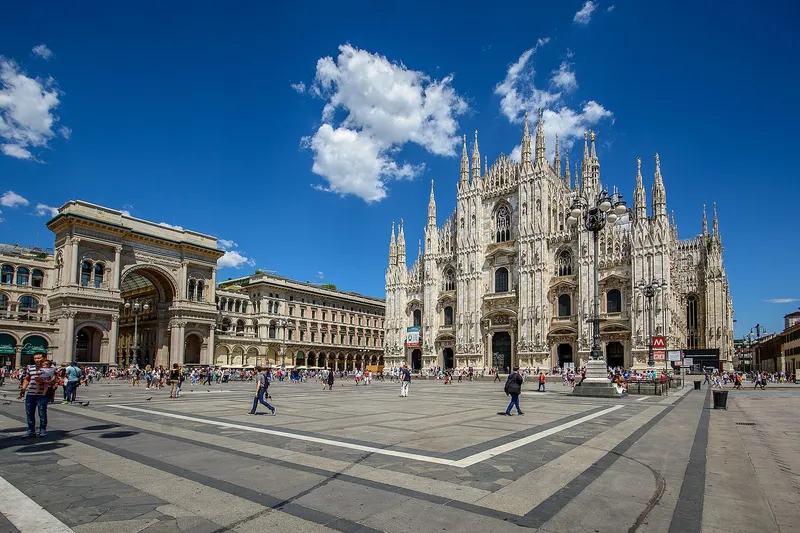
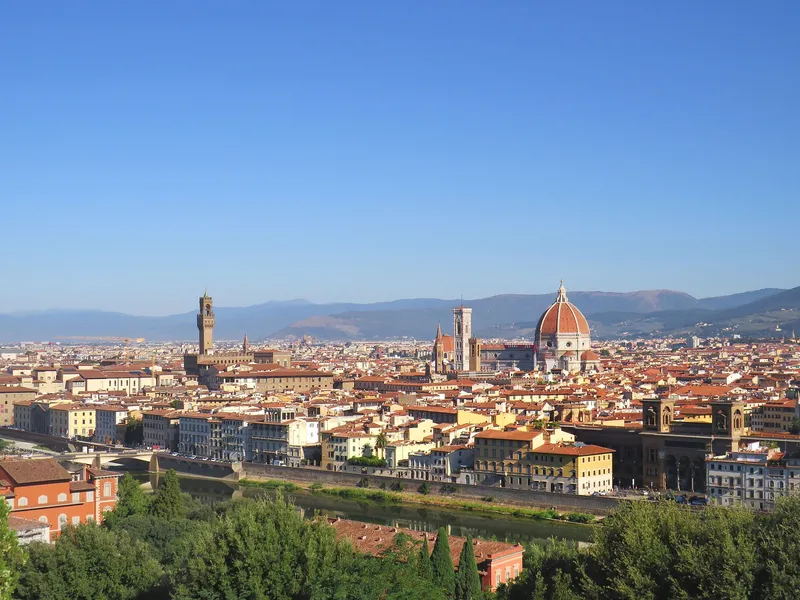
Piazza Maggiore in Bologna seen from above at golden hour, showing Palazzo del Podesta, Torre degli Asinelli, and San Petronio Basilica
Photo: Ingo Mehling / Wikimedia Commons (CC BY-SA 4.0)
Italy flag

Bologna

Italy

Experience la Grassa, La Dotta, La Rossa, fat, learned, and red. Italy's food capital.

€2.600
Monthly Budget
--
Current Weather
Humid Subtropical
Climate Type
70 Mbps
Avg. WiFi Speed
8/10
Safety Score
2,000+
Active Nomads
--
Time Difference
Scroll
0
Nomad Score

Bologna for Digital Nomads: The Honest Take

Experience la Grassa, La Dotta, La Rossa, fat, learned, and red. Italy's food capital. For remote workers, Bologna leans on food and safety, with a typical budget near $2,600 a month. The main trade-off is nature access.

Compare Bologna vs Florence →

Category Breakdown

How Bologna scores across all 13 factors

Weather in Bologna

Monthly averages from 2019-2023 (Open-Meteo), and the best time to visit

Jan
12°
Feb
15°
Mar
18°
Apr
22°
13°
May
29°
18°
Jun
31°
20°
Jul
31°
20°
Aug
26°
16°
Sep
21°
12°
Oct
13°
Nov
Dec
Daily high & low (°C)Rainfall (mm/month)Best months to visit

The best time to visit Bologna for comfortable weather is Jun, Jul, Aug. The warmest month is Jul (around 31°C by day), and the wettest is May (about 163mm of rain).

Chasing good weather? See other cities that are warm in Jun, or plan a multi-city route around the seasons. Staying a while in Bologna? Check visa options, your time-zone overlap and how far your budget stretches, or find it on the world map.

Historical monthly averages, not a forecast. Source: Open-Meteo.

Best Neighborhoods in Bologna

Where to base yourself for the perfect nomad experience

Centro Storico

$$$
Historic & Academic

Medieval towers and endless porticoes

Bologna's heart beats in the Centro Storico - Piazza Maggiore anchors the city beneath the Two Towers. Miles of porticoes shelter Italy's oldest university and finest trattorias.

Best for: History lovers, foodies, and those wanting authentic Italy
✓ Pros
  • Historic architecture
  • Best food scene
  • Walkable
  • Cultural hub
✗ Cons
  • Tourist crowds
  • Expensive dining
  • Limited parking

Bolognina

$
Multicultural & Gritty

Multicultural energy north of the station

Bolognina is Bologna's diverse neighborhood - working-class roots mixing with immigrant communities creating unique food scenes. Authentic and unpretentious character.

Best for: Budget travelers, cultural explorers, and those wanting diversity
✓ Pros
  • Affordable
  • Diverse food
  • Authentic vibes
  • Near station
✗ Cons
  • Grittier feel
  • Less polished
  • Some rough areas

Santo Stefano

$$$
Elegant & Cultural

Elegant streets and seven churches

Santo Stefano offers Bologna's refined side - the famous Seven Churches complex anchors elegant streets filled with boutiques, wine bars, and sophisticated residents.

Best for: Upscale travelers, wine lovers, and architecture enthusiasts
✓ Pros
  • Beautiful churches
  • Excellent bars
  • Safe area
  • Elegant atmosphere
✗ Cons
  • Expensive
  • Quieter nightlife
  • Tourist groups

Pratello

$
Student & Alternative

Student parties and alternative culture

Via del Pratello is Bologna's party street - students from Europe's oldest university fill bars and clubs. Alternative venues, street art, and endless nightlife energy.

Best for: Students, night owls, and those wanting young energy
✓ Pros
  • Great nightlife
  • Cheap drinks
  • Young crowd
  • Alternative scene
✗ Cons
  • Noisy nights
  • Can feel rough
  • Not family-friendly

San Donato

$$
Residential & Local

Local life beyond the gates

San Donato is Bologna for Bolognese - residential streets, local markets, neighborhood trattorias. Just outside the historic center but deeply authentic.

Best for: Long-term visitors, families, and those wanting local life
✓ Pros
  • Authentic vibes
  • Good prices
  • Local markets
  • Quiet streets
✗ Cons
  • Less scenic
  • Further from sights
  • Limited English

Cost of Living in Bologna

Bologna is one of Italy's best-value cities for remote workers. You get a genuinely livable, food-obsessed university city at prices well below Rome or Milan.

  • Rent, 1-bedroom in the center (Irnerio, Indipendenza, Santo Stefano): EUR 800-1,200/month (~USD 870-1,300)
  • Rent, 1-bedroom outside the center (Bolognina, San Donato): EUR 600-850/month (~USD 650-925)
  • Groceries: EUR 220-300/month (~USD 240-325) at Coop or Esselunga
  • Eating out (2-3 times per week, local trattorias): EUR 130-180/month (~USD 140-195)
  • Coworking hot-desk: EUR 170-220/month (~USD 185-240)
  • Local transport pass (bus): EUR 35/month (~USD 38)
  • Utilities plus internet: EUR 130-180/month (~USD 140-195)

Total monthly range: EUR 1,800-2,500 (~USD 1,950-2,720) for a comfortable central lifestyle, or EUR 1,400-1,800 (~USD 1,520-1,950) if you rent outside the center and cook most meals at home.

Where to Work

Bologna has a compact but real coworking scene, and the cafe culture is workable if you choose the right spots.

Coworking Spaces

The Social Hub Bologna, a short walk from Centrale station, is the most internationally oriented option with reliable fiber, meeting rooms, and a mixed crowd of students and remote workers. DumBO (in the repurposed railway yards north of the center) runs a creative-community coworking on day and monthly rates. BAAK near the university offers extremely cheap hourly and monthly passes (from EUR 2.50/hour), though the vibe skews student. Kilowatt and Piano C are well-regarded professional spaces at roughly EUR 170-190/month for a hot desk.

Cafes and WiFi

Bologna's cafe culture is strong on espresso and short on outlet access. The traditional bar where you stand at the counter for a coffee is not a place to open a laptop. Your best options are the dedicated hybrid spots: BURO on a central portico charges EUR 5/hour and provides a proper work setup with good WiFi. Le Serre in Giardini Margherita park is a greenhouse cafe with outdoor coworking and a relaxed atmosphere on warm days. Most cafes will tolerate a laptop for an hour or two if you keep ordering. Average fixed-line speeds in the city sit around 135 Mbps, and coworking spaces deliver 50-150 Mbps reliably. Apartment fiber is widely available and included or cheap to add.

Getting Around

The historic center is compact and genuinely walkable. Most destinations inside the old walls are 15-20 minutes on foot, and the 40km of covered arcades (porticoes) make even rainy-day walking pleasant. The entire historic center is low-traffic or pedestrian, so cycling is easy and popular.

The city bus system, operated by TPER, covers everywhere outside the center with a EUR 2.30 single fare or a EUR 35 monthly pass. Buses run frequently on the main corridors. A new tram network is under construction, with the first line expected to open in late 2026.

Airport: Bologna Guglielmo Marconi is close. The Marconi Express monorail connects the airport to Bologna Centrale station in 7 minutes, running every 7 minutes, and costs EUR 12.80 one way. A bus alternative (line Q) costs EUR 2.30 and takes around 30 minutes. Taxis run EUR 25-35. The station at Centrale puts you on fast trains to Milan (65 minutes), Florence (35 minutes), and Rome (2 hours).

Visas and Staying Long-Term

If you hold a US, Canadian, Australian, UK, or other visa-free passport, you can enter Italy and the Schengen Area for up to 90 days in any 180-day period without a visa. This covers a solid work-and-explore stint but does not let you stay indefinitely.

Italy launched a dedicated Digital Nomad Visa in 2024, available to non-EU/EEA nationals who work remotely for foreign employers or clients. To qualify you need a minimum annual income of EUR 28,000, proof of remote employment or freelance contracts, a recognized qualification or equivalent experience, and comprehensive health insurance. The visa is granted for one year and is renewable as long as you continue to meet the requirements. Processing takes 1-3 months at an Italian consulate, and you must register for a residence permit within 8 days of arrival.

Always verify current requirements directly with the Italian consulate in your country and the official Polizia di Stato immigration portal before applying.

Best Time to Visit

Bologna sits in the Po Valley and has a semi-continental climate: cold, damp winters and hot, humid summers.

Best windows for remote work: April to early June and September to early October. Temperatures are 15-25C, days are mostly sunny, the city is lively but not overwhelmed with tourists, and you can actually eat lunch outside without suffering. Spring is particularly good: the markets are at their most interesting and the light through the arcades is excellent.

Avoid July and August if heat affects your productivity. Temperatures regularly hit 34-37C with high humidity, and a significant portion of local businesses close for ferragosto in August. The university empties out, which quiets the city in ways that can feel flat.

Winter (November to February) is cold, gray, and occasionally foggy. It is not unpleasant for focused heads-down work, and rents can dip, but you give up the outdoor lifestyle that makes Bologna appealing. Snow is possible at least once per year.

Pros and Cons

  • Food quality is genuinely exceptional, this is the undisputed capital of Italian cuisine
  • Walkable, arcaded center that works in all weather
  • Significantly cheaper than Rome or Milan with comparable quality of life
  • Fast train connections to Florence (35 min), Milan (65 min), and Rome (2 hrs)
  • University city atmosphere means the city feels young, international, and open
  • Compact and human-scaled, easy to know within a few weeks
  • Summers are brutal, July and August are hot, humid, and commercially slow
  • Air quality is a concern, Po Valley pollution means Bologna ranks among Italy's more polluted cities, especially in winter
  • Limited international flights from Marconi airport; most long-haul trips route through Milan or Rome
  • English is patchy outside the university bubble, serviceable among students but variable in daily life
  • Smaller nomad community than Lisbon, Barcelona, or even Milan
  • Pickpocketing occurs around the station and busy piazzas, though violent crime is rare

Who Bologna Is Best For

Bologna suits you if food culture is a genuine priority (not just a nice-to-have), if you want authentic Italian daily life without the tourist saturation of Florence or Rome, and if you are based in Europe and can use the train network rather than needing frequent long-haul flights. It works particularly well for a one-to-three month base in spring or autumn.

It is an especially good fit for solo nomads who enjoy walking a city deeply, academics or researchers connected to the university, and anyone who wants to be in Italy properly rather than passing through a highlight reel.

Consider skipping Bologna if you need a large established nomad community and regular co-working events, if you are highly sensitive to air quality or heat, or if your work requires frequent intercontinental travel since the airport's direct route options are limited. Larger nomad hubs like Milan or Lisbon will serve those needs better.

Where to Stay in Bologna

Top neighborhoods and accommodations for digital nomads

The Social Hub Bologna

Aparthotel
Navile Station

Purpose-built for remote workers with coworking spaces, flexible stays, and a social courtyard five minutes from the central train station.

Check availability →

Almarossa

Serviced apartments
University District

Aparthotel steps from Bologna University with kitchenettes, long-stay discounts, and a lively walkable neighborhood full of cafes.

Check availability →

Hotel Brun

Boutique hotel
Centro Storico

Newly renovated 22-room design hotel on a quiet street near Piazza Maggiore, rated 9.2 with exceptional breakfast and reliable fast Wi-Fi.

Check availability →

Adriano Residence

Serviced apartments
Centro Storico

Spacious self-catering suites on elegant Via San Felice in a restricted traffic zone, ideal for quiet productive stays in the historic center.

Check availability →

Ostello Bello Bologna

Hostel
Porto Station

Social hostel with informal coworking tables, panoramic terrace, free kitchen, and a 9.0 rating at the edge of the walkable historic center.

Check availability →

Browse apartments, aparthotels and hotels across Bologna. Compare prices and book a base that suits a remote-work stay.

See available stays in Bologna →

Affiliate link. See our disclosure.

Best Coworking Spaces

Where nomads get work done in Bologna

The Social Hub Bologna

coworking space
Bolognina

International coworking with fiber WiFi, meeting rooms, and a mixed community of nomads, students, and entrepreneurs.

Visit website →

DumBO

coworking space
Bolognina

Creative coworking hub in a repurposed railway yard, with day passes and monthly memberships in an industrial-chic setting.

Visit website →

BAAK

coworking space
University District

Affordable university-area coworking from EUR 2.50/hour, popular with students and budget-conscious remote workers.

Visit website →

BURO

laptop-friendly cafe
City Center

Dedicated work-cafe under the porticoes charging EUR 5/hour with solid WiFi, good coffee, and proper desk setups.

View on Maps →

Le Serre dei Giardini

garden cafe and coworking
Giardini Margherita

Greenhouse cafe in Bologna's main park with outdoor power outlets, free WiFi, and a relaxed farm-to-table bar menu.

Visit website →

Copernico Bologna Rizzoli

coworking space
City Center

Professional coworking in a central palazzo with private offices, hot desks, fast internet, and meeting rooms.

Visit website →

Where to Eat & Drink

Best food and drink spots in Bologna

Osteria dell'Orsa

osteria
University District

Legendary communal-table osteria known for generous lasagne alla bolognese and tagliatelle al ragu at very affordable prices.

View on Maps →

Trattoria da Me

trattoria
City Center

Family-run trattoria with a seasonal menu blending classic Bolognese cooking with creative modern touches.

View on Maps →

Da Cesari

trattoria
City Center

Refined family-run restaurant since 1955 serving hand-cut tagliatelle, tortellini in brodo, and seasonal truffle dishes.

Visit website →

Caffe Terzi

specialty coffee bar
City Center

Bologna's most praised specialty coffee bar, known for exceptional cappuccinos and a focused single-origin espresso menu.

View on Maps →

Osteria del Sole

wine bar
Quadrilatero

One of Italy's oldest wine bars, founded in 1465, serving local wines by the glass in a medieval room with no food served.

View on Maps →

All'Osteria Bottega

fine dining osteria
City Center

Michelin-guided restaurant celebrated for high-quality Emilian home cooking with outstanding handmade pasta and seasonal ingredients.

View on Maps →

What Do Nomads Say?

Vote on how accurate these scores are based on your experience

Cities with a Similar Vibe to Bologna

Different places that score alike across our 13 categories, if you like Bologna, these tend to feel similar.

In the rankings

Where Bologna ranks

Bologna features in 2 of our 32 city rankings.

  1. 3Best cities in Italy
  2. 11Best cities for food
  3. Best cities in Europe

Frequently Asked Questions About Bologna

How much does it cost to live in Bologna as a digital nomad?

A comfortable nomad budget in Bologna is around $2,600 a month: a furnished rental, food, coworking, and getting around. Live a little outside the center or eat local to spend less.

Is the internet fast enough for remote work in Bologna?

With a WiFi score of 7/10, connectivity in Bologna is good for calls and focused work. A prepaid local SIM keeps you online when you are away from the apartment.

Is Bologna safe for digital nomads?

Bologna scores 8 out of 10 for safety in our ratings, which is excellent for solo travel and long stays. Use normal precautions at night and with valuables, and choose well-reviewed areas.

Is Bologna a good city for digital nomads overall?

For nomads, Bologna is worth a look if you value food and safety. Costs sit near $2,600 a month and the community keeps growing, though, like anywhere, it will not match every checklist.