Cost of Living in Alicante
Real market data
Source: Numbeo · August 2026
$1,660/moSolo nomad1-bed centre + living costs
$2,170/moCoupleshared 1-bed + costs
$1,490/moLean / localcheaper area + costs
- 1-bed rent, city centre$1,020€886
- 1-bed rent, outside centre$850€739
- Monthly costs excl. rent (1 person)$640€555
- Meal, inexpensive restaurant$17€15
- Monthly transit pass$25€22
- Buy price, per m² (centre)$4,320€3,753
Prices are from Numbeo (August 2026), converted to USD at $1 = €0.87 (01 Aug 2026). The monthly living-costs figure is our transparent one-person basket, groceries, a few meals out, utilities, phone, internet, transport and essentials, priced from those figures. Solo adds central rent; couple and lean are estimates from the same numbers.
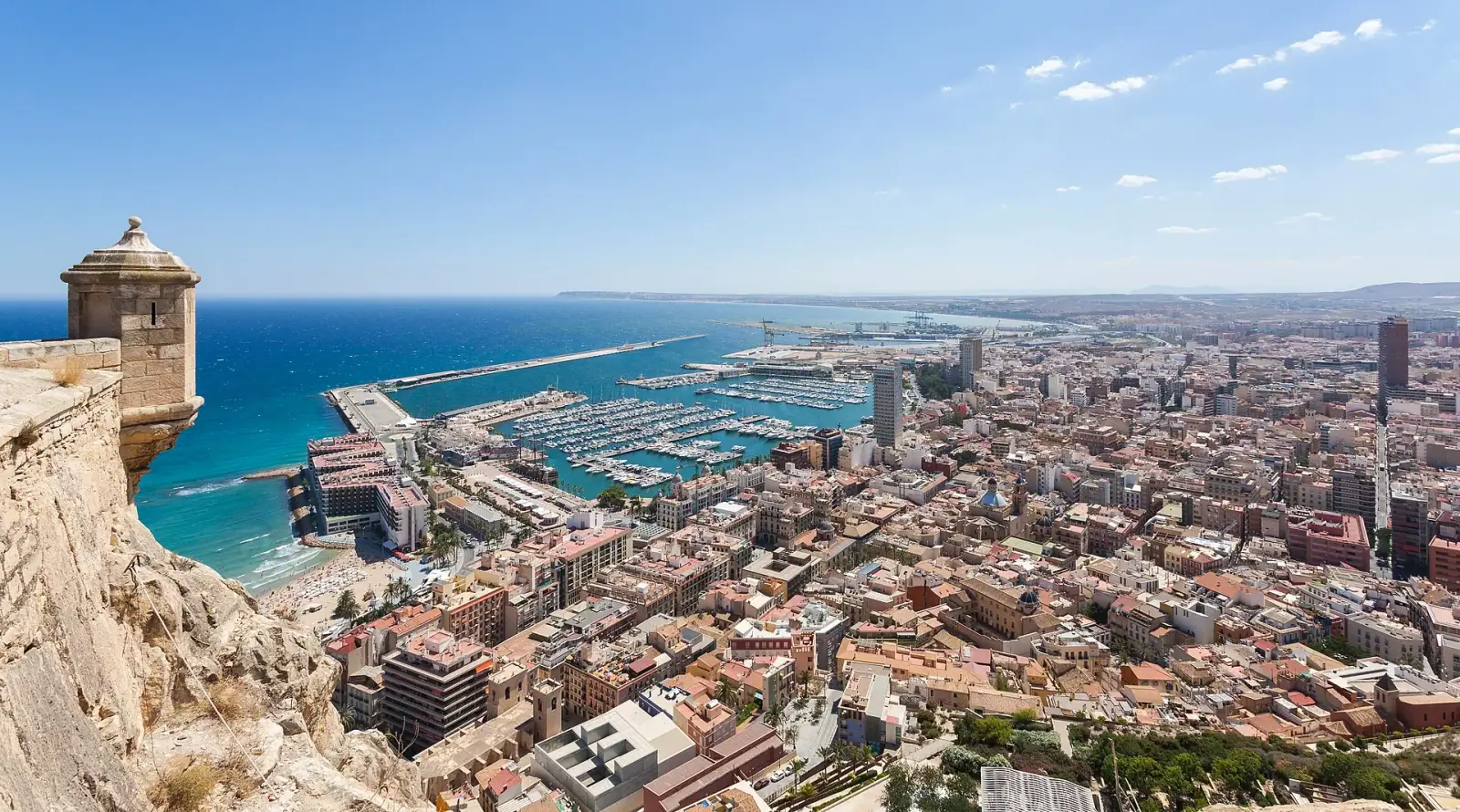
Alicante is one of the better-value coastal cities in Western Europe, and that is a big part of why nomads keep showing up. You get a Mediterranean beach city for a fraction of what Barcelona or the French Riviera would cost. All prices below are rough 2025-2026 figures in US dollars, converted from euro prices.
- Rent, central one-bedroom: around $865-1,090 per month in the city center or near the beach.
- Rent, cheaper area: a small flat in outer neighborhoods runs $575-805, and shared or studio setups can dip lower.
- Utilities: electricity and water around $150-185, plus home internet and a SIM for roughly $31.
- Groceries: budget $230-345 for one person. Spanish supermarkets and the Mercado Central keep produce, dairy, and meat cheap.
- Eating out: the menu del dia (a full lunch with starter, main, dessert, and a drink) is typically $14-17. A casual dinner for one lands around $17-23.
- Coworking hot desk: a flexible monthly membership generally sits around $115-185, with day passes available.
- Local transport: a monthly bus and tram pass is inexpensive, and single rides are cheap.
All in, a single nomad renting a modest place can live comfortably on roughly $1,610-2,300 per month. That is strong value for a sunny beach city with fast internet, and it undercuts most of Western Europe's coastal alternatives.
Where to Work
Alicante has a small but real coworking scene centered on the old town and city center, so you are rarely far from a desk. Well-known options include ULab near Placa de San Cristobal, which runs a fast connection and offers hot desks, dedicated desks, and private offices. V11 Coworking sits in the heart of the city with 24/7 access, meeting rooms, and a kitchen. TerretUp leans into the local startup community and is a good bet for meeting other remote workers. Syndicate Coworking is another central pick. If you want a coliving plus coworking setup, Sun and Co. is a short trip up the coast in Javea.
Cafe-work culture is decent but not limitless. Plenty of cafes near the marina and old town are laptop-friendly during quieter hours, though some smaller spots would rather you did not camp out over one coffee at lunchtime. Home WiFi in modern flats is generally fast and reliable (fiber is widespread), so many nomads split their time between a coworking membership and their apartment.
Getting Around
Alicante is compact and very walkable. The old town (El Barrio), the marina, the Explanada promenade, and Postiguet beach are all within an easy stroll of each other, so you may not need transport for daily life at all.
For longer trips, the TRAM Metropolitano is the star. Its light-rail and tram lines (L1 through L5) run from Luceros and the city center up the coast to El Campello, Benidorm, Altea, and Denia, which makes weekend trips and beach-hopping easy without a car. City buses fill in the gaps within Alicante itself and are cheap and frequent.
Getting to and from Alicante-Elche Airport (ALC) is simple. The C6 bus runs 24 hours a day, every day of the year, roughly every 15-20 minutes, connecting the airport with the city center (including the Renfe station and Luceros, where you pick up the TRAM). A single ticket is about $5.50. A taxi is faster but naturally costs more.
Sorting transport? Book an airport transfer, or compare car rental on Auto Europe and QEEQ.
Visas and Staying Long-Term
If you hold a passport from the US, UK, Canada, Australia, or another visa-exempt country, you can enter Spain and the wider Schengen Area visa-free for up to 90 days within any 180-day period. That is enough for a long stay, but it resets slowly, so you cannot simply live here on tourist entries year-round.
For longer stays, Spain offers a digital nomad visa aimed at remote workers and freelancers with clients outside Spain. It requires proof of stable income (200% of Spain's minimum wage, about $3,280 a month for a single applicant in 2026 and higher with dependents; some consulates, Washington among them, state the same yearly floor as about $2,810 a month over fourteen payments), valid health insurance, and a clean criminal record. Applying from your home country typically grants one year, while applying from inside Spain can grant a longer residence authorization, and the permit is renewable in stages toward long-term residency. It also preserves your right to travel elsewhere in Schengen for 90 days per 180.
Best Time to Visit
Alicante is one of the sunniest cities in Europe, with a mild Mediterranean climate and something like 300 sunny days a year. Summers (June to September) are hot and busy, with beach weather and long evenings, but also the peak tourist crush and higher short-term rental prices.
Winters are mild, rarely cold, and you can often sit outside at midday in January. The sweet spot for remote work is the shoulder seasons: April to June and September to November give you warm, sunny days, swimmable sea for much of it, thinner crowds, and better rental value. If you want the quietest, cheapest stretch, deep winter is calm and still pleasant, just cooler for swimming.
Pros and Cons
The honest picture:
- Pro: Excellent value for a Western European beach city.
- Pro: Sunny almost year-round with a mild winter.
- Pro: Walkable center with beaches right in town.
- Pro: Fast, widespread fiber internet and a workable coworking scene.
- Pro: Easy coastal day trips via the TRAM and a well-connected airport.
- Con: Summer brings heavy tourist crowds and higher prices.
- Con: The off-season is much quieter, which some find too sleepy.
- Con: The coworking and nomad community is smaller than in Barcelona or Lisbon.
- Con: Some Spanish goes a long way, especially for admin and outside tourist zones.
- Con: Spanish bureaucracy for visas and residency can be slow.
Who Alicante Is Best For
Alicante suits nomads who want beach-city living on a reasonable budget, value sunshine and a walkable pace over big-city intensity, and are happy with a smaller, friendlier community rather than a packed international scene. It is a great base if you like the idea of easy weekend trips up the Costa Blanca and do not mind picking up some Spanish.
You should probably skip Alicante if you need a large, buzzing nomad network and constant events, if you dislike tourist-heavy summers, or if you want a city that stays high-energy through the winter. Those travelers tend to be happier in Barcelona, Madrid, or Lisbon. For everyone else chasing affordable Mediterranean sun with solid WiFi, Alicante is an easy recommendation.