Cost of Living in Cádiz
Where this figure comes from. No cost survey covers Cádiz, so the $2,000 a month above is our own estimate rather than a measurement. On 416 of our 999 city guides the figure is built from a published Numbeo basket, a one-bedroom rent in the centre plus one person's monthly costs without rent, converted to USD; this city is not one of them. How we source everything.
Cádiz is cheaper than Madrid or Barcelona but has seen rents rise sharply, over 14% year-on-year as of 2025. Budget carefully: the city rewards those who live like a local rather than a tourist.
- Rent, central old town: $970-1,250/month for a one-bedroom
- Rent, outer districts (La Laguna, Loreto): $740-910/month
- Groceries: $230-320/month shopping at Mercadona or Lidl
- Eating out: a full tapas lunch with a drink runs $11-17 per person; a sit-down dinner $23-40
- Coworking hot-desk: $91-170/month at a dedicated space; day passes around $23-34
- Local transport: monthly bus pass approximately $28; the city is compact enough that many residents walk or cycle
- Total realistic range: $1,500-2,150/month for a single person living comfortably
Internet at home via fiber is widely available and costs $28-46/month. Mobile data on Spanish SIM cards from Movistar or Orange runs $17-28/month for a solid data plan.
Where to Work
Cádiz has a small but real coworking scene. Omniwork Center (Calle Acacias 10) is the most established option, positioning itself as the city's home for digital nomads, with a friendly multinational community, fast WiFi, and two meeting rooms. Day passes run around $34. Flamen Coworking (Calle San Francisco 13) in the old town takes a more creative approach, with plants, a yoga area, and a photo studio alongside the desks. La Cooperativa (Calle San José 25) occupies a renovated historic building and offers flexible half-day or full-day options with fast, reliable internet and a receptionist service.
Café work culture exists but is uneven. La Clandestina Librería-Café (Calle José del Toro 23) is the top spot: a bookstore-café with a relaxed atmosphere where lingering with a laptop is socially acceptable. Café Royalty on Plaza de la Candelaria is a grand historic café open from 9am; it works for morning sessions, though it fills up around lunchtime.
WiFi in the city center handles video calls without trouble. Free public WiFi exists in some plazas but is not reliable enough for professional use. Stick to a coworking space or your home fiber for important calls.
Getting Around
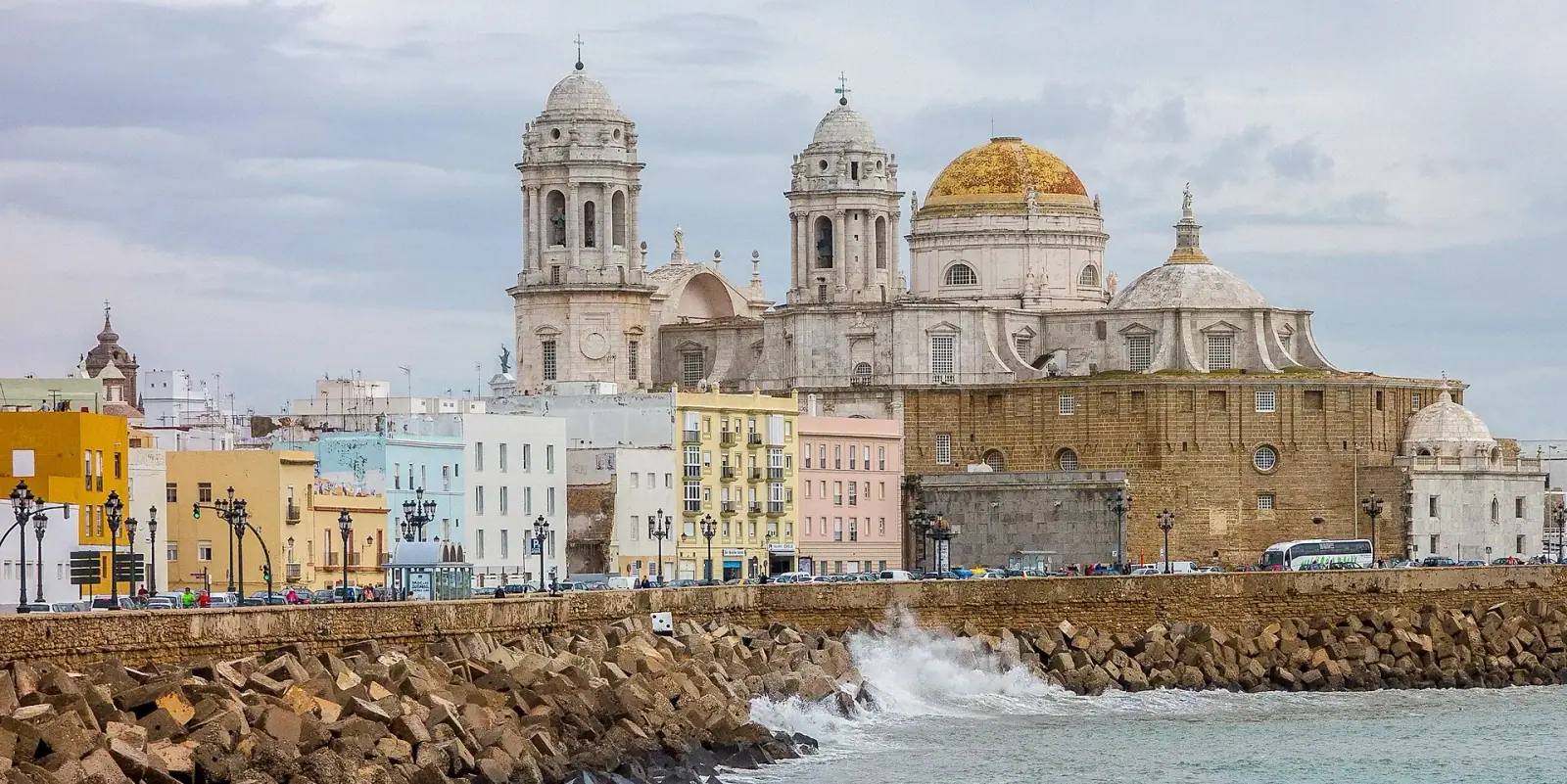
Cádiz occupies a narrow peninsula, which means the historic old town is remarkably walkable. You can cross it on foot in under 30 minutes. This is both the city's greatest charm and a gentle constraint: most daily life happens within a small radius.
Local buses connect the old town to residential areas and the wider city. A single trip costs around $1.50, and a monthly pass is approximately $28. Taxis are inexpensive by Western European standards. The city has dedicated cycling lanes on key routes, and bike rentals are available.
Getting to and from the airport: Cádiz has no commercial airport. Jerez Airport (XRY) is the closest option, about 45-57 minutes by train (around $7-19) and the most convenient route. Seville Airport (SVQ) is also reachable, roughly 90-115 minutes by train ($15-40 depending on the service), or about 1.5 hours by direct bus or taxi. Book trains via Renfe; trains in Spain are generally punctual and affordable.
Sorting transport? Book an airport transfer, or compare car rental on Auto Europe and QEEQ.
Visas and Staying Long-Term
Citizens of the US, UK, Canada, and Australia can enter Spain (and the broader Schengen zone) visa-free for up to 90 days in any 180-day period. EU and EEA citizens can live and work here freely without any additional permit.
Spain launched a Digital Nomad Visa (Visa para Nómadas Digitales) in early 2023 under the Startup Act. Non-EU citizens who work remotely for clients or employers outside Spain can apply for an initial one-year visa through a Spanish consulate, extendable to a three-year residence authorization once in-country. The key income requirement is at least 200% of Spain's minimum interprofessional salary, $3,280/month for a single applicant as of 2026. You must also hold a university degree or at least three years of relevant professional experience, and provide proof of employment or contracts with non-Spanish clients.
Tax note: the Beckham Law allows qualifying nomad visa holders to pay a flat 24% income tax on Spanish-sourced income for up to six years, rather than progressive resident rates.
Best Time to Visit
Cádiz sits on the Atlantic coast of Andalusia, giving it a notably milder summer than inland cities like Seville. The Atlantic breeze keeps temperatures in the high 20s Celsius (low-to-mid 80s Fahrenheit) even in July and August, rather than the 40C+ heat that blankets the interior.
Spring (April to mid-June) is the sweet spot for remote workers: warm days of 19-25C, very little rain, smaller crowds, and reasonable prices. You get the full city without the summer tourist peak.
Autumn (September to November) is a close second. Temperatures remain comfortable through October, the sea is still warm enough to swim, and the city quiets down significantly after summer.
Summer (July to August) brings peak tourism and higher prices for short-term rentals. The heat is manageable by coastal Andalusian standards, but the city gets crowded and monthly rents for furnished apartments spike. Good for those who want beach access alongside work, less ideal if you prefer a quieter environment.
Winter (December to February) is mild by northern European standards (average 13C/55F) but comes with Atlantic rain and strong winds. The city is quiet, prices drop, and you can lock in long-term rent deals. Not unpleasant, but pack layers and expect some grey days.
Pros and Cons
- Old town walkability: nearly everything you need is reachable on foot
- Food culture: exceptional seafood, generous tapas portions, and cheap local wine
- Safety: one of Andalusia's safer cities, with a relaxed atmosphere even at night
- Mild summers: Atlantic breezes keep the heat tolerable unlike inland Andalusia
- Lower cost than Madrid/Barcelona: meaningful savings on rent and daily life
- Beach access: Playa de la Caleta and Playa de la Victoria are both easy to reach
- Limited nomad community: you won't find the coworking density or peer network of Málaga or Seville
- English proficiency is low: day-to-day life requires at least basic Spanish
- Small city constraints: the peninsula geography means limited expansion and a narrow selection of venues
- Rising rents: costs are climbing faster than in comparable smaller Spanish cities
- Healthcare wait times: public health system can have long waits; private health insurance is strongly recommended
- Seasonal tourist surges: summer and Carnival (February) bring significant crowds and noise to the old town
Who Cádiz Is Best For
Cádiz suits remote workers who genuinely want to slow down. If you find the constant networking of larger nomad hubs exhausting and prefer building a quiet routine around good food, long beach walks, and a city with real local character, you will thrive here. It works particularly well for solo workers or couples who are intermediate-level Spanish speakers, can handle a small city's limited venue selection, and plan to stay two to six months to justify the time finding decent accommodation.
Cádiz is less suited to those who need a large coworking community, rely on strong English-language support services, or are hunting for the cheapest possible base in southern Spain. It is also a harder fit for people who need frequent flights, since the nearest airports require a 45-90 minute journey. Nomads based in Seville or Málaga will find more infrastructure; Cádiz rewards those who choose it on purpose.