Cost of Living in Toulouse
Real market data
Source: Numbeo · August 2026
$1,740/moSolo nomad1-bed centre + living costs
$2,410/moCoupleshared 1-bed + costs
$1,510/moLean / localcheaper area + costs
- 1-bed rent, city centre$910€788
- 1-bed rent, outside centre$680€588
- Monthly costs excl. rent (1 person)$840€726
- Meal, inexpensive restaurant$17€15
- Monthly transit pass$66€57
- Buy price, per m² (centre)$6,580€5,715
Prices are from Numbeo (August 2026), converted to USD at $1 = €0.87 (01 Aug 2026). The monthly living-costs figure is our transparent one-person basket, groceries, a few meals out, utilities, phone, internet, transport and essentials, priced from those figures. Solo adds central rent; couple and lean are estimates from the same numbers.
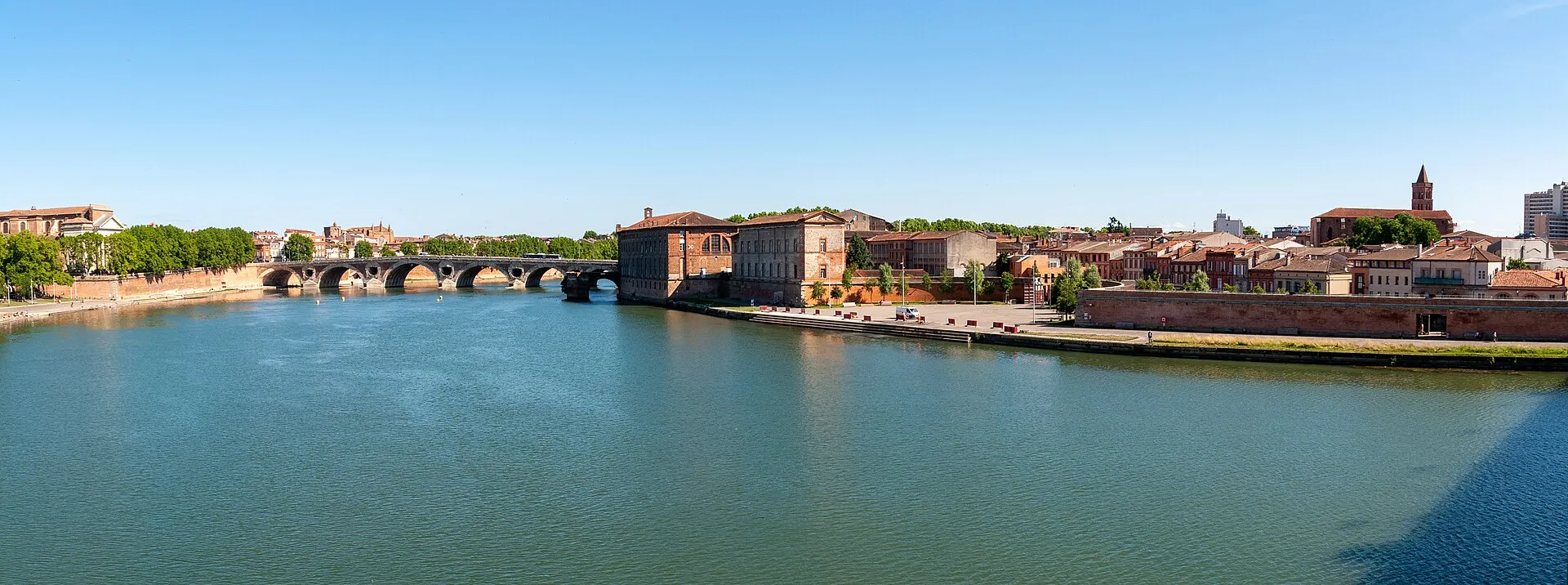
Toulouse sits comfortably below Paris in price while offering a proper city experience. A single person can live well here for $1,700 to $2,400 per month (roughly $1,600 to $2,300), depending on your accommodation choice and lifestyle.
- Rent, city center (1-bedroom): $910 to $1,150/month
- Rent, outer arrondissements (1-bedroom): $710 to $850/month
- Groceries: $230 to $340/month; Lidl and Auchan keep costs down
- Eating out: $14 to $20 for a lunch plat du jour with drink; $34 to $57 for a sit-down dinner for two
- Coworking hot-desk: $170 to $280/month; day passes from $17
- Local transport (monthly pass): $38/month for the metro and bus network
- Utilities and internet at home: $91 to $170/month
Your realistic total range: $1,700 to $2,400/month ($1,600 to $2,300). That is roughly 25% to 30% cheaper than Paris for a comparable standard of living.
Where to Work
Toulouse has a solid coworking infrastructure, driven partly by its large aerospace and tech sector. You will not struggle to find a professional workspace.
Coworking spaces are plentiful, with over 30 listed options. HarryCow is the most well-known, located near Place du Capitole in an 800 sq-meter converted space. La Cantine Toulouse (at Allée Jules Guesde) is a tech-community-focused space with open desk access and networking events. The Social Hub on Rue de Sébastopol blends hotel coworking with community events and a solid daily rate.
Cafe culture for remote work is real but requires some knowledge. Le Café Cerise on Quai de la Daurade has a dedicated back section for laptop users, free WiFi, and a river view. Flower's Cafe on Place Roger Salengro has stable WiFi and power outlets. Most traditional brasseries will look at you sideways if you open a laptop for hours, so stick to purpose-friendly spots.
WiFi quality: Cafe WiFi in Toulouse is adequate for everyday work, and coworking spaces run faster fibre connections. Mobile data coverage is strong throughout the city on major operators (Orange, Bouygues, Free).
The nomad scene is small. You will not find weekly nomad meetups or coliving clusters. What you will find is a functional, uncrowded city that lets you work without friction.
Getting Around
Toulouse is a compact and walkable city for its size (around 500,000 people). The historic core from Place du Capitole to Saint-Cyprien is easily covered on foot.
Metro: Two lines (A and B) run from around 5:15 am to midnight on weekdays, with trains every 1 to 3 minutes at peak times. A single ticket costs $2; a monthly Pastel card runs $38. A third metro line is under construction and expected in 2028.
Cycling: VelO Toulouse is the public bike-share system with stations across the city. Dedicated cycling lanes have expanded significantly in recent years and the city is quite bikeable.
Airport transfers: Toulouse Blagnac Airport is about 8 km northwest of the center. The airport shuttle bus runs every 15 to 20 minutes and takes around 25 minutes, stopping at metro stations Jeanne d'Arc (Line B) and Jean Jaures (Lines A and B). Cost is around $10 one-way. A taxi to the center costs $28 to $40. There is no direct metro connection, but a combined bus and metro journey takes around 45 to 50 minutes and costs a standard metro fare.
Sorting transport? Book an airport transfer, or compare car rental on Auto Europe and QEEQ.
Visas and Staying Long-Term
France is part of the Schengen Area. If you hold a US, Canadian, Australian, UK, or most other Western passport, you can enter visa-free for up to 90 days within any 180-day window. There is no dedicated French digital nomad visa.
For stays beyond 90 days, your main option is the Long-Stay Visitor Visa (VLS-TS), which lets you live in France for up to one year and is renewable. It technically prohibits paid work for French clients, but remote work for foreign clients exists in a grey zone. If you are actively freelancing with clients, the Profession Liberale visa is the cleaner path, requiring proof of income around $2,000/month and a business plan. Both must be applied for at a French consulate before you arrive.
Note that ETIAS, an EU travel authorization for visa-exempt visitors, is not required yet: the European Commission has scheduled it for the last quarter of 2026.
Best Time to Visit
Toulouse has a transitional Mediterranean climate: mild winters, warm summers, and a tendency for spring thunderstorms.
Best window for remote work: April to May and September to October. Temperatures sit between 17°C and 24°C (63°F to 75°F), the city is busy but not overrun, outdoor seating is pleasant, and daylight hours are long enough to make exploring feel effortless after work.
Summer (July to August) is genuinely hot, sometimes reaching 35°C (95°F), and while it is lively, some smaller restaurants and cafes close for vacation in August. Coworking spaces can get crowded with students and short-term visitors.
Winter (December to February) is mild by northern European standards, rarely dropping below 5°C (41°F), and the city is quiet and cheap. Rain is possible but not constant. A good budget season if you are comfortable with grey skies.
Spring (March to May) brings the most rainfall and occasional violent thunderstorms but also the prettiest streets and local markets in full swing.
Pros and Cons
- Pro: Significantly cheaper than Paris with a genuinely good quality of life
- Pro: Strong transport network, walkable historic center, and easy cycling infrastructure
- Pro: Excellent food scene rooted in southwest French cuisine, cassoulet, and fresh markets
- Pro: Good air quality, low pollution, and parks along the Garonne river
- Pro: Active university city with a young demographic and cultural calendar
- Pro: Well-connected airport with direct flights across Europe
- Con: English proficiency among locals is limited; French is essential for daily life
- Con: No dedicated digital nomad visa, and the visitor visa has restrictions on working
- Con: The nomad community is small; you will need to build your own social circle
- Con: Finding an apartment as a freelancer or non-French resident can be difficult; landlords often require French payslips or a local guarantor
- Con: Summer heat can make daytime work uncomfortable without air conditioning
Who Toulouse Is Best For
Toulouse suits remote workers who want a real French city without paying Paris prices, and who are comfortable or willing to function in French. If you enjoy food culture, a strong cafe and market scene, outdoor activities along the Garonne, and a city that does not feel staged for tourists, Toulouse rewards longer stays.
It is a particularly good fit if you are already based in Europe and want a month or two in the southwest, or if you are on a long-stay visitor visa and want urban infrastructure without the noise and expense of a capital.
Skip Toulouse if you need an active English-speaking nomad community, if you want beach access nearby, or if you are not prepared to deal with French bureaucracy for anything beyond a short tourist stay. It is also not the right choice if you are drawn to the startup and coworking energy of a city like Lisbon or Barcelona. Toulouse is quieter and more self-sufficient than that.