Cost of Living in Albarracín
Where this figure comes from. No cost survey covers Albarracín, so the $900 a month above is our own estimate rather than a measurement. On 416 of our 999 city guides the figure is built from a published Numbeo basket, a one-bedroom rent in the centre plus one person's monthly costs without rent, converted to USD; this city is not one of them. How we source everything.
Albarracín is inexpensive by almost any nomad benchmark, largely because it is a village of roughly 1,000 people rather than a curated remote-work destination. A simple studio or one-bedroom rental, when available, runs somewhere in the $405 to $635 range per month, though the stock is tiny and turnover is slow since most housing is old stone-and-adobe townhouses rather than purpose-built apartments. Short stays in a guesthouse or rural hotel are more realistic for a first visit and land around $52 to $105 a night depending on season. Groceries from the small local shops and the weekly market are reasonable, though selection is limited compared to a city, and a coffee or menu del dia in one of the plazas costs a couple of dollars less than you would pay in Madrid or Valencia. Overall, a modest monthly budget covering rent, food, and basics can sit around $1,040 to $1,500, with the biggest variable being whether you need a car and how often you drive to Teruel for bigger shops or errands.
Where to Work in Albarracín
Nobody has opened a coworking space in Albarracín, so a working day here is assembled from improvised pieces. Work options are a handful of cafe tables and the lounges of a few small hotels that welcome laptop guests over a coffee, plus whatever wifi your rental provides. Fiber or decent ADSL has reached much of the village, so video calls are generally workable, but speeds and reliability vary house to house, and a backup mobile hotspot is a sensible precaution given the hilly terrain and occasional service gaps. There is no buzzing remote-work scene here, no meetup culture, and no laptop-friendly bar strip; this is a place to hunker down solo, write, or do heads-down work rather than network. If you need a proper coworking desk or a more social work environment, Teruel city, about 40 minutes away by car, has a bit more infrastructure, though still modest by national standards.
Getting Around Albarracín
The old town itself is entirely walkable, in fact walking is the only realistic way to move through it: the lanes are steep, cobbled, and in places too narrow for cars, climbing the ridge above the Guadalaviar river. For anything beyond the village, a car is strongly recommended and close to essential. Public transport is sparse, with a limited bus service connecting Albarracín to Teruel a few times a day on weekdays and even less on weekends, so spontaneous trips or late returns are not really an option without your own wheels. Teruel itself has train and bus links onward to Zaragoza, Valencia, and Madrid, making it the practical gateway for anyone arriving without a car. Parking within the walls is restricted, so most visitors and residents park just outside the old town and walk in. If you plan to explore the surrounding Montes Universales, hiking trails, or nearby villages like Gea de Albarracín or Bezas, a car is the only sensible way to do it.
Sorting transport? Book an airport transfer, or compare car rental on Auto Europe and QEEQ.
Visas for Albarracín
Albarracín follows Spain's national visa rules, since there is nothing local or special about immigration here. Citizens of the US, UK, Canada, Australia, and most of the Americas can enter under the Schengen 90/180 rule, meaning up to 90 days within any rolling 180-day period without a visa, which is enough for a short, peaceful stay but not for settling in. For longer stays, Spain's digital nomad visa, introduced in 2023, allows remote workers employed by non-Spanish companies to live in Spain for a year, renewable up to five years, with proof of remote income and health insurance. In practice almost every applicant handles paperwork through Madrid, Barcelona, or a Spanish consulate abroad rather than locally, since Albarracín's town hall has no capacity for immigration matters. EU and Schengen-area citizens can simply live and work here without a visa at all, subject to standard registration (empadronamiento) if staying long term. Teruel's airport parks and recycles airliners and handles no passenger flights, so a non-EU visitor is registered by the EU Entry/Exit System at Valencia or Barajas instead, and the Schengen count is already running by the time the mountain road climbs to the village.
Best Time to Visit Albarracín
Late spring through early autumn, roughly May to September, is the most comfortable window, with warm, dry days well suited to hiking the Sierra de Albarracín and the nearby Montes Universales, and pleasantly cool evenings thanks to the altitude around 1,180 meters. July and August bring the most day-trippers and a livelier, if still modest, atmosphere in the plazas. Winters are genuinely cold and can bring snow, since this is a continental, inland climate rather than the mild coastal Spain many nomads picture; several weeks can dip well below freezing overnight, and some smaller businesses reduce hours or close in the quietest winter stretches. Autumn is a quiet, beautiful, and underrated season, with the surrounding pine and juniper forests turning color and far fewer visitors than summer. If solitude and low prices matter more to you than mild weather, winter can still work, but pack for genuine cold.
Pros and Cons of Albarracín
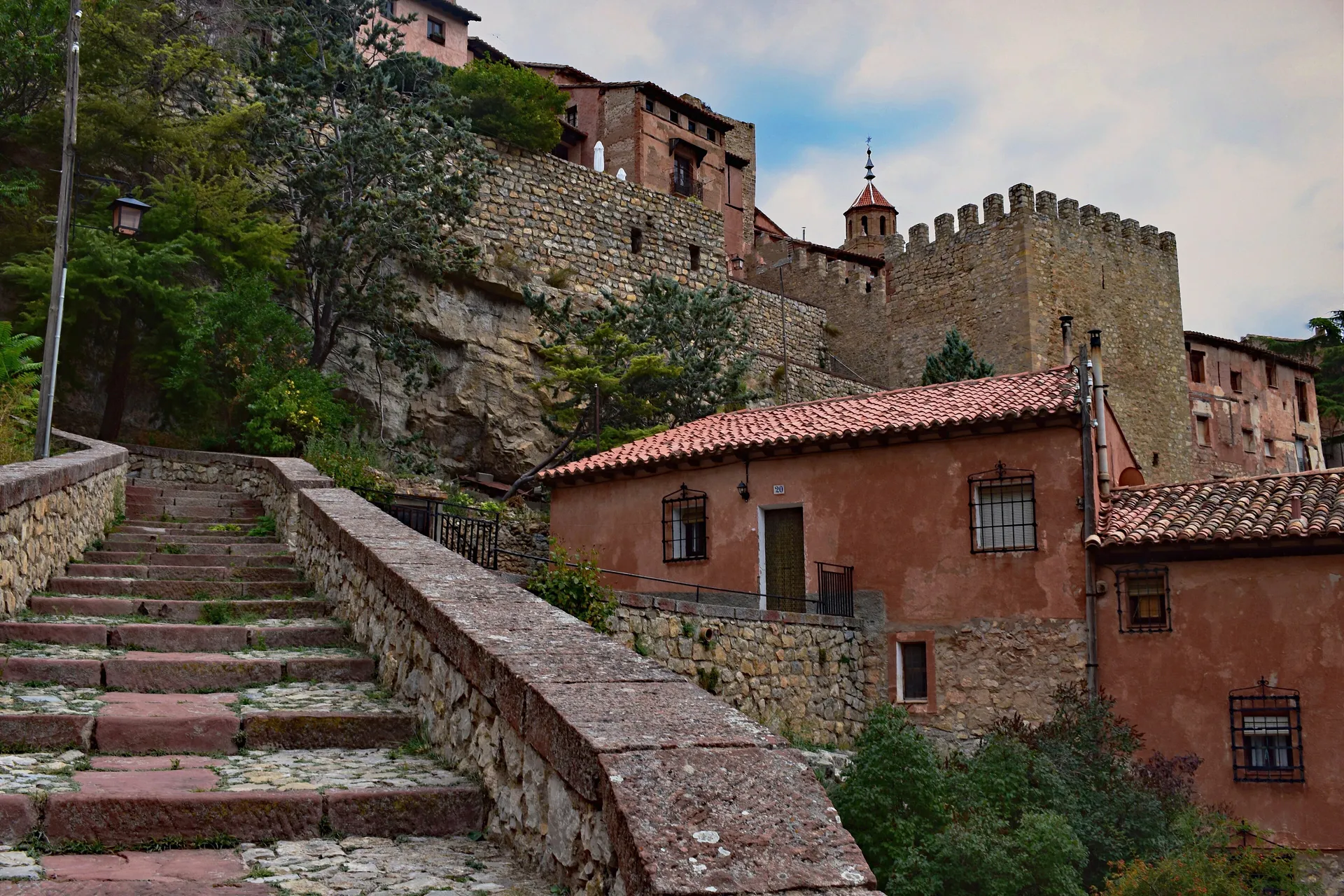
The pros are considerable if you know what you are looking for: Albarracín is one of Spain's most beautiful villages, with pink-red earthen houses stacked along the ridge, medieval walls, a compact cathedral, and a setting wrapped by a bend of the Guadalaviar river that few places in Europe can match. It is safe, quiet, low-cost, and genuinely peaceful, with excellent hiking and stargazing nearby thanks to low light pollution. The cons are equally real and worth stating plainly: there is no coworking scene, almost no nightlife, a very small and mostly older or tourism-focused local community, sparse public transport, and a housing stock that is limited and slow-moving. Cold winters and heavy dependence on tourist day-trippers for the local economy also shape the rhythm of the place, quiet and slow outside peak season, busier and more crowded during it. The Pinares de Rodeno, the red sandstone pine forest just outside the village, also hold painted rock shelters that belong to the UNESCO-listed Levantine rock art of eastern Spain, thousands of years older than anything inside the walls.
Who Albarracín Is For
Albarracín suits a specific kind of remote worker: someone who wants a short, restorative base rather than a long-term nomad hub, who values dramatic scenery, silence, and history over social scenes and infrastructure. It works well for a writer, researcher, or anyone doing focused solo work for a few weeks, ideally with their own car and a reliable backup internet plan. It is a poor fit for anyone who needs coworking spaces, an active nightlife, a large expat or nomad community, or frequent, easy transport connections. Think of it less as a place to live and work indefinitely and more as a serene detour, a place to recharge, hike, and get deep work done away from distractions, before moving on to a better-connected base like Valencia, Zaragoza, or Madrid. Climbers are the exception to all of this. The red sandstone boulders and cliffs around the village make it one of Spain's best-known bouldering areas, and for anyone who climbs, a few weeks of working mornings and climbing afternoons here is exactly the reason to come, with the cool, dry spring and autumn days the prime season on the rock.