Cost of Living in Oran
Where this figure comes from. No cost survey covers Oran, so the $700 a month above is our own estimate rather than a measurement. On 416 of our 999 city guides the figure is built from a published Numbeo basket, a one-bedroom rent in the centre plus one person's monthly costs without rent, converted to USD; this city is not one of them. How we source everything.
Oran runs about $700 a month for one person, though what you actually pay depends heavily on how you change money, since Algeria's parallel exchange rate differs substantially from the bank rate and most visitors use the former. A furnished apartment near the Front de Mer or in Hai Es Salem is $200 to $400. Food is cheap: a plate of couscous or a sandwich karantika is a dollar or two, a sit-down restaurant meal $6 to $12, and coffee well under a dollar. There is no real coworking market. Home ADSL or fibre from Algerie Telecom is $15 to $30 a month. Local transport costs pennies and taxis a few dollars. Cards issued abroad do not work here in any practical sense, so the money for a whole stay arrives as notes and gets changed in stages rather than drawn down as needed. Prices lift through July and August when the diaspora comes back from France, and a flat let by the week in that period earns what it would otherwise earn in a month. Cigarettes, coffee and bread anchor the bottom of the cost of living and have barely moved in years, which is why the monthly figure looks the way it does beside the price of anything imported.
Where to Work in Oran
Oran has very little coworking, a handful of small startup spaces linked to the university and incubator scene, so the practical answer is a flat with a fixed connection. Algerie Telecom's fibre rollout has reached parts of the city and delivers usable speeds for $15 to $30 a month, while older ADSL lines are slow and worth avoiding if you can choose. Mobile data from Djezzy, Mobilis or Ooredoo is inexpensive and 4G coverage in the city is good, which makes tethering a reasonable backup. International bandwidth is the weak point: local browsing is fine but video calls to Europe or North America can be unstable at peak hours. Test before committing. A national startup label introduced in 2020 gives registered young companies tax relief and access to a state fund, and the incubator space attached to it is most of what passes for a shared-desk sector in the country. Power is dependable and the outages that trouble neighbouring countries are not a feature. Printing, scanning and stamped copies remain a daily part of doing business, so the photocopy shops beside any administrative building are busier than the cafes.
Getting Around Oran
Oran has a modern tram line running from Es Senia to Sidi Maarouf across the city, which is clean, cheap and the easiest way to cover distance. Buses fill in the rest and cost pennies, while yellow taxis and shared taxis are a dollar or two for most trips; agree the fare first. The centre around Place du 1er Novembre and the Front de Mer is walkable, and the climb up to Santa Cruz above the bay is a walk or a short taxi. Es Senia airport is 10km south with flights to Paris, Marseille, Barcelona, Istanbul and the Gulf. Trains run east to Algiers in about four hours. Ferries cross to Spain and to the south of France and carry a great many people who would rather not fly, particularly families travelling with a car and a season of luggage. Booking a sailing in July takes months of notice. Driving in the city is assertive rather than hostile and the lane markings are advisory, which is worth understanding before renting anything. The coastal rail service is slow and cheap, with carriages comfortable enough to work in.
Sorting transport? Book an airport transfer, or compare car rental on Auto Europe and QEEQ.
Visas for Oran
Algeria is among the harder countries to enter independently. Most nationalities need a visa arranged in advance at an embassy, with a hotel booking or an invitation letter, proof of funds and a specific itinerary; processing is slow and refusals are not explained. A visa on arrival exists but only for organised tourism in the far south around Djanet and Tamanrasset, and it does not apply to Oran. There is no digital nomad visa and no remote work provision. Extensions are handled by the local wilaya police and are not straightforward. Anyone planning this should start the application months ahead and expect the paperwork to be the hardest part of the trip.
Best Time to Visit Oran
Oran has a proper Mediterranean climate and is comfortable for most of the year. April to June and September to early November are the best windows, with highs of 22C to 28C, warm sea and clear light. July and August are the warmest months, around 27C to 28C by day and humid on the coast, and the city fills with Algerians on holiday and with the diaspora returning from France, which pushes up prices and fills the beaches west towards Ain El Turk. Winter from December to February is mild at 16C to 18C but this is when the rain falls, mostly in short heavy bursts. A sirocco off the Sahara can spike temperatures sharply in any warm month. Rai came out of the cabarets here in the 1970s and the city still treats the music as its own property, with concerts through the summer advertised locally and almost nowhere else. The sea stays swimmable into November, which is longer than most of the northern shore manages. Spring brings a short green season across the hills behind the city that has gone entirely by June and surprises anyone who expected desert.
Pros and Cons of Oran
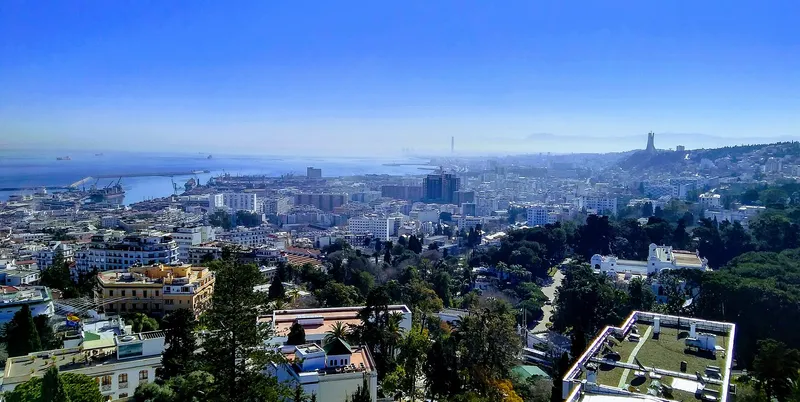
Oran is a large, lively Mediterranean port, with a century of layered Spanish, Ottoman and French building, a real beach coast running west of the city, and the birthplace of rai music, all of it at a cost most Mediterranean cities cannot come anywhere near. The Santa Cruz fort above the bay is one of the great views in North Africa. Food is excellent and cheap and the city has genuine energy. The visa is a serious obstacle in itself, international internet is unreliable, there is no coworking and no foreign community, alcohol is restricted and expensive, English is little spoken so French or Arabic is close to necessary, and cash and card infrastructure barely works for foreigners.
Who Oran Is For
A French or Arabic speaker with a reason to be in Algeria and the patience to get the visa: family ties, research, journalism, or a wish to see the least touristed large city on the Mediterranean and a willingness to work for it. If you can handle bureaucracy and carry enough cash, it is one of the more rewarding places on this list. Stable video calls are not something Algeria's connection delivers, French is required throughout, no nomad community exists, and the visa process makes booking a flight for next month an unrealistic plan rather than a spontaneous one. Tunis and Casablanca deliver a similar coast with a fraction of the friction. Six weeks is a more realistic plan than six months, given how much of the effort goes into the paperwork and how little of it can be repeated easily. Anyone with family here has a completely different experience of the city from anyone without, and the gap is wider than in most places.
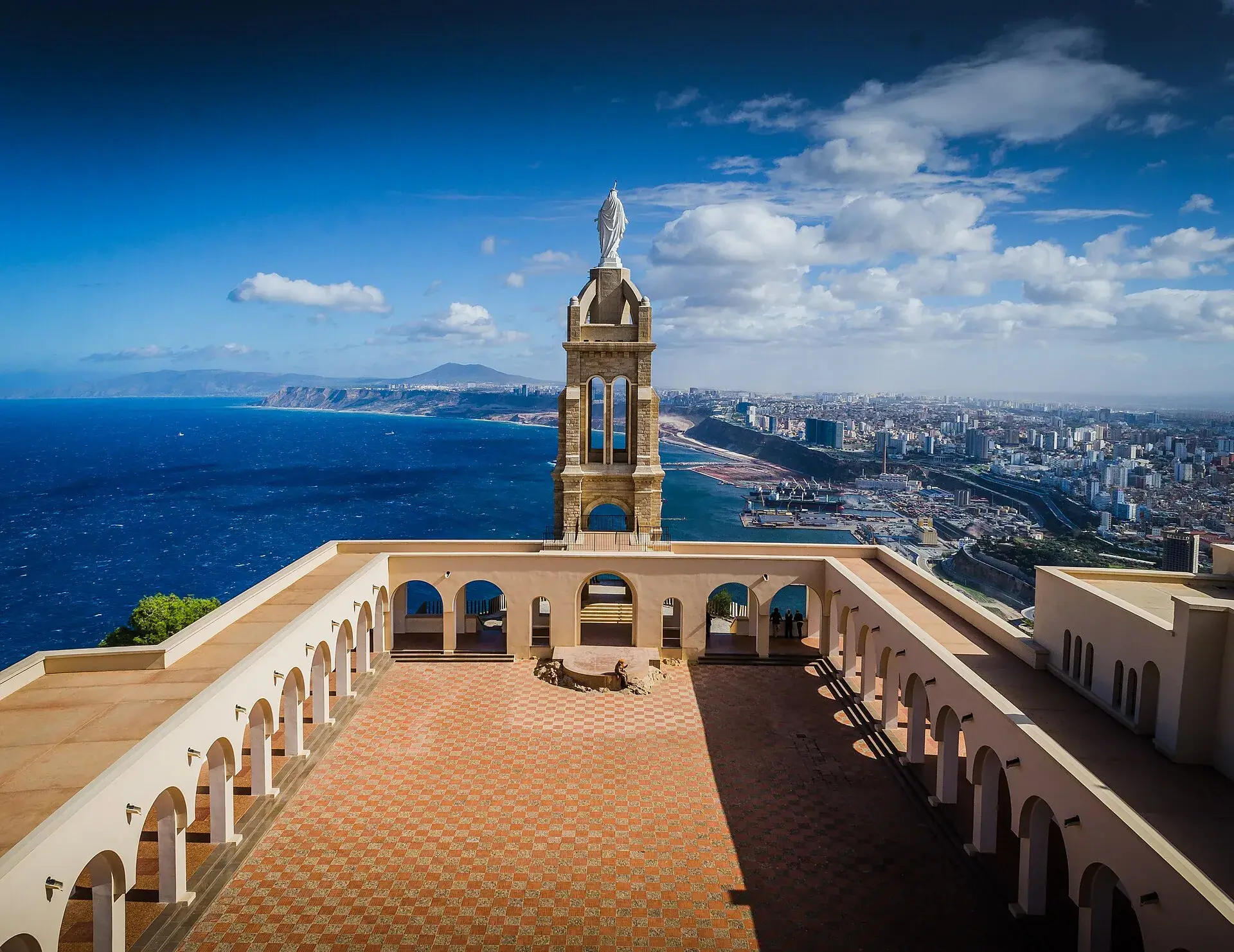 Photo: R hakka / Wikimedia Commons (CC BY-SA 4.0)