Cost of Living in Málaga
Real market data
Source: Numbeo · August 2026
$2,140/moSolo nomad1-bed centre + living costs
$2,660/moCoupleshared 1-bed + costs
$1,690/moLean / localcheaper area + costs
- 1-bed rent, city centre$1,490€1,295
- 1-bed rent, outside centre$1,040€905
- Monthly costs excl. rent (1 person)$650€563
- Meal, inexpensive restaurant$17€15
- Monthly transit pass$28€24
- Buy price, per m² (centre)$5,100€4,432
Prices are from Numbeo (August 2026), converted to USD at $1 = €0.87 (01 Aug 2026). The monthly living-costs figure is our transparent one-person basket, groceries, a few meals out, utilities, phone, internet, transport and essentials, priced from those figures. Solo adds central rent; couple and lean are estimates from the same numbers. The guide below quotes its own monthly range, which is a different measurement rather than a competing one: this table prices a defined basket at the figures above, while that range is a judgement about how somebody actually lives here.
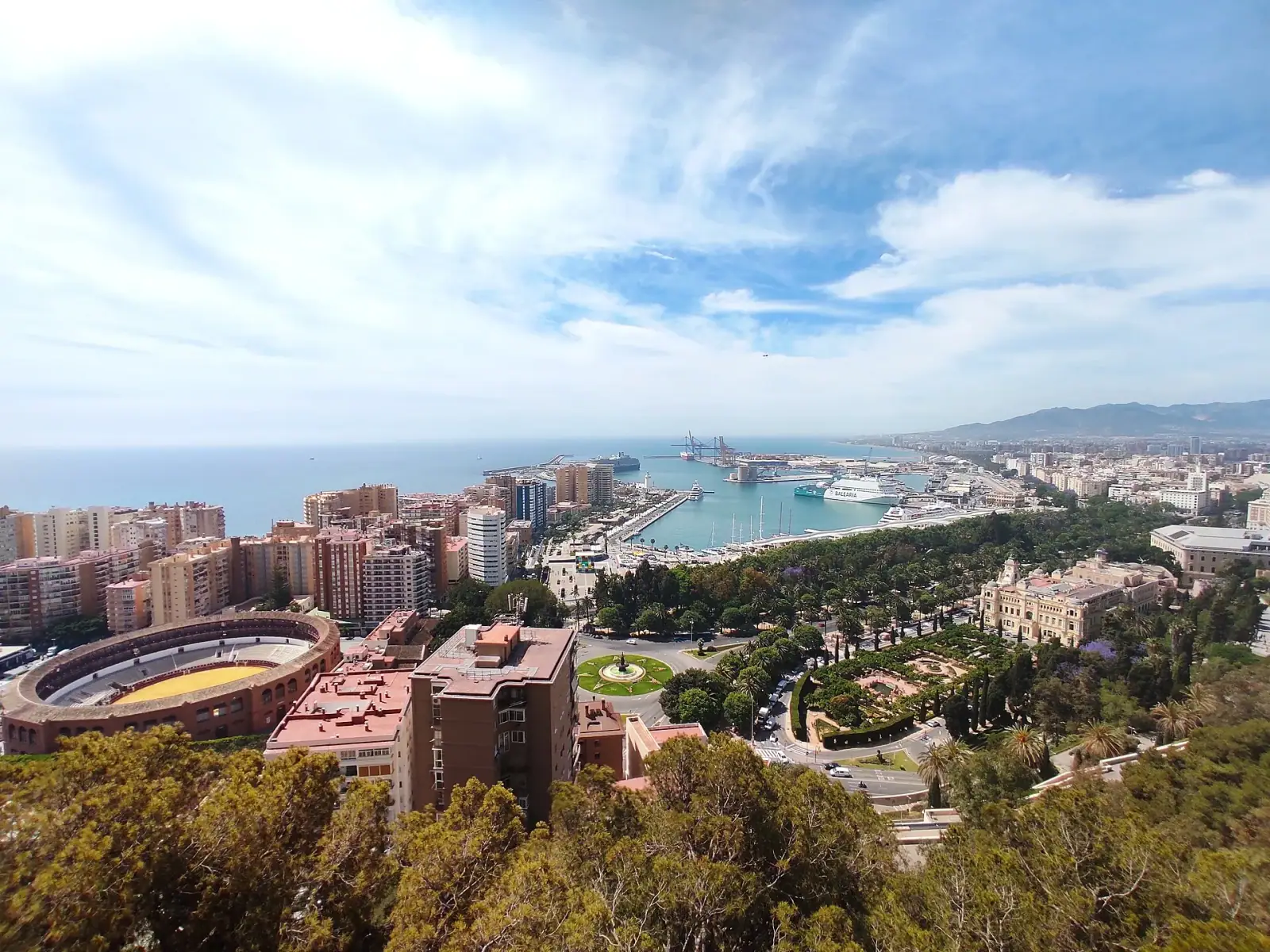
Málaga is no longer cheap by Spanish standards, but it remains more affordable than Madrid or Barcelona. Rents have risen sharply since 2022, so budget accordingly if you plan a longer stay.
- Rent, central (Centro, Soho, Malagueta): $970-1,500/month for a one-bedroom
- Rent, cheaper areas (Teatinos, Huelin, El Palo): $740-1,150/month
- Groceries: $170-280/month at Mercadona or Carrefour
- Eating out: $11-23 per meal at a local restaurant; a menu del dia (lunch set menu) runs $11-16
- Coworking hot desk: $110-250/month; day passes $22-34
- Local transport: $1.50-2.50 per bus trip; monthly pass $46-68
- Internet (home fiber): $34-68/month
Realistic monthly total: $1,600-2,500/month for a comfortable lifestyle with a coworking membership and regular meals out. Budget travelers can push below $1,350 with shared housing and home cooking.
Where to Work
Málaga has a solid and growing coworking scene, concentrated in the Soho arts district and near the historic center. TLR Coworking (C/ Barroso 15, Soho) is one of the most established spaces with a rooftop terrace and a community of 150+ professionals from 30+ countries. Innovation Campus has two locations: one in the historic center at Calle Álamos 7 and a seafront option at Calle Puerto 14, both offering hot-desk and dedicated-desk passes. La Innova Noria caters to social entrepreneurs and freelancers on a tighter budget.
Cafe culture is strong but uneven for work. Santa Coffee (Tomás Heredia, Soho) has reliable WiFi and a focused atmosphere. Brunchit (Calle Carretería) is popular with laptop workers for its all-day hours and good seating. Ana la Fantástica in the old town is ideal for a morning work session with excellent pastries, though it fills up fast on weekends.
The WiFi situation across the city is generally solid. Fiber broadband is widely available in apartments, and coworking spaces advertise high-speed connections. Some traditional tapas bars will give you side-eye for opening a laptop, so stick to cafes or coworking if you need to work for hours.
Getting Around
The city center is highly walkable. Most sights, restaurants, and cafes you'll use day-to-day are within a 20-30 minute walk of each other. Public buses cover the wider city, with fares starting at $1.50 per trip; the EMT bus app makes navigating routes straightforward.
There is no metro, but a commuter rail (Cercanías) connects the center with suburbs like Fuengirola to the west and the airport. From the airport to the city center, the Cercanías C1 train takes around 12 minutes and costs about $2.50. Taxis and ride-share apps (Uber and Cabify both operate here) are widely available and affordable for occasional use.
Málaga also has excellent intercity connections: a high-speed AVE train reaches Madrid in under three hours, and Seville in about two. The airport offers direct flights across Europe, making it easy to travel while based here.
Sorting transport? Book an airport transfer, or compare car rental on Auto Europe and QEEQ.
Visas and Staying Long-Term
Citizens of the US, UK, Canada, Australia, and most other non-EU countries can enter Spain visa-free for up to 90 days within any 180-day period under Schengen rules. Note that the EU's Entry/Exit System (EES) has been fully operational since 10 April 2026, requiring biometric registration at borders; an ETIAS travel authorization for visa-exempt travelers comes next, and the European Commission has scheduled it for the last quarter of 2026.
For stays beyond 90 days, Spain's Digital Nomad Visa (officially the Telework Visa) is the most practical route. Key requirements include a minimum income of $3,280/month (200% of Spain's minimum wage), proof of a university degree or three years of relevant professional experience, comprehensive health insurance valid in Spain, and a clean criminal record. The initial permit is valid for one year and renewable for up to two more years, with a path to permanent residency after five years.
Best Time to Visit
Málaga has one of the warmest and sunniest climates on mainland Europe, with about 300 sunny days per year. That said, timing still matters for remote workers.
Spring (April-May) and early autumn (September-October) are the best windows. Temperatures sit at 20-26°C, crowds are manageable, and the beach is accessible without being overwhelming. May and September are the sweet spot: warm enough to enjoy evenings outdoors, cool enough to focus indoors during the day.
Summer (June-August) brings 29-32°C heat, intense tourist crowds, higher prices for short-term rentals, and some disruption to the city's work rhythm. It can feel relentless during July and August if you need to be productive. Winter (November-February) is mild at 15-20°C with occasional rain, making it popular with European cold-weather escapees; it is genuinely pleasant for city life and work, though the beach is out.
Pros and Cons
- Excellent climate with 300+ sunny days per year
- Strong infrastructure: fast fiber internet, growing coworking scene
- Good transport links: international airport, AVE to Madrid, walkable center
- Rich culture and food scene: world-class museums, tapas, fresh seafood
- Growing English-speaking nomad community
- Still cheaper than Madrid or Barcelona for comparable quality of life
- Rents have risen 30-40% since 2022; it is no longer a budget destination
- Very hot and crowded in July-August, which disrupts work rhythm
- Spanish bureaucracy can be slow and frustrating for visa and residency processes
- Limited Spanish fluency required outside the nomad bubble; not all locals speak English
- Short-term rental supply tightens in summer, pushing prices up sharply
Who Málaga Is Best For
Málaga suits remote workers who want a Mediterranean lifestyle with real urban infrastructure: coworking options, good restaurants, cultural depth, and easy flights back home. It works especially well for Europeans looking to extend winter into spring, and for anyone on the Spanish Digital Nomad Visa who wants a smaller, more relaxed city than Madrid or Barcelona without sacrificing connectivity.
It also appeals to people who value being outdoors: the beach is within a short bus or taxi ride, hiking in the Montes de Málaga natural park is accessible, and the broader Costa del Sol and Ronda are easy day trips.
Skip Málaga if you are on a very tight budget (under $1,350/month all in), if you need a 24/7 work culture with late-night coworking access, or if peak-summer heat and tourist crowds would derail your focus. It is also not the right fit for those who need a large English-speaking local professional network rather than a nomad one.