Cost of Living in Torshavn
Where this figure comes from. No cost survey covers Torshavn, so the $2,400 a month above is our own estimate rather than a measurement. On 416 of our 999 city guides the figure is built from a published Numbeo basket, a one-bedroom rent in the centre plus one person's monthly costs without rent, converted to USD; this city is not one of them. How we source everything.
Budget around $2,400 a month as a solo remote worker in Torshavn, which is expensive and reflects a North Atlantic archipelago that imports nearly everything except fish and lamb. A one-bedroom flat runs roughly $900 to $1,400 and the rental market is tight, since the islands have fifty-four thousand people and a housing shortage. Groceries are Nordic-priced and eating out is expensive. Heating is a substantial year-round line rather than a winter one. The Danish krone is the currency, issued locally as Faroese notes. This is our own estimate rather than measured data. The sub-sea tunnels are tolled and the charges are billed automatically to the vehicle, so a car used between islands accumulates a monthly bill worth budgeting for. Alcohol is sold only through the state monopoly and is expensive even by Nordic standards. And ordering from Denmark, which is how a good deal of shopping gets done, attracts handling on arrival that removes part of the saving. Set against all that, the local lamb and fish are outstanding and cheap, and much of the heating comes from local hydro.
Where to Work in Torshavn
The Faroes are among the best-connected small territories anywhere: submarine cables to Denmark and Iceland, fibre to essentially every household, and mobile coverage through a network of sub-sea tunnels that link the main islands. Speeds are high and reliable. Power is reliable and increasingly wind and hydro. There is a small coworking presence in Torshavn. Faroese is the language of daily life and Danish is taught throughout; English is widely and comfortably spoken, particularly by anyone under fifty. Anyone working with the United Kingdom will find the islands on the same clock through the year, which is a smaller adjustment than the geography suggests. The tunnels also carry mobile signal, so a drive between islands does not drop a call. The economy behind all that infrastructure is narrow. Fishing and salmon farming account for the overwhelming majority of exports and the public sector employs much of the rest, so the professional network here is small and centred on those. What it means for a visiting worker is that the connection is excellent and the local market is not, which is the right way round for anyone bringing their own income with them.
Getting Around Torshavn
Torshavn is small and its centre, including the turf-roofed peninsula of Tinganes where the government has sat since the Viking age, is walkable in half an hour. The islands are connected by a remarkable network of sub-sea tunnels, one of which contains the world's first undersea roundabout, along with ferries and helicopters run as public transport at subsidised fares. Buses within Torshavn are free. Vagar airport is around forty-five minutes away by road and tunnel, with flights to Copenhagen, Reykjavik and a handful of European cities. The helicopter service to the outlying islands is subsidised as public transport and is one of the cheapest scheduled helicopter flights anywhere. The helicopter has rules that catch visitors. Seats are limited, residents have priority, and the routes exist to serve the islands rather than to sightsee, so a same-day return on the same route is generally not permitted and a trip out usually means a ferry back. Weather cancels all of it regularly. On foot, many of the best walks cross private land and a fee is now charged at several of the well-known sites, which is a change from a few years ago and is clearly signposted.
Sorting transport? Book an airport transfer, or compare car rental on Auto Europe and QEEQ.
Visas for Torshavn
The Faroe Islands are an autonomous territory of Denmark but are not in the European Union and not in the Schengen area, which is the detail that catches almost everyone out: a Schengen visa does not admit you here, and time spent here does not count against a Schengen allowance. Most Western nationalities enter visa-free for up to ninety days. There is no remote work visa. Longer stays require a Faroese residence permit, which is administered separately from the Danish system. Anyone flying via Copenhagen should note that the Faroe leg is treated as an external border crossing despite both being Danish territory. A practical consequence of that border: carry a passport rather than a national identity card even when travelling from Denmark, since this is an external crossing and the checks are real. Routing matters too, because the islands are also reachable from Edinburgh and Reykjavik depending on the season, and arriving from somewhere other than Denmark avoids a Schengen entry and exit entirely, which is worth planning for anyone watching that allowance closely.
Best Time to Visit Torshavn
May to September is the practical window, with long days, temperatures in the low teens and the puffin colonies at Mykines occupied between roughly May and August. The Faroes have some of the most changeable weather anywhere: locals say you can experience all four seasons in an afternoon and they are not exaggerating, with fog, sun and horizontal rain in the same hour. Winter is dark, wet and windy rather than cold, rarely below freezing, with storms that close the tunnels and cancel flights. The Olavsoka festival at the end of July, marking the opening of parliament, is the largest gathering of the year and fills Torshavn entirely. Daylight swings hard, from about nineteen hours in June to five in December, and the summer light is what makes a trip here feel longer than it is. Mykines has a season of its own, since the ferry runs only in the summer months and the island closes to visitors outside them. For anyone flexible, late August and early September hold most of the light with fewer people and lower fares, and the G! Festival in July puts a very good music weekend on a beach in the north.
Pros and Cons of Torshavn
The Faroe Islands are eighteen basalt islands rising vertically out of the North Atlantic, with sea cliffs, grass-roofed houses, a waterfall that falls off a cliff into the ocean at Gasadalur and some of the emptiest landscape in Europe. The connectivity is excellent, the country is exceptionally safe, and English works everywhere. The weather is genuinely difficult and the prices are high with it, there are almost no trees and very little daylight in winter, and the grindadrap whale hunt is a real thing that visitors should read about rather than discover. On the whale hunt, the facts rather than the argument. The grindadrap is a non-commercial drive hunt of pilot whales, the meat is distributed within the community, it is regulated under Faroese law, and it is not a tourist event or something a visitor will stumble into, though it can happen at short notice and is confronting to see. Opinion within the islands is not monolithic either. Separately, healthcare is good and Danish-standard, with anything specialist meaning a flight to Denmark.
Who Torshavn Is For
A photographer, a walker, or anyone who genuinely likes weather rather than merely tolerating it, and whose work benefits from excellent connectivity in an extremely quiet place. The islands are outside Schengen, which makes them useful for anyone managing a European day count. Sun is scarce at this latitude, the population of the whole country would fill a small town, and no scene of any description has ever formed in the islands. Anyone considering a winter stay should understand that the darkness and the wind are the defining experience rather than a footnote. Fishing and sailing are what these islands are organised around. The waters rank among the most productive in the North Atlantic, and the harbours are working ones rather than marinas dressed up for visitors. Iceland is not really the same choice at all. Iceland has the volume of tourism, the range of landscape and the flights, while the Faroes are smaller, greener, emptier and considerably less prepared for visitors, which is the whole appeal for some people and the objection for others. A stay of a few weeks suits most, since the islands can be covered thoroughly in that time and what follows is repetition rather than discovery.
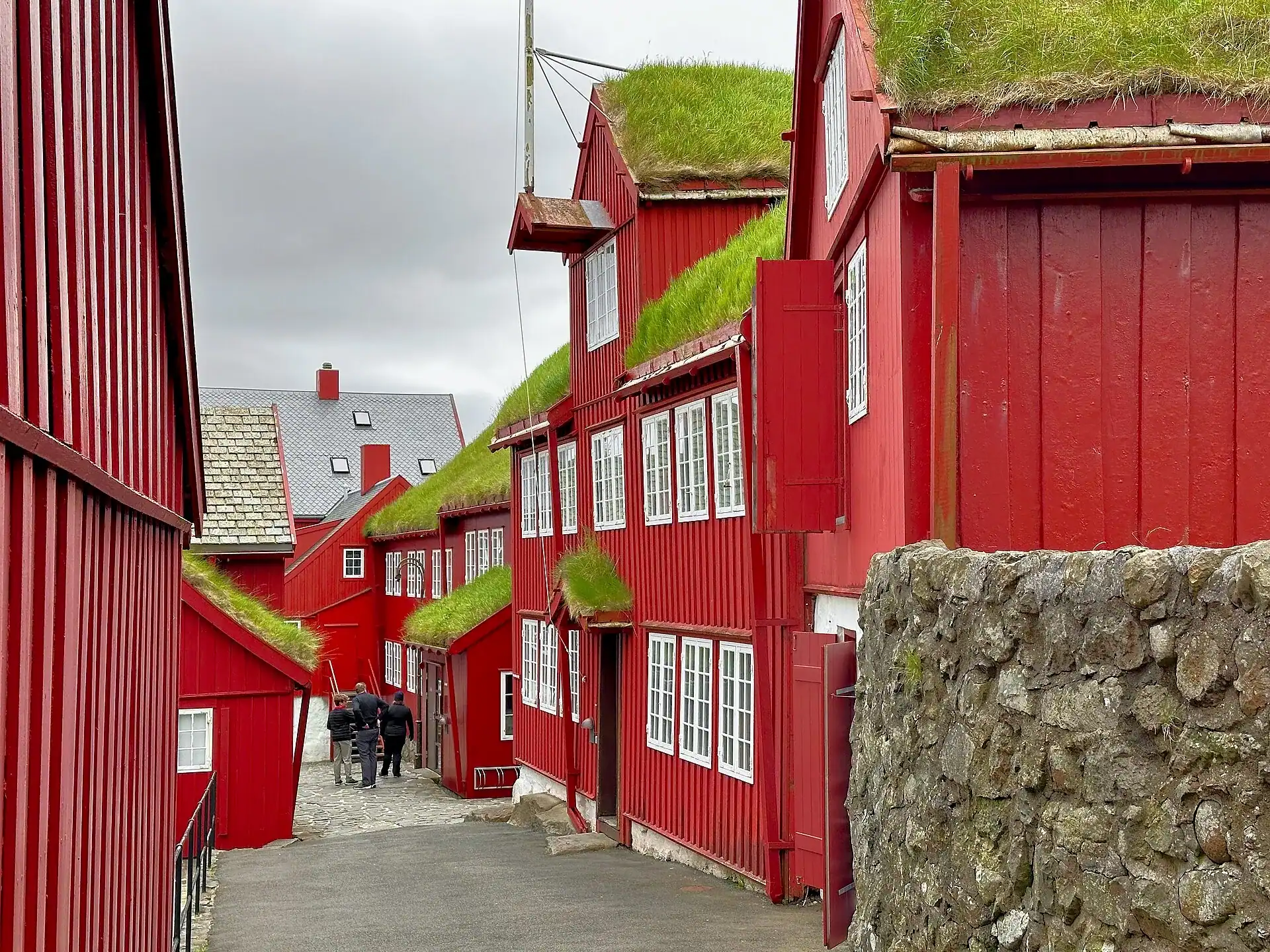 Photo: Perigrinator / Wikimedia Commons (CC BY-SA 4.0)