Cost of Living in Zermatt
Where this figure comes from. No cost survey covers Zermatt, so the $1,900 a month above is our own estimate rather than a measurement. On 416 of our 999 city guides the figure is built from a published Numbeo basket, a one-bedroom rent in the centre plus one person's monthly costs without rent, converted to USD; this city is not one of them. How we source everything.
Be clear-eyed: Zermatt is one of the most expensive places you can base yourself as a nomad. This is Switzerland, and specifically a world-famous car-free resort where nearly everything arrives by train, so prices carry a heavy premium. A realistic solo monthly budget lands around $1,900, and it climbs fast in peak ski season when short-term apartments and hotels command resort rates. Groceries, restaurants and transport all sit well above European norms, and a casual sit-down dinner can cost more than a full day elsewhere. You can trim costs by cooking in a self-catered studio, buying at the Coop or Migros, and avoiding the busiest weeks, but there is no version of Zermatt that is genuinely cheap. Budget travelers should treat it as a splurge stay, not a long base.
- Studio or one-bed short-term rental: roughly $1,400 to $2,600 per month, higher in ski season
- Groceries at Coop or Migros: around $500 to $750 per month if you cook
- Restaurant main course: commonly $30 to $55, fondue and mountain restaurants higher
- Coffee: about $5 to $7; a beer around $8 to $12
Where to Work in Zermatt
Zermatt is a resort, not a startup town, so do not expect dedicated coworking spaces on every corner. What it does have is excellent, reliable internet and a strong crop of laptop-friendly cafes and hotel lounges where a slow-travel worker can settle in for a few hours. The most practical setup is a good self-catered apartment with fast fibre wifi, used as your main office, supplemented by cafe sessions when you want a change of scene or a proper coffee. Many four and five-star hotels have quiet lobby lounges that welcome a coffee-buying laptop user, and the pace is calm outside peak apres-ski hours. Video calls are no problem given the connection quality. The trade-off is community: you are unlikely to bump into other remote workers, so this is heads-down solo work rather than a networking hub.
- Book an apartment with confirmed fibre wifi as your primary workspace
- Use cafes and hotel lounges near Bahnhofstrasse for a change of scene
- Work mornings, then take afternoons on the mountain when weather is clear
- Expect strong, stable connections suitable for video calls
Getting Around Zermatt
Zermatt is car-free, and that shapes everything. Combustion cars are banned from the village, so you leave your vehicle in the large parking garages down-valley in Tasch, then ride the Matterhorn Gotthard Bahn train the final stretch up to Zermatt. Coming by public transport, you change at Visp onto the same line. Inside the village you simply walk, since it is compact and mostly flat along the valley floor, or take one of the small electric taxis and e-buses that hum quietly through the lanes. For the mountains you have a superb network: the Gornergrat cog railway climbs to a panoramic ridge, the Sunnegga funicular whisks you up in minutes, and the Matterhorn cable cars, including the Klein Matterhorn and Matterhorn Glacier Paradise, reach Europe's highest cable-car station. It is efficient, scenic and refreshingly clean.
- Park in Tasch and take the train the last few minutes into Zermatt
- Arrive by rail via Visp on the Matterhorn Gotthard Bahn
- Walk the village or use electric taxis and e-buses
- Reach the peaks by Gornergrat railway, Sunnegga funicular and the Matterhorn cable cars
Sorting transport? Book an airport transfer, or compare car rental on Auto Europe and QEEQ.
Visas for Zermatt
Switzerland is not a member of the European Union, but it is part of the Schengen Area, so the familiar Schengen rules apply for most visitors: you can generally stay up to 90 days within any rolling 180-day period without a visa if you hold a passport from an eligible country, and days spent elsewhere in Schengen count against the same allowance. That window suits a scenic slow-travel stint or a ski season chunk, but it is not a route to living here long term. Anything beyond 90 days, or any intention to work locally, moves you into Swiss residence and permit territory, which is its own strict, quota-driven system tied to employment, study or means. Since July 2023 the Matterhorn Alpine Crossing has carried passengers over the glacier from Klein Matterhorn to Testa Grigia, the top station above Breuil-Cervinia, in about nine minutes, and the frontier with Italy up there has no passport desk at all: the Entry/Exit System record opened at your arrival airport keeps counting on the Italian side.
- Schengen: up to 90 days in any 180-day period for eligible passports
- Switzerland is outside the EU but inside Schengen
- Longer stays or local work require a Swiss residence or work permit
Best Time to Visit Zermatt
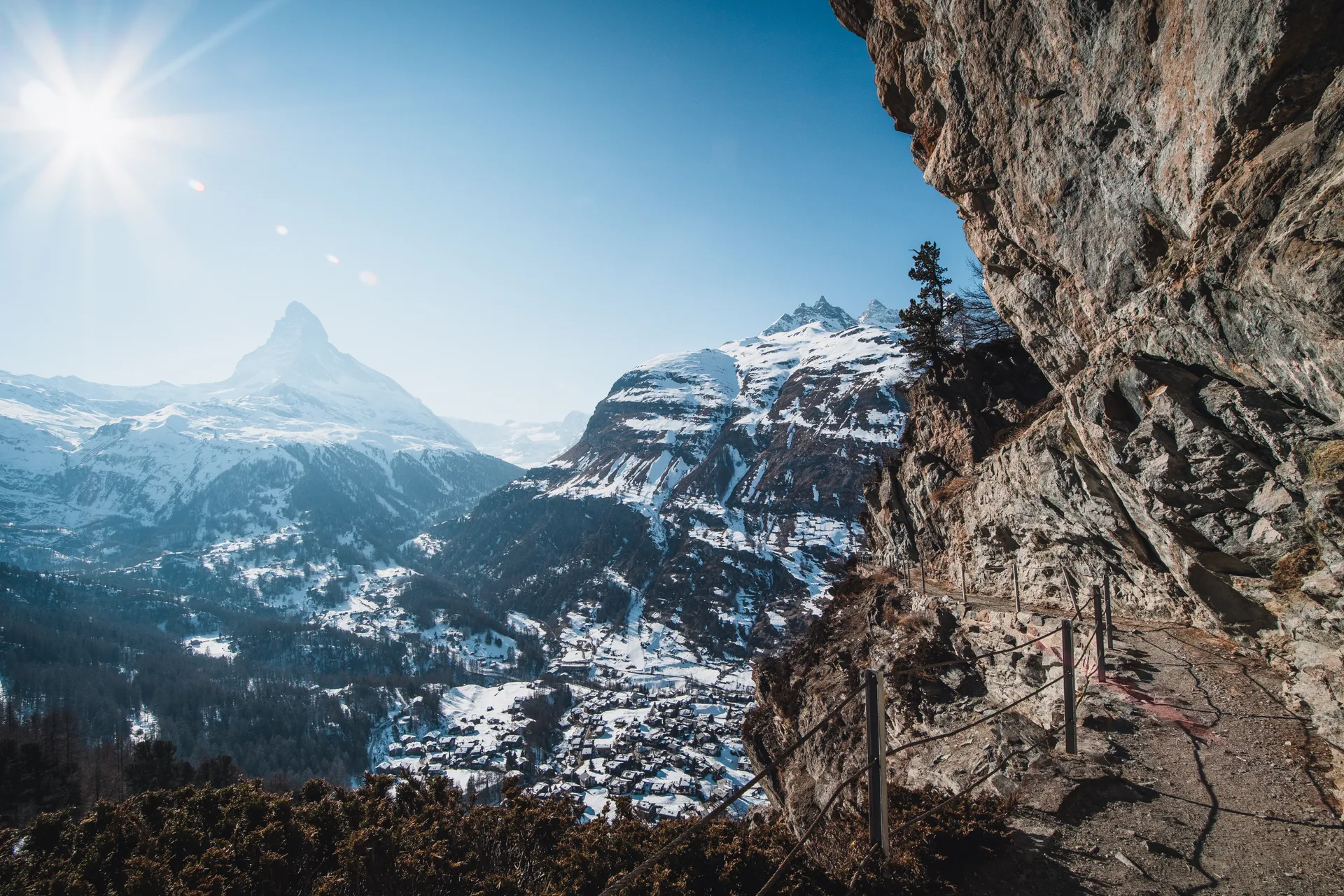
Zermatt is a genuine two-season destination. Winter, roughly December to April, is prime time for world-class skiing across an enormous linked area that spills over to Cervinia in Italy, with reliable snow, buzzing apres-ski and the village at its liveliest. Summer, around July to September, is the sweet spot for hikers: hundreds of kilometers of trails open up, the Matterhorn stands crisp against clear skies on good days, and you can even ski on the glacier in the mornings. The shoulder seasons, late spring and late autumn, are the quiet, cheaper flip side: fewer crowds and calmer streets, but also reduced lift service and some hotels, restaurants and cable cars closed for maintenance. For working and slow travel, summer or the early-winter lull offer the best balance of open infrastructure, good weather and slightly softer prices.
- December to April: world-class skiing and the liveliest village atmosphere
- July to September: hiking, glacier skiing and clear Matterhorn views
- Shoulder seasons: quieter and cheaper, but expect closures and limited lifts
Pros and Cons of Zermatt
Zermatt trades on a simple, powerful promise: some of the most breathtaking alpine scenery on earth, wrapped in Swiss efficiency. The car-free streets are clean and quiet, the air is crisp, safety is excellent, and the internet is genuinely fast and reliable, which is more than many prettier places manage. Getting into the mountains is effortless thanks to the rail and cable-car network. The honest downside is cost, which is punishing, and character: this is a tourism-driven resort with a tiny permanent community, so it can feel transient and, outside the apres-ski scene, the nightlife is quiet. It is also strongly seasonal, with a different rhythm and different closures depending on when you arrive. None of that is a flaw so much as a fit question. Come for scenery, air and activity, not for a bustling social scene or a bargain.
- Pros: stunning scenery, clean car-free air, excellent safety and wifi, easy mountain access
- Cons: very high cost, tiny community, quiet nightlife, heavy seasonality
- Best enjoyed as an active, well-funded splurge rather than a budget base
Who Zermatt Is For
Zermatt suits a specific kind of nomad: the scenic, active, well-funded slow traveler who values mountains and quiet over cost and crowds. If you can work a focused morning and then be on a glacier or a high trail by lunch, and if your budget comfortably absorbs Swiss resort prices, few places reward you more. It is ideal for skiers and hikers, for couples or solo travelers who want calm and nature, and for anyone who treats a stay here as a memorable splurge rather than an economical base. It is a poor fit for budget nomads, for people who need a large ready-made social or coworking community, and for night-owls seeking a big-city scene. Come with the right expectations, a healthy budget and a love of the outdoors, and Zermatt is unforgettable. Come chasing cheap rent or nightlife, and you will be disappointed.
- Great for: skiers, hikers and scenery-first slow travelers with a comfortable budget
- Great for: focused solo workers and couples who want calm and clean air
- Not for: budget nomads, nightlife seekers or those needing a big community