Cost of Living in Bergen
Real market data
Source: Numbeo · August 2026
$2,580/moSolo nomad1-bed centre + living costs
$3,510/moCoupleshared 1-bed + costs
$2,180/moLean / localcheaper area + costs
- 1-bed rent, city centre$1,410kr13,400
- 1-bed rent, outside centre$1,010kr9,633
- Monthly costs excl. rent (1 person)$1,170kr11,070
- Meal, inexpensive restaurant$26kr244
- Monthly transit pass$87kr827
- Buy price, per m² (centre)$7,770kr73,733
Prices are from Numbeo (August 2026), converted to USD at $1 = kr9.49 (01 Aug 2026). The monthly living-costs figure is our transparent one-person basket, groceries, a few meals out, utilities, phone, internet, transport and essentials, priced from those figures. Solo adds central rent; couple and lean are estimates from the same numbers.
Bergen is one of the most expensive cities in Scandinavia, and you should budget accordingly. Rent for a one-bedroom apartment in the city centre runs $1,260-1,580 per month. Step 20 minutes out to areas like Landas or Laksevag and you can find the same footprint for $735-1,050. Groceries are costly: expect to spend $420-580 per month if you cook most meals. A single sit-down meal at an inexpensive restaurant costs around $26; a mid-range dinner for two runs $125-160.
A hot-desk at a coworking space such as Impact Hub Bergen or Bergen.Works typically costs $210-420 per month. The monthly public transport pass is $87. Add utilities of around $84-125 and your all-in monthly total lands somewhere between $2,950 and $4,420 depending on your lifestyle and how centrally you live. The measured basket at the top of this page is lower, $2,180 to $2,580, because it assumes cooking at home and no coworking desk, which are the two lines that move most here.
Where to Work
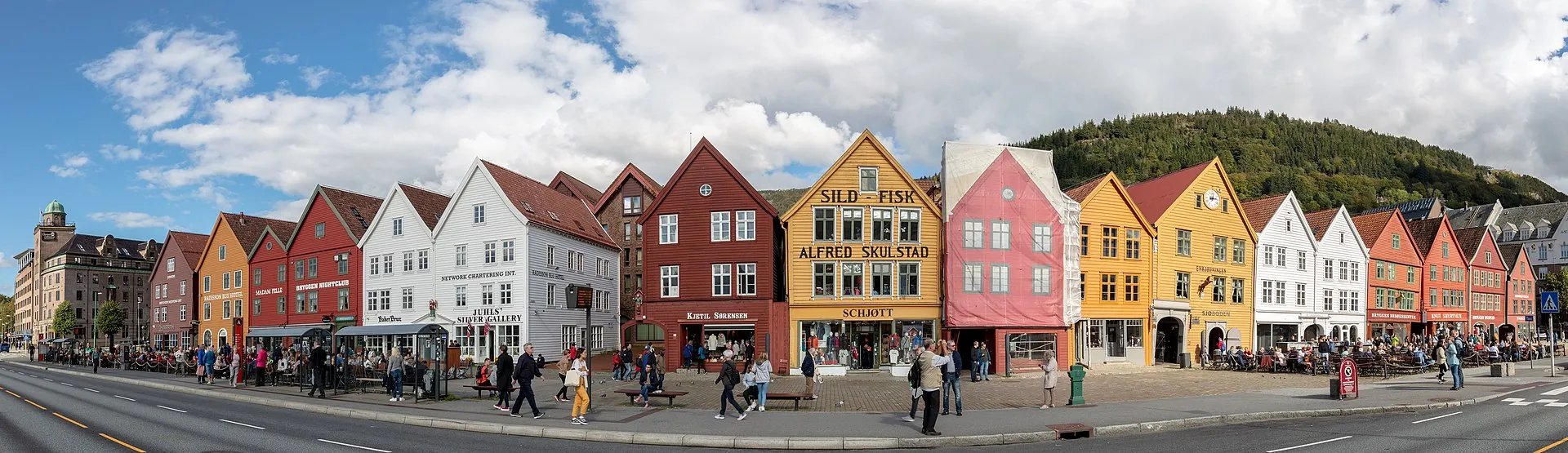
Bergen has a handful of solid coworking options for the size of the city. Impact Hub Bergen, Norway's first coworking space, occupies a historic warehouse near Bryggen and draws a community of social entrepreneurs and freelancers. Bergen.Works in Skostredet is central, has fast fibre internet, and offers both hot desks and private offices with 24-hour access. BKOLON on Nygardsgaten caters to creative and tech workers and has a strong community feel.
Cafe work culture exists but is more limited than in Southern Europe. Norwegians tend to linger over coffee, but many cafes are small and get busy quickly. Kaffemisjonen near Torgalmenningen is a specialty coffee standout and tolerates remote workers during off-peak hours. Godt Brod has multiple locations with seating, though tables fill fast at lunch. Bergen Public Library in the city centre is a genuinely good free option: comfortable seating, free fast WiFi, and a cafe on site.
WiFi is reliable across the city. Norway's fixed broadband is fast, and public WiFi in cafes and coworking spaces is routinely solid. You will not struggle with connectivity for video calls or large file uploads.
Getting Around
The city centre is compact and very walkable. Most of what you need as a remote worker, including coworking spaces, cafes, supermarkets, and restaurants, sits within a 15-minute walk of Torgalmenningen. You can cover the main districts on foot without needing public transport day to day.
For longer trips, the Bybanen light rail and Skyss buses cover the city well. A single ride costs $5 and the monthly pass at $87 pays for itself quickly. The light rail Line 1 connects the city centre directly to Bergen Airport Flesland in about 45 minutes for a standard fare of $5.50. The express airport bus, Flybussen, takes around 30 minutes but costs $16 each way. Taxis are available but notoriously expensive: Bergen holds one of the highest taxi start fares in the world.
Cycling is possible but Bergen's hilly terrain and frequent rain make it an option rather than an obvious default. Most residents walk or use the light rail for daily errands.
Sorting transport? Book an airport transfer, or compare car rental on Auto Europe and QEEQ.
Visas and Staying Long-Term
Norway is part of the Schengen Area, which means the standard 90-day-in-any-180-day rule applies for citizens of the US, Canada, Australia, the UK, and most other non-EU countries. You can enter without a visa for short stays, but you cannot work remotely for longer than 90 days under a tourist entry.
Norway does not offer a dedicated digital nomad visa. The independent-contractor permit is not one either: it covers a skilled, self-employed person established abroad with a contract for a time-limited assignment in Norway, at no less than the skilled-worker wage requirement, and it is tied to that contract and never leads to permanent residence. EU and EEA citizens can live and work in Norway without restriction under freedom of movement. If you want to stay longer as a non-EU remote worker, your realistic options are either using the 90-day allowance, leaving and re-entering after the 90-day period resets, or exploring a longer-term residency route if you have Norwegian connections or employment. Arriving on Norwegian's direct London flight, you meet the Entry/Exit System at Flesland's non-Schengen passport desks, which is where the clock on a non-EU visitor's allowance starts. Fjord Line's ferry from Hirtshals is the opposite case: it docks from Denmark with no border check, so a Danish detour still spends the same allowance.
Best Time to Visit
Bergen is the rainiest city in Western Europe, receiving around 2,500 mm of precipitation annually. Rain is spread throughout the year, with November through January being the worst months for both darkness and rain. If you are coming primarily to work remotely and want the best conditions, May, June, and early July offer the most daylight (up to 19 hours in midsummer), the driest spells, temperatures between 14-20 degrees Celsius, and an energetic city atmosphere.
Late July and August bring the main tourist season, which means crowds at cafes and a tighter rental market for short-term lets. September is a reasonable shoulder choice: fewer tourists, still decent light, and the fjords and surrounding trails are at their most dramatic in autumn colours. Avoid October through March unless you are specifically drawn to the moody Atlantic atmosphere and low-season quiet; the short days and persistent rain are a genuine productivity drag for many people.
Pros and Cons
- Stunning natural setting: fjords, mountains, and sea are all within easy reach from the city centre
- Very safe: extremely low crime rate, no real areas to avoid, comfortable to walk at any hour
- Excellent infrastructure: reliable fast internet, good public transport, clean and well-maintained city
- English is universal: virtually everyone speaks fluent English, including in shops, coworking spaces, and restaurants
- Compact and walkable: the city centre is easy to navigate without a car
- Strong food scene: quality seafood, Michelin-starred restaurants, excellent specialty coffee culture
- Very expensive: rent, eating out, and daily costs will stretch most nomad budgets
- Persistent rain: even in summer, expect frequent grey days and showers
- Short days in winter: November through January can feel relentlessly dark and damp
- No nomad visa: the 90-day Schengen limit is a hard ceiling for most non-EU passport holders
- Small nomad community: Bergen is not a hub with established digital nomad infrastructure or regular meetups
- Limited coworking options: the selection is small compared to larger European cities
Who Bergen Is Best For
Bergen rewards remote workers who earn in stronger currencies and value natural beauty, outdoor activities, and a high quality of life over budget friendliness. If you want to combine productive work weeks with weekend hikes through the Fjaerland fjords, day trips to Sognefjord, or kayaking in the archipelago, Bergen delivers this within arm's reach of a city with real infrastructure.
You will get the most from Bergen if you come during May to July, have an income comfortable for Scandinavian costs (think at least USD 4,000 per month after accommodation), and are the kind of person who enjoys a smaller, quieter city rather than a loud nomad social scene.
Bergen is not a great fit if you are budget-conscious, need a large English-speaking nomad community, want longer-term residency options, or struggle with grey weather and limited daylight. Those prioritising warm weather, low costs, or a well-established nomad network will find better options elsewhere in Europe.