 Valencia
Two cities with an empty river
Each of these cities has a riverbed through its middle that you will rarely see much water in. Both were left that way by a flood. What each did next says more about living there than any list of beaches.
On 14 October 1957, the Turia burst into Valencia and killed at least 81 people. The answer was to move the river, and by the early 1970s it ran through a new channel south of the city, leaving a long dry bed curving through the centre. The government wanted to fill it with a motorway to link the port with the airport. People in Valencia had another idea, and a slogan to go with it: "El llit del Túria és nostre i el volem verd", the Turia bed is ours and we want it green. They won. A royal decree handed the land to the city in 1976, and the first park opened ten years later.
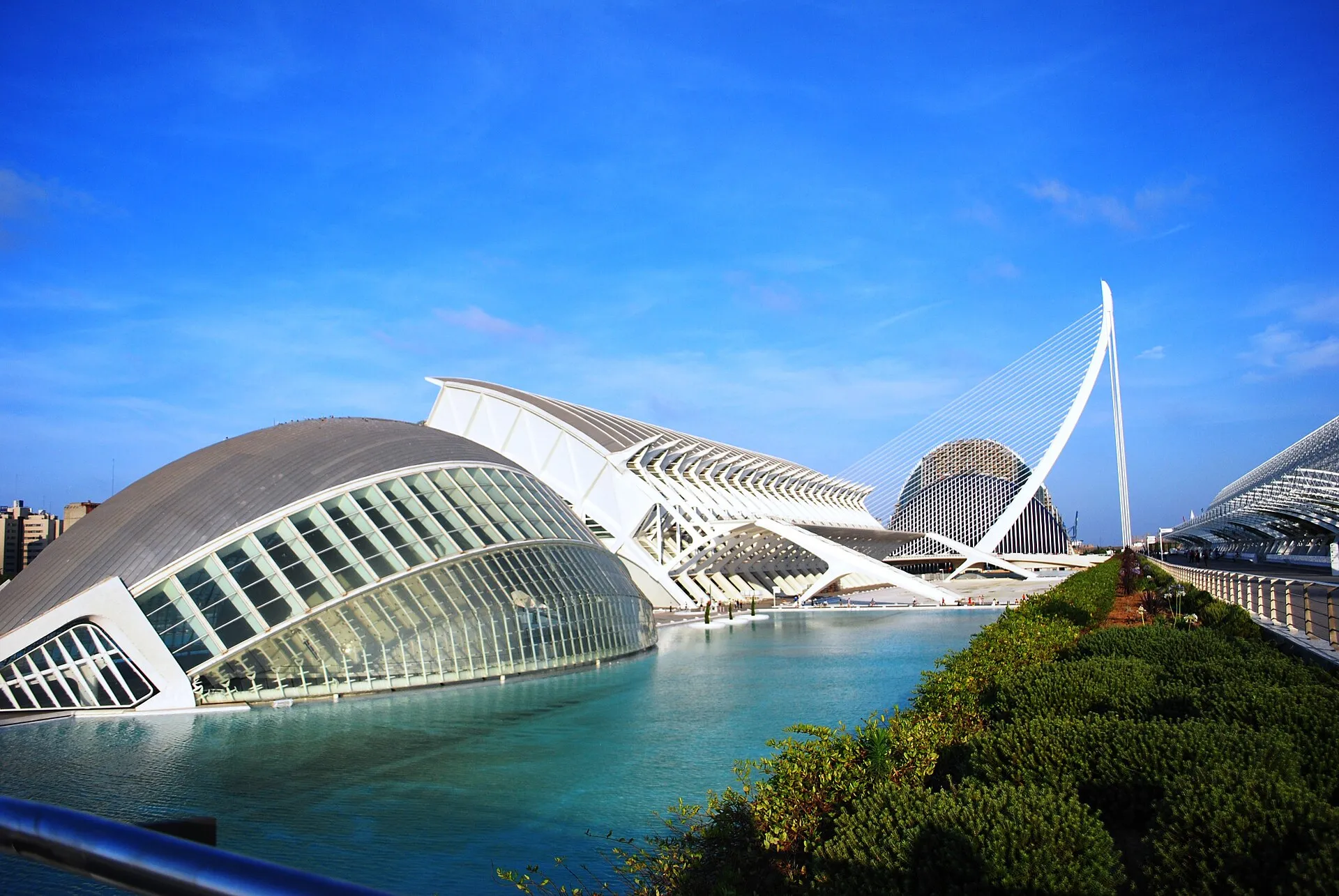
That argument, won by residents half a century ago, is still the best reason to live in Valencia. The gardens run for 8.5 kilometres at about 160 metres wide: orange trees and palms by the Palau de la Música, children climbing over a giant Gulliver, the white ribs of the City of Arts and Sciences towards the sea. You can cross town on a bike without meeting a car, and go from El Carmen to a meeting on the far side by way of the old stone bridges.
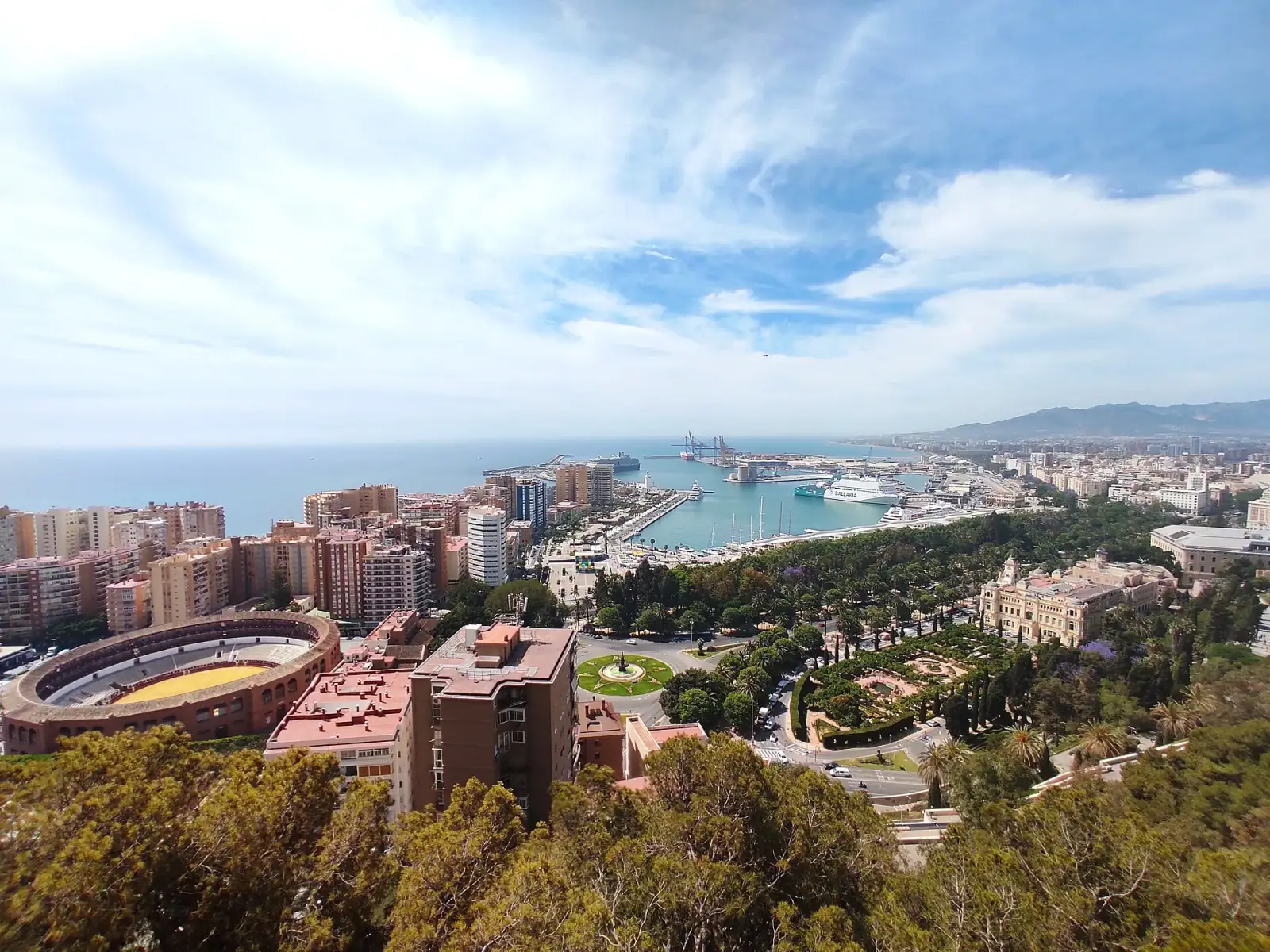
The river in Málaga is the Guadalmedina, which comes from the Arabic for "river of the city". On 23 September 1907 it flooded so badly that Alfonso XIII ordered works to tame it. It took until the El Limonero dam of 1983 to end the danger, and by then the bed was a walled channel with traffic along both sides. The city's own planning papers call it a barrier, and its government has called it a wound. The historic centre lies to the east, with the Picasso Museum, the Pompidou's glass cube and the port. West of it are the cheaper districts, such as Huelin and Teatinos, tied to the centre by a metro whose Guadalmedina stop opened in 2023.
Málaga does plan to fix this: five plaza-bridges, a river park of 1.4 kilometres and the roads moved into tunnels. The main works alone are put at about $350 million, with the tunnels on top. As of July 2026 the city was still choosing who would draw up the project, a job with an eleven-month deadline, and neighbours have marched against covering the bed. Expect years of argument, and then years of building beside whatever flat you pick.
What else has changed since
Málaga has spent the last three decades remaking itself on a tighter schedule: the technology park in 1992, the Picasso Museum in 2003, high-speed trains in 2007, the Pompidou in 2015. The park now counts over 29,000 workers, and Google has added a cybersecurity centre. If your career benefits from being around engineers, this is the stronger city, and the airport is one of Spain's busiest.
You may have heard that the reason to pick Málaga is winter. Look at the weather stations before you believe it. Both cities have an average January high of 17 degrees and a low of 8, February differs by a single degree, and so do the summer peaks. Málaga's mountains give it some shelter and plenty of sun, about 2,975 hours a year, but this should not be what decides it.
Price will not settle it either, at around $2,500 a month for Valencia by our estimate and $2,600 for Málaga. Size leans the same way as the river: about 840,000 people against 600,000, a wider base of local life, and Madrid in under two hours instead of under three. Trying both is harder than it looks on the map, because there is no direct train. It takes about five hours with a change at Córdoba, so most people would take the flight of little more than an hour.
For a year's stay, we would choose Valencia. Málaga is more exciting and has more of a future to sell you, and Valencia has already built what the other is still drawing. So how do you feel about living in a city that is not finished yet?
 United States
 United Kingdom
 Germany
 Canada
 Australia
 India