Seville Málaga
Head to head
Seville vs Málaga

Seville vs Málaga: Which Is Better for Digital Nomads?

Overall: Málaga edges ahead, 8 to 7.4

Open a map of Andalusia and put a finger on each city. Seville lies on a wide, flat river plain, some 80 kilometres from the Atlantic. Málaga is jammed between a wall of hills and the Mediterranean. You could work out most of what follows from that alone, including a few things people get wrong.

Seville on its river

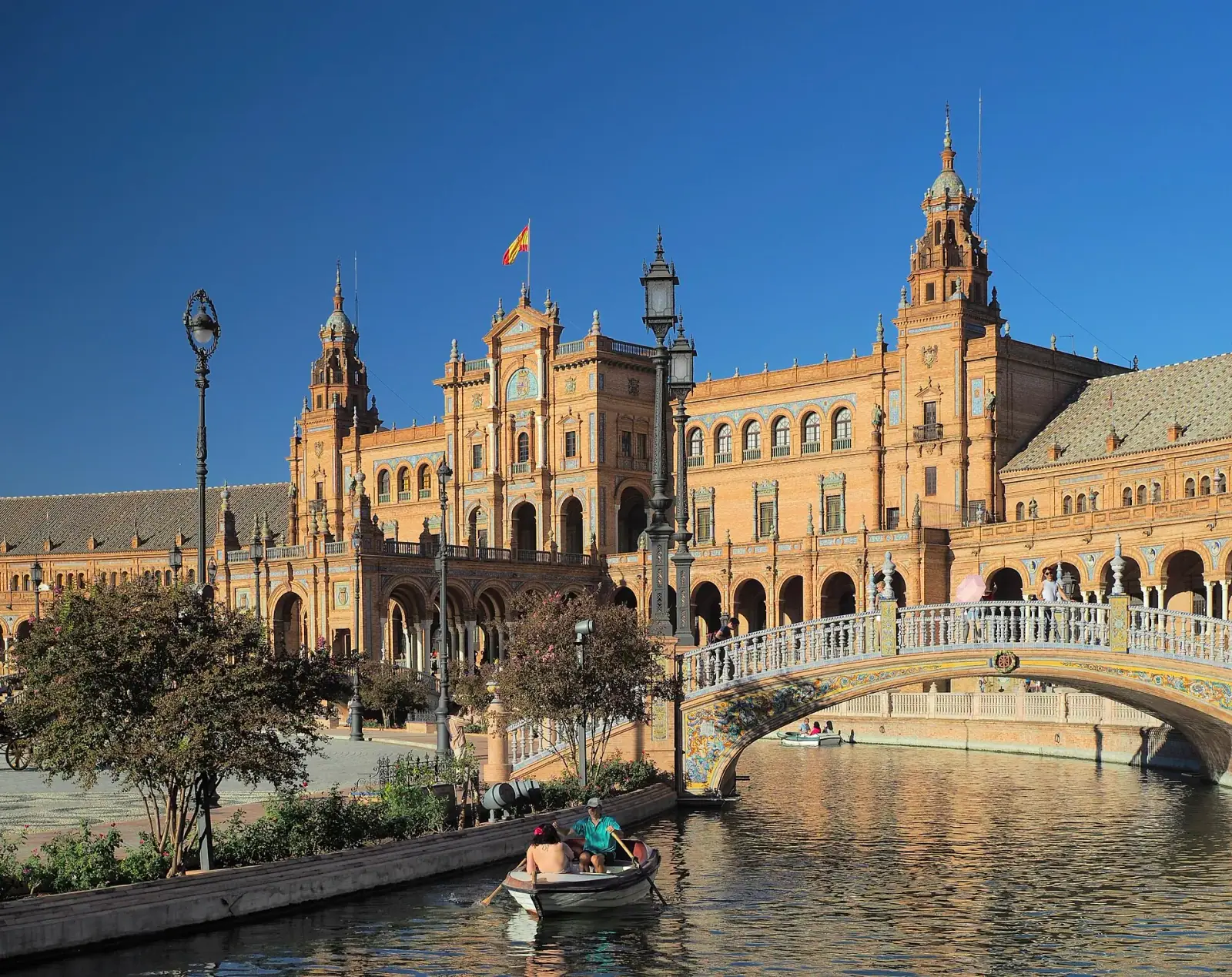
Seville's strangest fact is that it became rich as a seaport. From 1503 it held the royal monopoly on trade with the Spanish Americas, by way of the Guadalquivir, and the Archive of the Indies still stands in the middle of town as a record of it. Then the river silted up and the trade drifted to Cádiz. What remains is the only river harbour in Spain, and a city built for a world that left.

The flatness is the daily gift. Seville is made for a bicycle: Sevici has more than 260 docking stations, and you could ride from a flat in Triana, past the ceramic workshops and over the bridge, to a desk near the Alameda de Hércules without meeting a hill. The city turns inward and keeps its calendar. Fifty-four brotherhoods carry their floats through the streets in Holy Week, and about two weeks later families move into marquees at the April Fair. For those weeks, you are either in it or you are in the way.

The flatness is also the trap, because nothing cools the plain. July and August days average 36°C, with an official record of 46.6°C, and the nearest proper sea swim is Matalascañas, an Atlantic resort hemmed in by the Doñana National Park, which fills up with people from Seville all summer.

Málaga between the hills and the sea

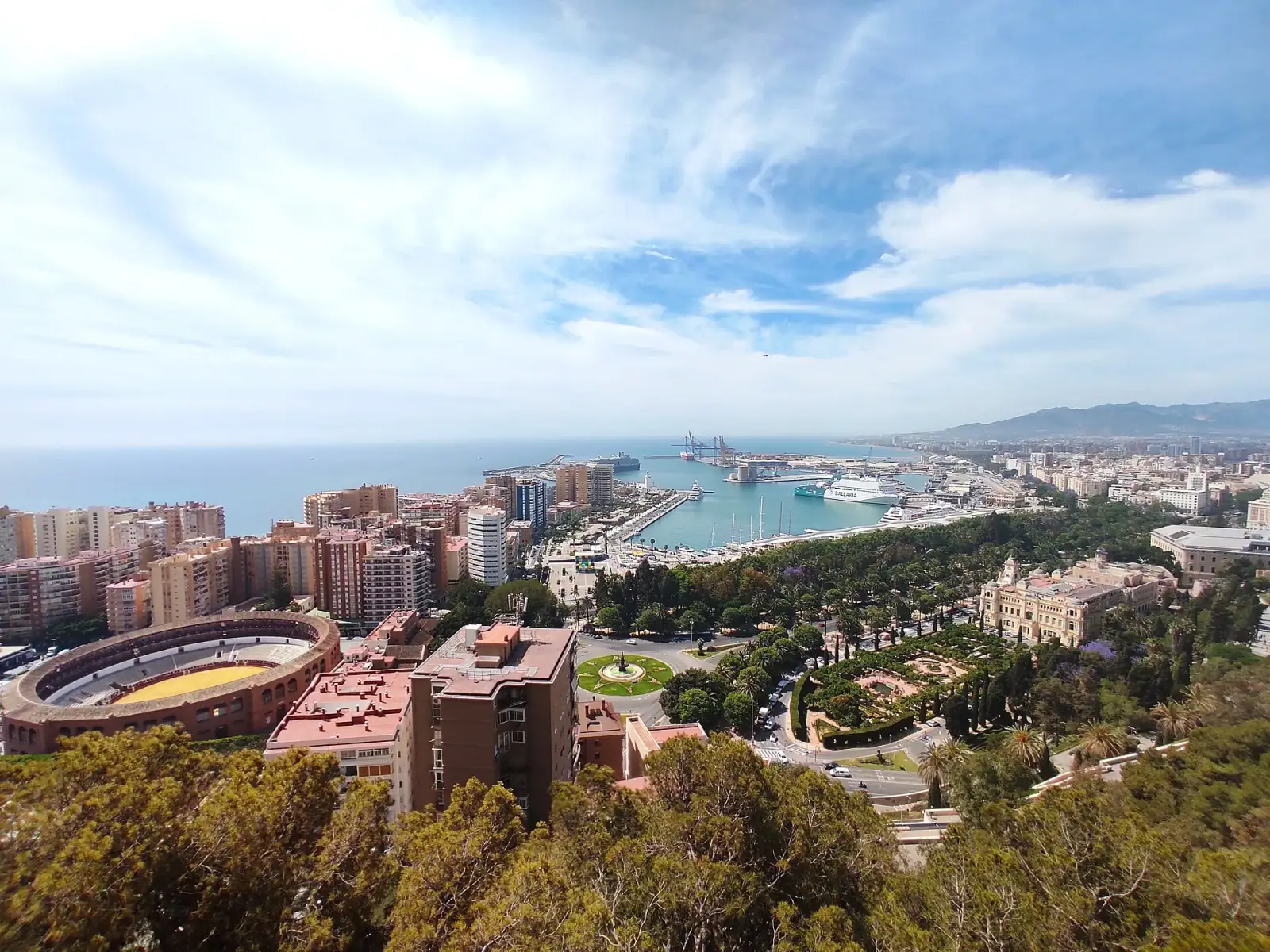
Málaga's hills do the opposite job. The Montes de Málaga block cold northerly air, which is why winter afternoons average 17°C or 18°C and you could eat outside on Christmas Day. In July the sea holds the day down to about 31°C. It is the same range that also gives Málaga its one nasty surprise: when the wind swings north in summer, it drops down those slopes, heats as it falls and arrives as the terral, hot and very dry. On those days you lose the advantage you came for.

And look closely at the nights. Seville's July low is 21°C, the same as Málaga's. The real difference between them in summer is the afternoon. Winter is closer than you might think too, with Seville at 16°C on a January day against 17°C. So if you can leave Seville for July and August, the weather argument mostly falls away.

Flights, jobs and trains

The Costa del Sol gave Málaga an airport that Seville cannot match. Málaga handled 26.8 million passengers in 2025, fourth in Spain, including seasonal flights to Newark, and a commuter train reaches it from town about every 20 minutes. Seville's airport handled about 9 million in 2024, mostly Ryanair and Vueling across Europe and short hops to Morocco. If you fly every month, this may decide things on its own.

The tech followed the access, with 29,018 people working at Málaga TechPark by the end of 2025. So did the visitors, an estimated 6 million a year, and you will feel them on Calle Larios and in your search for a flat.

Rail is the other side of living behind a mountain range. A landslide on 4 February 2026 shut the high-speed branch into Málaga until 27 April, while Seville's own line was shut after the Adamuz crash, which killed 46 people in January, and reopened in February. High-speed services to Madrid from both cities were suspended again after a second crash, at Urda, on 28 October. Six Avant trains a day normally run between the two cities via Antequera-Santa Ana, so either is an easy weekend from the other.

Rent

Locals pay almost the same for a one-bedroom on a new lease: about $550 in Seville and about $570 in Málaga. The gap appears when you rent as a foreigner, central and furnished. We estimate about $2,400 a month in Seville against about $2,600 in Málaga, and that difference is what the coast charges an outsider. Spain's nomad visa is the same in both, as our Spain page explains.

For a whole year in one place, take Málaga. Take Seville if you are willing to leave every summer, because for ten months it is the better city to live in. Just do not sign on the strength of a visit in April, when it is giving you orange blossom and processions. Go back and look at it in the first week of August.

Seville vs Málaga: side by side

All 13 categories we rate, each out of 10. Green is strong, amber is middling, red is weak.

SevilleMálaga
6 Climate 8
5 Cost of living 5
7 WiFi 7
8 Nightlife 7
5 Nature 7
7 Safety 7
8 Food 7
6 Community 7
5 English 6
7 Visa 7
9 Culture 7
7 Cleanliness 7
7 Air quality 8

Seville and Málaga at a glance

157 kmapart in a straight line
Same timein January
$200a month less in Seville
Population, urban areaSeville1,212,000Málaga550,000
ElevationSeville18 mMálaga22 m
Time zoneUTC+1 in January, UTC+2 in Julyin both
Nearest airportSevilleSeville Airport (SVQ), 9 kmMálagaMálaga-Costa del Sol Airport (AGP), 9 km
Main languageSpanishin both
CurrencyEuro (€, EUR)in both
PlugsType C/F, 230V / 50Hzin both
Tap waterSafe to drinkin both
Emergency number112in both
TippingRound up or 5-10%in both
Ride-hailingUber, Cabify, Boltin both
In the Schengen areaYesin both

Population is the Natural Earth figure for the urban area around each city, elevation from the Copernicus height model, airports from OurAirports.

Where they differ most

The three biggest gaps between the two, in the words of each city guide.

Climate

Seville

Seville has a hot Mediterranean climate with scorching summers regularly exceeding 40 C (104 F) in July and August, making outdoor work or activity brutal. Spring (March to May) and autumn (October to November) are ideal with temperatures between 15-28 C.

Málaga

Málaga enjoys one of the warmest climates on mainland Europe, with around 300 sunny days per year and a true Mediterranean pattern. Summers are hot and dry at 29-32°C; winters are mild and mostly sunny at 15-20°C with occasional rain.

Nature

Seville

Seville is an urban city with limited wild nature nearby. The Guadalquivir River runs through it and has pleasant cycling and walking paths along its banks. Parque de Maria Luisa is the main large park, well suited for morning runs.

Málaga

The Montes de Málaga natural park sits just north of the city and offers accessible hiking trails through pine and oak forest. The Mediterranean coast provides beaches within a short bus ride, with cleaner and quieter stretches east toward El Palo and Pedregalejo.

Culture

Seville

Seville is the heartland of Andalusian culture: flamenco was born here, the Semana Santa processions draw global attention, and the spring Feria de Abril is one of Europe's great street parties. The city has a strong identity around food, family, and late-night socializing.

Málaga

Málaga punches above its size culturally. It is the birthplace of Picasso and home to the Picasso Museum, the Carmen Thyssen Museum, and the Centre Pompidou Málaga. Semana Santa processions in spring are among the most atmospheric in Andalusia.

From the score notes in the Seville and Málaga guides, where each one is explained in full.

Month by month: the weather

Each bar runs from the average daily low to the average daily high. Rain is below.

SevilleMálagaScale runs from 6C to 36C, rain up to 88 mm
See the numbers
SevilleMálaga
Jan16C / 6C, 56 mm17C / 8C, 62 mm
Feb18C / 7C, 46 mm18C / 9C, 59 mm
Mar22C / 10C, 47 mm20C / 10C, 66 mm
Apr24C / 12C, 51 mm22C / 12C, 41 mm
May28C / 15C, 33 mm25C / 15C, 23 mm
Jun33C / 19C, 6 mm29C / 19C, 4 mm
Jul36C / 21C, 1 mm31C / 21C, 0 mm
Aug36C / 21C, 3 mm31C / 22C, 3 mm
Sep32C / 18C, 32 mm28C / 19C, 25 mm
Oct26C / 15C, 74 mm24C / 16C, 61 mm
Nov20C / 10C, 72 mm20C / 12C, 79 mm
Dec17C / 8C, 78 mm18C / 9C, 88 mm

Seville: weather-station averages for 1991-2020. Málaga: weather-station averages for 1991-2020.

What a month costs

Seville$2,400
Málaga$2,600

What residents pay

SevilleMálaga
$547 One-bedroom rent $569
$280 Groceries $280
$148 Eating out $148
$143 Utilities $143
$74 Local transport $74
$38 Home internet $38
$40 Phone $40

Our own estimate for a comfortable month for one remote worker, the same figure the city guides use. The lower lines are local prices: rent from the official statistics office named on each city guide, the rest from World Bank price levels.

Entry rules for common passports

Tourist entry on arrival. Every passport is in the visa finder, and remote-work visas are on the nomad visa page.

United States
Visa-free, 90 daysin both
United Kingdom
Visa-free, 90 daysin both
Germany
Visa-freein both
Canada
Visa-free, 90 daysin both
Australia
Visa-free, 90 daysin both
India
Visa requiredin both

Where you would live and work

The areas people choose in each city, and some of the places they work from.

Seville

Neighbourhoods

  • Santa CruzSeville's magical Jewish quarter maze
  • TrianaFlamenco soul across the river
  • Alameda de HérculesSeville's nightlife and alternative scene
  • El ArenalBullring quarter with tapas culture
  • NerviónModern Seville with shopping and stadium

Places to work

workINcompanyArcadia CoworkingSierpes 48Just Work Coworking SevillaLATE Specialty Coffee
More on the Seville guide →
Málaga

Neighbourhoods

  • Centro HistóricoMalaga's renaissance cultural core
  • Soho/CACMalaga's street art creative district
  • La MalaguetaMalaga's urban beach quarter
  • PedregalejoMalaga's local fishing village beach
  • El PaloMalaga's working-class beach community

Places to work

TLR CoworkingInnovation Campus Málaga PalaceInnovation Campus Málaga TerraceLa Innova NoriaSanta Coffee Soho
More on the Málaga guide →

Services in a language you speak

Providers in our directory who work in a language other than the local one, from official registers, consular lists and the providers’ own websites.

Where each city wins

Seville is stronger on

CultureNightlifeFood
Seville guide →

Málaga is stronger on

ClimateNatureCommunityEnglishAir Quality
Málaga guide →

Add a third city in the comparison tool →

Frequently asked questions

Is Seville or Málaga cheaper for digital nomads?

Seville is the cheaper base, around $2,400 a month versus $2,600 in Málaga, a difference of about $200.

Which has better WiFi, Seville or Málaga?

Both score 7/10 for WiFi, so connectivity is comparable.

Which is safer, Seville or Málaga?

Both rate 7/10 on safety.

Seville or Málaga: which is better overall for remote work?

Málaga takes the overall Nomad Score (8/10 versus 7.4/10), though the right pick depends on what you value most.




