Cost of Living in Tarifa
Where this figure comes from. No cost survey covers Tarifa, so the $1,500 a month above is our own estimate rather than a measurement. On 416 of our 999 city guides the figure is built from a published Numbeo basket, a one-bedroom rent in the centre plus one person's monthly costs without rent, converted to USD; this city is not one of them. How we source everything.
Tarifa sits at the affordable end of Spain's coastal towns, though summer demand pushes short-term rents sharply upward. If you secure a long-term lease in the old town or along Batalla del Salado, you will pay roughly $690-1,040/month for a studio or compact one-bedroom. Rooms in shared flats run $345-575/month. Avoid arriving without a lease in summer: Airbnb prices for a one-bedroom spike to $2,300-3,450/month in July and August.
A realistic monthly budget breakdown for a solo nomad:
- Rent (long-term studio, old town): $805-1,040
- Groceries (Mercadona or local market): $175-255
- Eating out (lunch menu del dia, 2-3 times/week): $92-140
- Coworking hot-desk (Tarifa Garage or TAF): $175-230
- Local buses and occasional taxi: $35-58
- Utilities and home internet: $92-115
- Coffee, leisure, extras: $92-175
Total monthly range: roughly $1,460-2,000/month, assuming a long-term rental. The town is meaningfully cheaper than Malaga or Sevilla, but not budget-level by Andalusian standards.
Where to Work
Tarifa has two dedicated coworking spaces that are open year-round. Tarifa Garage is a 230-square-meter open-plan space in an industrial building, built around natural light and a community of freelancers and creatives. It is open 365 days a year and rents hot-desks starting around $175/month. TAF CoWorking, located in Polígono Industrial La Vega, offers fixed and flexible desks, private offices, a meeting room, kitchen, and terrace; it suits those needing a quieter, more office-like setup.
For cafe work, Cafe Azul in the old town is the most reliable choice: decent WiFi, good coffee, and a layout that tolerates a laptop for a couple of hours without pressure. Most other cafes and restaurants in Tarifa are set up for dining rather than working and will not welcome you camping with a laptop during busy periods.
WiFi is generally solid in the coworking spaces and acceptable in the cafe. Residential broadband is reliable; a fiber plan runs around $35-46/month. In summer the coworking spaces are shared with more people, but availability has not been a reported problem. Video calls and large uploads are best handled at the dedicated spaces, not cafes.
Getting Around
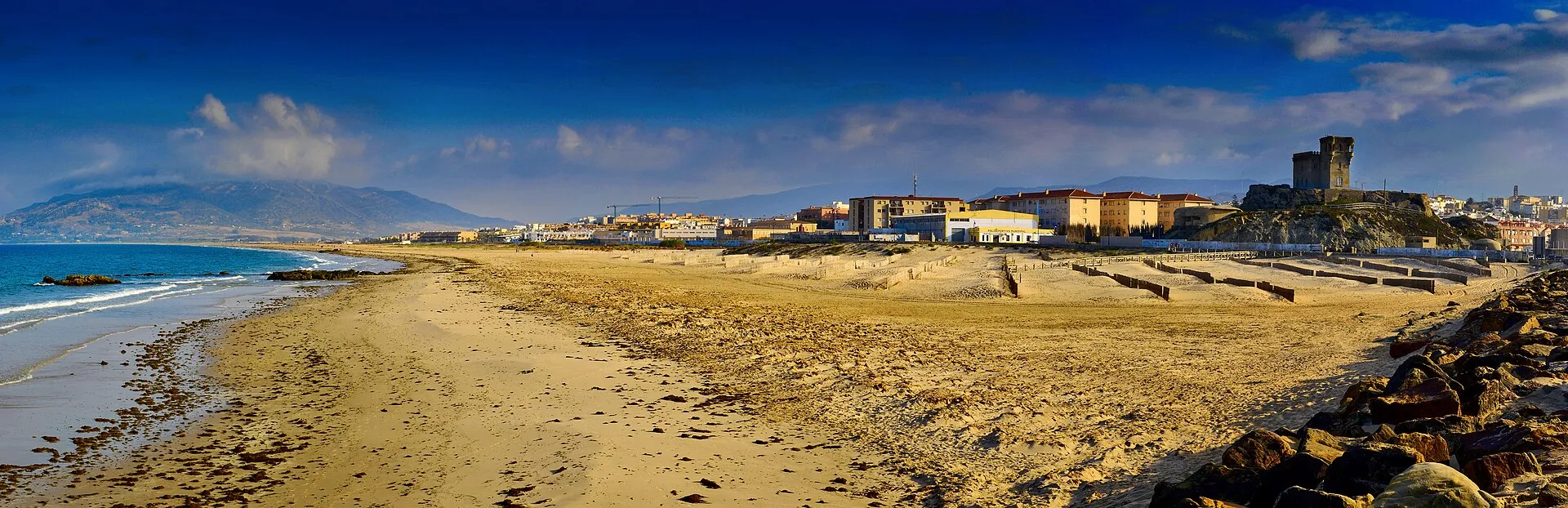
Tarifa's old town is compact and completely walkable. The main beaches, Playa Chica and Playa de los Lances, are reachable on foot or by a short bike ride. For Valdevaqueros beach (4 km north) or Bolonia (20 km north), you either need a car or take the local bus, which runs roughly every 30 minutes at $1 per ride.
The nearest major airport is Malaga (AGP), about 130 km away. Direct buses run from Malaga bus station to Tarifa in around 2 hours; the journey involves a change in Algeciras. Gibraltar Airport (GIB) is closer at about 45 minutes by car, and buses via La Linea de la Concepcion make the connection for around $6-9. There is no train connection to Tarifa. A car is optional for town life but genuinely useful for reaching remote beaches and the hinterland.
Ferries to Tangier, Morocco depart from Tarifa's port year-round. The crossing takes about 35-45 minutes and is an easy day trip or a convenient route if you need to reset a visa stay.
Sorting transport? Book an airport transfer, or compare car rental on Auto Europe and QEEQ.
Visas and Staying Long-Term
EU and EEA passport holders can live and work in Spain indefinitely. Most other common passports, including US, UK, Canadian, and Australian, allow visa-free stays of up to 90 days within any 180-day period under the Schengen rules. There is no border stamp when entering Schengen from Morocco, so many nomads use the ferry to Tangier for a short reset, though this approach has legal grey areas you should understand before relying on it.
Spain has a formal Digital Nomad Visa (introduced under the 2023 Startup Act) available to non-EU nationals. It requires proof of remote work for a company outside Spain or freelance income from non-Spanish clients, a minimum monthly income of $3,280 (200% of the Spanish minimum wage), health insurance valid in Spain, a clean criminal record, and educational or professional credentials. If approved from abroad, you receive a 1-year visa, upgradeable to a 3-year residence permit once in Spain. The permit is renewable every 2 years and allows you to bring dependents.
Best Time to Visit
Tarifa is windswept by design. Two prevailing winds, the westerly Poniente and the easterly Levante, blow for more than 300 days a year. That is great news if you kitesurf or windsurf, and less ideal if you plan to work on a terrace.
April, May, and June offer the best combination for remote workers: warm temperatures (18-24 C), consistent wind for outdoor sports, lower crowds, and most businesses open. September and October are nearly as good: still warm, the summer crush has gone, and the wind remains reliable.
July and August are peak season. The town fills with tourists and kite school clients, accommodation prices double or triple, and the constant summer Levante can feel relentless after a week. Working peacefully in a coworking space is still possible, but the social atmosphere dominates everything.
November through February is quiet, cheaper, and milder than northern Europe (10-16 C), but many restaurants and shops reduce hours or close. The nomad community thins out significantly. If you prize solitude and low cost, winter can work; if you want energy and community, it does not.
Pros and Cons
- Genuinely affordable compared to most Spanish coastal towns
- Strong nomad and expat community, especially during shoulder season
- Spectacular natural setting: Atlantic and Mediterranean meet here, with views to Morocco
- Excellent fresh seafood, particularly almadraba tuna caught locally
- Easy day trips to Morocco, Gibraltar, Jerez, and Cadiz
- Outdoor sports culture that suits active nomads
- Very small town with limited amenities; no cinema, limited healthcare specialists
- The wind is constant and can grate on people who do not love it
- Seasonal economy: many venues close or cut hours in winter
- No direct train; getting here and away takes effort
- Summer crowds and prices change the character of the town significantly
- Limited coworking options: only two dedicated spaces, not always open late
Who Tarifa Is Best For
Tarifa suits you if you want a small, atmospheric Andalusian town with a ready-made community of like-minded people, strong natural beauty, and a lifestyle built around the outdoors. It works well for solo nomads, couples without children, and anyone who kitesurf, windsurf, or simply wants to live near the water. The town punches above its size for food and nightlife during the on-season.
Skip it if you need reliable access to specialists or hospitals, want a large co-working ecosystem with lots of event programming, or plan to arrive in summer without a long-term rental already arranged. Families with school-age children will find the local international schooling options very limited. And if you struggle with wind, do your research: Tarifa earns its reputation as one of the windiest places in Europe for good reason.