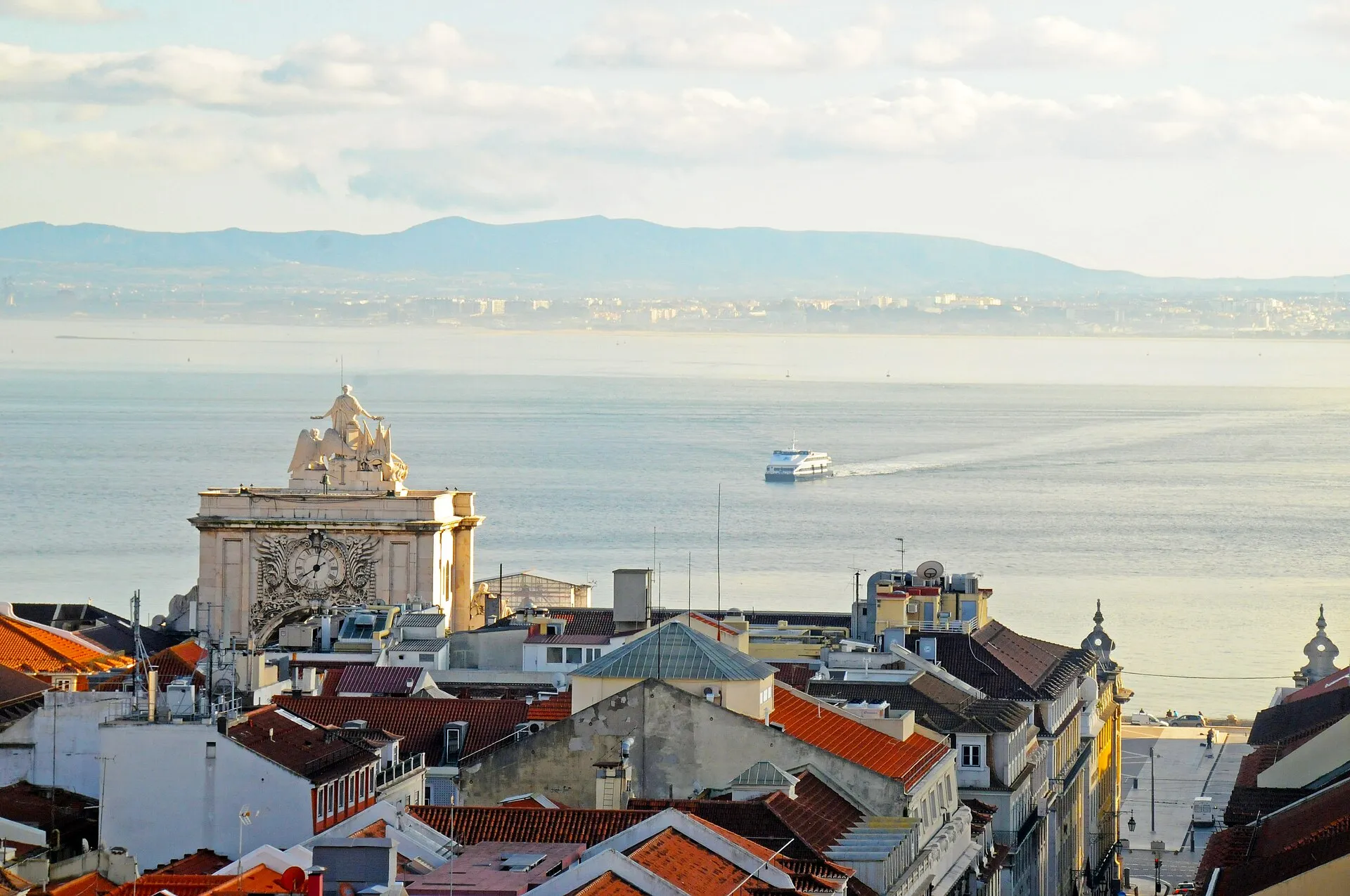
 Lisbon
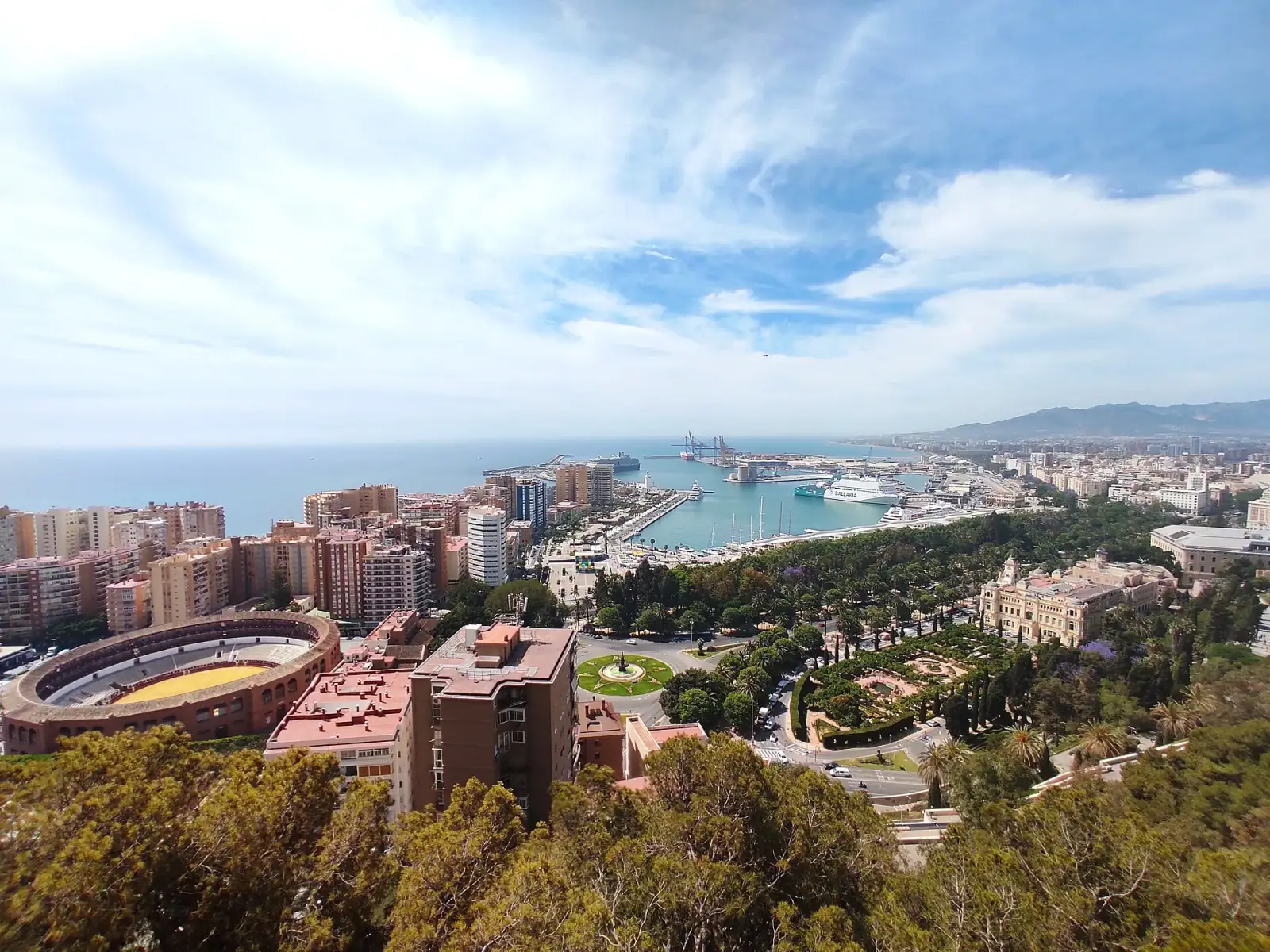
 Málaga
Which way each city faces
Lisbon looks west, over a wide river mouth, towards open ocean. Málaga looks south over the Alboran Sea, about 100 kilometres inside the Strait of Gibraltar, with its back pressed against a wall of mountains. They are only two degrees of latitude apart, so you might expect similar lives. Most of the differences between them can be read off the map.
Start with the water. Atlantic water off Lisbon runs from about 15°C in winter to 20°C at the end of summer, cool all year, and it comes with swell. Málaga's sea climbs to about 23°C in August, warm enough to stay in without thinking about it. There is a catch, and it comes from the land. On summer days when the terral blows, a hot, dry wind sliding down off the mountains, it pushes the warm surface water offshore, and the sea can turn surprisingly cold while the air bakes.
What the mountains do
The Montes de Málaga rise to 1,031 metres right behind the city and block the cold northerly winds, and that one wall does most of the work in Málaga's winter. January days reach about 17°C, and Lisbon's are not far off at 15°C. The sunshine totals are closer than you may expect too, at about 2,975 hours a year against 2,875. Where Lisbon really loses is the rain and how it falls: November alone brings about 121 millimetres, driven in off the ocean with nothing in the way, and Málaga's wettest month has about 88. If grey weeks get to you, that gap will matter more than any temperature in the brochure.
Longitude plays a smaller trick. Málaga is only about five degrees east of Lisbon, some 20 minutes of sun, yet its clocks are an hour ahead. By the clock, your evenings on the beach at Pedregalejo last about 40 minutes longer. Lisbon, meanwhile, shares London's time, and that hour is useful if your clients are in Britain or America.
How you get out of town
Inside their city limits the two are nearly the same size, about 660,000 and 600,000 people. The metropolitan areas are not: about 3.4 million around Lisbon and 1.1 million around Málaga. Lisbon spreads across a river, so reaching the sand means a plan. You could take the Cascais line 25 kilometres along the north shore, or a train over the lower deck of the 25 de Abril Bridge, with buses on towards the 30-kilometre beach at Caparica. Within the city, the hills shape everything, and the Glória funicular remains closed after its fatal derailment.
Málaga is laid out in a line. The C1 commuter train leaves from Centro-Alameda every 20 minutes, reaches the airport in about 12, then keeps going along the coast through Torremolinos and Benalmádena to Fuengirola. The airport is only 8 kilometres out, and it has more than 100 European cities on its boards. North is the awkward direction: the mountains close that side, and the high-speed line to Madrid has been suspended since the crash at Urda on 28 October.
Lisbon's airport is even closer to the centre, with the metro running downtown in about 20 minutes, but it is one of the most congested in Europe, with its replacement across the Tagus not expected until around 2034. It handled 36 million passengers in 2025, and Málaga 27 million.
What it comes to
Málaga is also the cheaper of the two by a distance. We put a month at about $2,600 there, against about $3,500 in Lisbon. A local tenant pays about $570 for a one-bedroom on a new lease in Málaga, and about $890 in Lisbon. The Spanish nomad visa asks for about $3,280 a month in income, the Portuguese D8 about $4,240.
What Lisbon gives you for all that is mass: a real capital, a far larger community of people doing what you do, and an ocean with surf. Málaga's coworking gathers in Soho and around the old town, and you may know most of it by spring. We would pick Málaga for a first winter, and we think most people would be happier there on less money. If Andalusia appeals but the coast does not, read our comparison of Seville and Málaga. Lisbon is for the person who has already tried a small city and found it small.
 United States
 United Kingdom
 Germany
 Canada
 Australia
 India