Cost of Living in Hanoi
Real market data
Source: Numbeo · August 2026
$690/moSolo nomad1-bed centre + living costs
$910/moCoupleshared 1-bed + costs
$560/moLean / localcheaper area + costs
- 1-bed rent, city centre$420₫11,000,900
- 1-bed rent, outside centre$290₫7,515,385
- Monthly costs excl. rent (1 person)$270₫7,158,827
- Meal, inexpensive restaurant$2₫50,000
- Monthly transit pass$9₫228,696
- Buy price, per m² (centre)$4,780₫124,998,839
Prices are from Numbeo (August 2026), converted to USD at $1 = ₫26167.86 (01 Aug 2026). The monthly living-costs figure is our transparent one-person basket, groceries, a few meals out, utilities, phone, internet, transport and essentials, priced from those figures. Solo adds central rent; couple and lean are estimates from the same numbers. The guide below quotes its own monthly range, which is a different measurement rather than a competing one: this table prices a defined basket at the figures above, while that range is a judgement about how somebody actually lives here.
Hanoi is one of Southeast Asia's most affordable capitals for remote workers. A comfortable life here costs roughly $840-1,340 per month, depending on how centrally you live and how often you eat out.
- Rent, central districts (Hoan Kiem, Ba Dinh, Tay Ho): $380-690/month for a furnished one-bedroom.
- Rent, outer areas (Cau Giay, Thanh Xuan): $230-380/month for comparable space.
- Groceries: $76-155/month if you shop at local wet markets and supermarkets.
- Eating out: A bowl of pho or bun cha at a local spot costs $1.50-2.50. Mid-range restaurant meals run $5.50-11. Budget $96-190/month for a mix.
- Coworking hot-desk: $57-115/month at most shared spaces; day passes start around $4-5.50.
- Local transport (Grab rides, occasional bus): $19-57/month.
- Total realistic range: $840-1,340/month for a comfortable nomad lifestyle. Budget travelers can survive on under $700 with a cheaper room and local food.
Where to Work
Hanoi has a maturing coworking scene and a deep-rooted cafe culture that suits laptop workers well. Fixed broadband at home or in dedicated coworking spaces is fast. Cafe WiFi is more variable: slow at busy spots and noticeably better at the good work-friendly ones.
Coworking Spaces
Toong has five locations across the city and is the most popular chain among nomads. Its French-villa aesthetic, free tea and coffee, and monthly rates starting around $73 make it the default choice. COGO Coworking in Dong Da is one of the few spaces open 24/7, with day passes at around $4 and monthly memberships from $76. UPGen has seven locations and a more corporate feel, with 24/7 access and full amenities.
Cafe Work Culture
Vietnamese coffee culture actively accommodates laptop workers. Oriberry Coffee on Xuan Dieu in Tay Ho is a long-standing favorite among expats with reliable WiFi and spacious seating. Spacebar Coworking Cafe in Tay Ho blends a cafe menu with a proper coworking setup, popular with creatives and remote workers. Most mid-range cafes will not pressure you to keep ordering, though during lunch rush WiFi can slow noticeably on shared connections.
One honest note: power outlets in cafes can be scarce. Arrive early and bring your own adapter.
Getting Around
Hanoi is a city built for motorbikes, and that shapes everything about daily movement. Traffic in the Old Quarter and central districts is dense and chaotic, particularly during morning and evening rush hours.
Daily Transport
Grab is the essential app. It covers both GrabCar and GrabBike (motorbike taxi), with transparent pricing in English. For short hops, a GrabBike costs $0.50-1.50. A GrabCar across the city rarely exceeds $5.50. Traditional taxis from Mai Linh or Vinasun are reliable alternatives; avoid unmarked cabs.
Hanoi has one metro line in operation (Cat Linh to Ha Dong), with more under construction. It is useful for commutes in the west of the city but does not yet serve the Old Quarter or Tay Ho. Public buses exist and are very cheap but can be confusing without Vietnamese.
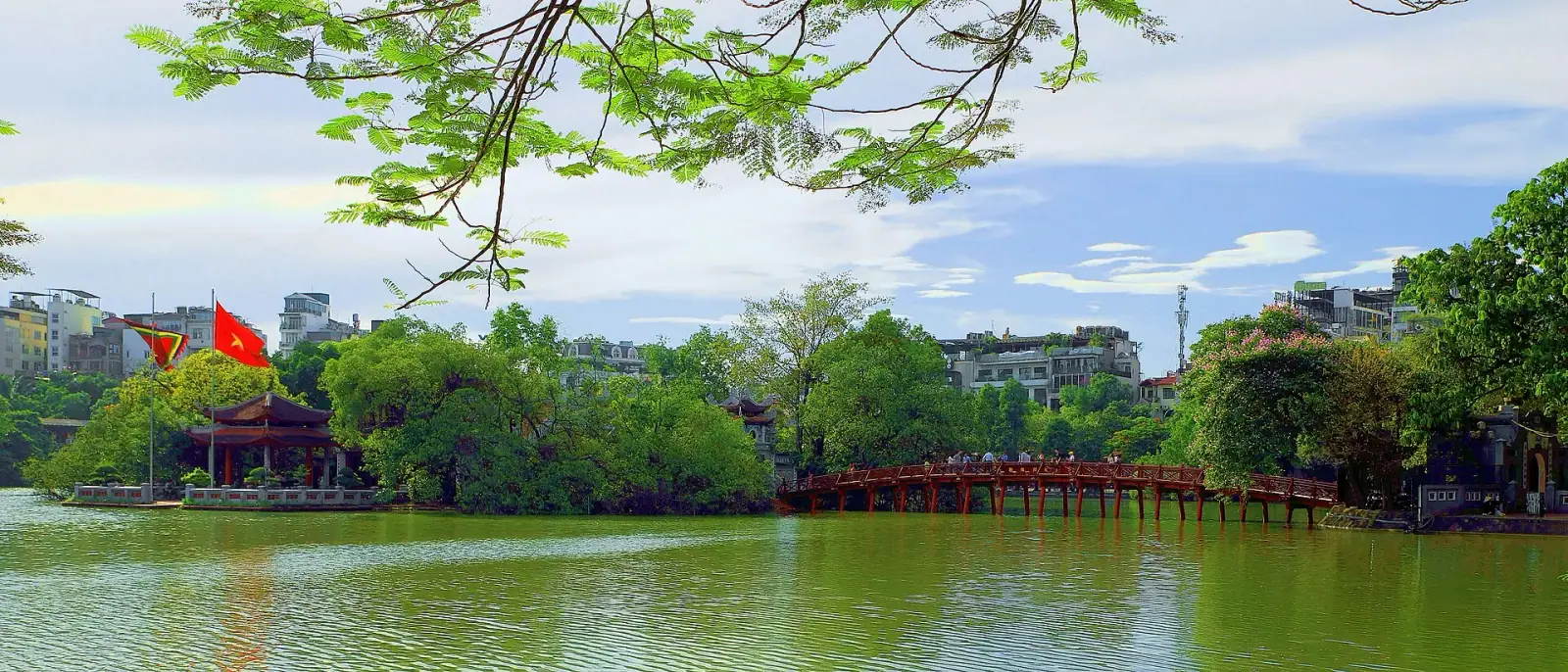
Walkability is high in compact areas like the Old Quarter and around Hoan Kiem Lake, but the city's size and traffic make walking impractical for longer journeys.
Airport
Noi Bai International Airport (HAN) is 30-45 km north of the city center. Expect a 35-60 minute ride depending on traffic. Grab from the airport to the Old Quarter costs roughly $7.50-13. The Airport Bus No. 86 runs directly to Hoan Kiem Lake for about $1.50-2.50 but takes longer. Pre-booking a Grab or a hotel transfer is the easiest option on arrival.
Sorting transport? Book an airport transfer, or compare car rental on Auto Europe and QEEQ.
Visas and Staying Long-Term
Vietnam has significantly loosened its entry rules in recent years. Citizens of about 25 countries, including Germany, France, Italy, Spain, the UK, Japan, and South Korea, currently receive 45 days visa-free on arrival.
For everyone else, the e-visa is the standard route. It is valid for up to 90 days with single or multiple entry, costs $25 (single) or $50 (multiple), and takes 3-5 working days to process online. It is accepted at all major airports and dozens of land and sea crossings.
Vietnam does not offer a dedicated digital nomad visa. After your e-visa or visa-free period expires, many nomads do a visa run to a neighboring country (Laos, Cambodia, Thailand) and re-enter. This is a common practice but comes with some uncertainty; official policy can shift. In mid-2025, Vietnam introduced a 5-year Talent Visa aimed at skilled professionals in tech and creative fields, though the application criteria are demanding.
Best Time to Visit
Hanoi has four distinct seasons, none of them perfect, which makes timing matter more than it does in most Southeast Asian cities.
October to December is the sweet spot for remote work. Temperatures drop to a pleasant 20-25°C, humidity falls, skies clear, and the city takes on a golden quality. Air quality also tends to be better in the transition from wet season.
February to April offers mild spring conditions with temperatures of 15-25°C, though a persistent drizzle and mist called crachin can last for days in February and early March. Late March and April are genuinely lovely.
May to September is hot (up to 38°C), very humid, and subject to heavy afternoon downpours. You can still work productively from air-conditioned spaces, but outdoor exploration is sweaty and the rain is unpredictable. On the upside, this is also when air quality tends to improve compared to winter months.
December to February brings real cold, with lows of 10-15°C and bone-damp air. Hanoi in January feels nothing like the tropics. Pack layers and expect grey skies.
For combining comfort and productivity, aim for October through November or March through April.
Pros and Cons
- Very low cost of living with excellent value on food, rent, and coworking
- Outstanding food scene with world-class street food at minimal cost
- Rich culture and history with easy day trips to Ha Long Bay, Ninh Binh, and Sapa
- Strong expat and nomad community in Tay Ho with regular meetups and events
- Fast and affordable internet at coworking spaces and many cafes
- 90-day e-visa covers most stays without bureaucratic headaches
- Air quality is a genuine concern: Hanoi repeatedly ranks among the most polluted cities globally, with PM2.5 levels often in the unhealthy range during winter months
- Traffic is chaotic and crossing busy roads as a pedestrian requires nerve
- No dedicated nomad visa and visa runs are needed for longer stays
- Weather is unpredictable across all four seasons, with cold winters and oppressive summers
- Petty theft, particularly phone and bag snatching from motorbikes, is a consistent issue in tourist areas
- English proficiency varies widely outside tourist zones, which can complicate daily errands
Who Hanoi Is Best For
Hanoi rewards nomads who want genuine immersion in a non-tourist-facing city at very low cost. If you thrive on cultural depth, complex food, and the energy of a 7-million-person working capital, Hanoi will keep you engaged for months.
It is a strong fit for budget-conscious nomads who want to stretch their runway, foodies and culture seekers drawn to Vietnamese history and cuisine, and experienced Asia travelers comfortable navigating chaotic traffic and administrative ambiguity around visas.
It is less ideal for people with respiratory sensitivities given the persistent air quality problems, anyone who needs a simple long-term visa path (Chiang Mai or Bali are easier), or nomads who prioritize a polished, English-friendly infrastructure. Hanoi demands a bit more adaptability than Ho Chi Minh City or more tourist-oriented Southeast Asian hubs, but the payoff in authenticity and value is real.