
 Hanoi
Take a US passport. It cannot enter Vietnam visa-free, so it needs an e-visa: $50 for multiple entries, valid for up to 90 days, and open to every nationality since August 2023. Many Europeans get 45 days without one, and the same e-visa is there if they want longer. It is one national rule, and it does not care which of these two cities you land in.
That is exactly why it helps you. Ninety days is about one season, and you are free to spend it at either end of a country more than 1,000 kilometres long. Most comparisons of these two cities argue about personality, north against south. We would start with which 90 days you have.
| Your 90 days start | Hanoi | Ho Chi Minh City |
|---|---|---|
| January | Grey and damp, with poor air | Dry and at its most pleasant, until the haze of March |
| April | Lovely at first, then fierce heat | Hottest stretch, then the rains begin |
| July | Very hot, very wet, storm season | Wet afternoons, mornings mostly dry |
| October | The best season it has | Rain easing, dry by December |
January to March
This is where Hanoi loses most people. January's highs are around 20°C and its lows around 14°C, which feels colder in the damp than it sounds, and the sun nearly vanishes: downtown gets about 45 hours of it in all of February, about an hour and a half a day. A persistent mist called crachin hangs around for days, and winter is when the city's fine particle pollution is at its worst. Saigon, meanwhile, is having its best moment, at about 27 to 34°C and dry. Work around Tet, which falls on 6 February in 2027 and shuts much of the country for a week or more.
April to September
Neither city shines here, but Saigon's trouble is more manageable. Hanoi in June averages highs near 35°C and more than 260 millimetres of rain, with storm season to follow. In Ho Chi Minh City the rain comes in a hard burst of 30 to 60 minutes in the afternoon, and you plan around it. Mornings are generally dry, rents ease a little, and the worst you will usually face is a flooded street that disrupts your Grab for an hour or two.
October to December
Now the north has its turn, and it is the reason people fall in love with the place. Hanoi drops to around 20 to 25°C with clear skies and golden afternoons around Hoan Kiem and West Lake, and you could eat bun cha on a plastic stool at lunch without breaking a sweat. It also costs slightly less to do it: we estimate about $1,500 a month in the capital, against $1,700 in the south, a difference too small to change your dates.
What stays true all year
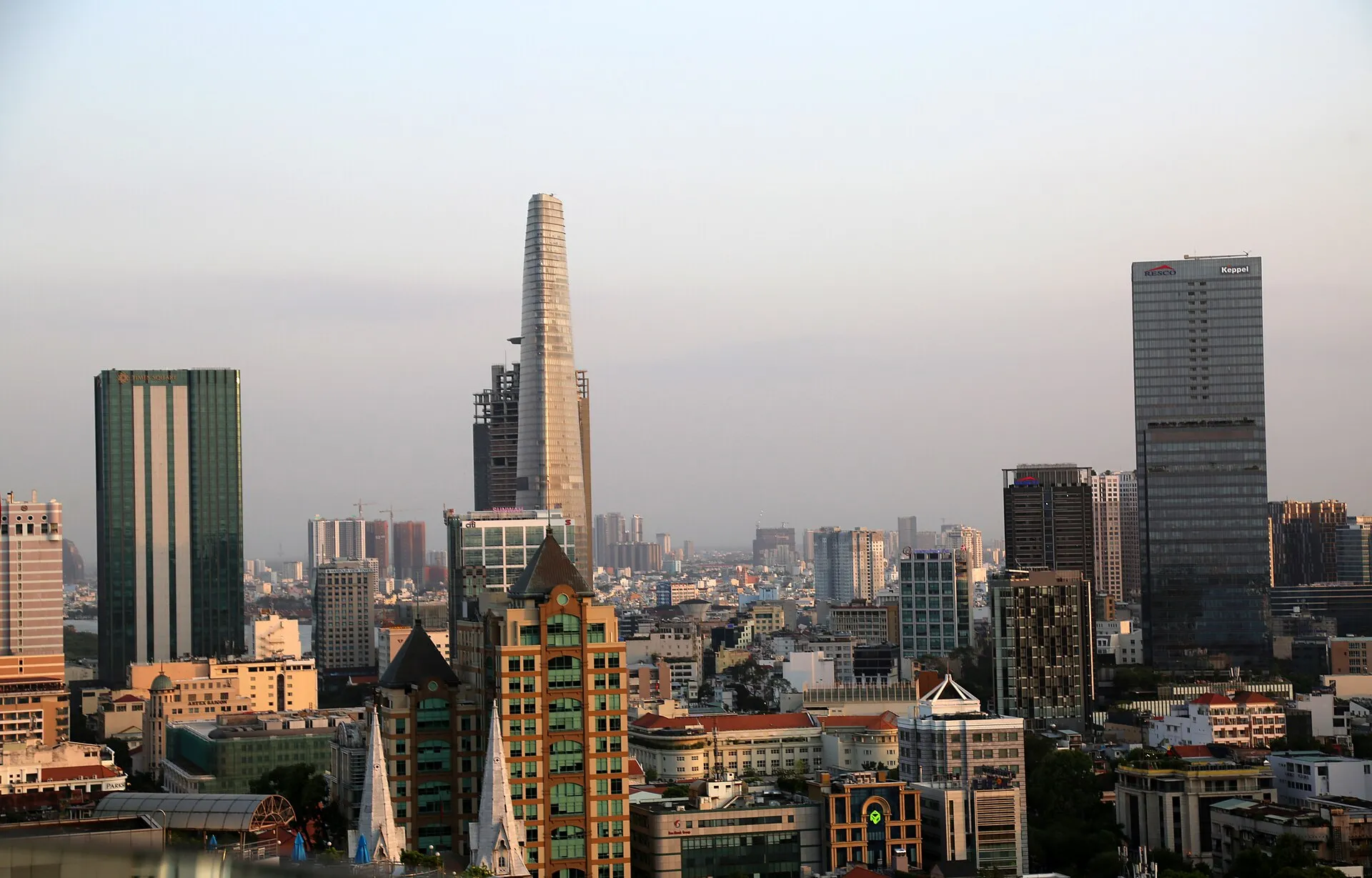
A few things do not move with the calendar. Ho Chi Minh City is the larger world by far, and larger still since 2025, when it absorbed Binh Duong and Ba Ria-Vung Tau and became a city of about 14 million that now runs all the way to the coast at Vung Tau. Its first metro line opened in December 2024, 14 stations from Ben Thanh to Suoi Tien. If you want coworking spaces, founders and a deep bench of foreign residents around Thao Dien, it wins every month of the year.
Hanoi is older and more demanding, and it is changing its streets. Two metro lines are running, though neither reaches the Old Quarter, and the city approved a low-emission pilot around Hoan Kiem that starts with petrol ride-hailing motorbikes. Private bikes keep going for now, but a wider zone covering Ring Road 1 is planned from 2028.
A plan for one passport
You do not have to pick. Apply for your first e-visa and land in Hanoi on 1 October, when the heat has gone. Ride out the best of the northern autumn until late December, then apply for a new e-visa, make a short trip out of the country and come back through Saigon for its dry season. Leave around the end of March, before the air and the heat turn on you. If we could give you only one city, it would be Saigon for its dependability. But one good autumn in Hanoi is the part of this trip you will talk about for years, so book that first.
 United States
 United Kingdom
 Germany
 Canada
 Australia
 India