Cost of Living in Ha Long
Where this figure comes from. No cost survey covers Ha Long, so the $700 a month above is our own estimate rather than a measurement. On 416 of our 999 city guides the figure is built from a published Numbeo basket, a one-bedroom rent in the centre plus one person's monthly costs without rent, converted to USD; this city is not one of them. How we source everything.
Ha Long is genuinely affordable, especially for a place wrapped around a UNESCO seascape. A comfortable solo budget runs roughly $600 to $1,200 a month, with mid-range comfort landing near the middle. Rents are low outside peak tourist season, local food is cheap and excellent, and everyday costs like transport and coffee barely dent a budget. The catch is that Ha Long is built for cruise tourists, not long-stay renters, so monthly apartment inventory is thinner than in Hanoi or Da Nang and you may pay a hotel or serviced-apartment premium if you cannot find a private landlord. Prices climb noticeably in summer holiday months when domestic tourism peaks.
- Studio or one-bedroom rental: roughly $250 to $500 per month, cheaper on the Hon Gai side
- Local meals (pho, rice plates, banh mi): $1.50 to $3; fresh seafood dinners $8 to $20
- Coffee or coworking-friendly cafe visit: $1.50 to $3 per drink
- Monthly mobile data SIM: around $5 to $10 for generous data
- Grab or taxi across town: $2 to $6 per trip
Where to Work in Ha Long
It helps to arrive knowing that Ha Long has never grown a real coworking culture. There are no dedicated coworking spaces of note, so your office will be a laptop-friendly cafe, a hotel lobby, or your rental. The good news is that wifi is broadly decent in mid-range and upscale hotels and in the newer chain and specialty cafes around Bai Chay, and a local SIM gives you fast, cheap mobile data as a reliable backup. The Bai Chay side has the densest cluster of comfortable air-conditioned cafes near the marina and Sun World, while Hon Gai offers quieter, more local spots. Power outlets can be hit or miss, so bring a power bank.
- Chain and specialty cafes in Bai Chay: reliable wifi, air conditioning, and space to spread out
- Mid-range and upscale hotels: often the most stable connection for video calls
- A Viettel or Mobifone SIM: essential for tethering when cafe wifi wobbles
Getting Around Ha Long
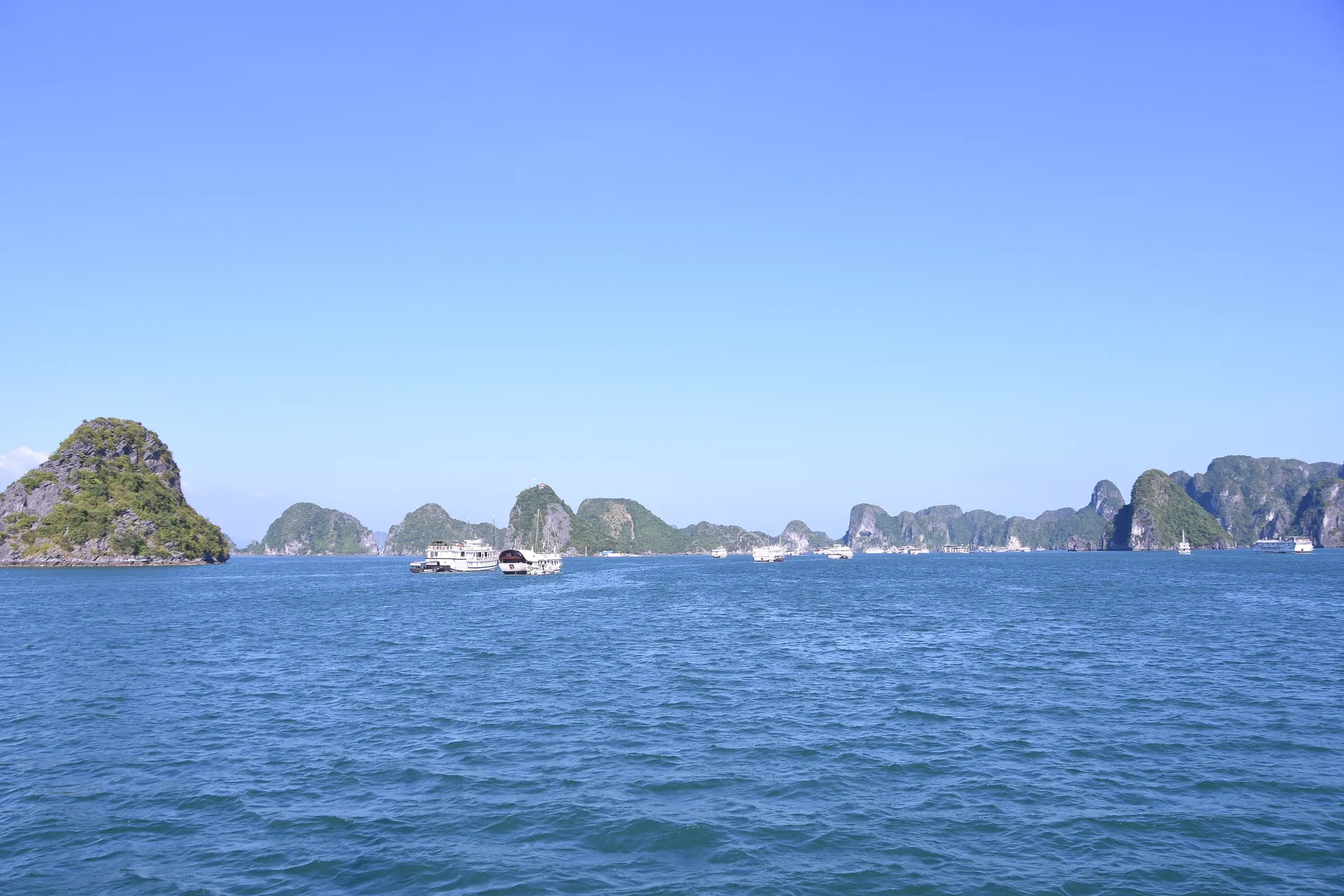
Ha Long splits into two halves joined by the graceful Bai Chay bridge over the strait. Bai Chay to the west is the tourist and hotel strip, home to the marina, Sun World, and the Queen cable car; Hon Gai to the east is the more local, working side with the central market and administrative core. Grab works reliably for cars and bikes, metered taxis are easy to hail, and cheap local buses run the main corridors. The city is spread out and not especially walkable, so plan on rides. Getting in and out is straightforward: an expressway and frequent buses reach Hanoi in about 2.5 hours, and Van Don International Airport sits roughly an hour east. The real transport star, of course, is the water.
- Grab (car and motorbike) is the simplest way to move around town
- Bai Chay bridge links the tourist west and local east sides
- Buses and the expressway reach Hanoi in roughly 2.5 hours
- Van Don International Airport is about an hour away by road
- Cruises and day boats depart from Bai Chay and Tuan Chau marinas into the bay
Sorting transport? Book an airport transfer, or compare car rental on Auto Europe and QEEQ.
Visas for Ha Long
Vietnam has become markedly friendlier to travelers. The government e-visa is now valid for up to 90 days for many nationalities and can be issued for single or multiple entry, which suits a nomad wanting to base in Ha Long for a season without a border run. Several countries also enjoy short visa-exemption windows for tourism, and the rules shift periodically. Apply for the e-visa online before you travel and keep a printed copy. For stays beyond 90 days you will need to look at longer-term options or an exit and re-entry, which is worth researching from Hanoi. The 45-day visa-free list grew again in August 2025, when Belgium, the Netherlands, Czechia, Hungary and several other European states were added, so travellers on those passports can now spend a month by the bay with no e-visa at all.
- Vietnam e-visa: up to 90 days for many nationalities, single or multiple entry
- Visa exemption: shorter windows apply to some passports
- Apply on the official government portal and carry a printout on arrival
Best Time to Visit Ha Long
The shoulder seasons are the sweet spot. Spring, roughly March to May, and autumn, September to November, bring the most reliable weather for cruising the bay: mild temperatures, calmer seas, and clearer skies that make the karst towers glow. Summer from June to August is hot and humid, packed with domestic tourists, and carries genuine storm and typhoon risk that can cancel cruises at short notice. Winter, December to February, turns cool and often misty, which lends the bay a moody beauty but can grey out the classic emerald-water views and chill the air on deck. Whenever you come, build a little flexibility into cruise bookings so a passing storm does not sink your one shot at the water.
- March to May: mild, clear, ideal for cruising and kayaking
- September to November: warm, settled, fewer weather cancellations
- June to August: hot, crowded, and typhoon-prone
- December to February: cool and atmospheric but frequently misty
Pros and Cons of Ha Long
Ha Long is a place of one overwhelming asset and several honest trade-offs. The bay is world-class, genuinely one of the great seascapes on earth, and the city around it is cheap, safe, well connected to Hanoi, and stocked with superb seafood. But the city itself is a large, developed, and somewhat generic resort-and-industry town; the magic lives on the water, not in the streets. The nomad scene is thin, coworking is essentially absent, and long-stay housing takes effort to find. Air and water quality can be mixed given nearby industry and heavy tourism, and the tourist strip can feel packaged. Come for the bay and a low-cost base, not for a buzzing community. Typhoon Yagi came ashore over Ha Long and Hai Phong in September 2024 and sank or wrecked dozens of boats in the province, a reminder that a cruise booked during the storm season can be called off at a day's notice.
- Pros: astonishing bay scenery, low cost, safety, great seafood, easy Hanoi access
- Pros: improving visas and cheap, fast mobile data
- Cons: generic city center and modest, scattered nomad community
- Cons: no real coworking and limited monthly housing stock
- Cons: mixed air and water quality; summer crowds and storms
Who Ha Long Is For
Ha Long suits a specific traveler. It is a dream for the nomad who wants to wake up next to one of the planet's most spectacular seascapes, work quiet cafe hours, and spend weekends kayaking through karst channels or cruising overnight among the islands. It rewards independent, self-sufficient remote workers who do not need a ready-made community and are happy to build their own routine. Budget-minded slow travelers and couples looking for a scenic, affordable base within easy reach of Hanoi will find a lot to love. It is a poor fit for anyone craving a lively nomad hub, dedicated coworking, or nightlife: for that, Hanoi or Da Nang are the smarter home bases, with Ha Long as an unforgettable few-days detour.
- Great for: independent remote workers who want spectacular nature over social scene
- Great for: budget slow travelers and couples wanting a scenic, affordable base
- Less ideal for: those needing coworking, a big community, or nightlife