Cost of Living in Ha Giang
Where this figure comes from. No cost survey covers Ha Giang, so the $600 a month above is our own estimate rather than a measurement. On 416 of our 999 city guides the figure is built from a published Numbeo basket, a one-bedroom rent in the centre plus one person's monthly costs without rent, converted to USD; this city is not one of them. How we source everything.
Ha Giang is one of the most affordable bases in Vietnam, largely because it is a small provincial town rather than a tourist-priced hub. A budget traveller riding the loop and sleeping in homestays can get by on very little, while someone renting a simple room in town and eating out daily still spends modestly. Expect roughly $500 to $1,000 a month depending on whether you stay put or ride, how often you hire drivers, and how much motorbike fuel and homestay hopping you do. These are editorial estimates; prices shift with season and bargaining, and cash is king since card acceptance is thin outside a few hotels. Cash for the loop has to leave town with you, since ATMs thin out quickly once the road climbs into the mountains, and the homestays, fuel stops and drivers along the route are paid in dong.
- Basic guesthouse or hotel room: roughly $8 to $20 per night in town.
- Mountain homestay with dinner and breakfast: often $6 to $12 per person.
- Local meals (pho, com, noodle soups): around $1.50 to $3 each.
- Motorbike rental: roughly $8 to $12 per day, fuel extra.
- Easy-rider guide for the loop: commonly $40 to $60 per day, all-in.
Where to Work in Ha Giang
Anyone planning to work from here should know what the town is really for: Ha Giang is a place to disconnect and ride, not a productive remote-work hub. There is no dedicated coworking space, wifi in town is variable, and on the loop itself connectivity is patchy to non-existent as you climb into the mountains and gorges. A handful of cafes and better hotels in the city center have usable wifi for email and light tasks, but do not count on smooth video calls. If you must stay online, buy a Viettel SIM (the widest rural coverage) with a generous data package.
- Get a Viettel SIM with data; Viettel has the best reach in the far north.
- Work from laptop-friendly cafes in the town center, not on the loop.
- Ask hosts to run a speed test or send a screenshot before you book.
- Download offline maps, docs, and entertainment before riding out.
- Treat the loop days as offline; schedule deadlines around town stays.
Getting Around Ha Giang
Ha Giang city itself is small and walkable, so you can cover the center, riverfront, and markets on foot. The real point of being here, though, is the Ha Giang Loop, and the region only truly opens up on two wheels. Most travellers either rent a motorbike and ride themselves or, very commonly, hire an easy-rider guide who drives while you sit on the back and take in the scenery. Mountain villages along the route offer homestays that double as your overnight stops. Reaching Ha Giang from Hanoi means a sleeper bus or a limousine van, roughly six to seven hours north through increasingly winding roads. Self-riders need a licence Vietnam actually recognises, and the country accepts international permits issued only under the 1968 convention, so a permit in the older 1949 format does not count; riding without valid papers also gives most travel insurers a reason to refuse a claim after a crash.
- Walk the town center; it is compact and flat along the Lo river.
- Rent a motorbike only with a valid license and real mountain-riding experience.
- Hire an easy-rider driver if you are unsure; the passes are unforgiving.
- Sleeper buses and limousine vans run daily from Hanoi (about 6 to 7 hours).
- Book village homestays as loop overnight stops for the full experience.
Sorting transport? Book an airport transfer, or compare car rental on Auto Europe and QEEQ.
Visas for Ha Giang
Ha Giang follows the same rules as the rest of Vietnam, so there is nothing region-specific to arrange beyond your standard entry. Many nationalities can now apply online for the Vietnam e-visa, which has been extended to allow stays of up to 90 days, single or multiple entry, a big improvement for anyone wanting to slow-travel the north. Some passports also benefit from visa-exemption arrangements for shorter stays, but the details vary by nationality and change periodically. Vietnam has no visa for remote workers, so a season on the loop runs on the same e-visa as any holiday, and the expiry date printed on it is the one to plan the final ride around. Since mid-2025 Ha Giang has also stopped being a province of its own, having been merged into Tuyen Quang, so official paperwork and some addresses now carry that name instead.
- The Vietnam e-visa now allows stays of up to 90 days for many nationalities.
- Apply through the official government e-visa portal, not third-party resellers.
- Some passports qualify for shorter visa-exempt entry; rules differ by country.
- No special permit is needed for Ha Giang province itself under current rules.
Best Time to Visit Ha Giang
Timing matters more in Ha Giang than in most Vietnamese destinations, because the mountains transform with the seasons and the weather directly affects riding safety. The sweet spot is roughly September to November, when the terraced rice fields turn gold before harvest and the skies are clearest for those long ridge-line views. Spring, from March to May, is the other lovely window, with buckwheat flowers, peach and plum blossoms, and mild temperatures. Summers are hot, humid, and wet, with a real risk of landslides and washed-out roads, while winters can be cold, damp, and shrouded in mist that hides the very scenery you came for.
- September to November: golden rice terraces and the clearest mountain skies.
- March to May: blossoms, buckwheat, mild air, fewer crowds.
- Summer (June to August): hot, wet, and prone to landslides on the loop.
- Winter (December to February): cold, misty, and often low on visibility.
Pros and Cons of Ha Giang
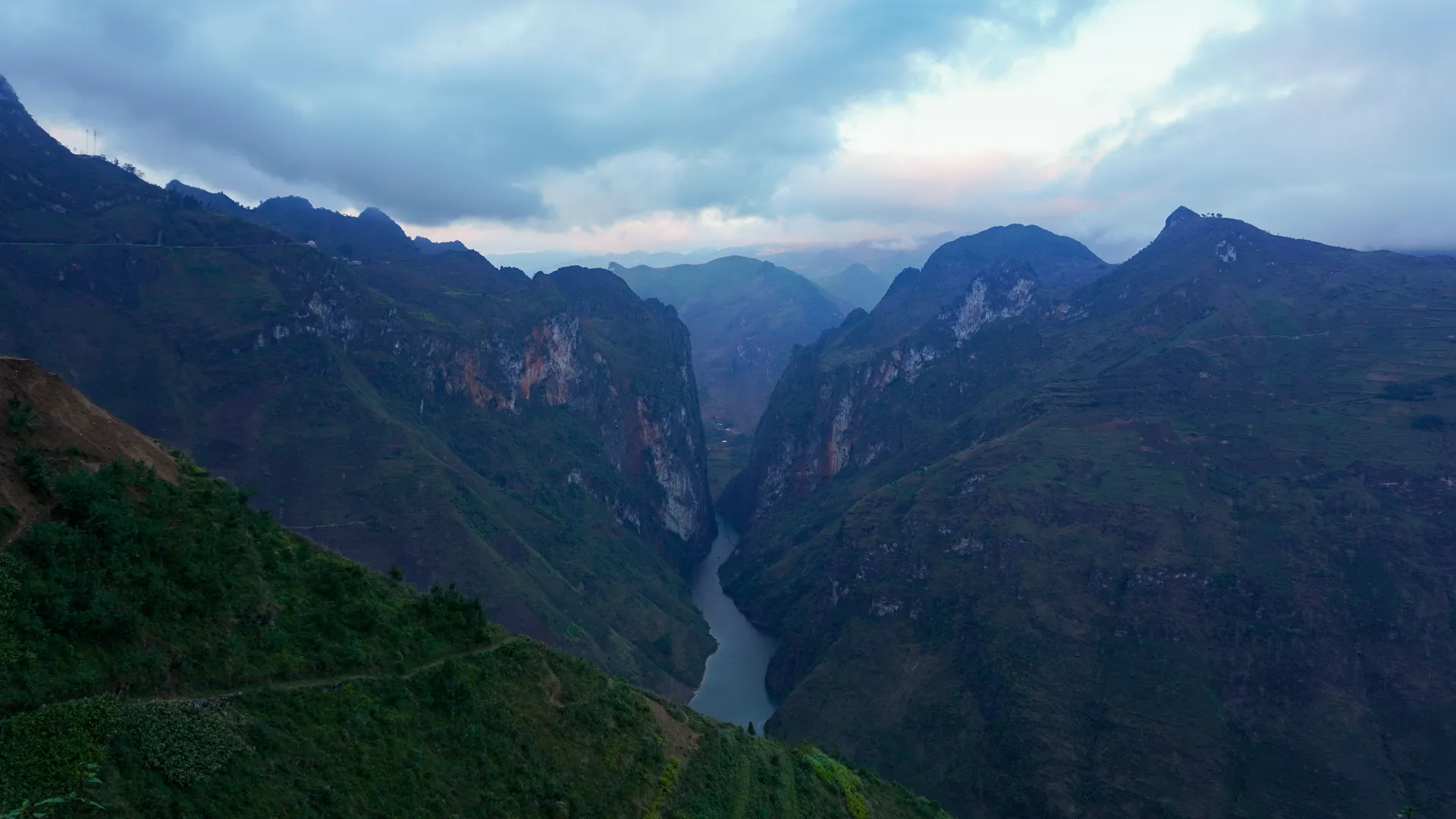
Ha Giang rewards a very particular kind of traveller and frustrates everyone else. The upside is enormous: some of the most spectacular mountain-and-karst scenery in Southeast Asia, an authentic window into Hmong, Dao, and Tay hill-tribe life, rock-bottom costs, and an adventure that genuinely stays with you. The downside is equally real. The town is functional rather than charming, wifi is unreliable, English is limited, nightlife is essentially non-existent, and the loop itself is physically demanding and occasionally dangerous. It is a base for riding and disconnecting, not for building a comfortable remote-work routine. Come for the mountains, manage your expectations of the town, and you will not be disappointed. The karst plateau the loop crosses has been a UNESCO Global Geopark since 2010, which is the reason the landscape as a whole, rather than any single sight, is the attraction.
- Pro: world-class scenery, the Ma Pi Leng Pass, and the Nho Que gorge.
- Pro: rich ethnic-minority culture, markets, and warm homestay hospitality.
- Pro: extremely low cost and a real sense of adventure.
- Con: variable wifi, limited English, near-zero nightlife, functional town.
- Con: the loop demands riding skill and carries genuine safety risk.
Who Ha Giang Is For
Ha Giang is for the adventure traveller, the motorbike rider, and the photographer chasing landscapes rather than the digital nomad chasing bandwidth. It suits people who want to trade fast wifi and cafe culture for mountain passes, misty valleys, and nights in village homestays. If you are comfortable being offline for days, curious about hill-tribe culture, and physically up for winding roads and changeable weather, this is one of the most memorable places in Vietnam. If you need reliable connectivity, a lively social scene, or creature comforts, it will disappoint you. Think of it as a trip to take, not a hub to settle into for months of remote work.
- Ideal for motorbike adventurers and confident riders.
- Great for photographers and slow-travel culture seekers.
- Good for nomads wanting a deliberate offline reset.
- Not for those needing dependable wifi or a busy social scene.