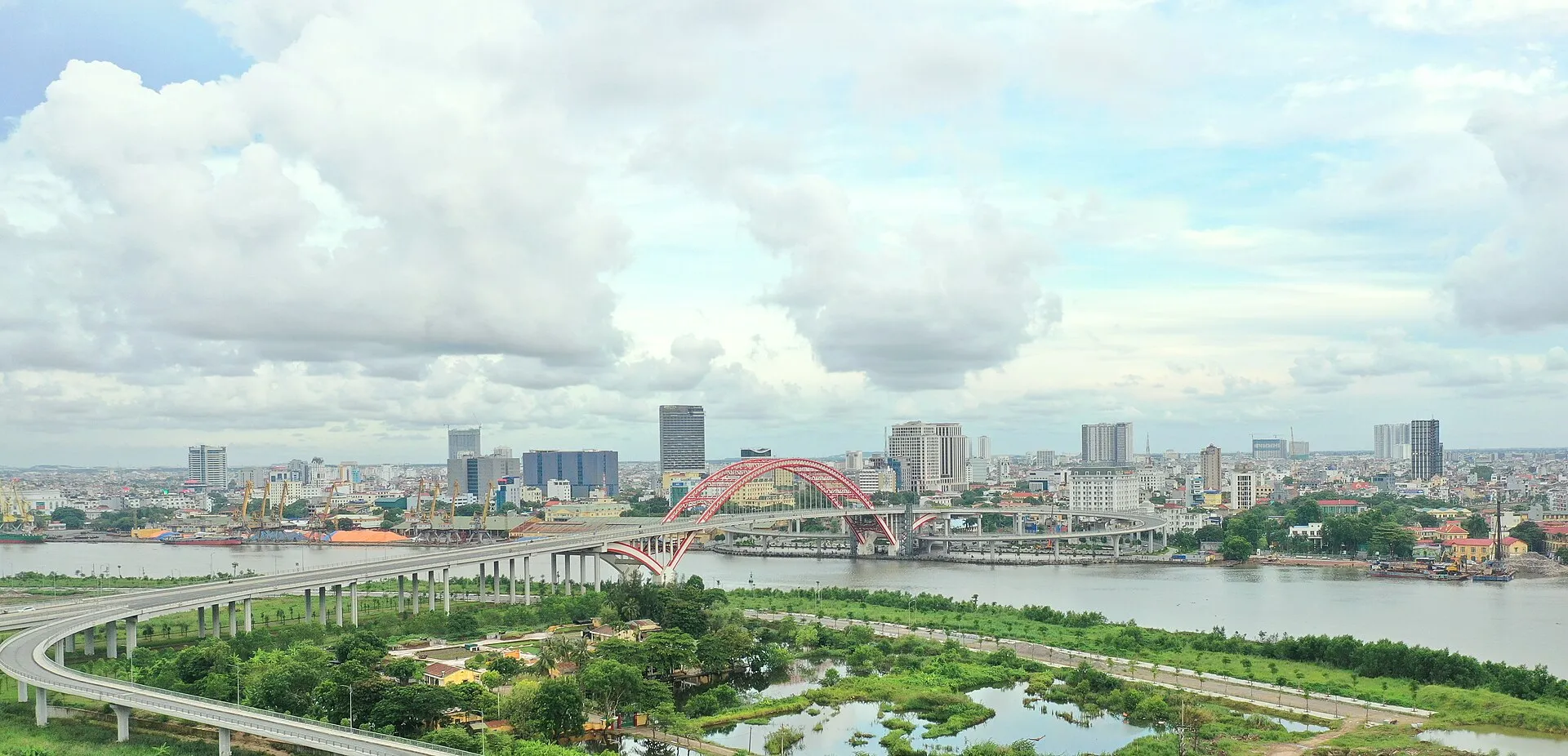
Cost of Living in Hai Phong
Where this figure comes from. No cost survey covers Hai Phong, so the $700 a month above is our own estimate rather than a measurement. On 416 of our 999 city guides the figure is built from a published Numbeo basket, a one-bedroom rent in the centre plus one person's monthly costs without rent, converted to USD; this city is not one of them. How we source everything.
Hai Phong is one of Vietnam's better-value large cities, and $700 a month is comfortable rather than tight. A furnished serviced studio or one-bedroom in Le Chan, Ngo Quyen or central Hong Bang costs $200 to $330, often with cleaning included; older local apartments go for $130 to $200. Street food is the backbone of the budget: banh da cua at $1.50, com binh dan plates at $2, bia hoi under $0.50 a glass, so $150 to $220 covers food with occasional Western meals at $8 to $12. A Viettel or Vinaphone SIM with abundant data runs $4 to $8 monthly. Dedicated coworking is limited, with desks around $60 to $110 where available. Electricity, water and fibre together come to $35 to $70, higher in the humid summer. Grab trips are $1 to $3. Verdict: strong value, with the trade-off being fewer nomad-specific amenities. A foreigner may own an apartment here but only on a fifty-year title rather than outright, and the land itself belongs to the state whoever is living on it, which shapes every conversation about buying. Rent is commonly asked three or six months at a time, and a discount for taking the longer term is normal.
Where to Work in Hai Phong
Central Hong Bang around the Tam Bac lake and the French colonial theatre district is the most walkable base, with Le Chan and Ngo Quyen offering cheaper apartments and dense local food. The city's cafe culture is deep, and Vietnamese chains do the heavy lifting: Cong Caphe, Highlands Coffee and Trung Nguyen Legend branches all have air conditioning, power outlets and workable wifi, while independent roasters along Dien Bien Phu and Lach Tray streets suit longer sessions. Formal coworking is scarce compared with Hanoi or Da Nang, so most remote workers combine a good apartment fibre line with cafes. Fibre performance is solid, though Vietnam's reliance on undersea cables means periodic international slowdowns even when domestic speeds look fine. Caveats: cafes get loud and smoky in the evening, seating tightens at lunch, and typhoon season brings genuine power and internet outages.
Getting Around Hai Phong
Hai Phong is flat and moderately walkable in the centre, but the city sprawls and the heat and traffic push most people onto two wheels. Grab dominates, alongside the electric Xanh SM fleet: motorbike trips cost $0.60 to $1.50 and car rides $2 to $5 across town. Monthly scooter rental is $45 to $70 and makes life considerably easier, though not strictly essential given app coverage. Cat Bi International Airport lies only about 7km from the centre, roughly a $4 to $7 car ride, with domestic flights nationwide and regional connections. The train to Hanoi is a local favourite: around 2.5 hours for $3 to $6, arriving at Long Bien. Limousine vans to Hanoi cost $7 to $10. Ferries and fast boats from Ben Binh pier and Got connect to Cat Ba island for $5 to $15, the main reason many nomads choose this city. An expressway opened a decade ago reduced the run up to the capital to ninety minutes flat, which is why the limousine vans run as often as they do. The deepwater container port east of the city is the largest in the north, and it is the reason the roads carry the lorry traffic they do at every hour of the day.
Sorting transport? Book an airport transfer, or compare car rental on Auto Europe and QEEQ.
Visas for Hai Phong
Vietnam runs one of Asia's easiest entry systems. Since August 2023 the e-visa is available to all nationalities, valid up to 90 days, single or multiple entry, applied for online at the official portal for about $25 single and $50 multiple, usually approved within three to five working days. Separately, citizens of the United Kingdom, France, Germany, Italy, Spain, and several Nordic and Asian countries receive a visa exemption of 45 days, with periodic extensions to that list. There is no digital nomad visa. Extensions inside Vietnam are possible through agencies but are inconsistent and increasingly discouraged, so most long-stayers simply exit to Cambodia, Thailand or Laos and return on a fresh e-visa, which is legal and routine. Working for a Vietnamese employer requires a work permit and temporary residence card, a separate and much slower process.
Best Time to Visit Hai Phong
Hai Phong has a northern Vietnamese climate with four distinct seasons, unlike the tropical south. October and November are the best months: dry, clear, with highs of 25C to 29C and low humidity, ideal for Cat Ba and Ha Long Bay trips. April and early May are the second window, warm and green before the heat sets in. December to March is cool and often grey, with temperatures of 14C to 20C and a persistent drizzle known as mua phun that keeps everything damp; heating is rare in apartments. June to August is hot and sticky at 32C to 36C with high humidity and heavy afternoon downpours. The typhoon window runs from July to September, and Hai Phong takes direct hits, as Typhoon Yagi demonstrated in 2024. Local highlights include Tet in January or February, and the red flamboyant flower festival in May. Lychees come in from the province next door for a few weeks at the start of summer and are sold by the branch at every roadside, which is one of the few compensations for the heat arriving. Humidity in the damp months is high enough that clothes left in a wardrobe grow mould, and a dehumidifier is an ordinary purchase.
Pros and Cons of Hai Phong
Hai Phong offers genuine value: low rents, some of the best street food in Vietnam including banh da cua and nem cua be, a walkable French colonial core, an airport seven kilometres from downtown, cheap trains to Hanoi, and ferries to Cat Ba and Ha Long Bay for weekends. Prices have not been inflated by tourism, locals are welcoming, and the pace is calmer than Hanoi or Saigon. On the other side, this is an industrial port city rather than a nomad hub, so the international community is small, coworking options are thin, and English is less widely spoken than in Da Nang or Hoi An. Air quality is poor in winter, the damp cold season is genuinely unpleasant indoors, traffic is chaotic, typhoons cause real outages between July and September, there is no true beach in the city, and long-stay visa options remain limited.
Who Hai Phong Is For
Anyone who has already done the obvious stops in Vietnam, and wants low costs, real food and easy access to Ha Long Bay and Cat Ba without paying tourist prices, will find the arithmetic works. It works for solo developers, writers and traders who need little more than a fast apartment line, for people with business or manufacturing interests in the northern industrial belt, and for anyone who enjoys big-city Vietnamese life without a foreigner bubble. Skip it if a ready-made nomad community, frequent meetups and a choice of coworking spaces are what make a base work, if beaches are the priority, or if damp grey winters and poor winter air quality are dealbreakers. Those who want the same country with more infrastructure should compare Da Nang; those who want more culture and nightlife should compare Hanoi, two hours away by train.