Cost of Living in Arequipa
Real market data
Source: Numbeo · September 2026
$610/moSolo nomad1-bed centre + living costs
$820/moCoupleshared 1-bed + costs
$490/moLean / localcheaper area + costs
- 1-bed rent, city centre$360S/1,218
- 1-bed rent, outside centre$240S/812
- Monthly costs excl. rent (1 person)$250S/862
- Meal, inexpensive restaurant$4S/12
- Buy price, per m² (centre)$1,990S/6,771
Prices are from Numbeo (September 2026), converted to USD at $1 = S/3.39 (01 Aug 2026). The monthly living-costs figure is our transparent one-person basket, groceries, a few meals out, utilities, phone, internet, transport and essentials, priced from those figures. Solo adds central rent; couple and lean are estimates from the same numbers. The guide below quotes its own monthly range, which is a different measurement rather than a competing one: this table prices a defined basket at the figures above, while that range is a judgement about how somebody actually lives here.
Arequipa is one of the most affordable mid-sized cities in South America for remote workers. Costs in US dollars as of 2025-2026:
- Rent, central (Cercado, San Lazaro): $350-590/month for a furnished one-bedroom
- Rent, cheaper areas (Miraflores, Jose Luis Bustamante): $210-350/month
- Groceries (cooking most meals): $120-180/month
- Eating out (local picanterias, set lunches): $3-6 per meal; mid-range restaurants $10-21
- Coworking hot desk: $12-21/day or $130-210/month
- Local transport (combis, taxis): $0.44-0.88 per combi ride; $2.50-6 per short taxi or Uber trip
- Mobile data (10GB plan): approximately $28/month
Realistic monthly total: a lean setup runs $710-940. A comfortable lifestyle with a decent apartment, coworking, and regular restaurant meals comes to $940-1,450. You will not need much more than that unless you are splurging on fine dining or frequent travel.
Where to Work
Arequipa has a small but functional coworking scene. The most established spaces are Selina Arequipa (Calle Jerusalem 606, Cercado), which caters directly to nomads with fast internet and a social atmosphere; CoworkInHouse (Selva Alegre), known for mountain views and a reliable community; La Pera Coworking (Yanahuara), a quieter residential-area option; and Conexa Coworking, which offers flexible day and monthly plans. Monthly memberships typically run $130-210.
Cafe work is very viable. Kafi Wasi and Palacios Coffee are the go-to spots: both have outlets at every seat, strong WiFi, and staff who are used to people staying for hours. Kaffeehaus near the historic center has a shaded garden courtyard and is atmospheric but can get noisy at peak times.
The honest WiFi picture: dedicated coworking spaces and the better cafes are reliably fine for video calls. Cheaper apartments in older buildings can be slower. Home internet quality varies a lot by landlord, so test before signing anything longer than one month.
Getting Around
The historic center is compact and walkable. You can reach most plazas, markets, restaurants, and coworking spaces on foot if you are based centrally. Yanahuara, a popular residential neighborhood, is a 20-minute walk or a short $2.50-3.50 Uber ride from Plaza de Armas.
Combis (minibuses) are the cheapest way to cross the city at $0.44-0.88 per ride, but routes are informal and hard to navigate without some Spanish and local knowledge. Uber and inDrive both operate in Arequipa and are the most practical option for visitors: fares for typical city trips run $2.50-6 and you avoid fare negotiation entirely.
Street taxis exist but require you to agree on a price upfront. Stick to apps or your hotel's recommended taxis, especially at night.
Airport: Alfredo Rodriguez Ballon Airport (AQP) is about 8 km from the center. Use the authorized taxi booth inside the terminal (posted zone fares, $7.50-13 depending on destination) or request an Uber from arrivals. There is no reliable direct public bus from the terminal. The journey to the center takes 20-30 minutes in normal traffic.
Sorting transport? Book an airport transfer, or compare car rental on Auto Europe and QEEQ.
Visas and Staying Long-Term
Most Western passport holders, including US, UK, EU, Canadian, and Australian citizens, enter Peru visa-free as tourists for up to 183 days (about six months). Your stamp at the border sets the exact duration, so check it on arrival.
Peru passed legislation in 2023 to create a dedicated digital nomad visa allowing a 365-day stay, but as of September 2026 it has not been implemented and cannot be applied for. Migraciones has issued neither the regulations nor the TUPA procedure it said would open the category. If you need to stay beyond 183 days, you would need to explore a standard residency route.
Extensions to the tourist stay are difficult to obtain inside Peru and are not reliably granted; a border run to Chile or Bolivia is the common workaround.
Best Time to Visit
Arequipa sits at 2,335 meters above sea level and has a dry, sunny climate year-round, with approximately 300 days of sunshine annually. There are two distinct seasons:
Dry season (May to November) is the best window for remote work. Skies are clear, humidity is very low, and daytime temperatures average 20-22C (68-72F). Nights get cold, especially in June and July when temperatures can drop to 5-8C (41-46F), so pack layers. This is also the best period for day trips to Colca Canyon.
Rainy season (December to April) brings afternoon showers, higher humidity, and more cloud cover. February is the wettest month. The rains are rarely intense enough to disrupt work, but outdoor plans take more flexibility. Prices are lower and the city is quieter. Some nomads actually prefer this period for the calmer atmosphere and easier apartment hunting.
For the best combination of stable weather, outdoor activities, and social energy, aim for May through September.
Pros and Cons
Pros
- Very low cost of living by Latin American standards
- 300+ days of sunshine and mild daytime temperatures year-round
- Exceptional food scene rooted in Arequipan cuisine (one of Peru's richest regional traditions)
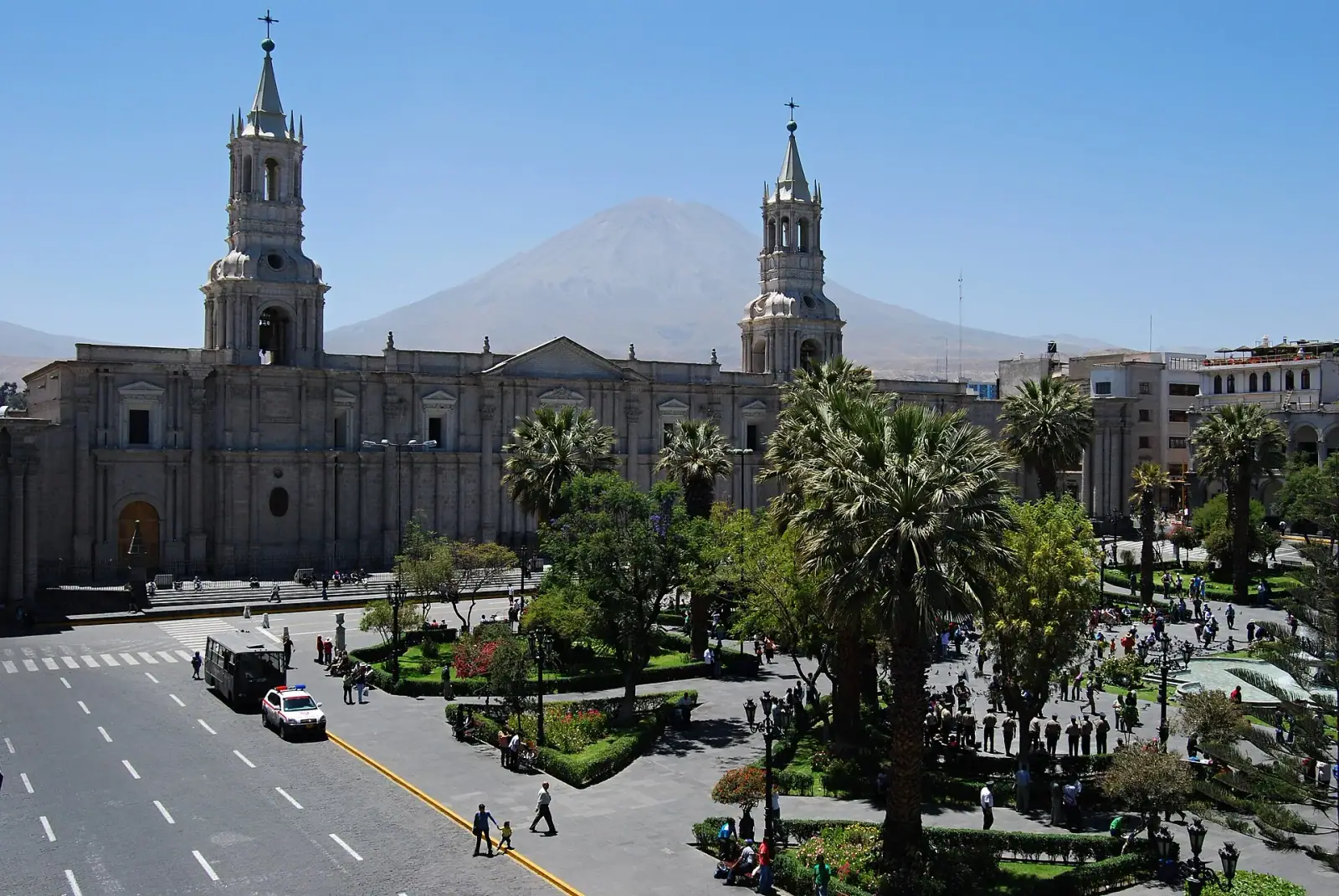
- UNESCO-listed white sillar stone architecture; genuinely beautiful city center
- Safer than Lima or Cusco for everyday life, with a walkable historic core
- Strong day-trip options: Colca Canyon, Misti Volcano, Cotahuasi Canyon
- Moderate altitude (2,335m) that most visitors adapt to within a day or two
Cons
- Smaller nomad community than Lima, Medellin, or Buenos Aires
- WiFi and coworking infrastructure is limited compared to larger hubs
- Limited English spoken outside of tourist businesses
- Digital nomad visa still not operational despite being legislated
- Air quality in the urban center can register moderate pollution levels
- Altitude affects some visitors on arrival, especially those coming from sea level
- Nightlife is modest; this is not a party city
Who Arequipa Is Best For
Arequipa works well for nomads who prioritize low cost, good food, and access to dramatic landscapes over fast internet or a buzzing coworking community. If you are the type who wants a quiet base to get work done, explore on weekends, and eat extraordinarily well without spending much, Arequipa delivers. It suits people with some Spanish or a willingness to pick it up, since day-to-day life outside the tourist zones operates entirely in Spanish.
It is also a strong choice as a medium-term base for anyone doing a Peru circuit. The altitude is manageable and makes it a sensible acclimatization stop before Cusco or Puno.
Consider looking elsewhere if you need consistently fast internet for large file transfers or heavy video work, want an active nomad social scene with meetups and networking, or rely on English in daily errands and business interactions. Lima has far more infrastructure for high-output remote work; Cusco has a larger transient nomad community.