Cost of Living in La Paz
Real market data
Source: Numbeo · August 2026
$460/moSolo nomad1-bed centre + living costs
$610/moCoupleshared 1-bed + costs
$370/moLean / localcheaper area + costs
- 1-bed rent, city centre$260BOB 3,025
- 1-bed rent, outside centre$170BOB 2,000
- Monthly costs excl. rent (1 person)$190BOB 2,240
- Meal, inexpensive restaurant$2BOB 25
- Monthly transit pass$17BOB 200
- Buy price, per m² (centre)$1,240BOB 14,266
Prices are from Numbeo (August 2026), converted to USD at $1 = 11.51 BOB (01 Aug 2026). The monthly living-costs figure is our transparent one-person basket, groceries, a few meals out, utilities, phone, internet, transport and essentials, priced from those figures. Solo adds central rent; couple and lean are estimates from the same numbers. The guide below quotes its own monthly range, which is a different measurement rather than a competing one: this table prices a defined basket at the figures above, while that range is a judgement about how somebody actually lives here.
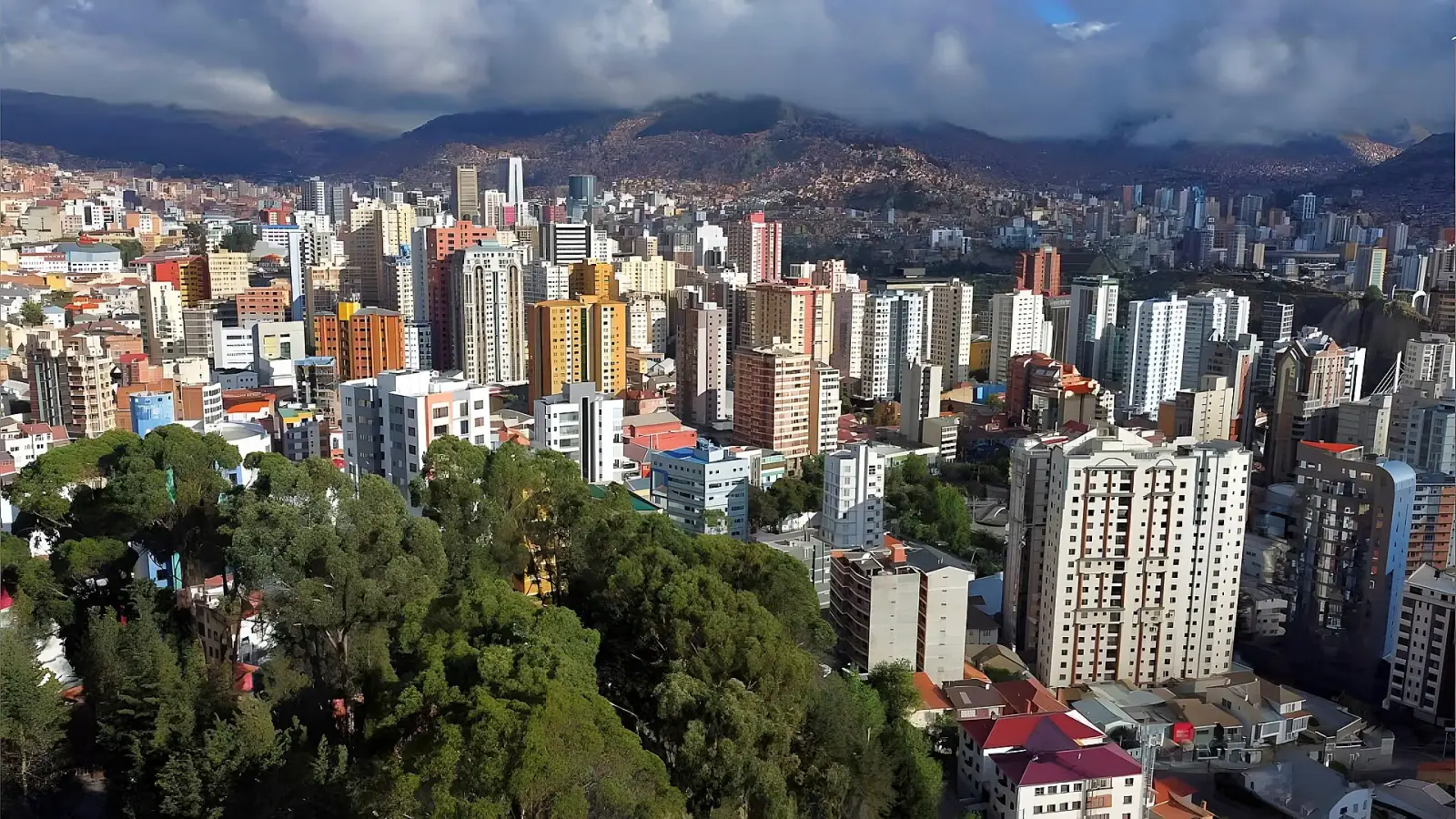
La Paz is one of the cheapest capitals in South America for remote workers. A solo nomad can live reasonably well on $800-1,200 per month, or tightly on $600. Here is a realistic monthly breakdown in Bolivianos (BOB) and USD (1 USD is roughly 6.9 BOB as of mid-2026):
- Rent, central (Sopocachi, San Miguel): $130-260 for a furnished 1-bed
- Rent, cheaper areas (Obrajes, Miraflores): $87-175
- Groceries: $69-120
- Eating out (local set lunch menus, "almuerzo"): $1.50-2.50 per meal; mid-range restaurants $5-10
- Coworking hot desk: $43-87/month
- Local transport (teleferico + minibus): $8.50-17
- Total comfortable range: $700-1,100 per month excluding flights and travel
You will not find many long-stay furnished apartments listed online. Ask at your hostel or check Facebook groups like "Expats in La Paz" for short-term sublets.
Where to Work
La Paz has a small but functional coworking scene concentrated in the Sopocachi and Miraflores districts. Squemas Cowork (Av. Arce, near Miraflores) is consistently rated the best in town, with fast WiFi, a friendly community, and hourly or monthly rates. Cowork Sopocachi on Calle Gregorio Reynolds offers a quieter, more local feel between two parks. EQ Spaces Cowork (Gabriel Rene Moreno) advertises fast internet and meeting rooms.
For cafe work, HB Bronze Coffeebar in the historic Casona Patino building is the go-to specialty coffee destination with reliable WiFi. Cafe Epico in Zona Sur/Calacoto draws a health-conscious crowd and has solid connectivity. Experiment Coffee is a calm, Asian-aesthetic specialty shop popular with remote workers.
The honest truth about WiFi in Bolivia: speeds are acceptable but inconsistent. Fixed broadband in coworking spaces is generally dependable. Cafes can drop during peak hours. Buy a local SIM from Entel (best coverage nationally) the day you arrive and use mobile data as a backup. Tethering on a 4G Entel SIM is slower than a fixed line, and a monthly data plan costs around $10-15.
Getting Around
La Paz has one of the most unusual urban transit systems on earth: Mi Teleferico, a network of eleven cable car lines that connects neighborhoods across the dramatically uneven terrain. A single ride costs $0.50 (under $0.50). It is fast, safe, and gives you spectacular views of the city and Illimani peak. For shorter flat distances, shared minibuses ("minis") are the cheapest option at under $1 per trip, though routes can be confusing at first.
The city is not highly walkable. Steep gradients between neighborhoods and the altitude (3,625 m / 11,900 ft above sea level) make even short walks tiring until you acclimatize, which takes most people 2-4 days.
Getting to El Alto International Airport: the airport sits in El Alto at 4,061 m (13,325 ft), roughly 500 m above central La Paz. A taxi from Sopocachi takes 30-45 minutes and costs $5-8.50. The teleferico Red Line terminates near El Alto but does not reach the airport terminal directly; most travelers take a taxi or Uber for the final stretch. Book rides through the Uber app or use metered taxis from designated ranks, especially at night.
Sorting transport? Book an airport transfer, or compare car rental on Auto Europe and QEEQ.
Visas and Staying Long-Term
Bolivia offers generous visa-free entry for most Western passports. EU citizens can enter visa-free for up to 90 days. US citizens have been visa-free since December 2025, also for up to 90 days. UK, Canadian, and Australian passport holders are also exempt from tourist visa requirements and receive 30-90 days on arrival depending on nationality and entry point.
There is no dedicated digital nomad visa for Bolivia as of mid-2026. Extensions beyond your initial stamp are possible at the immigration office (SEGEMIG) in La Paz, up to the 90-day annual maximum. Doing a border run to Peru or Chile resets the clock, though authorities may scrutinize frequent re-entries. For stays beyond three months, a temporary residence visa requires sponsorship or a local employer, making it impractical for most nomads.
You must complete SIGEMIG online pre-registration before arrival, and proof of yellow fever vaccination is required.
Best Time to Visit
La Paz sits at high altitude and has a subtropical mountain climate, so temperatures stay mild year-round (average daytime highs of 14-17 degrees C / 57-63 degrees F). The key variable is rain.
- Dry season (May to October): The best window for remote workers. Skies are clear and sunny, especially June and July. Nights get cold (below 5 degrees C / 41 degrees F), so pack layers. Power cuts during dry season are rare.
- Wet season (November to March): Frequent afternoon downpours, occasional thunderstorms, and cloudier skies. January is the wettest month. Internet infrastructure can be affected during heavy rains.
- Shoulder months (April and October): Rain begins tapering off or returning; milder nights than deep winter. A good compromise if dry-season crowds at Salar de Uyuni worry you.
The sweet spot for combining reliable work conditions with comfortable temperatures is May through August.
Pros and Cons
Pros
- Very low cost of living, especially rent and food
- Unique city character: high-altitude markets, cable cars, and diverse indigenous culture
- Easy access to some of South America's most dramatic landscapes (Salar de Uyuni, Lake Titicaca, Death Road)
- Warm and welcoming local population; Bolivians are generally friendly to foreigners
- 90-day visa-free entry for most Western passports now includes US citizens
- Affordable, abundant street food and fresh produce markets
Cons
- Altitude at 3,625 m is serious: expect headaches, fatigue, and shortness of breath for the first few days, sometimes longer
- WiFi reliability is lower than in Bogota, Mexico City, or Lima; carry a local SIM
- English is rarely spoken outside tourist restaurants and upscale hotels; Spanish is essential
- Air quality can be poor: high-altitude UV, vehicle emissions, and smoke from burning are all common
- Political demonstrations and road blockades ("bloqueos") can disrupt transport with little warning
- Nightlife and nomad networking community are thin compared to larger South American hubs
Who La Paz Is Best For
La Paz suits you if you are budget-focused and want to stretch a modest income while exploring a genuinely off-the-beaten-path South American capital. It is ideal for solo travelers who speak Spanish, are comfortable with some infrastructure roughness, and want to use the city as a base for weekend trips to extraordinary natural landscapes.
It also works well for people who find Medellin or Buenos Aires too polished or expensive, and who want to experience an unvarnished Andean city that is changing rapidly but has not yet been overrun by tourists.
You should probably skip La Paz if altitude sickness hits you hard, if reliable high-speed internet is non-negotiable for your work (video calls, large uploads), if you need a strong English-speaking social scene, or if you rely on a dense nomad community for accountability or networking. It rewards patience and adaptability more than any other city at this price point.