Cost of Living in Granada
Where this figure comes from. No cost survey covers Granada, so the $800 a month above is our own estimate rather than a measurement. On 416 of our 999 city guides the figure is built from a published Numbeo basket, a one-bedroom rent in the centre plus one person's monthly costs without rent, converted to USD; this city is not one of them. How we source everything.
Granada is one of Central America's most affordable colonial bases, which is a big part of why expats and long-stay travellers keep landing here. A comfortable single nomad can expect to spend roughly $700 to $1,300 a month, depending on housing and how often you eat out. Rent for a furnished one-bedroom in or near the Centro Historico often runs $350 to $600, with cheaper rooms and shared houses well below that. Local meals of gallo pinto, grilled meats and fresh fruit are inexpensive, while La Calzada's tourist restaurants cost more. Utilities and fans or air conditioning add up in the heat. These figures are editorial estimates, not fixed prices, and will shift with your lifestyle. Mombacho, the volcano that fills the skyline south of town, is the cheapest big day out: walking up the road into its cloud-forest reserve costs foreigners about $5, while the truck shuttle to the summit trails runs closer to $20, and the guided trails add a few dollars more.
- Furnished 1-bedroom rental: roughly $350 to $600 per month
- Local set lunch (comida corriente): often $3 to $6
- Coworking or cafe days: modest, many cafes free with a purchase
- Electricity with air conditioning: a meaningful line item in hot months
Where to Work in Granada
Granada is a small, walkable city, so most nomads work from apartments, laptop-friendly cafes and a handful of coworking-style spaces rather than large offices. Wifi is honestly variable: many cafes and rentals in town have decent connections that handle calls and everyday work, but outages, slowdowns and power flickers happen, especially in the wet season. The realistic move is to have a backup. Buy a local Claro or Tigo SIM, top up a generous data plan and use your phone as a hotspot when the main connection wobbles. Cafes along and just off Calle La Calzada and around Parque Central are the usual daytime spots, quieter in the mornings before the heat and crowds build.
- Work mornings when it is cooler and connections are less congested
- Carry a charged phone with a Claro or Tigo data SIM as backup
- A small UPS or power bank helps ride out brief outages
Getting Around Granada
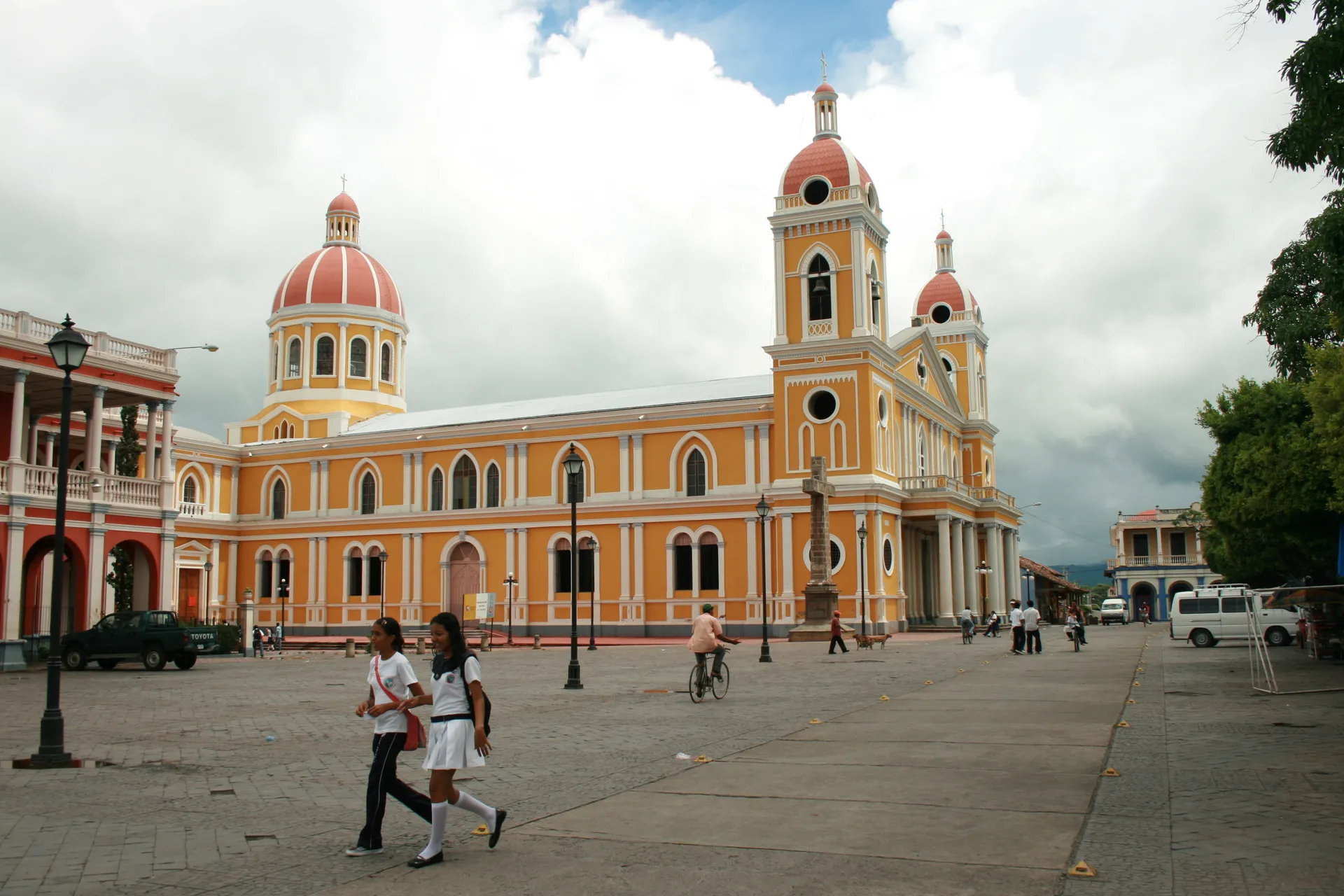
Granada's colonial grid is compact and flat, so walking is genuinely the main way to get around, from Parque Central and the yellow cathedral down Calle La Calzada to the lakefront. For longer hops there are cheap local taxis (agree the fare first) and inexpensive buses. Boats leave from the Complejo Turistico for trips through the Isletas de Granada archipelago on Lake Nicaragua (Cocibolca). Managua and its airport (MGA) are about a 45-minute to one-hour drive away, reachable by shuttle, taxi or bus. Granada also makes an excellent base for day trips: the Masaya volcano, the Laguna de Apoyo crater lake for swimming, and the island of Ometepe further out on the lake.
- Walking covers most of the historic centre easily
- Local taxis and buses are cheap; agree taxi fares in advance
- Boats to Las Isletas depart the Complejo Turistico on the lake
- Managua airport (MGA) is roughly a 45-minute drive
- Easy day trips: Masaya, Laguna de Apoyo, Ometepe
Sorting transport? Book an airport transfer, or compare car rental on Auto Europe and QEEQ.
Visas for Granada
Most visitors enter Nicaragua as tourists, and under the CA-4 Central America agreement (which links Nicaragua, Honduras, El Salvador and Guatemala) travellers are typically granted up to 90 days across the region. Many nationalities receive this stamp on arrival, sometimes with a small entry fee, though rules vary by passport. Extensions are handled through the immigration authority (Migracion) inside the country, and because the 90 days are shared across the CA-4 bloc, border-hopping to reset the clock does not always work the way people expect. The tourist card costs $10 in cash on arrival, and the regional clock it starts keeps running through the other three CA-4 countries. Stopping that clock means leaving the bloc altogether, and the nearest way out from Granada is south into Costa Rica at the Penas Blancas crossing beyond Rivas. Staying put is often simpler: the immigration office grants extensions in 30-day blocks at about $25 each, up to three more months, which stretches a single entry to roughly half a year without a border run.
- CA-4 tourist entry is commonly up to 90 days region-wide
- An entry fee may apply depending on your nationality
- Extensions go through Migracion inside Nicaragua
Best Time to Visit Granada
Granada is hot year-round, sitting in the tropical lowlands beside the lake, so pack for heat whenever you come. The dry season, roughly November to April, is the most comfortable and popular stretch, with sunny days, lower humidity and lively streets, peaking around the holidays and into the early months of the year. The green, wetter season from about May to October brings afternoon downpours, lusher surrounding countryside and fewer crowds, though humidity climbs and the occasional heavier storm rolls through. If you want reliable sunshine for exploring the Isletas, Masaya and Laguna de Apoyo, aim for the dry months. If you prefer greener scenery, softer prices and a quieter town, the wet season can be rewarding for a longer, flexible stay.
- Dry season (about November to April): sunniest and most popular
- Green season (about May to October): wetter, lusher, quieter
- Hot and humid all year; plan for shade, water and a fan or AC
Pros and Cons of Granada
Granada's appeal is easy to summarise: it is affordable, walkable and genuinely charming, with a beautifully preserved colonial centre, a warm expat and backpacker scene, and standout nature on the doorstep. The trade-offs are real too. The heat is relentless, wifi and power can be inconsistent, and it is a developing-country setting where everyday street awareness pays off. Nicaragua's political situation also warrants staying informed through reliable sources, without treating the country as off-limits. Weigh these honestly against the low cost and lifestyle before committing to a long stay. The colour has a history behind it: Granada was founded in 1524 and burned by the American filibuster William Walker's men in 1856, so a good deal of what looks colonial today was rebuilt after that fire. On the money side, the cordoba has been fixed at about 36.6 to the dollar since January 2024, which means a price quoted in cordobas this month is worth the same in dollars next month.
- Pros: low cost, walkable colonial charm, established community
- Pros: exceptional nearby nature (volcano, lake, crater lagoon)
- Cons: hot and humid year-round; variable wifi and power
- Cons: normal developing-country awareness needed; stay informed on national events
Who Granada Is For
Granada suits budget-conscious nomads and slow travellers who want colonial character, an easy walkable pace and a ready-made expat community without paying big-city prices. It rewards people who value lake sunsets, volcano hikes and long cafe mornings over fast infrastructure, and who can work happily around a connection that occasionally hiccups. It is a strong fit for those comfortable in a developing-country environment and willing to keep an eye on local news. It is less ideal if you need rock-solid high-speed internet for constant video calls, cannot tolerate persistent heat, or want big-city nightlife and amenities. For the right person, though, it is one of Central America's most likeable, affordable bases.
- Great for: budget slow-travellers who love colonial charm and nature
- Great for: nomads with flexible, connection-tolerant workloads
- Less ideal for: those needing fast, always-on internet or cooler weather