Cost of Living in Pécs
Real market data
Source: Numbeo · September 2026
$1,240/moSolo nomad1-bed centre + living costs
$1,720/moCoupleshared 1-bed + costs
$1,060/moLean / localcheaper area + costs
- 1-bed rent, city centre$640Ft202,571
- 1-bed rent, outside centre$460Ft144,429
- Monthly costs excl. rent (1 person)$600Ft189,583
- Meal, inexpensive restaurant$12Ft3,750
- Monthly transit pass$24Ft7,650
- Buy price, per m² (centre)$3,480Ft1,100,000
Prices are from Numbeo (September 2026), converted to USD at $1 = Ft315.83 (01 Aug 2026). The monthly living-costs figure is our transparent one-person basket, groceries, a few meals out, utilities, phone, internet, transport and essentials, priced from those figures. Solo adds central rent; couple and lean are estimates from the same numbers.
Budget roughly $1,240 a month as a solo remote worker in Pécs, which is among the cheaper options anywhere in the European Union. A one-bedroom apartment in the centre runs about $300 to $420, and the surrounding districts drop that to $230 to $320. Groceries land around $180 to $240, with the Saturday market on Vasarcsarnok cheaper than the supermarkets for produce. A menu lunch is $5 to $7, a restaurant dinner with wine $15 to $22, and Hungarian wine from the nearby Villany region is very good and very cheap. A monthly transit pass is about $16. Utilities add $80 to $150, more in winter. The university keeps a large stock of small flats in circulation, which holds rents down outside the September rush. Older flats in the centre are often still heated by a tiled stove in the corner, cheap to run on wood and an hour to get going, which is either charming or a chore depending on the morning. Blocks charge a monthly common cost covering the stairwell and the lift, and it arrives separately from the rent. Two months as deposit is the usual ask, and it comes back in cash rather than by transfer more often than not.
Where to Work in Pécs
Pécs is a university city of roughly 20,000 students, and the working infrastructure follows from that rather than from any nomad economy. There are one or two small coworking spaces attached to the university's innovation ecosystem, with desks around $80 to $130 a month, but most people work from home or from cafes. The pedestrianised Kiraly utca and the streets around Szechenyi ter have a good density of places that will not hurry you along. Hungarian fixed-line internet is fast and cheap, among the better networks in the region, and mobile data is inexpensive. The main practical constraint is that very little of this is set up for foreigners: expect Hungarian menus, Hungarian signage and a certain amount of translation-app work in the first weeks. The porcelain works that made this city's name still runs, and the quarter built around it for a European culture year holds studios, galleries and a planetarium in what were factory buildings, which is the nearest thing here to a creative district. Uranium was mined in the hills until the nineteen nineties, and its closure took thousands of jobs out of the local economy inside a few years, which is why the city leaned so hard on the university afterwards.
Getting Around Pécs
Pécs is compact and hilly, built on the southern slope of the Mecsek, and the centre is comfortably walkable if you accept some climbing. A bus network covers the rest of the city, with a monthly pass at about $16 and single tickets under a dollar; there are no trams. Cycling works on the flat but is hard work towards the hills. The railway station is a fifteen-minute walk from the centre and connects to Budapest in about three hours, which is the main link most residents use. There is no useful airport: Budapest is the practical gateway, roughly three hours away by train or car. Within the region a car opens up the Villany wine country and the Danube, but nothing essential requires one. The motorway reached this city only in the last fifteen years, and the drive to the capital fell to roughly two hours and a half with it, which is why so much of what is written about how remote the place feels was written before that. The Croatian border is under an hour south, putting the coast within a long day. Up in the hills behind the city a television tower has a viewing platform, and the road to it is the standard Sunday outing.
Sorting transport? Book an airport transfer, or compare car rental on Auto Europe and QEEQ.
Visas for Pécs
Hungary is in the European Union and the Schengen area, so EU and EEA citizens face no restrictions beyond registering a residence address. Most other Western passports receive 90 days in any 180-day Schengen period. Hungary runs the White Card, a digital nomad residence permit introduced in 2022 for non-EU remote workers who earn at least $3,450 net a month from an employer or company abroad; it is one of the few purpose-built schemes in the region. Beyond that the usual routes are employment, study at the university, which has English-language medical and business programmes, or family reunification. Bureaucracy is real and generally conducted in Hungarian. Croatia's border, under an hour south, is internal to Schengen and registers nothing in the Entry/Exit System. Serbia is the nearest country outside, through the Hercegszántó crossing beyond Mohács, where officers log the exit and the return electronically, so days spent in Novi Sad or Belgrade fall outside the Schengen allowance with the arithmetic done for you.
Best Time to Visit Pécs
Pécs enjoys a mild, almost Mediterranean pocket of climate by Hungarian standards, sheltered by the Mecsek hills, and it shows. May, June and September are the best months: warm, bright and comfortable, with the squares full and the surrounding wine country at its most pleasant. July and August get hot, into the low to mid thirties, though it is a dry heat and evenings on the terraces are the point of the season. Autumn is long and golden through October, and the Villany harvest festivals fall in this window. Winter, December to February, is cold, grey and damp rather than snowy, and the city is quiet with students away over Christmas. March and April are changeable. The academic year fills the city from late September. Almond trees flower on the hillsides here weeks before anything blooms elsewhere in the country, and a thousand-year-old one on the slope above the city is enough of a local emblem that the national tree competition began around it. That early blossom is the clearest sign of the sheltered pocket this city sits in. Fog fills the valley below on still cold mornings while the hill above stays in sun, which is worth the walk up to see.
Pros and Cons of Pécs
Pécs offers genuine European Union living at close to south-east Asian prices, with a two-thousand-year history that runs from Roman tombs through a surviving Ottoman mosque to a well-preserved Habsburg centre. It is warm by Hungarian standards, safe, walkable, and surrounded by good wine country. The university gives it energy and a supply of cheap flats. It pays for that in isolation: Budapest is three hours away and there is no airport at all. The international community is very small and the nomad scene effectively nonexistent. English is limited outside the university, and Hungarian is a difficult language with no useful cognates. Winter is long and grey. Anyone needing a professional network, frequent flights or an English-speaking environment will struggle here.
Who Pécs Is For
Spend very little, live somewhere genuinely old and attractive, and provide your own company: that is the arrangement, and it suits a particular kind of person. The Hungarian White Card is the usual paperwork, and the university's English-language programmes account for most of everybody else. Writers and researchers come for the quiet, and anybody with a car and an interest in wine has the Villány region close by. Couples and solo workers who are comfortable in their own company will get the most from it. There is no existing foreign community to join, international travel means a long haul to Budapest first, and daily life cannot be conducted in English however willing the person opposite is. Budapest is the obvious alternative for those who want Hungary with all of that, at roughly double the rent.
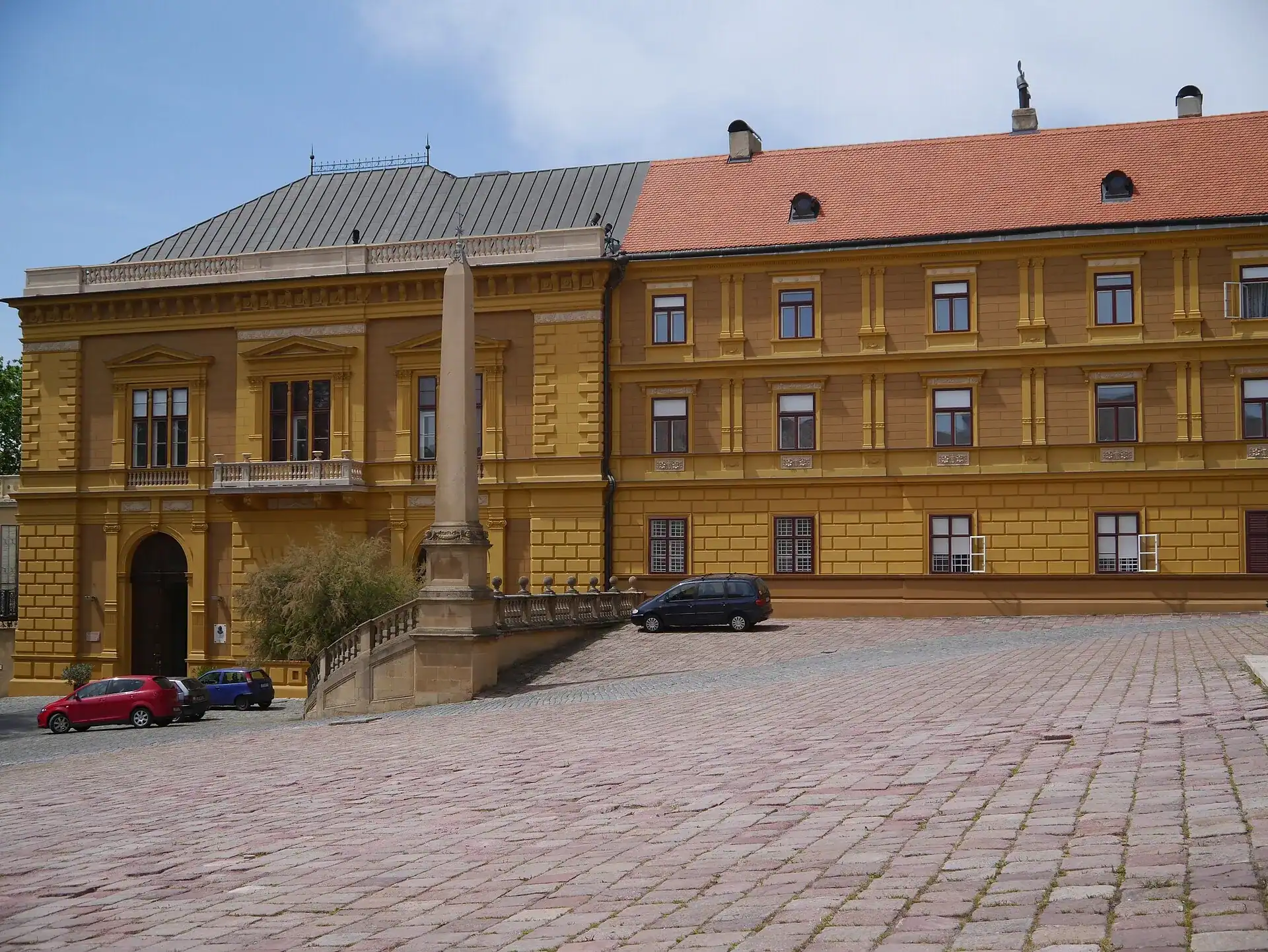 Photo: Zairon / Wikimedia Commons (CC BY-SA 3.0)