Cost of Living in Sassari
Where this figure comes from. No cost survey covers Sassari, so the $1,150 a month above is our own estimate rather than a measurement. On 416 of our 999 city guides the figure is built from a published Numbeo basket, a one-bedroom rent in the centre plus one person's monthly costs without rent, converted to USD; this city is not one of them. How we source everything.
Budget around $1,150 a month, which makes Sassari one of the cheaper cities in Italy. A one-bedroom runs roughly $400 to $700, well below the Sardinian coast and a fraction of the Costa Smeralda an hour east. Market produce is cheap and Sardinian food is distinctive: pane carasau, pecorino sardo, bottarga and the island's own wines. Eating out is inexpensive. Utilities are moderate with summer cooling the main cost. Island logistics push some imported goods above mainland prices, and the ferry and flight costs to the mainland are a real annual line for anyone travelling often. The northwest of the island functions as one economy rather than three towns, so rents in Sassari, Alghero and Porto Torres move against each other and a search that covers all three finds better value than one that fixes on the city. Alghero costs more for the same space because of the tourism, and Porto Torres less because of the port. Student demand from the university tightens the market each autumn. Winter heating is the seasonal cost, since the interior gets genuinely cold and the older stone housing holds it.
Where to Work in Sassari
Connectivity is adequate. Fibre has reached Sassari and the main towns at reasonable speeds, mobile coverage is good along the developed coast and thins in the interior, and power is reliable. There is a small coworking presence helped by the University of Sassari, which was founded in 1562. The time zone is central European. Sardinia has actively courted remote workers through regional programmes, and several municipalities have offered incentives to people relocating, which is worth investigating for anyone considering a longer stay on the island. Anyone considering a longer move should look at the Sardinian regional relocation schemes, several of which offer grants towards property purchase in the interior villages. The professional base here is medicine and agriculture rather than anything digital: the university hospital is the largest employer in the north of the island, and the agricultural research around cork, wine and dairy is substantial. Neither is much use to a visiting freelancer, though both mean the city has a settled middle class and the services that follow. Anyone needing an office beyond a spare room will find the choice thin, and Alghero has more of it despite being smaller.
Getting Around Sassari
Sassari is walkable in the historic centre and spread out beyond it, with buses covering the city and a light rail line. A car is close to essential for the island, since the coast, the nuraghe sites and the interior are not otherwise reachable. Alghero airport is about half an hour southwest with flights across Italy and to several European cities, and Porto Torres, twenty minutes north, has ferries to Genoa, Barcelona and Corsica. The road to the Costa Paradiso and the north coast beaches takes under an hour. Anyone driving inland should expect the roads to slow considerably once the coast is behind, since the interior is mountainous and the routes are narrow. The road network out of the city is better than the island's reputation suggests, since the northwest was the part that received investment, and Alghero, Stintino and Castelsardo are each within an hour on decent tarmac. The interior is where the driving slows. Asinara, the island off the northwest tip, was a prison until 1998 and is now a national park reached by boat from Stintino or Porto Torres, with no private cars allowed and albino donkeys grazing the old prison farms.
Sorting transport? Book an airport transfer, or compare car rental on Auto Europe and QEEQ.
Visas for Sassari
Italy is in the European Union and the Schengen area, so European Union and EEA citizens may live and work here with no permit, registering with the comune once resident. Everyone else needs a Schengen visa for short stays or a permesso di soggiorno for longer ones. The 2024 digital nomad visa applies here as elsewhere in Italy for highly skilled remote workers meeting income and insurance thresholds. Sardinia's regional relocation incentives are separate from the visa question and generally require residency to be established first. Anyone using the Genoa or Barcelona ferries should book vehicle space well ahead in summer, since the crossings fill with Italian holiday traffic from June. Registration with the comune is where residence becomes real in Italy, and it triggers a visit from the vigili urbani to confirm you actually live at the address, which is standard and surprises people. Sardinia's regional grants for moving to interior villages are administered by the comuni themselves rather than nationally, so terms differ village by village and the published schemes change year to year. Check with the specific comune rather than trusting an aggregator. Arriving by ferry from Spain or Corsica into Porto Torres involves no passport desk, since both routes stay inside Schengen, so the Entry/Exit System only knows where you first entered the zone.
Best Time to Visit Sassari
May, June, September and October are the best months, warm at around twenty four degrees with the sea swimmable from June to October and the beaches empty either side of the Italian holidays. July and August are hot at around thirty two degrees and are when the whole of Italy arrives, which changes the island completely. Winter is mild at around thirteen degrees and wet, and much of the coastal infrastructure closes. The mistral wind blows hard from the northwest through much of the year and is a genuine feature. The city's own calendar peaks twice. The Cavalcata Sarda in May brings costumed riders from across the island and is the largest secular gathering in Sardinia, while the Faradda di li Candareri on the fourteenth of August, when guild members carry enormous wooden candlesticks through the streets in fulfilment of a vow made during a plague, is UNESCO-listed and is the city at its most itself. Both fill the accommodation for miles around.
Pros and Cons of Sassari
Sassari gives you Sardinia at Sardinian rather than resort prices: the island's second city, with a genuine old town, an excellent archaeological museum, and half an hour to Alghero's Catalan-speaking old quarter and to beaches at Stintino that rank with any in the Mediterranean. The nuraghe, Bronze Age stone towers of which the island has thousands, are unlike anything else in Europe. Sassari itself is a working city rather than a beautiful one, and everything outside it requires a car, which is true of the whole island. Sardinian is also a distinct Romance language rather than an Italian dialect, and it is spoken widely in the interior with several quite different regional forms. Asinara, the island off the northwest tip, was a quarantine station and then a maximum security prison holding mafia bosses until 1998, and is now a national park where the descendants of the prison's albino donkeys wander a landscape nobody built on for a century. Boats run out from Stintino, and nothing else in the Mediterranean resembles it. Healthcare centres on the university hospital, which is the referral point for the whole north of the island.
Who Sassari Is For
A Sardinian base that is not a resort, particularly for people who will use the island properly: divers, walkers, and anyone drawn to the nuraghic sites, which are genuinely mysterious and largely unexcavated. Italian costs at the genuinely low end are the point, and the mainland rarely manages it. Without a car Sardinia is largely out of reach, the centre here is workaday rather than picturesque, and leaving the island frequently costs both money and time, since ferries and flights are each a real constraint on how spontaneous a month can be. Alghero is half an hour southwest, and Catalan has been spoken there since the fourteenth century. It remains an official local language, which is an odd and durable thing to find on a Sardinian coast. The two ends of Sardinia differ in character rather than in quality: the south around the capital is flatter, drier and more oriented to its own coast, while the north has the mountains, the Catalan corner and the crossings to Corsica. This city suits somebody using the island rather than looking at it, and it disappoints anyone who arrived expecting the Sardinia that appears in photographs, which is a coastline sixty kilometres away.
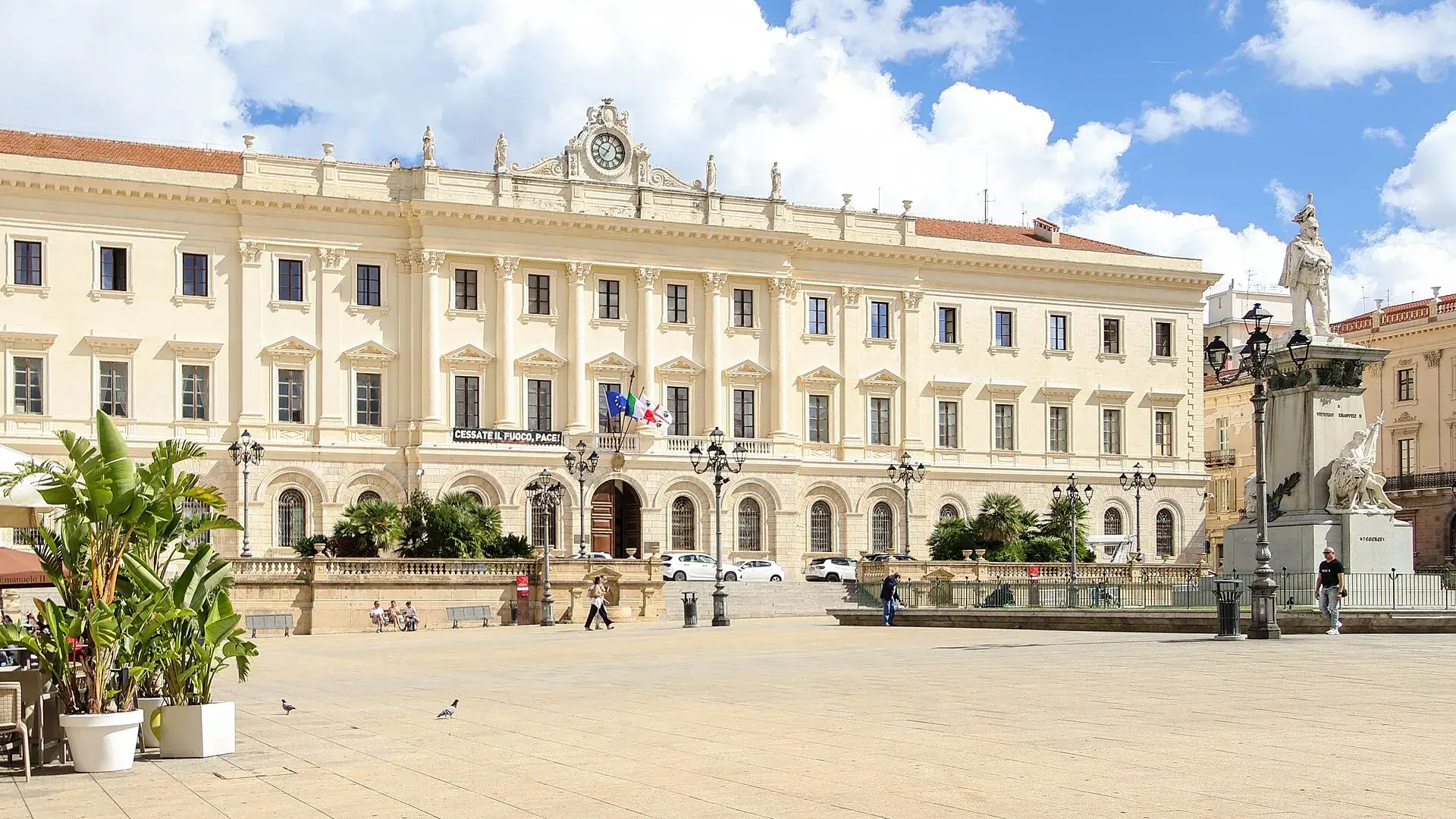 Photo: Dr. Thomas Liptak / Wikimedia Commons (CC BY-SA 4.0)