Cost of Living in Zaragoza
Where this figure comes from. No cost survey covers Zaragoza, so the $1,800 a month above is our own estimate rather than a measurement. On 416 of our 999 city guides the figure is built from a published Numbeo basket, a one-bedroom rent in the centre plus one person's monthly costs without rent, converted to USD; this city is not one of them. How we source everything.
Zaragoza is one of Spain's most affordable large cities, with monthly costs well below what you'd pay in Madrid or Barcelona. Rent is the biggest variable: a one-bedroom apartment in the center (Casco Antiguo, El Rabal) runs roughly $805-980 per month, while apartments a bit further out in districts like Delicias or Torrero drop to $520-690. Groceries at a local supermarket cost around $230-290 per month if you cook regularly. Eating out is a pleasure here: a pintxos crawl in El Tubo rarely breaks $17, and a solid sit-down lunch menu is typically $14-17.
For remote work infrastructure, a hot-desk at one of Zaragoza's coworking spaces runs $115-175 per month, which is very reasonable by European standards. A monthly public transport pass costs around $23-35, and the city's bike-share scheme runs just $40 per year. Utilities average $115-150 per month for a one-bedroom flat.
- Rent (central 1BR): $805-980
- Rent (outer areas 1BR): $520-690
- Groceries: $230-290
- Eating out: $290-460 (depending on how much you dine out)
- Coworking hot-desk: $115-175
- Local transport: $23-35
- Utilities: $115-150
- Total comfortable monthly range: $1,500-2,190
Where to Work
Zaragoza has a small but real coworking scene. TheHackership on Via de la Hispanidad is a tech-focused space with fast internet, 24-hour access, free coffee, and a recording studio, at $115 per month. Coworking ConJota near Parque del Buen Humor offers a bright, community-driven environment with an outdoor terrace for $175 per month. Regus Torre Aragonia on Avenida Juan Pablo II is the largest flexible workspace in the city (900+ sqm), housed in a landmark Rafael Moneo building, and suits those who prefer a corporate-grade setup. CIEM Zaragoza on Avenida de la Autonomia is a business incubator with coworking access, strong for networking with local startups. Studio 9 Space on Calle del Rio Huerva caters to creatives.
Cafe-working culture in Zaragoza is more limited than in cities like Barcelona. Spanish cafe culture prizes quick coffee over lingering with a laptop, so you'll get mixed results in traditional bars. That said, several cafes actively cater to remote workers: Cafe Nolasco (Calle San Jorge) has high chairs and laptop-friendly tables; La Clandestina Bistro (Calle San Andres) in the historic center offers WiFi and specialty coffee; Didola (Calle Don Jaime I) is a converted-library cafe with large tables and free WiFi. Veintiuno Coffee roasts its own beans and has multiple locations with WiFi.
Fiber coverage in Zaragoza is excellent. You should not have connectivity problems at any coworking space or modern apartment.
Getting Around
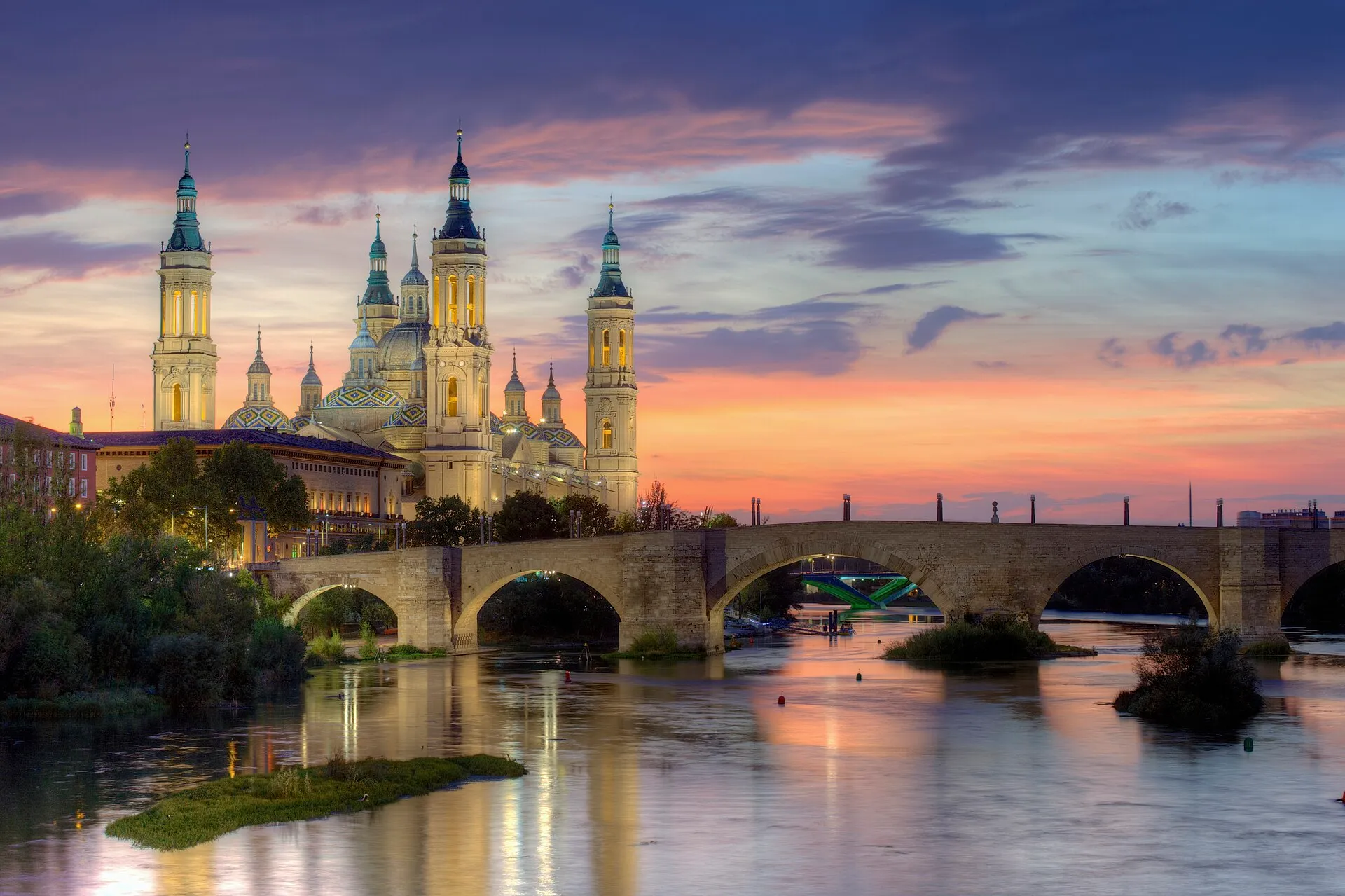
Zaragoza is a compact city of around 700,000 people and very walkable in the center. The Casco Antiguo, El Tubo, and the area around the Basilica del Pilar are all easily covered on foot. For longer distances, the city runs a single tram line crossing north to south with 25 stops, plus over 30 day bus lines and 7 night lines. A single ticket costs $1.50; a monthly pass is around $23-35. The tram is the fastest way to get across the city and runs until midnight on weekdays.
The city also has a bike-share scheme (Bizi Zaragoza) at $40 per year, and the flat terrain makes cycling practical for most of the urban area. Taxis are available throughout the city and easy to hail or app-book.
Zaragoza Airport (ZAZ) sits about 10 km west of the center. Bus Line 501 connects the airport to the main bus station and Delicias railway station in 20-30 minutes for $4.50. A taxi runs $23-29. The city also has a major AVE high-speed rail station (Delicias), putting Madrid 1h20m away and Barcelona under 2 hours, which is a genuine advantage for anyone who travels frequently for work.
Sorting transport? Book an airport transfer, or compare car rental on Auto Europe and QEEQ.
Visas and Staying Long-Term
Citizens of the US, UK, Canada, Australia, and most other non-EU countries can enter Spain visa-free for up to 90 days within any 180-day period under Schengen rules. This 90-day counter applies across the entire Schengen Area, not just Spain, so days spent in France or Germany count against your allowance.
If you want to stay longer, Spain offers a Digital Nomad Visa (formally the ARTIN, Autorizacion de Residencia para Teletrabajo de Caracter Internacional). As of 2026, the income requirement is approximately $3,280 per month for a single applicant. You must work remotely for a company or clients outside Spain, and no more than 20% of your income can come from Spanish sources. The initial authorization is valid for 3 years and renewable for a further 2. EU and EEA citizens can live and work in Spain without any visa. Zaragoza's own airport is an outer Schengen border too: Ryanair's flights to London Stansted and Marrakesh leave the zone from its terminal, so the Entry/Exit System logs you out and back in there, and a long weekend in Morocco is a genuine pause in the ninety-day count.
Best Time to Visit
Zaragoza sits in the Ebro valley with a continental Mediterranean climate: little rain, low humidity, and strong temperature swings between summer and winter. The city is also notorious for the Cierzo, a cold dry wind that blows from the northwest, which can make winter days feel harsher than the temperature suggests.
Spring (April and May) is the best window for remote work. Temperatures are mild (15-22 C / 59-72 F), the city is lively without being overwhelmed by visitors, and outdoor work or evening exploring is genuinely pleasant. September and October are a close second, with summer heat fading, excellent produce in the markets, and the city returning to its local rhythm after August holidays.
Avoid July and August if you can. Temperatures regularly hit 35-40 C (95-104 F), many local businesses close for extended periods in August, and the heat makes midday work uncomfortable unless you have strong air conditioning. Winter (December to February) is cool and manageable at 7-11 C (45-52 F) but the Cierzo wind can be unpleasant, and the city is quieter.
Pros and Cons
Pros
- Significantly cheaper than Madrid or Barcelona, with solid infrastructure
- Fast fiber internet and a real, if small, coworking scene
- Excellent food culture: El Tubo tapas scene, fresh Aragonese produce, ternasco lamb
- Highly walkable center; flat terrain great for cycling
- Safe city with a low crime rate relative to European averages
- AVE connections put Madrid and Barcelona within 2 hours
- Feels like a real Spanish city without the tourist saturation of coastal destinations
Cons
- English is not widely spoken outside tourist areas and younger demographics
- The Cierzo wind makes winter feel harsh; summers are very hot
- Small international expat and nomad community, less easy to plug into than Lisbon or Valencia
- Cafe-working culture is limited; dedicated coworking is the better bet
- Fewer direct international flights than Madrid or Barcelona; connections are limited
- Less to do on extended stays compared to coastal cities with beach access
Who Zaragoza Is Best For
Zaragoza suits remote workers who want the infrastructure and culture of a mid-size Spanish city without paying Madrid or Barcelona prices. You will do well here if you value affordability, good food, a walkable center, and easy rail access to Spain's major hubs. It's a strong pick for anyone on a tighter budget who still wants a real city experience, or for those spending several months in Spain who want somewhere quieter and more genuinely local than the well-worn nomad trail.
It is less well suited to people who rely on a large English-speaking community, want a lively digital nomad social scene, or need regular direct international flights. Those who want beach access or warmer winters will also find better options along Spain's Mediterranean coast.