Cost of Living in Querétaro
Real market data
Source: Numbeo · August 2026
$1,440/moSolo nomad1-bed centre + living costs
$1,870/moCoupleshared 1-bed + costs
$1,130/moLean / localcheaper area + costs
- 1-bed rent, city centre$900MX$15,563
- 1-bed rent, outside centre$590MX$10,206
- Monthly costs excl. rent (1 person)$540MX$9,371
- Meal, inexpensive restaurant$10MX$170
- Monthly transit pass$27MX$464
- Buy price, per m² (centre)$2,350MX$40,719
Prices are from Numbeo (August 2026), converted to USD at $1 = MX$17.34 (01 Aug 2026). The monthly living-costs figure is our transparent one-person basket, groceries, a few meals out, utilities, phone, internet, transport and essentials, priced from those figures. Solo adds central rent; couple and lean are estimates from the same numbers. The guide below quotes its own monthly range, which is a different measurement rather than a competing one: this table prices a defined basket at the figures above, while that range is a judgement about how somebody actually lives here.
Querétaro sits at a comfortable middle ground: more affordable than Mexico City or San Miguel de Allende, but not as cheap as smaller provincial towns. Expect to spend between $1,100 and $1,800 per month as a solo nomad, depending on your housing choice.
- Rent, central neighborhoods (Centro, Cimatario): $520-750/month for a furnished 1BR
- Rent, newer outer areas (Juriquilla, El Refugio, Zibatá): $750-1,150/month for more modern apartments
- Groceries (supermarket, cooking at home): $230-345/month; local markets and Mexican staples are cheap, imported goods add up
- Eating out: Street tacos and local fondas run $3.50-7 per meal; a sit-down dinner at a mid-range restaurant costs $12-23 per person
- Coworking hot desk: $92-145/month; day passes around $14-23
- Local transport (bus + occasional Uber): $40-69/month
- Total comfortable range: roughly $1,270-2,080/month, excluding coworking
A thrifty nomad sharing a place, cooking often, and using a cafe for work can come in closer to $900-1,000. Rents have been rising around 6-10% annually since 2023, so lock in a good deal when you find one.
Where to Work
Querétaro has a solid coworking scene for a city its size, anchored mostly in the central and northern commercial corridors.
Coworking Spaces
el27 Coworking in Milenio III is one of the most established options, with monthly hot desks around $115. Orbita CoWorks in El Carrizal offers a full amenity package including meeting rooms and printing. The WorkHub Alamos in Alamos 2da Sección is newer and well-reviewed. KROW sits directly in Centro if you want to stay in the historic zone. Monthly rates across the board run $92-145.
Cafe Work Culture
Working from cafes is accepted and common in Querétaro's Centro. Monono Coffee Shop on Ignacio Pérez 13-Norte has strong WiFi, good seating, and a welcoming vibe for laptops. Casa Apothecarius stays open until 11pm and has a stylish setup for evening work. Black Juice and Coffee Lab near Centro offers power outlets and a board game collection alongside specialty coffee. Maco Café has outlets near many tables and a rooftop terrace. Most cafes will expect you to order something every couple of hours; that norm is easy to meet.
The WiFi Situation
Home fiber is available in newer buildings, and dedicated coworking spaces advertise similar speeds. Typical connections elsewhere in the city are slower, which is fine for calls but can frustrate large uploads. Cafe WiFi is inconsistent: good at specialty coffee shops, unreliable at busier chain locations. A local SIM for backup data costs around $8.50-12/month for a solid 4G/LTE plan with 10+ GB.
Getting Around
The historic center is genuinely walkable. The core sights, most cafes, and many coworking options sit within a 1.5 km radius, on well-maintained colonial streets with wide sidewalks and pedestrian-priority zones. You can go days without needing any transport if you base yourself in Centro.
Beyond the center, the city spreads out considerably. The QROBus public bus network covers the main corridors but requires a prepaid QROBus card (not cash). Fares are around $0.50 per ride. Uber is reliable and cheap: most cross-city trips run $2.50-6, and drivers accept the app without issue. Taxi kiosks at set fares also operate from the bus terminal.
The main intercity bus terminal (Central de Autobuses) sits about 2 km south of Centro, easily reached by Uber. First-class buses connect Querétaro to Mexico City (about 2.5 hours, $14-20) and San Miguel de Allende (1 hour, $4.50-7) frequently throughout the day.
Querétaro Intercontinental Airport (QRO) is roughly 32 km northeast of downtown. Uber and taxi kiosks serve the route; budget around $14-23 each way.
Sorting transport? Book an airport transfer, or compare car rental on Auto Europe and QEEQ.
Visas and Staying Long-Term
Most nationalities, including US, Canadian, UK, EU, and Australian passport holders, enter Mexico visa-free for tourism. On arrival you are typically granted up to 180 days on a tourist permit (FMM), though border agents can issue fewer days, so ask clearly if you need the full 180. Mexico still has no dedicated digital nomad visa in 2026, so remote workers in Querétaro rely on the tourist FMM or temporary residency.
For stays beyond 180 days or if you want a more stable legal status, the Temporary Resident Visa is the main route. It requires proof of consistent monthly income of approximately $3,700 or savings of around $73,000 over the prior 12 months. Apply at a Mexican consulate in your home country before arriving. The visa is initially issued for one year and can be renewed up to four times.
Extending a tourist permit inside Mexico is not officially possible; most long-term visitors do a border run or apply for residency.
Best Time to Visit
Querétaro sits at roughly 1,800 meters elevation, which keeps temperatures mild year-round. Daytime highs range from around 22°C (72°F) in the coolest months to 30°C (86°F) in the warmest, with evenings often dropping to 12-15°C (54-59°F), so keep a layer handy.
The rainy season runs June through September. Afternoon thunderstorms are the norm: mornings are clear, rain arrives around 4-6pm, and clears by evening. This disrupts outdoor evenings more than workdays. The rest of the year is dry and sunny.
The sweet spot for remote work is October through May: dry, comfortable, and busy with local cultural events and festivals. December and the pre-Semana Santa period in March-April bring domestic tourism, which means fuller restaurants and some accommodation price bumps, but nothing disruptive for a working nomad.
Pros and Cons
- Consistently cited as one of Mexico's safest cities, with a lower crime rate than most major Mexican urban centers
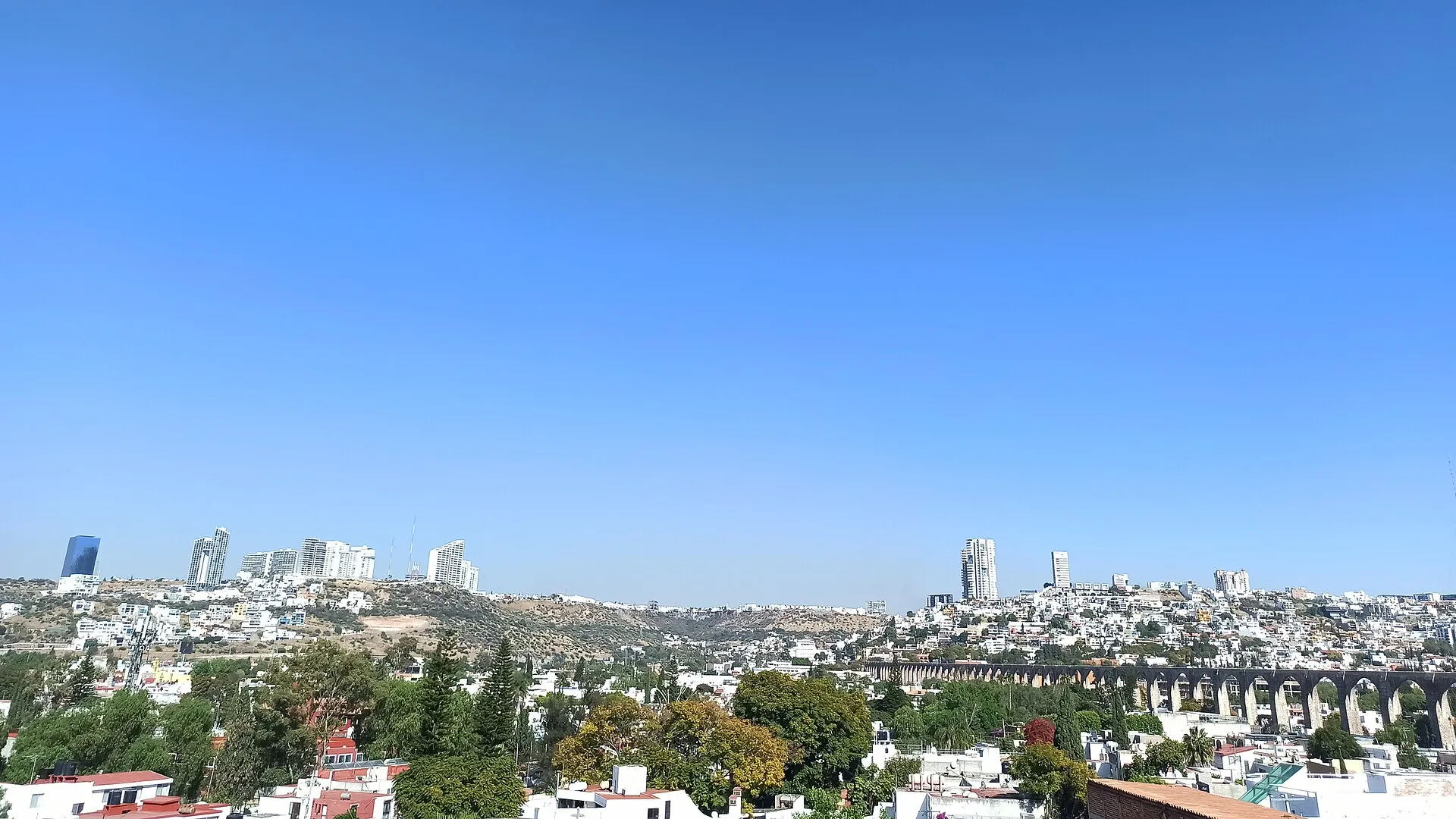
- UNESCO World Heritage historic center with genuine colonial architecture and walkable plazas
- Comfortable climate year-round thanks to the high-altitude location
- Good coworking infrastructure for a mid-size city, with multiple options in different price brackets
- Easy access to Mexico City (2.5 hours by bus), San Miguel de Allende (1 hour), and the Sierra Gorda mountains
- Lower cost than CDMX or San Miguel for a comparable quality of life
- Growing food and coffee scene with genuine variety across price points
- Small English-speaking community: functional Spanish is close to essential for daily life
- Limited nomad social scene compared to Oaxaca, CDMX, or Playa del Carmen; you may need to be proactive about meeting people
- Average WiFi speeds are modest outside dedicated coworking spaces and newer apartment buildings
- Rising rents: the city is growing fast and Centro accommodation is increasingly hard to find furnished
- Traffic congestion in outer areas like Juriquilla and Zibatá during rush hours
- Not a beach or party destination: nightlife and the broader entertainment scene are quieter than tourist-heavy cities
Who Querétaro Is Best For
Querétaro suits nomads who want a real Mexican city, not a tourist bubble. If you are comfortable with Spanish, or actively want to improve it, the city rewards that investment with an authentic daily life that cities like Playa del Carmen or Puerto Vallarta cannot offer at the same price point.
It is a particularly good fit for anyone who values safety and stability above nightlife and scene, for people who want a quieter base with easy weekend access to Mexico City, and for expats considering longer-term residency in Mexico who want to test the country before committing to a more touristic hub.
Skip it if you need a large English-speaking nomad community to feel at home, if reliable ultra-fast WiFi in cafes is non-negotiable, or if you are looking for beach proximity or an active party scene. It is also not the right first Mexico city if you have zero Spanish: the learning curve without it is real here in a way it is not in Playa del Carmen or Mexico City's Roma Norte neighborhood.