Cost of Living in Logrono
Where this figure comes from. No cost survey covers Logrono, so the $1,250 a month above is our own estimate rather than a measurement. On 416 of our 999 city guides the figure is built from a published Numbeo basket, a one-bedroom rent in the centre plus one person's monthly costs without rent, converted to USD; this city is not one of them. How we source everything.
Budget around $1,250 a month. A one-bedroom runs roughly $500 to $800, well below Bilbao an hour north and a fraction of Madrid. Market produce is very good and cheap, since La Rioja is agricultural country, and the wine is the obvious point: good Rioja costs a few euros a bottle here. Eating out is where the city excels and it is inexpensive, with the pincho bars on Calle Laurel serving a small plate and a glass for a couple of euros. Utilities are moderate. Anyone comparing with the Basque country should note that San Sebastian, two hours north, costs roughly double for a comparable flat and considerably more to eat in. The regional border two hundred metres away is worth understanding, because Spain's fiscal map is not uniform: Navarre and the Basque Country operate their own tax systems under historic charters, with different income tax bands and their own collection, while La Rioja sits inside the ordinary Spanish regime. Anyone employed across that line or considering where to register should take advice on it. Locally, the wine harvest brings seasonal work each September and October, which is the one time of year casual labour is genuinely available here.
Where to Work in Logrono
Connectivity is very good. Spain has extensive fibre at high speeds and low prices, comprehensive mobile coverage and reliable power, and Logrono is well served. There is a small coworking presence and the University of La Rioja adds a young population. The time zone is central European, which in northern Spain is an hour ahead of solar time and produces the famously late Spanish day. Spain's digital nomad visa applies here as everywhere and has brought a substantial number of people to the country, though mostly to the larger cities. Wine is the professional economy and it is more technical than outsiders assume, with oenology, viticultural research and the certification apparatus of the denomination employing a substantial professional class alongside the growers. The regional government's small scale means officials are reachable in a way they are not in Madrid or Barcelona, which matters if you are setting anything up. For a remote worker with clients elsewhere the practical point is simply that the connection is fast, the flat is cheap and the interruptions are few.
Getting Around Logrono
Logrono is flat and compact and entirely walkable, with the old town, the cathedral and Calle Laurel within a few minutes of each other. Buses cover the rest and cycling is easy along the Ebro. Trains reach Zaragoza in two hours and Madrid in about four, and buses to Bilbao take under two hours, which makes Bilbao airport the practical international connection. The Camino de Santiago passes directly through the city, which means a steady stream of walkers through the centre from spring to autumn. Anyone walking the Camino should know that Logrono is the end of a long stage from Los Arcos and that the municipal albergue fills early in summer. The Camino's passage through the city has a practical dividend beyond atmosphere: it keeps a network of cheap accommodation, luggage transfer services and marked walking routes running year-round that would not otherwise exist in a city this size. Cycling the Ebro path west leads into the vineyards within twenty minutes. A car is the honest answer for visiting bodegas, most of which sit outside the villages and none of which are on a bus route.
Sorting transport? Book an airport transfer, or compare car rental on Auto Europe and QEEQ.
Visas for Logrono
Spain is in the European Union and the Schengen area, so European Union and EEA citizens may live and work here with no permit, registering for an NIE number and on the local padron. Everyone else needs a Schengen visa for short stays or a residence permit for longer ones. Spain operates a digital nomad visa under its 2023 startups law, valid up to a year initially and renewable to five, with an income threshold and a favourable tax regime for qualifying applicants, and it has become one of the most used schemes in Europe. The tax question is the one worth planning rather than the immigration one, since Spain's favourable regime for inbound workers has conditions that catch people: it must be applied for within a set window of becoming resident, it excludes anyone who has been Spanish tax resident in recent years, and the treatment of foreign income under it is narrower than the summaries suggest. Get advice before the move rather than in the following spring, because several of the doors close on arrival rather than at the filing deadline. For flights from London the external border is Bilbao airport, served by Vueling from Gatwick and Heathrow, so the Entry/Exit System check is over before the bus south to Logroño.
Best Time to Visit Logrono
May, June, September and October are the best months, warm at around twenty two degrees, with the grape harvest in September and October the region's busiest and most interesting period. July and August are hot at around thirty degrees. Winter is cold for Spain, often near freezing, with the Ebro valley catching fog and the Sierra de Cebollera holding snow. The San Mateo festival in September, which celebrates the harvest and includes the treading of the first grapes, fills the city for a week. Book accommodation well ahead for that week, and then use it: the wineries around the city run tours through the harvest that they do not offer for the rest of the year. The vendimia is the season that defines the year here, and the fortnight when the harvest actually happens moves with the weather rather than the calendar, so anyone hoping to see it should keep their dates loose into late September. Bodegas run tours through it but book out. Spring brings the Ebro's fog off the river in the mornings, which burns away by ten and makes the vineyards photograph better than any other time of year.
Pros and Cons of Logrono
Calle Laurel is a single street with around forty pincho bars, each specialising in one thing, and you move from bar to bar eating and drinking for a few euros at a time, which is a genuinely distinctive way to spend an evening and is why Spaniards come here in the first place. The Rioja vineyards are all around, several with architecturally serious wineries. The cultural offer beyond food and wine is limited, the winters here are colder than most of Spain, and English is barely used outside the hotels. La Rioja is also Spain's smallest autonomous community by population, which means the regional government is unusually accessible and the administration is quicker than in the larger regions. The denomination's internal politics are livelier than the wine's reputation suggests: Rioja Alavesa lies in the Basque Country and has pushed for its own separate appellation for years, which the wider region has resisted, and the argument runs through local business and local politics alike. The regional hospital covers the whole community competently, with Zaragoza and Bilbao holding whatever it cannot. The city is safe and small enough that most of it is walkable at any hour.
Who Logrono Is For
Anyone who takes wine seriously, since this is the centre of the best known region in Spain and the wineries are open and welcoming, along with walkers on the Camino, which passes through. Spanish quality of life at northern Spanish prices, and food a good deal better than a city this size ought to have. La Rioja conducts itself in Spanish and offers very little English to lean on, so arriving without it makes everything harder than it needs to be. A hundred and fifty thousand people also behave like a town rather than a city, which is the appeal for some and the limit for others. The Cameros hills south of the city hold thousands of preserved dinosaur footprints, with several marked trails running between the sites. Very few people arrive in Rioja expecting that. Anyone choosing a base in northern Spain should weigh what they actually want from it: Bilbao has the museums, the airport and the size, San Sebastian has the coast and the prices to match, Pamplona has the university and the fiesta, and this city has the lowest costs of the four with the best everyday eating. It suits somebody who intends to learn about wine properly rather than drink it, and who is content that the evenings are the entertainment.
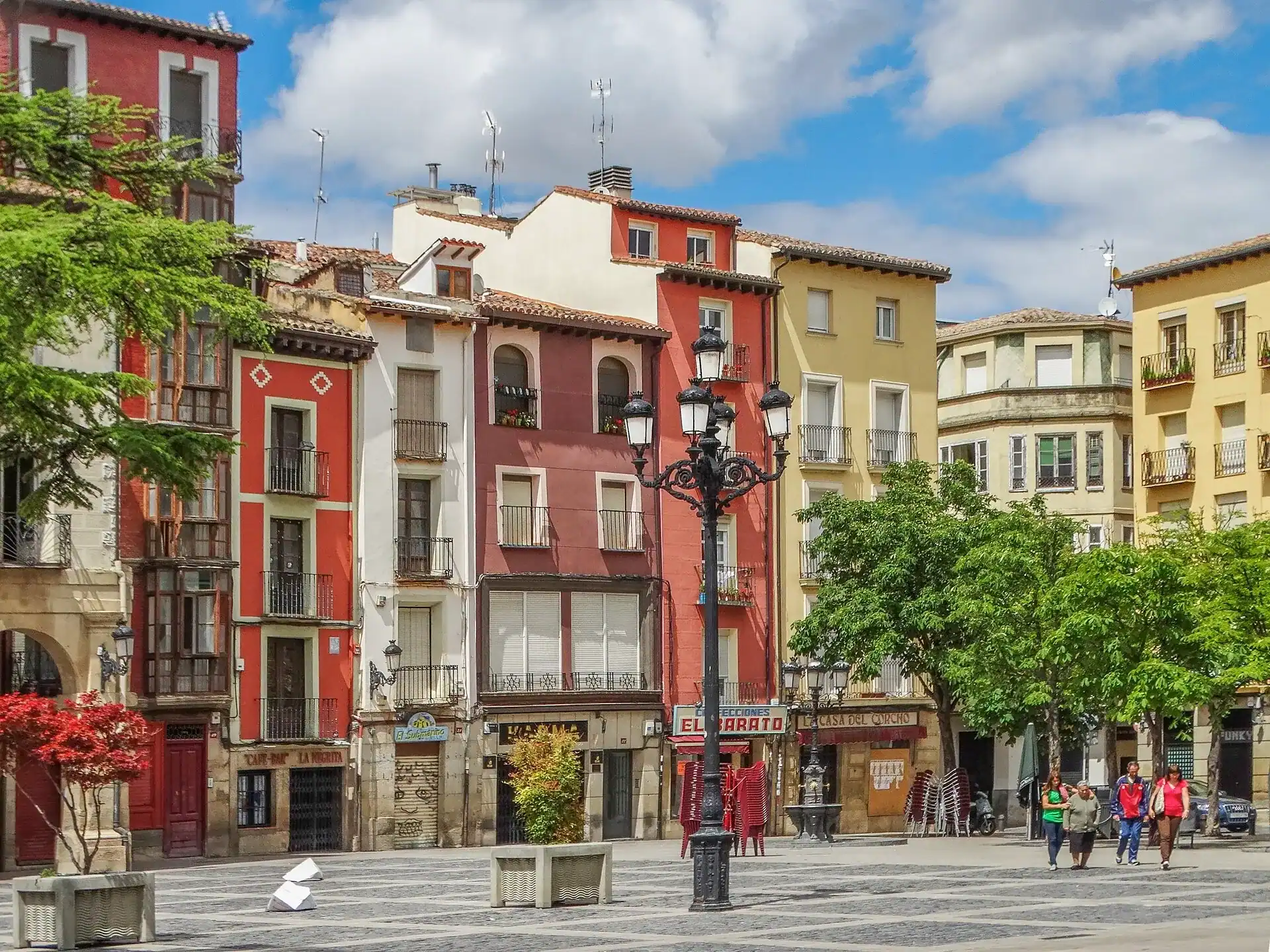 Photo: Adam Jones from Kelowna, BC, Canada / Wikimedia Commons (CC BY-SA 2.0)