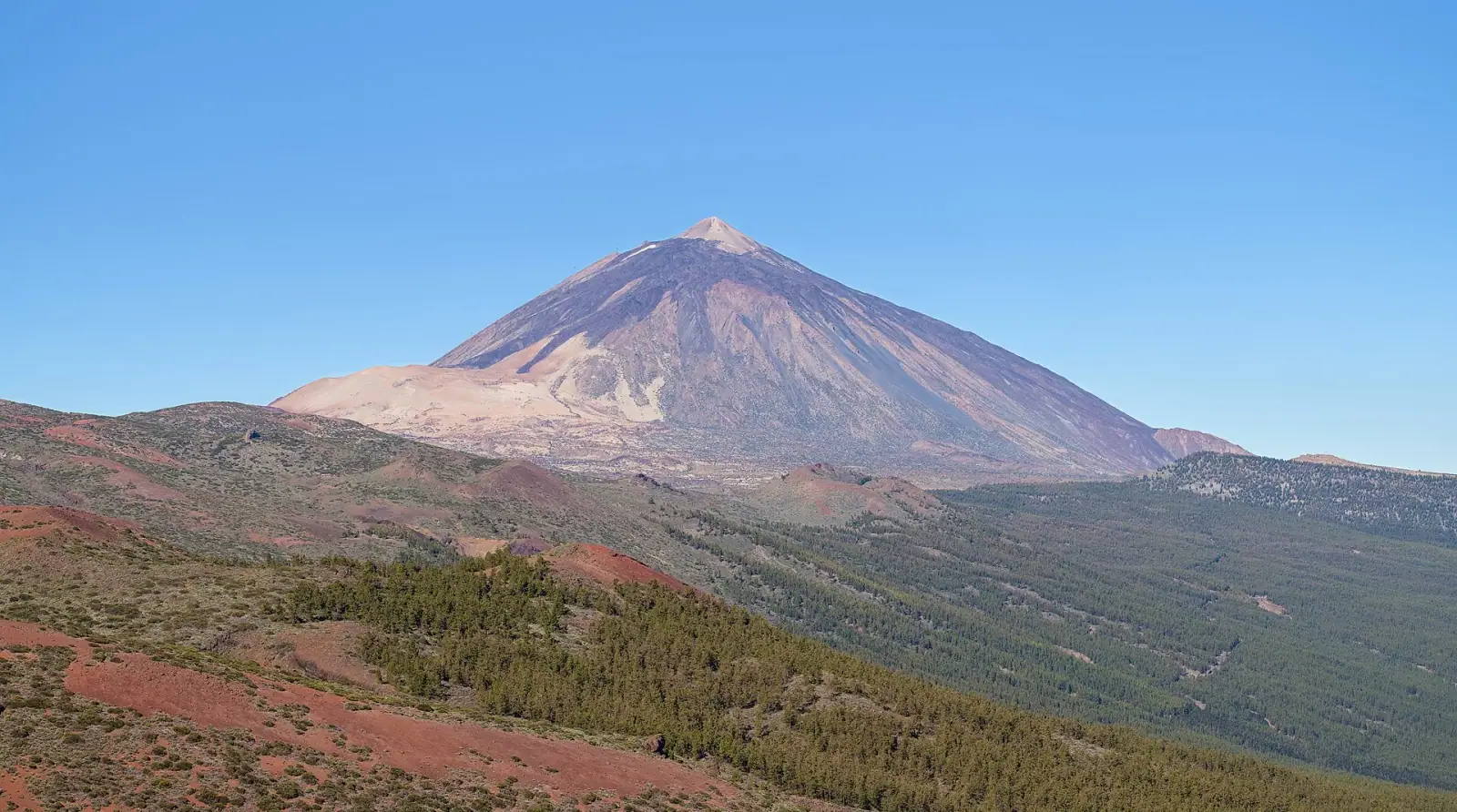
Mount Teide volcano rising above pine forests in Tenerife, Spain
Photo: Thomas Wolf, www.foto-tw.de / Wikimedia Commons (CC BY-SA 3.0 de)
Spain flag

Tenerife

Spain

A volcanic island with eternal spring and dramatic landscapes.

€2.400
Monthly Budget
--
Current Weather
Arid
Climate Type
70 Mbps
Avg. WiFi Speed
8/10
Safety Score
5,000+
Active Nomads
--
Time Difference
Scroll
0
Nomad Score

Setting Up as a Nomad in Tenerife

A volcanic island with eternal spring and dramatic landscapes. A arid climate and strong climate make Tenerife an easy base, and at about $2,400 a month it fits a range of budgets. Keep the culture scene in mind.

Compare Tenerife vs Las Palmas →

Category Breakdown

How Tenerife scores across all 13 factors

Weather in Tenerife

Monthly averages from 2019-2023 (Open-Meteo), and the best time to visit

-2°
Jan
-1°
Feb
Mar
11°
Apr
15°
May
16°
Jun
23°
13°
Jul
22°
13°
Aug
18°
Sep
15°
Oct
10°
Nov
Dec
Daily high & low (°C)Rainfall (mm/month)Best months to visit

The best time to visit Tenerife for comfortable weather is Jun, Jul, Aug. The warmest month is Jul (around 23°C by day), and the wettest is Sep (about 123mm of rain).

Chasing good weather? See other cities that are warm in Jun, or plan a multi-city route around the seasons. Staying a while in Tenerife? Check visa options, your time-zone overlap and how far your budget stretches, or find it on the world map.

Historical monthly averages, not a forecast. Source: Open-Meteo.

Things to do in Tenerife: it is one of our top nomad spots for diving. See more things to do off the clock.

Best Neighborhoods in Tenerife

Where to base yourself for the perfect nomad experience

Santa Cruz de Tenerife

$
Urban cultural

Capital culture and urban energy

The island capital offers cultural institutions, modern architecture, and authentic Canarian life beyond tourism. The famous Carnival, shopping districts, and harbor create urban Spanish atmosphere.

Best for: Culture seekers and urban travelers
✓ Pros
  • Cultural venues
  • Carnival celebrations
  • Authentic Canarian
  • Good shopping
✗ Cons
  • No beaches
  • Less touristy
  • Hot summers

La Laguna

$
Historic academic

UNESCO university town charm

The historic capital features UNESCO-listed colonial architecture and university energy. Tapas bars, bookshops, and cultural venues fill the pedestrian streets while students bring life.

Best for: History lovers and culture seekers
✓ Pros
  • UNESCO heritage
  • Student atmosphere
  • Great tapas
  • Cooler climate
✗ Cons
  • Cloudy weather
  • No beach
  • Limited nightlife

Puerto de la Cruz

$$
Traditional resort

Traditional resort with local character

The original tourist area maintains local character with historic plazas, botanical gardens, and the famous Lago Martianez seawater pools. European retirees and nomads mix with Canarians.

Best for: Those seeking resort comfort with culture
✓ Pros
  • Seawater pools
  • Local character
  • Botanical gardens
  • Established tourism
✗ Cons
  • Older tourist base
  • Rocky beaches
  • Limited nightlife

Los Cristianos/Las Américas

$$
Package resort

Southern sun and package tourism

The southern resort strip offers guaranteed sunshine, sandy beaches, and extensive tourist infrastructure. British and German visitors fill all-inclusive hotels while nightlife pumps.

Best for: Sun seekers and party goers
✓ Pros
  • Best weather
  • Sandy beaches
  • Full infrastructure
  • Active nightlife
✗ Cons
  • Very touristy
  • Generic feel
  • No local culture

El Médano

$
Wind sports nomad

Windsurf village with nomad community

This wind sports capital attracts kitesurfers, windsurfers, and increasingly digital nomads. Affordable living, year-round wind, and relaxed atmosphere create a distinct community.

Best for: Wind sports enthusiasts and nomads
✓ Pros
  • Wind sports paradise
  • Nomad community
  • Affordable
  • Relaxed vibe
✗ Cons
  • Very windy
  • Limited nightlife
  • Small town

Cost of Living in Tenerife

Tenerife is cheaper than mainland hubs like Barcelona or Madrid, but the south (Costa Adeje, Los Cristianos, Playa de las Americas) has been pushed up by tourism, so your rent is where most of your money goes. Prices below are in euros with rough USD equivalents at about 1.15 to the euro. Treat them as a mid-2025 to 2026 snapshot, since the rental market moves fast.

  • Rent, one-bedroom in a central or resort area: roughly EUR 900 to 1,300 (about USD 1,035 to 1,495) per month for a long stay. Furnished short-term lets in Costa Adeje run higher.
  • Rent, cheaper area: a studio or one-bed in Santa Cruz, La Laguna, or an inland town runs closer to EUR 500 to 800 (about USD 575 to 920). Colivings that bundle a room, coworking, and community usually land at EUR 700 to 1,500 (about USD 805 to 1,725).
  • Groceries: about EUR 200 to 260 (USD 230 to 300) per month if you cook. Local produce and Mercadona keep this reasonable, though imported goods cost more because everything ships in.
  • Eating out: a cheap main is around EUR 15 (USD 17), a mid-range meal for two about EUR 50 (USD 58), and a coffee near EUR 1.60 (USD 1.85).
  • Coworking hot-desk: a monthly pass is roughly EUR 150 to 200 (USD 173 to 230); day passes sit near EUR 20 (USD 23).
  • Local transport: the TITSA resident monthly bus pass is EUR 19 (USD 22); most single rides cost a few euros with the ten+ card.

Realistic monthly total: a solo nomad renting solo can expect roughly EUR 1,600 to 2,600 (about USD 1,840 to 2,990). Sharing, choosing the north, or splitting a coliving pushes you toward the low end.

Where to Work

The coworking scene splits along the same north/south line as everything else. In the south, near where most nomads land, Zen Den in Costa Adeje is the main social hub, sitting close to the beach with fast WiFi, free coffee, and regular evening networking. Los Cristianos has beachfront options aimed at short stays. In the north, Santa Cruz has the most professional spaces, including Workeamos, a large two-level hub with meeting rooms, phone booths, and 24/7 member access. You will also find smaller community spaces in Puerto de la Cruz and La Orotava.

Cafe-work culture exists but is more relaxed than in a dedicated nomad city, so treat cafes as a backup rather than your daily office. On the internet, the island is in good shape: fibre is widely available in the main towns and coworking spaces, and speeds commonly run from 100 to 600 Mbps. Check the actual connection before signing any longer lease, since older or more rural buildings can lag.

Getting Around

The green TITSA buses cover almost the whole island and are the backbone of getting around without a car. Grab a ten+ card (about EUR 2 to buy, then topped up in five-euro increments), which cuts fares by roughly 20 to 30 percent and works on buses and the Santa Cruz to La Laguna tram. A short ride costs a few euros.

That said, a car is genuinely useful here. Buses connect the main towns well, but reaching quieter villages, Teide National Park, or the north coast on your own schedule is far easier with a rental, and rentals are cheap by European standards. Many nomads go car-free in the south and rent occasionally for trips.

There are two airports. Tenerife South (TFS) handles most international flights and is the one you will likely use, sitting close to the southern nomad zone; buses 111, 343, 40, and the night 711 link it to Los Cristianos, Las Americas, and Costa Adeje. Tenerife North (TFN) serves more inter-island and domestic routes and connects to Santa Cruz and La Laguna. The 343 express runs directly between the two airports.

Visas and Staying Long-Term

If you hold a passport with visa-free access to the Schengen Area (for example the US, UK, Canada, or Australia), you can stay up to 90 days within any 180-day period as a tourist. That window resets slowly, so you cannot simply leave for a weekend and return.

For longer stays, Spain's digital nomad visa lets non-EU remote workers live here legally. You generally need to work remotely for non-Spanish companies or clients (a small share of Spanish income is allowed), show a university degree or equivalent experience, and prove income around 200 percent of Spain's minimum wage, which was roughly EUR 2,368 per month for a single applicant in 2025 and higher in 2026. It is typically issued for one year from a consulate or up to three years if applied for from inside Spain, and it is renewable toward longer-term residency. A practical bonus of the Canary Islands is the lower IGIC sales tax, a general rate of 7 percent versus 21 percent VAT on the mainland, which trims the cost of many purchases. Visa rules change, so confirm current thresholds and paperwork with an official Spanish government or consular source before you commit.

Best Time to Visit

Tenerife is called the island of eternal spring for good reason: winters rarely drop below about 15C and summers sit around 25 to 30C, so there is no truly bad season for remote work. The catch is the north/south split. The south (Costa Adeje, Los Cristianos, Las Americas) is dry, sunny, and sheltered from the trade winds year-round, which is why most nomads base there. The north (Santa Cruz, La Laguna, Puerto de la Cruz) is greener but cooler, cloudier, and windier.

If you want the most reliable conditions, spring through early summer is a sweet spot: winds calm, temperatures are comfortable, and the crowds are thinner than peak season. Watch for occasional calima, a Saharan dust haze that can bring hot, hazy air for a day up to a week. For a long working stay, the south in almost any month is a safe bet.

Pros and Cons

  • Pro: reliably warm, sunny weather all year, especially in the south.
  • Pro: lower cost of living than mainland Spanish cities, plus the reduced IGIC tax.
  • Pro: solid fibre internet and a growing coworking and coliving scene.
  • Pro: outdoor access to Teide, hiking, beaches, and diving on your doorstep.
  • Con: the southern nomad zones sit inside tourist-resort territory, which can feel generic and packaged.
  • Con: a car is close to essential for exploring beyond the main towns.
  • Con: island isolation and time away from mainland Europe; everything imported costs more.
  • Con: wind in the north and the occasional dusty calima can dull the paradise image.

Who Tenerife Is Best For

Tenerife suits you if you want dependable warm weather, outdoor sport, and a European base with lower costs and a lighter tax load, without the intensity of a big city. It works especially well for sun-driven nomads who will base in the south, dip into the coworking and coliving community, and rent a car when they want to roam.

Skip it if you crave a dense, walkable capital with nightlife and a large local scene, since the resort south can feel touristy and the real cities sit in the cooler, windier north. It is also a weaker fit if you refuse to drive, want to hop across mainland Europe cheaply and often, or need a hard-charging, high-energy nomad hub. For that, a mainland Spanish city may serve you better.
Where to Stay in Tenerife

Top neighborhoods and accommodations for digital nomads

Dock 1 Suites

Serviced apartments
Santa Cruz Centre

Fully equipped suites with kitchen and fast WiFi, steps from Rambla de Santa Cruz in the walkable city capital.

Check availability →

Apartamentos Masaru

Aparthotel
La Paz

Spacious studio and one-bed apartments with dedicated desk, fast WiFi, two pools and gardens near Playa Jardin.

Check availability →

GF Noelia

Aparthotel
Puerto de la Cruz

Central aparthotel with self-catering studios, rooftop pool, and mountain views one block from Playa Jardin beach.

Check availability →

Hotel AF Valle Orotava

Hotel
Puerto de la Cruz

Four-star hotel in the heart of Puerto de la Cruz with 50 Mbps in-room WiFi, work desk, and long-stay rates for nomads.

Check availability →

Puerto Nest Hostel

Hostel
Puerto de la Cruz

Social hostel two minutes from Playa Jardin with a dedicated workspace area, terrace views of Teide and weekly group activities.

Check availability →

Browse apartments, aparthotels and hotels across Tenerife. Compare prices and book a base that suits a remote-work stay.

See available stays in Tenerife →

Affiliate link. See our disclosure.

Best Coworking Spaces

Where nomads get work done in Tenerife

Espacio Kernel

Coworking Space
Santa Cruz Centre

Five-floor, 1,100sqm coworking hub near the historic centre with biometric access, rooftop terrace, and free coffee.

Visit website →

Workeamos Coworking

Coworking Space
Santa Cruz Centre

Bright, social coworking space near Weyler Square with lounge, meeting room, kitchen, and phone booths.

Visit website →

The Zen Den Tenerife

Coworking Space
Costa Adeje

Beach-close coworking with 1 Gbps WiFi 6 fibre, sit-stand desks, and weekly nomad networking events.

Visit website →

Chill Co-Working

Coworking Space
Los Cristianos

Tenerife South's largest coworking at 500sqm across two floors, with ample natural light and meeting rooms.

Visit website →

We The North Specialty Coffee

Specialty Cafe
La Laguna

Specialty coffee shop in La Laguna with fast WiFi, plentiful power outlets, and rotating single-origin beans.

Visit website →

Pistacho Coffee Brunch

Brunch Cafe
Los Cristianos

Health-forward brunch cafe in Los Cristianos open from 8am, popular with nomads for its fast WiFi and healthy menu.

Visit website →

Where to Eat & Drink

Best food and drink spots in Tenerife

El Aguarde

Canarian Creative
Santa Cruz Centre

Luminous restaurant with a visible wine cellar serving inventive Canarian market cooking and excellent tortilla de papas.

Visit website →

Tasca Ihüey

Bistronomic Canarian
Puerto de la Cruz

Intimate restaurant in the historic quarter blending traditional Canarian flavours with contemporary technique and local produce.

Visit website →

El Taller Seve Diaz

Michelin Starred
Puerto de la Cruz

Michelin-starred chef Seve Diaz presents creative tasting menus rooted in Canarian land and sea produce.

Visit website →

Etéreo by Pedro Nel

Mediterranean Canarian
Santa Cruz Centre

Elegant dining near Parque Garcia Sanabria with meticulous Mediterranean-Canarian plates and a Repsol Sol award.

Visit website →

Mesón Asador Casa Rodrigo

Traditional Canarian
Costa Adeje

Relaxed family restaurant serving classic Canarian dishes including arroz caldoso, papas con mojo, and roast meats.

View on Maps →

Aromas del Mar

Seafood Bar
Costa Adeje

Beachfront spot on the Torviscas promenade serving fresh seafood, fish soup, and Galician-style octopus with wine by the glass.

View on Maps →

What Do Nomads Say?

Vote on how accurate these scores are based on your experience

Cities with a Similar Vibe to Tenerife

Different places that score alike across our 13 categories, if you like Tenerife, these tend to feel similar.

Frequently Asked Questions About Tenerife

How much does it cost to live in Tenerife as a digital nomad?

A comfortable nomad budget in Tenerife is around $2,400 a month: a furnished rental, food, coworking, and getting around. Live a little outside the center or eat local to spend less.

Is the internet fast enough for remote work in Tenerife?

With a WiFi score of 7/10, connectivity in Tenerife is good for calls and focused work. A prepaid local SIM keeps you online when you are away from the apartment.

Is Tenerife safe for digital nomads?

Tenerife scores 8 out of 10 for safety in our ratings, which is excellent for solo travel and long stays. Use normal precautions at night and with valuables, and choose well-reviewed areas.

Is Tenerife a good city for digital nomads overall?

For nomads, Tenerife is worth a look if you value climate and nature. Costs sit near $2,400 a month and the community keeps growing, though, like anywhere, it will not match every checklist.