 Tenerife
One person, one year, two islands
Take a single applicant and run the paperwork. Say you are a Canadian designer earning $4,500 a month from a studio in Toronto, and you would like to spend next year in the Canaries.
You land on your passport, which gives you 90 days in any 180. The islands are in Schengen, so a week in Lisbon on the way uses up the same allowance. To stay on, you apply for Spain's digital nomad visa, which asks a single applicant for about $3,280 a month, double the Spanish minimum wage. You clear it, and you get a year that can be renewed up to five.
Now look for the line where the application asks which island. There isn't one. Every rule you meet comes from Madrid or from the Canaries as a whole, which is why this comparison is stranger than it looks:
| Tenerife | Las Palmas | |
|---|---|---|
| Visa-free stay | 90 days in 180 | 90 days in 180 |
| Nomad visa income | $3,280 a month | $3,280 a month |
| Sales tax (IGIC, against 21% on the mainland) | 7% | 7% |
| Clock | An hour behind Madrid | An hour behind Madrid |
| Our monthly estimate for a remote worker | $2,400 | $2,400 |
Our nomad visa page covers the conditions in full. For the purposes of this decision, you can stop reading it: no document will choose for you. The only box left is the one that asks for your address.
An address in Las Palmas
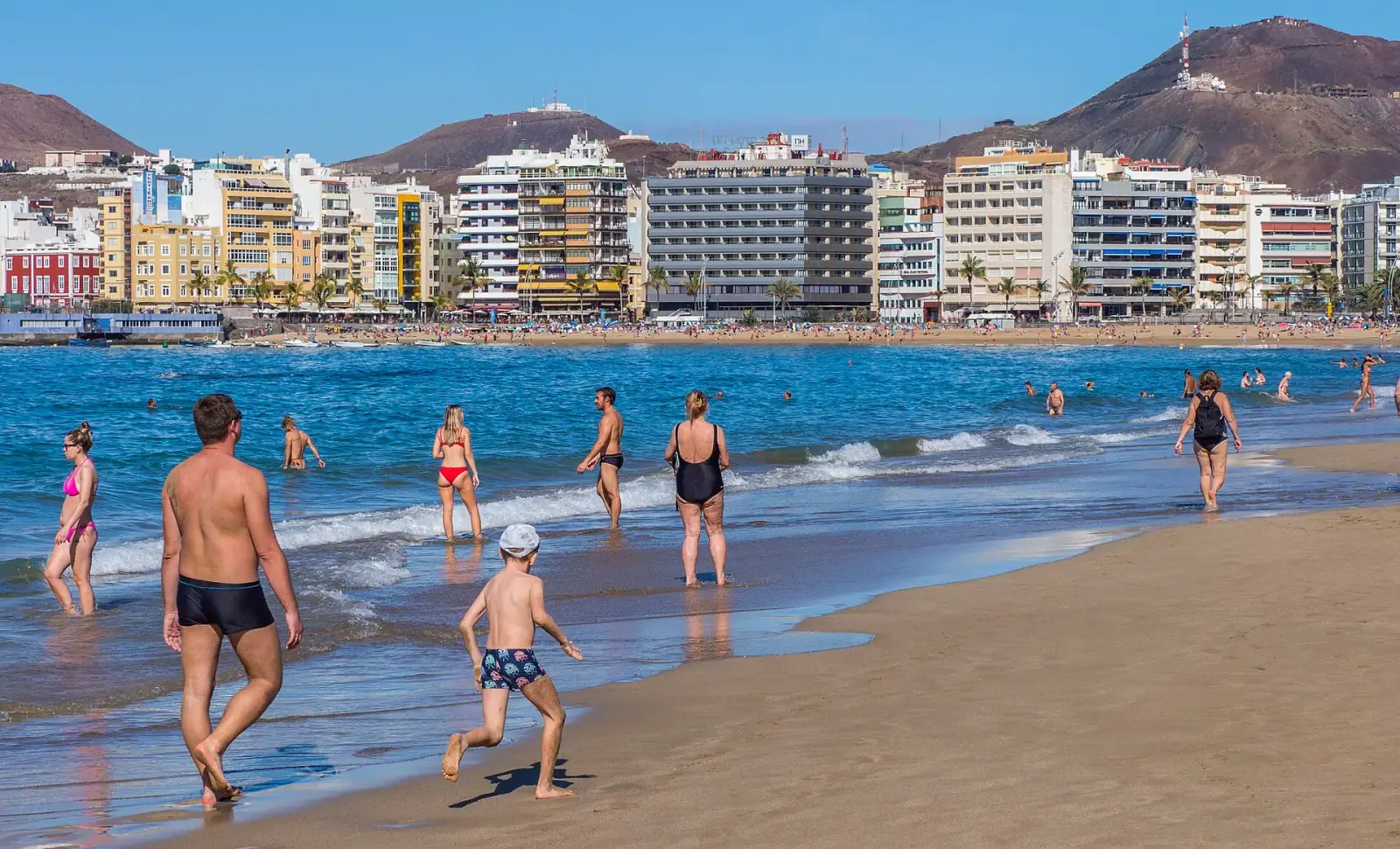
Here the choice is short. You will probably end up in Guanarteme or near Santa Catalina, in the strip where Las Palmas keeps most of its flats, cafés and desks. Las Canteras runs for 3.1 kilometres along that shore, with a natural sandstone bar sheltering much of it from the Atlantic, so a swim before your first call is an ordinary thing. White Forest and The House are within walking distance. If you want the cobbled old quarter of Vegueta, a yellow guagua will take you there for about $0.50 on a Bono card.
This is a real city of over 380,000 people that happens to have a beach. You will not need a car, and our Canadian, arriving alone, should have people to eat with inside a fortnight.
An address in Tenerife
Here you first have to decide which Tenerife you mean, since the island works more like several small countries. The trade winds pile cloud against the north and leave the southeast dry, and much of life sorts itself accordingly.
- Costa Adeje and Los Cristianos: the sun, the sandy beaches and most of the remote workers, with Zen Den as the social hub. You will also live among all-inclusive hotels, and that wears thin for some people.
- El Médano: a windsurfing village with a laid-back crowd, and wind that does not let up.
- La Laguna: a university town on the UNESCO list, full of bookshops and tapas bars, and often under cloud.
- Santa Cruz: the working capital, home to one of the world's largest carnivals and to Workeamos, the island's more serious coworking hub.
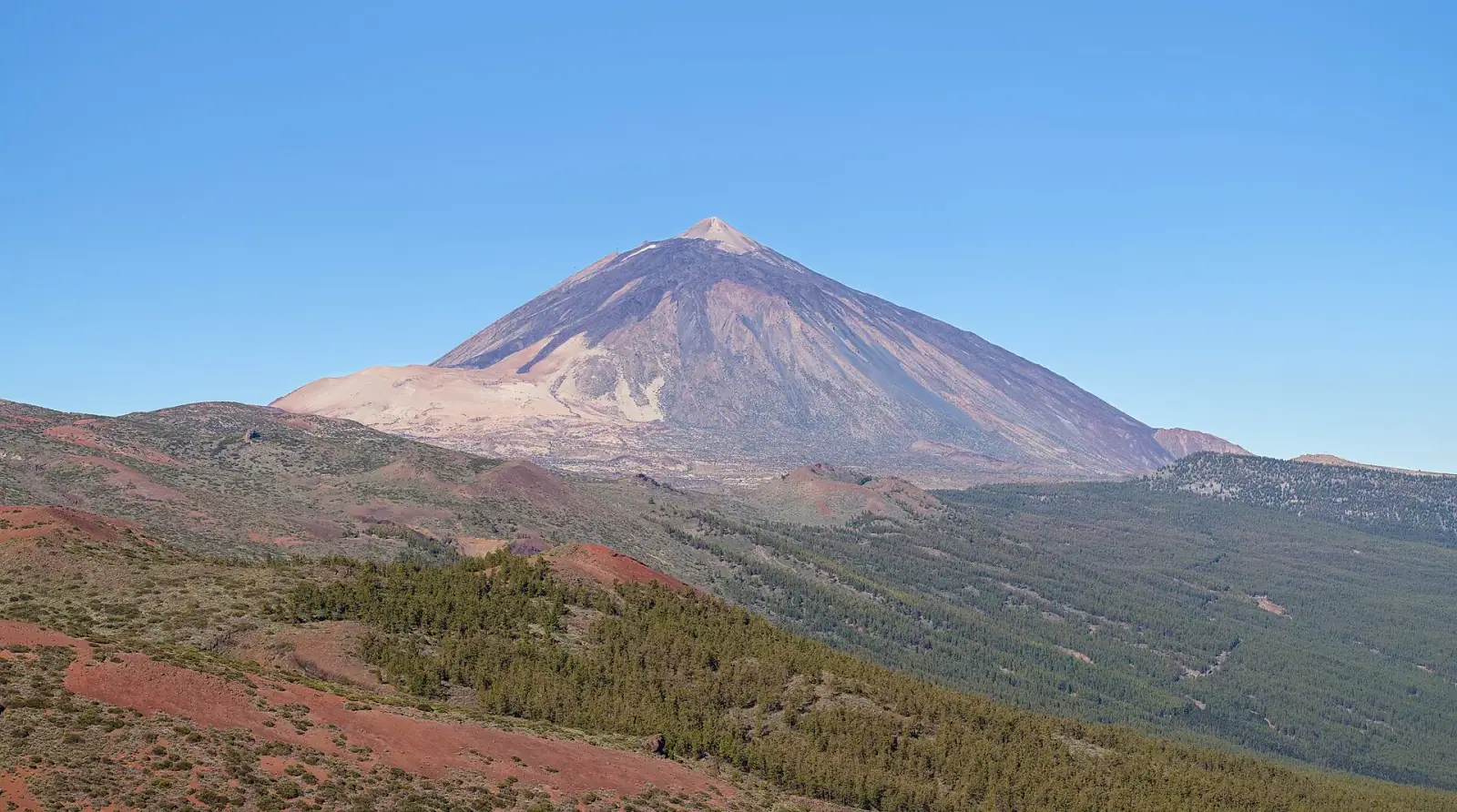
Tenerife also has the thing Gran Canaria cannot match. Teide rises to 3,715 metres, the highest point in Spain, and on a free Saturday you could drive from a beach to a lunar crater landscape before lunch. Drive is the word: buses link the main towns, but the mountain, the Anaga ridges and the quiet villages are far easier with a rental car, and that is one more thing to arrange.
Back to our applicant
A single person who wants company, a flat near the sea and no car should take Las Palmas, and we would say that to most first-timers. A couple who hike, or anyone who already has a rental booked and works well alone, will get more from Tenerife, and we would point them to the north of the island sooner than the resorts.
Those 90 visa-free days are your trial period. The Fred Olsen catamaran links Santa Cruz with Agaete in about 80 minutes, so spend the first half in Guanarteme, cross over, and spend the second half in La Laguna. By then you will know what to write in that box.
 United States
 United Kingdom
 Germany
 Canada
 Australia
 India