Cost of Living in Purmamarca
Where this figure comes from. No cost survey covers Purmamarca, so the $700 a month above is our own estimate rather than a measurement. On 416 of our 999 city guides the figure is built from a published Numbeo basket, a one-bedroom rent in the centre plus one person's monthly costs without rent, converted to USD; this city is not one of them. How we source everything.
Purmamarca is cheap by international standards, but not because it is set up for long-stay budget travelers, it is cheap because it is a tiny village with a limited menu of things to spend money on. A simple room in a family-run posada or hostel runs roughly $10 to $20 a night, while a nicer boutique hotel with mountain views can run several times that. Empanadas and a plate of llama or goat stew at a local comedor cost a few thousand ARS, and a basic almuerzo (set lunch) is usually the best value in town. There is a small supermarket and a daily produce stand, but selection is thin and prices for imported or packaged goods run higher than in Salta or Jujuy city, since almost everything is trucked in. Argentina's inflation keeps prices moving, and since the 2025 end of currency controls dollars changed informally go little further than a card, though cash is still needed where card machines are scarce. Budget roughly $17 to $30 a day for a comfortable but modest stay including lodging, food, and the odd tour to Salinas Grandes.
Where to Work in Purmamarca
Anyone hoping to work remotely from here should know up front that Purmamarca is not, and has never tried to be, a coworking destination. There is no dedicated coworking space, and the village's entire commercial core is a few blocks around the plaza. Wifi exists in most hostels and hotels, but it is typically a single shared residential-grade connection serving the whole property, and it slows to a crawl or drops entirely during storms, power fluctuations, or when several guests are on video calls at once. Mobile data from Personal, Claro, or Movistar is more reliable than fixed wifi in many spots, but coverage in the surrounding Quebrada is patchy. A handful of hostel common areas and hotel lounges tolerate laptops for a few hours, and the plaza itself has some outdoor seating, but there is no cafe culture built around remote workers the way there is in Salta or Tilcara. Treat Purmamarca as a place to disconnect for two or three days, not a base for sustained deep-work weeks; if you need dependable bandwidth for calls, do those from Salta or Jujuy city and treat Purmamarca as a side trip.
Getting Around Purmamarca
The village itself is entirely walkable, you can cross it end to end in about fifteen minutes, and the classic Paseo de los Colorados loop trail behind town is done on foot in one to two hours. For getting here and beyond, regional buses connect Purmamarca to Jujuy city in around ninety minutes and to Salta city in three to four hours, with a change often required at Jujuy's bus terminal. Remises (private taxis) and organized minivan tours are the standard way to reach Salinas Grandes salt flats (about an hour up RN52 toward the Chile border) and nearby Tilcara or Maimara, since public transport to those spots is thin. Renting a car in Salta or Jujuy gives the most flexibility for exploring the Quebrada de Humahuaca at your own pace, and the roads are paved and well maintained, though the switchbacks up toward Salinas Grandes climb above 4,000 meters and demand caution. There is no local taxi rank or rideshare app coverage inside the village itself.
Sorting transport? Book an airport transfer, or compare car rental on Auto Europe and QEEQ.
Visas for Purmamarca
Purmamarca follows Argentina's national entry rules, there is no separate provincial visa. Citizens of the US, Canada, the UK, the EU, Australia, and most of Latin America receive a 90-day visa-free entry stamp on arrival, which can typically be extended once for a fee at a migraciones office in a larger city like Salta or Jujuy, or handled via a short "border run" into Bolivia or Chile. Because Purmamarca has no immigration office of its own, any visa paperwork needs to be done in Jujuy city, Salta, or at the land border crossings further up the valley. Argentina does offer a digital nomad residence, open to nationalities that need no tourist visa and running 180 days with one renewal, but it is applied for online or at a city office rather than anywhere up here, so arrange it before you come up the valley. The Paso de Jama road runs right past the village on its way over the Salinas Grandes, and the international coaches to San Pedro de Atacama travel it, so a border crossing is a day's ride from the plaza rather than a long detour.
Best Time to Visit Purmamarca
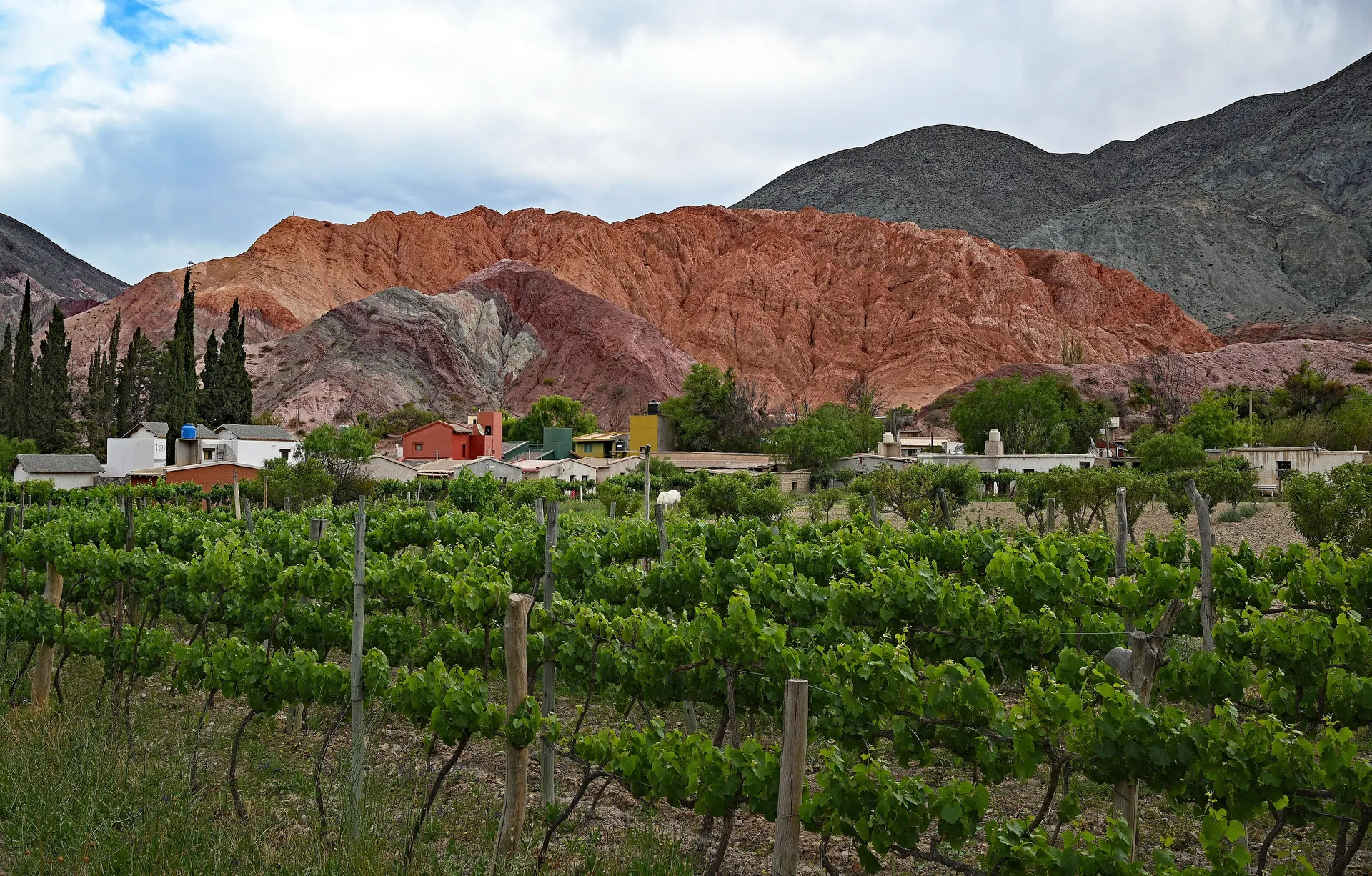
The dry season from April through November is by far the better window, with clear skies that show off the Hill of Seven Colours at its sharpest, cold but manageable nights, and stable roads up to Salinas Grandes. The southern-hemisphere summer, December through March, brings the rainy season to the Quebrada, and sudden storms can flood the normally dry riverbeds (the "rio seco" that borders town), wash out unpaved side roads, and occasionally cut off travel to the salt flats for a day. Winter nights (June through August) are genuinely cold, often dropping below freezing at altitude, while days are sunny and mild, so pack layers regardless of season. Shoulder months like May, September, and October offer a good balance of good weather and thinner crowds around the plaza market. The calendar here follows Andean ritual as much as the weather. All of August belongs to the Pachamama, when families feed the earth with food and drink in small ceremonies, and in February or March the valley's carnival brings days of music, flour, basil and diablo costumes, with rooms booked out and very little else getting done.
Pros and Cons of Purmamarca
Pros: the scenery is genuinely extraordinary, the Hill of Seven Colours and the surrounding Quebrada de Humahuaca landscape are unlike almost anywhere else, the pace of life is slow and unhurried, the artisan plaza market sells real regional textiles and crafts, prices are low, and it makes an excellent low-key base for day trips to Salinas Grandes, Tilcara, and Humahuaca. Cons: it is very small, most things you might want (a real supermarket, varied restaurants, reliable fast wifi, a pharmacy with wide stock, nightlife of any kind) simply are not here, altitude at roughly 2,300 meters can cause headaches or fatigue for a day or two, nights get cold even outside winter, cash is often required since card acceptance is inconsistent, and the same beauty that draws visitors also draws heavy day-trip tour traffic through the plaza in high season.
Who Purmamarca Is For
Purmamarca suits travelers, not remote-work settlers. It rewards people who want a short, scenic, low-stimulation stop, hikers, photographers, and slow travelers who are happy to spend two or three days walking, shopping the market, and taking day trips to the salt flats before moving on. It also works well as a quiet decompression stop for remote workers who are based in Salta or Jujuy city and want a long weekend off-grid. It is a poor fit for anyone who needs daily reliable video calls, variety in food or nightlife, or a real community of other remote workers, for that, larger nearby hubs like Salta are a far better choice, with Purmamarca kept as a memorable side trip. It also suits someone who likes a village with a long memory. The adobe church of Santa Rosa de Lima on the plaza dates from the 1640s and has a ceiling of cactus wood, and the valley around it has served as a trade route for some ten thousand years, which is why the Quebrada carries a UNESCO listing. A slow week spent learning that history repays anyone who would otherwise leave after one photograph of the hill.