Cost of Living in Potosí
Where this figure comes from. No cost survey covers Potosí, so the $600 a month above is our own estimate rather than a measurement. On 416 of our 999 city guides the figure is built from a published Numbeo basket, a one-bedroom rent in the centre plus one person's monthly costs without rent, converted to USD; this city is not one of them. How we source everything.
Potosí is one of the cheapest cities you could base yourself in, though "base" is a generous word for a place this high and this cold. A frugal but comfortable month here lands in roughly the $500 to $1,000 range, and you can live near the bottom of that if you rent locally and eat at markets and simple almuerzo spots. Rooms and basic apartments are inexpensive, restaurant set lunches cost a couple of dollars, and long-distance buses are cheap. The real costs are less obvious: warm bedding, heaters or extra blankets, gas for hot water, and the time you lose acclimatizing to the altitude. Prices are quoted and best paid in bolivianos and cash, as cards are unreliable outside larger businesses. The food worth seeking out is local and cheap: kalapurka, a thick maize soup that reaches the table still boiling around a stone heated in the fire, is the local speciality and the best defence against the evening cold.
- Budget room or basic apartment: roughly $150 to $350 per month
- Almuerzo (set lunch) at a local spot: around $2 to $4
- Local micros and city taxis: well under a dollar to a couple of dollars
- Long-distance bus to Sucre or Uyuni: a few dollars each way
- A guided cooperative mine tour: commonly $15 to $25
Where to Work in Potosí
Comfort is not what Potosí offers a remote worker, and no amount of planning changes that. There is no real coworking scene and no nomad community to plug into, wifi is basic and variable, and at over 4,000 metres the altitude itself makes concentration, sleep, and energy harder for the first several days. Plan around all of that. A few cafes and better guesthouses near the Plaza 10 de Noviembre have usable wifi for email and light tasks, but treat any heavy upload, video call, or deadline as optional rather than guaranteed. Your most reliable connection is your own phone data.
- Buy a local SIM (Entel or Tigo) on arrival and load a generous data plan as your primary connection
- Acclimatize first: ideally arrive overland from other highland cities rather than flying straight in
- Hydrate constantly, take it slow, and watch for soroche (altitude sickness): headache, nausea, breathlessness
- Keep expectations low for calls and large uploads; schedule critical work for lower-altitude Sucre if you can
- Bring a power bank and warm layers; unheated rooms make long work sessions cold
Getting Around Potosí
The compact colonial center is walkable, which is the good news, but every walk is steep and breathless when the air holds so little oxygen. Give yourself far more time than the distances suggest and pause often on the climbs. For anything beyond the center, cheap shared micros run set routes and taxis are inexpensive and easy to flag. The Cerro Rico and the cooperative mines are reached on organized tours rather than under your own steam, and those tours include transport and gear. Intercity travel is by bus from the terminal, with a small airport handling limited flights.
- Walk the historic center, but slowly, the cobbled streets are steep and the altitude punishing
- Micros and taxis cover the rest of the city cheaply
- Buses run to Sucre (about 3 hours), Uyuni (about 4 hours) and on to La Paz
- The Cerro Rico mine tours are reached by tour operator, not independently
- A small airport offers limited connections; many travelers arrive and leave overland
Sorting transport? Book an airport transfer, or compare car rental on Auto Europe and QEEQ.
Visas for Potosí
Potosí follows Bolivia's national entry rules, so there is nothing city-specific to arrange. Many nationalities receive a tourist entry on arrival that commonly allows up to 90 days of stay per calendar year, sometimes granted in shorter increments that can be extended at a migration office. US passports, long the main exception with a fee and extra paperwork, were moved onto the country's visa-free list at the start of December 2025. The city is a departmental capital with its own migration office, so an extension can be arranged in town without travelling to La Paz, an administrative advantage this city holds over the smaller stops on the road to Uyuni.
- Tourist entry commonly permits up to 90 days per year, sometimes in shorter renewable blocks
- Bolivia dropped its visa requirement for US citizens in December 2025; some other nationalities still apply in advance
- Extensions are handled at Bolivian migration (migracion) offices
Best Time to Visit Potosí
Potosí is cold all year: the altitude keeps temperatures low regardless of season, and nights are frequently freezing. The dry season, roughly May to October, brings the clearest skies, the crispest light on the colonial facades, and the most reliable conditions for travel and mine tours, but the nights are bitterly cold and frost is normal. The wet season, roughly November to March, is a touch milder by day but cloudier, with more rain and grayer skies. There is no warm window here, so the real choice is between clear-and-freezing and milder-and-cloudier. Whenever you come, pack serious warm layers and expect big day-to-night temperature swings. Late August brings Ch'utillos, the festival of San Bartolomé, when dance groups from across the region parade through the streets for days; it is the liveliest week of the year and the hardest one in which to find a room.
- Dry season (May to October): clearest skies and best light, but very cold, often freezing nights
- Wet season (November to March): milder days, cloudier skies, more rain
- Cold year-round, with sharp day-to-night temperature swings at altitude
- Pack thermal layers, a warm sleeping setup, and sun protection for the high-altitude glare
Pros and Cons of Potosí
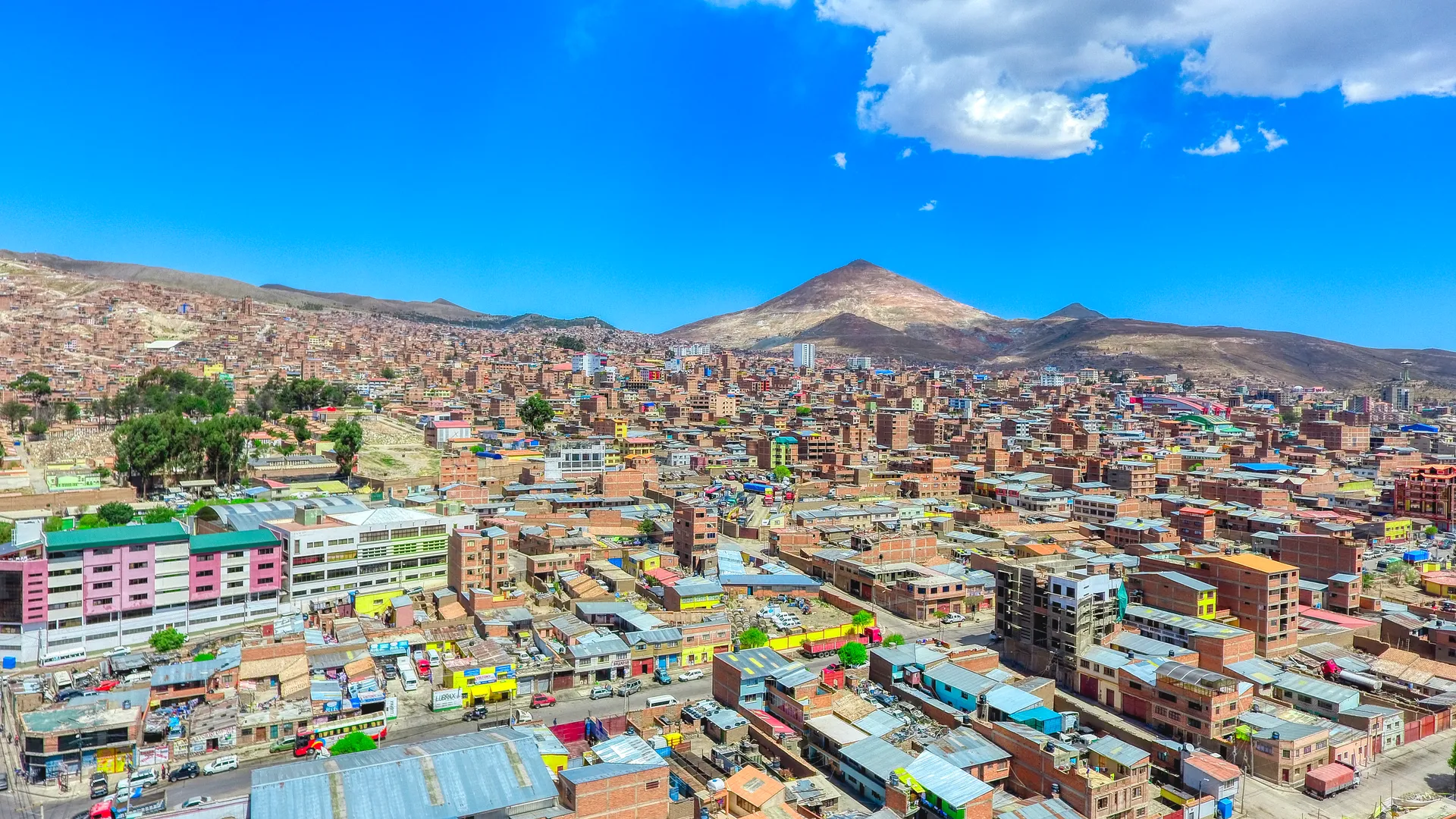
Potosí is a place you visit for its extraordinary history rather than its comfort. Once one of the richest cities on Earth thanks to the silver of the Cerro Rico, it is now a UNESCO World Heritage site layered with grand colonial churches, the remarkable Casa Nacional de la Moneda, and a mining culture that is still very much alive and still very hard. The atmosphere is genuinely unique and the cost of living is tiny. Against that, weigh the harsh cold, the thin air that affects nearly everyone, the basic infrastructure and patchy wifi, and the near-total absence of a nomad scene. The heritage is under genuine strain. Since 2014 the city has been on the international list of heritage sites in danger, because centuries of tunnelling have left the summit of the silver mountain subsiding, and cooperative mining continues inside the very peak the listing is meant to protect, so seeing it now means seeing a site whose future is unsettled.
- Pros: astonishing colonial and mining heritage, UNESCO status, very low cost, clean high-altitude air, few crowds
- Cons: harsh cold, punishing altitude and soroche risk, basic infrastructure, variable wifi, no nomad community
- The cooperative mine tours are sobering and ethically complex, not a light day out
- Best treated as a slow, history-focused stay rather than a productive work base
Who Potosí Is For
Potosí rewards a particular kind of traveler: the history-and-altitude-loving slow nomad who is happy to trade comfort and connectivity for atmosphere and depth. If you are moved by colonial architecture, mining history, and places that wear their past openly, and if you can handle real cold and thin air with patience, you will find few cities as fascinating. If you need reliable wifi, warmth, a social scene, or a smooth work setup, this is not your base, and nearby Sucre at a lower altitude is a far gentler place to actually get work done. Come to Potosí to understand it, not to be comfortable in it.
- Great for: history buffs, slow travelers, altitude-hardened explorers, culture-first visitors
- Not for: comfort seekers, deadline-driven remote workers, anyone sensitive to cold or altitude
- Consider pairing a short, meaningful Potosí visit with a longer, easier stay in Sucre