Cost of Living in San Pedro de Atacama
Where this figure comes from. No cost survey covers San Pedro de Atacama, so the $1,100 a month above is our own estimate rather than a measurement. On 416 of our 999 city guides the figure is built from a published Numbeo basket, a one-bedroom rent in the centre plus one person's monthly costs without rent, converted to USD; this city is not one of them. How we source everything.
San Pedro de Atacama is pricier than its size suggests. It is a remote oasis town where almost everything is trucked in across the desert and where tourism sets the rates, so expect to pay more than you would in a comparable small Chilean town. A lean but comfortable month for a nomad typically lands around $900 to $1,700, depending on how much you eat out and how many excursions you book. Groceries and restaurant meals carry a visible remoteness premium, and the headline cost of a stay here is really the tours: geysers, salt flats and lagoon trips add up fast. The tap water carries enough dissolved minerals that most people do not drink it, so large refill jugs of bottled water become a weekly line in the budget. The town's few cash machines also run dry on busy weekends, which matters because many tour agencies still prefer cash, so withdraw a stock in Calama on the way in.
- Budget hostel bed or basic room: roughly $18 to $40 per night; simple private stays and cabanas run higher.
- A casual restaurant meal on Caracoles street: around $12 to $22; wine and craft beer add up.
- Group excursions (Valle de la Luna, Tatio geysers, Salar lagoons): commonly $25 to $70 each.
- Local groceries cost more than in Calama or Santiago; stock up in Calama if you pass through.
Where to Work in San Pedro de Atacama
Working from San Pedro means working from an oasis roughly 100 km of desert away from Calama, and the connection behaves accordingly, fast one hour and crawling the next. Fibre has reached parts of town, but many properties still lean on shared or slower connections, and wifi can drop or crawl at busy hours or after weather events. There is no real coworking scene, so your setup will be your accommodation plus a few laptop-friendly cafes. Buy a local prepaid SIM from Entel or Movistar (Entel generally has the strongest desert coverage) as a mobile-data backup, and top up enough for a hotspot. When booking a stay, ask directly about the actual wifi speed rather than trusting a listing that simply says wifi is available.
- Get an Entel or Movistar prepaid SIM in Calama or in town for hotspot backup.
- Cafes and a few bakeries around Caracoles work for short sessions and calls.
- Plan deep-focus work for mornings; afternoons and evenings are tour and social time.
Getting Around San Pedro de Atacama
The town itself is tiny and made for walking. The compact grid of adobe streets around the plaza and Caracoles is easily covered on foot, and many people rent a bicycle to reach nearby sights like the Pukara de Quitor or the edge of the Valle de la Luna. Everything beyond that, the El Tatio geysers, the Salar de Atacama and its flamingo lagoons, the altiplanic lagoons and Rainbow Valley, is reached by tour van or 4x4, either on an organised excursion or a rented vehicle. Regular buses connect San Pedro to Calama (about 1.5 hours) and its airport (CJC), with long-distance coaches to Santiago and cross-border routes to Argentina and Bolivia. The Uyuni salt-flat crossing into Bolivia departs from here.
- Walk the town; rent a bike for closer desert sights and viewpoints.
- Book tour vans or 4x4s for geysers, salt flats and high-altitude lagoons.
- Buses run to Calama and airport CJC; long-distance to Santiago, Argentina and Bolivia.
- Respect the altitude and intense sun: pace yourself, hydrate, and cover up.
Sorting transport? Book an airport transfer, or compare car rental on Auto Europe and QEEQ.
Visas for San Pedro de Atacama
San Pedro de Atacama follows standard Chilean entry rules, since it is simply a town in the Antofagasta region rather than a special zone. Many nationalities, including most Western passport holders, can enter Chile visa-free as tourists for a stay commonly up to 90 days, receiving a tourist card on arrival that you should keep for your departure. Chile does not currently offer a dedicated digital-nomad visa, so remote workers here are travelling on the ordinary tourist entry. The one local wrinkle is Bolivia. Chile's immigration and customs post for the Hito Cajon crossing stands on the edge of San Pedro itself rather than at the frontier some 40 km east, so jeeps bound for Uyuni stop there for exit formalities early in the morning, and travellers returning from the salt flats are processed there too.
- Chilean tourist entry commonly allows up to 90 days for many nationalities.
- Keep the tourist card (PDI slip) you receive on arrival for exit.
- No dedicated digital-nomad visa exists; remote workers use tourist status.
Best Time to Visit San Pedro de Atacama
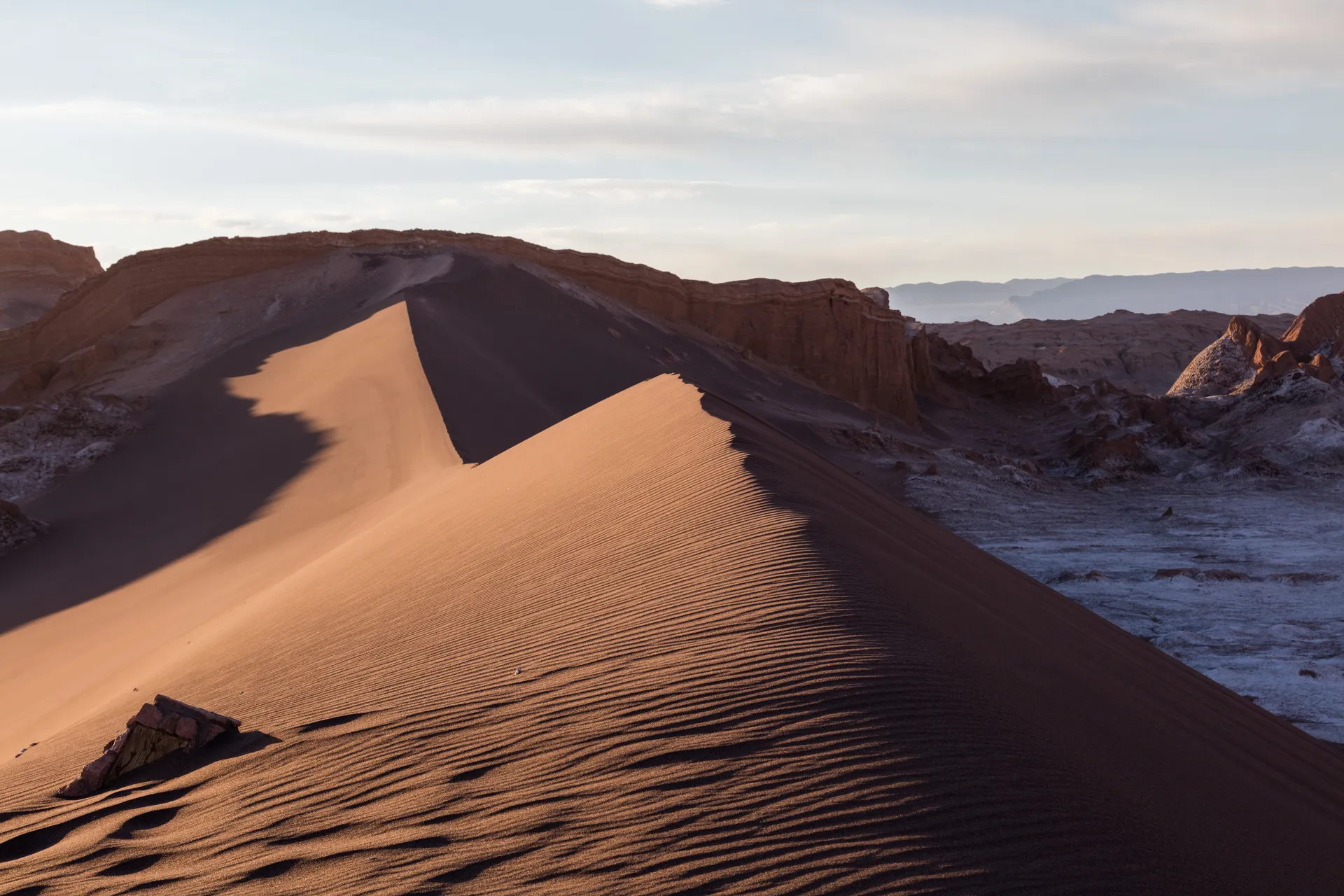
This is the driest non-polar desert on Earth, so it is dry and sunny almost year-round, and the choice is really about temperature and altiplano conditions rather than rain in town. The shoulder seasons, roughly March to May and September to November, tend to be the most pleasant, with mild days and clear skies. Winter (June to August) brings very cold nights, which is a gift for stargazing under some of the clearest skies anywhere, but you will want serious warm layers for pre-dawn geyser trips. The so-called Bolivian winter of January and February can bring afternoon storms and rain to the high altiplano, occasionally affecting or closing some of the higher-altitude lagoon and geyser tours.
- March to May and September to November: mild, clear and comfortable.
- June to August: freezing nights, superb stargazing, bring heavy layers.
- January to February: altiplano rains can disrupt some high-altitude tours.
- Sun is intense at altitude every month; sunscreen and a hat are essential.
Pros and Cons of San Pedro de Atacama
San Pedro is a bucket-list base wrapped in a small, dusty town, and knowing that balance up front saves disappointment. On the upside, you are living beside some of the most surreal landscapes on the planet, with world-class stargazing, clean dry air, a walkable centre and a decent sense of safety. On the downside, it is expensive for its size, wholly dependent on tourism, and short on the infrastructure a productive remote worker leans on: wifi is inconsistent, the scene is transient, and altitude and dryness take a physical toll. Treat it as a place to slow down and explore rather than to grind out a heavy work sprint, and it delivers beautifully.
- Pros: astonishing desert and altiplano scenery, elite stargazing, clean air, walkable and fairly safe.
- Pros: a natural launch point for Uyuni, the Salar and world-famous observatories.
- Cons: variable and sometimes slow wifi, high prices, total tourism dependence.
- Cons: altitude, extreme dryness, cold nights and a small transient community.
Who San Pedro de Atacama Is For
San Pedro de Atacama is for the astronomy-loving, landscape-hungry slow traveller more than the deadline-driven digital nomad. If your idea of a good month is watching the Milky Way rise over the desert, ticking off geysers and salt flats, and letting work take a back seat around excursions, this town rewards you richly. If you need reliable high-speed internet, a dependable coworking desk and a stable long-term community, you will find it thin here and should base yourself somewhere larger, treating San Pedro as a memorable one to two week detour instead. Come with realistic expectations about connectivity, cost and altitude, lean into the desert rhythm, and it becomes one of the most unforgettable stops on any South American route. ALMA, the radio telescope array on the plateau above town, opens its operations base to free public visits on weekends, booked online, and the slots go weeks ahead, so reserve before arriving rather than after.
- Ideal for stargazers, photographers and desert-and-altiplano explorers.
- Great as a slow-travel base woven around tours rather than a work hub.
- Less suited to heavy remote-work sprints needing fast, reliable wifi.
- Best for travellers comfortable with altitude, dryness and higher costs.