Cost of Living in Ponta Delgada
Where this figure comes from. No cost survey covers Ponta Delgada, so the $2,000 a month above is our own estimate rather than a measurement. On 416 of our 999 city guides the figure is built from a published Numbeo basket, a one-bedroom rent in the centre plus one person's monthly costs without rent, converted to USD; this city is not one of them. How we source everything.
Ponta Delgada sits well below Lisbon prices, roughly 15-17% cheaper across the board. That said, it is not a rock-bottom destination: island logistics push imported goods and utilities higher than you might expect for a Portuguese city.
A realistic monthly budget for a solo nomad:
- Rent, city center (1BR): $680-970. The centro historico and the area around Avenida Infante Dom Henrique command a premium.
- Rent, outer neighborhoods (1BR): $510-680. Neighborhoods like Fenais da Luz or Rosto do Cao, a short drive out, offer noticeably cheaper flats but require a car or scooter.
- Groceries: $200-280/month. Local produce (pineapple, dairy, tuna, yams) is cheap and excellent. Imported items carry a markup.
- Eating out: $8-14 per meal at a local tasca; $17-28 at a mid-range restaurant. Daily lunch at a local spot runs $9-11 with wine.
- Coworking hot-desk: $110-170/month at dedicated spaces; some offer day passes for $11-17.
- Local transport (bus/minibus): $0.57 per city minibus ride; a taxi from the airport to center costs $7-9. Renting a car for island exploration adds $230-400/month if needed regularly.
- Utilities + internet: $91-140/month combined for a furnished apartment with fiber included.
Total range: $1,350-2,050/month, depending on how often you eat out and whether you rent a car. Budget travelers hitting local spots and cooking most meals can stay near the lower end.
Where to Work
The city punches above its size for remote work infrastructure. Two well-established coworking spaces anchor the scene: unOffice PDL on Avenida Dom Joao III is the original and most full-featured, with private offices, meeting rooms, high-speed fiber, and a professional atmosphere suited to focused work. ONE Solmar Business Center sits inside the landmark Solmar Avenida building overlooking the marina and brings in more of a startup-adjacent crowd. Both offer hot-desk and monthly memberships.
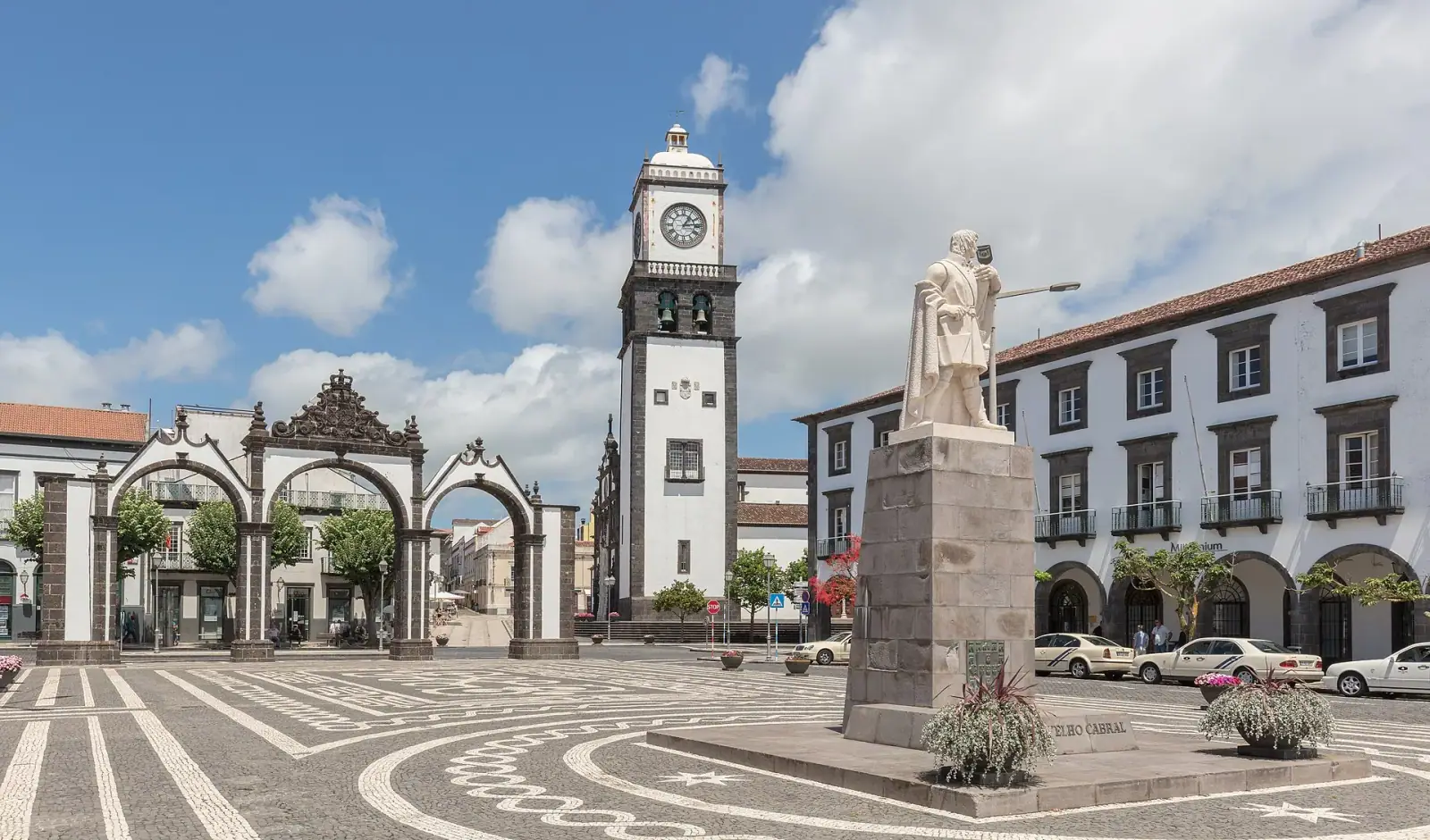
For cafe work, the culture is friendly enough but not built around it the way Lisbon or Porto are. Most cafes have WiFi, but many are small and fill quickly. Louvre Michaelense near Igreja de Sao Sebastiao is the most popular spot for a working coffee: it has tables with room to spread out, reliable WiFi, and a relaxed attitude toward laptops during off-peak hours. Go before noon or after 14h30 to get a seat.
WiFi quality across the city is genuinely good. Fiber is well-deployed in the urban core and coworking spaces consistently report speeds that handle video calls without trouble. The main limitation is not connectivity but variety: the pool of coworking seats is small, so you will likely know most regulars within a week.
Getting Around
The city center is compact and walkable. You can cover the main commercial strip, the marina, and most restaurants on foot in under 20 minutes. City minibuses ($0.57 per ride) run the main avenue and connect key points downtown, but schedules thin out in the evening and routes outside the center are limited.
The airport (PDL) sits about 2 km west of the city center. A taxi from arrivals to the center costs $7-9 and takes 5-10 minutes. An ANC Aerobus shuttle runs every 40 minutes for $9 but requires a reservation in advance. Walking is technically possible in about an hour, but impractical with bags.
For exploring the rest of Sao Miguel, a rental car is essentially required. Public bus connections to places like Sete Cidades, Furnas, or the north coast exist but run infrequently and on schedules that make day trips difficult without long waits. Car rental costs roughly $34-57 per day; booking ahead of summer is important. Scooters and bikes are another option for shorter distances, and the city is flat enough to make cycling comfortable near the waterfront.
Sorting transport? Book an airport transfer, or compare car rental on Auto Europe and QEEQ.
Visas and Staying Long-Term
Portugal is a Schengen member, so US, Canadian, Australian, and UK passport holders can enter visa-free for up to 90 days within any 180-day period. This covers shorter-term stays without paperwork.
For longer residency, Portugal offers the D8 Digital Nomad Visa, available in two forms: a temporary stay visa (renewable, up to 5 years total) and a residence visa leading to a 2-year residence permit renewable for 3-year periods. The income requirement is four times the Portuguese minimum wage, about $4,240/month in 2026 for the primary applicant. Processing times through AIMA have stretched to 6-9 months due to backlog, so apply well in advance. After 5 years of legal residence you can apply for permanent residency, and citizenship becomes possible after 10 years.
Best Time to Visit
The Azores have a reputation for unpredictable weather, and it is earned. The islands sit mid-Atlantic with no landmass to block incoming weather systems, so rain can arrive fast and leave just as quickly, any time of year.
For remote work, June through September is the sweet spot: average temperatures of 19-24°C (66-75°F), the fewest rainy days (July averages just 5), calm seas, and long daylight hours. September is particularly good for those who want warmth without peak tourist crowds, which concentrate in July and August and push accommodation prices up significantly.
October through February brings the wettest and windiest conditions, with December averaging 15 rainy days. It is not oppressive weather, and the mild Atlantic climate means temperatures rarely dip below 13°C (55°F) even in January. But gray and drizzly weeks are common, and if outdoor nature exploration is a priority for your non-work hours, the experience suffers.
April and May offer a reasonable middle ground: fewer tourists, green volcanic landscapes at their most vivid, and acceptable weather with some rain. If you are flexible, May and June represent the best value period before summer prices kick in.
Pros and Cons
- Pro: Extraordinary natural environment: volcanic calderas, hot springs, whale watching, and some of the most biodiverse ocean waters in the North Atlantic, all within a short drive or boat trip.
- Pro: Genuinely safe city. Crime is low, locals are hospitable, and solo travelers of all backgrounds report feeling comfortable.
- Pro: Lower cost than Lisbon or Porto with comparable (if smaller) quality of life infrastructure.
- Pro: Good fiber internet and functional, if compact, coworking options.
- Pro: Excellent local food, particularly seafood, dairy, and produce, at affordable prices.
- Con: Small and isolated. Once you have explored the island, there is not a lot of new stimulation. Many nomads feel itchy after 4-6 weeks.
- Con: Limited nomad community. You will not find the busy networking scene of Lisbon or Las Palmas. It can feel lonely for extroverts.
- Con: A car is near-essential for anything beyond the city center, which adds cost and planning overhead.
- Con: Flights to and from Ponta Delgada are limited in carriers and can be expensive, especially in peak summer.
- Con: Weather is genuinely changeable. A week of rain is not unusual even in spring or autumn.
Who Ponta Delgada Is Best For
Ponta Delgada rewards nomads who genuinely want a slower rhythm. If your ideal week involves focused deep work, fresh seafood lunches, a hike to a volcanic lake on the weekend, and early nights, this place delivers that reliably. It works especially well for solo workers who are self-sufficient and not reliant on a buzzing co-working culture for motivation, and for couples looking for an affordable base that is a genuine departure from mainland Europe without being hard to reach.
Nature-focused people who want ocean swims, whale watching, and dramatic landscapes within arm's reach of a functional small city will find it hard to beat.
You should probably skip it if you need constant stimulation, a large English-speaking social scene, frequent direct flights to other European cities, or if island-scale constraints on nightlife and cultural programming will frustrate you. It is also a poor fit for team offsites that need conference-scale facilities or a diverse pool of meeting venues.