Cost of Living in Puerto Madryn
Where this figure comes from. No cost survey covers Puerto Madryn, so the $900 a month above is our own estimate rather than a measurement. On 416 of our 999 city guides the figure is built from a published Numbeo basket, a one-bedroom rent in the centre plus one person's monthly costs without rent, converted to USD; this city is not one of them. How we source everything.
Budget around $900 a month as a solo remote worker in Puerto Madryn, though Argentine figures need more caution than most: inflation has run extremely high for years and the exchange rate has moved repeatedly, so any number here is indicative rather than firm. A one-bedroom apartment runs roughly $300 to $500. Food and eating out are good value at the rates most foreigners get, and Argentine beef and wine are cheap. Prices rise sharply through the whale season from June to December, when the town fills. Fibre runs about $25 to $45 a month for modest speeds. The exchange-rate question is the one that actually determines what a month costs here: bringing dollars or euros in cash and changing them outside the official channel has historically given a far better rate than a card, and the gap has at times exceeded fifty per cent, though the rules keep changing and the current position needs checking rather than assuming. Accommodation prices roughly double through the whale season, and a monthly rate negotiated outside it is a different market entirely.
Where to Work in Puerto Madryn
Puerto Madryn has no formal coworking and remote work happens from apartments and cafes. Argentine fixed broadband reaches the town with modest speeds and reasonable reliability, and mobile data works along the coast. The infrastructure is adequate rather than good and is noticeably behind Chile across the Andes. The recurring practical issue in Argentina is financial rather than technical: currency controls, multiple exchange rates and the difficulty of getting money in at a sensible rate matter more to a remote worker here than bandwidth does. Anyone planning a longer stay should work out how they will be paid and how they will access that money before arriving, not after. Argentina sits three hours behind GMT, which gives a workable European afternoon and a full overlap with North America, and is one of the better time zones on the continent for transatlantic work. Starlink is licensed and available in Argentina, which is the practical answer for anyone spending time in Patagonia proper rather than the town. Cafes with reliable connections cluster along the seafront and around Avenida Roca, and the town is small enough that word gets around quickly about which ones work.
Getting Around Puerto Madryn
Puerto Madryn is small and the seafront, the centre and the bus terminal are all walkable. Local buses cover the town cheaply. Everything that brings people here needs transport: Peninsula Valdes is about ninety minutes north and effectively requires a tour or a hire car, and Punta Tombo with its penguin colony is a similar distance south. Trelew has the nearest airport, about an hour away, with flights to Buenos Aires. Long-distance buses connect north and south along the Atlantic coast. Distances in Patagonia are large and the roads are empty. Peninsula Valdes is a UNESCO World Heritage site and entry is charged per person at the gate, with the interior roads unsealed and slow, so a day there is genuinely a full day. The orca attacks at Punta Norte, where the animals beach themselves to take sea lion pups, happen around high tide in March and April. Puerto Pirámides, the only village on the peninsula, is the one place whale-watching boats are allowed to launch from, so a boat trip means a day there rather than a short excursion from town. Closer in, a sea lion colony about seventeen kilometres south makes a good bike ride along the coast on a calm day.
Sorting transport? Book an airport transfer, or compare car rental on Auto Europe and QEEQ.
Visas for Puerto Madryn
Argentina grants most Western nationals ninety days visa-free on arrival, extendable once for a further ninety days at a migration office. Argentina introduced a digital nomad visa in 2022 for remote workers, valid for six months and renewable once, though for many people the practical benefit over the tourist stamp is limited. Chile is reachable overland across the Andes, and Uruguay and Brazil are options further north. Currency and banking rules change frequently. Argentina also charges no reciprocity fee at present, though it has done in the past and the policy has changed with successive governments. Argentina's nomad visa has seen little uptake for an obvious reason: the ordinary stamp already stretches to six months for most nationalities, at a modest fee and with nothing at all arranged in advance. Chile across the Andes is the nearest genuine reset.
Best Time to Visit Puerto Madryn
June to December is the southern right whale season in the Golfo Nuevo, when the animals come into the bay to calve and can be watched from the shore as well as from boats, and September and October are the peak. That overlaps with cold weather: winter here is windy and around ten degrees by day. Summer from December to February is warm, dry and windy, with temperatures in the mid twenties, and is when the penguin colony at Punta Tombo is at its fullest. The wind is a constant across every season. El Doradillo, a few kilometres north of town, is the specific place to do that from land rather than from a boat: the water there is deep very close in, and the animals pass within metres of the sand. The wind averages well above what most visitors expect and is strongest through the spring, which is also the peak whale month, so the boats cancel more often than the season suggests.
Pros and Cons of Puerto Madryn
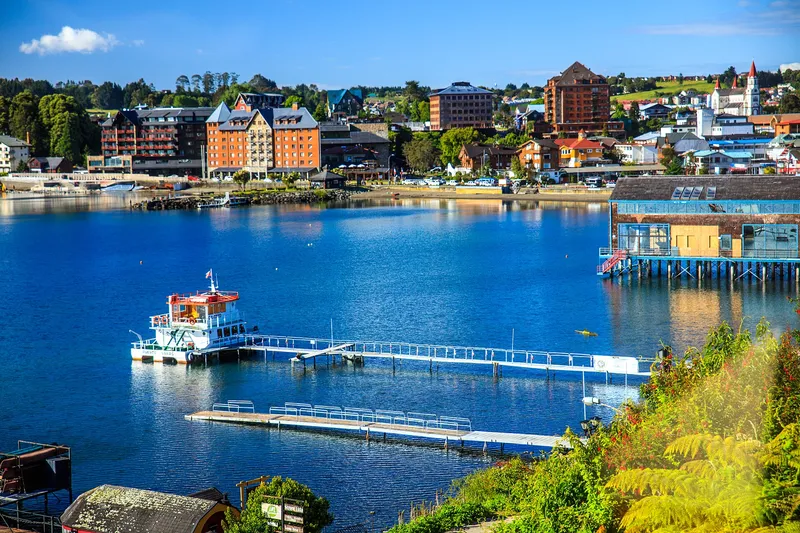
Puerto Madryn is the base for one of the great marine wildlife concentrations on earth: right whales in the bay, elephant seals, sea lions and orcas on Peninsula Valdes, and half a million penguins at Punta Tombo. The town is safe, calm and cheap by international standards. The Patagonian wind is relentless, the town itself is workaday rather than pretty in any way, there is no foreign community, and Argentina's economic instability makes financial planning genuinely difficult in a way that no other country in this batch does. The town also grew around an aluminium smelter rather than tourism, which is why it looks more industrial than a wildlife destination usually does. The town was founded by Welsh settlers in 1865 and the Welsh presence persists inland at Gaiman and Trelew, where tea houses and chapel names survive and the language is still taught, which is one of the odder cultural survivals in South America. The seafront is an asset the wildlife overshadows: a long promenade with a cycle path curves around the bay from the centre to the Ecocentro on the headland at its southern end, and on a still evening that walk is the best thing the town itself does.
Who Puerto Madryn Is For
Wildlife travellers, divers and photographers wanting a Patagonian coastal base while the whales are in, and anyone crossing Patagonia who needs somewhere to stop and work. It works for people comfortable with Argentine practicalities and with Spanish. There is no international community, Argentine finances offer nothing that could be called reliable, and the wind off the Atlantic is relentless rather than occasional. The town itself is plain: everything worth coming for lies outside it, on the peninsula and in the water. It also suits divers specifically, since the shipwrecks and sea lion colonies in the gulf are among the better cold-water diving in South America. Marine biology is the one profession this town serves properly. The whale, orca and elephant seal populations off the peninsula support research programmes that have run for decades, and a national research centre sits here because of them. Set beside Ushuaia, Madryn is warmer, cheaper, considerably duller and has the better wildlife by a wide margin.
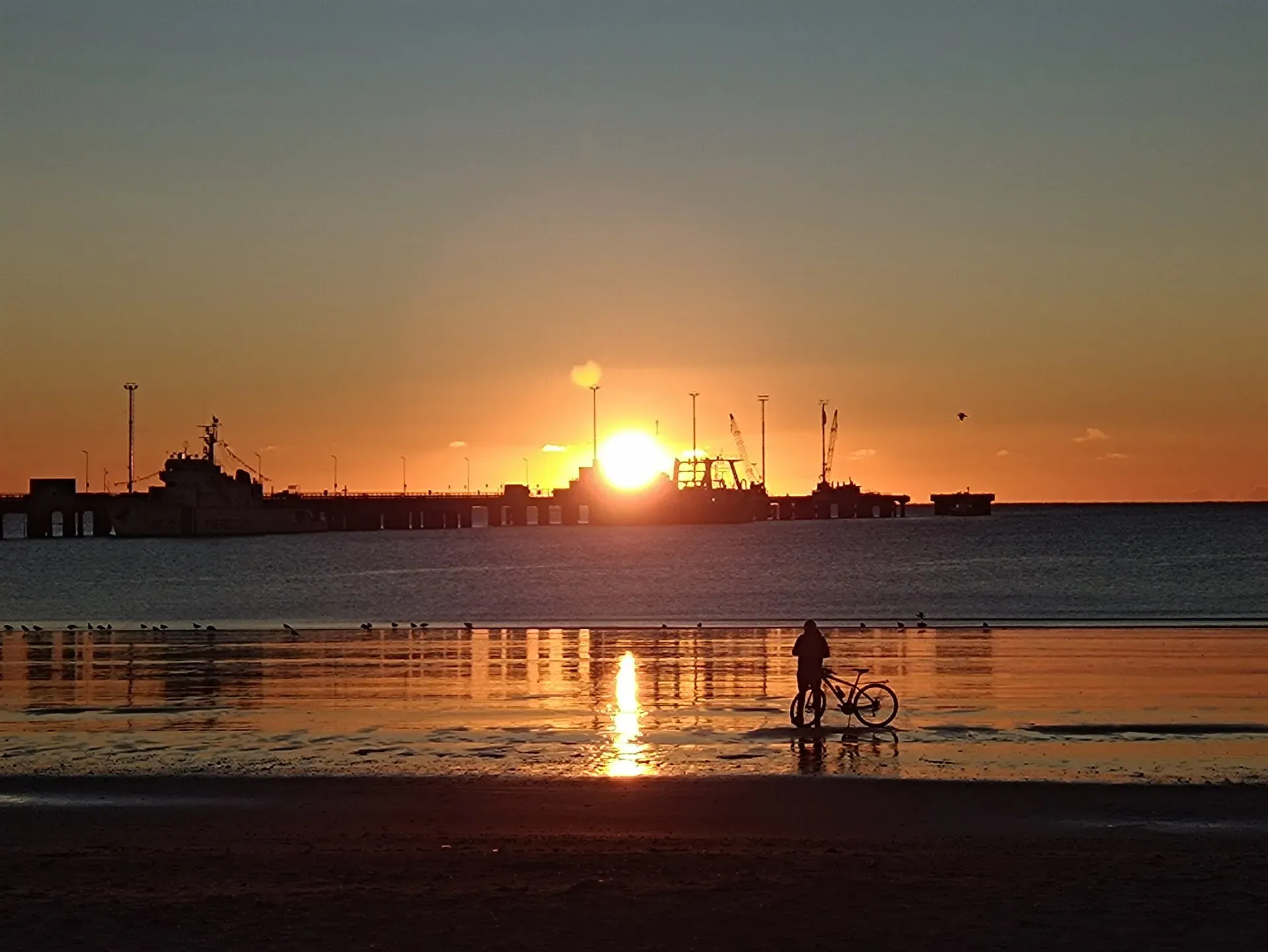 Photo: ElGuruCesar / Wikimedia Commons (CC BY-SA 4.0)