Cost of Living in Monteverde
Where this figure comes from. No cost survey covers Monteverde, so the $1,100 a month above is our own estimate rather than a measurement. On 416 of our 999 city guides the figure is built from a published Numbeo basket, a one-bedroom rent in the centre plus one person's monthly costs without rent, converted to USD; this city is not one of them. How we source everything.
Monteverde sits at a moderate price point for Costa Rica: not the cheapest corner of the country, but far gentler than beach hotspots like Tamarindo or Santa Teresa. A comfortable solo long-stay budget lands roughly between $1,000 and $1,800 a month, depending on how you eat and where you sleep. Monthly rentals and cabinas in and around Santa Elena are widely available, and the small-town scale keeps daily life simple. Groceries at the local supermarkets and the weekend feria are reasonable, though imported goods carry the usual Costa Rican markup. Eating the daily casado at a soda is the frugal move; the tourist-facing restaurants near the reserves cost more. Reserve entry fees, guided walks, and canopy tours add up if you do them often, so budget those as travel extras rather than fixed costs.
- Long-stay room or small apartment: roughly $450 to $850 per month.
- Casado lunch at a soda: around $6 to $9; tourist restaurants noticeably higher.
- Cloud forest reserve entry: budget extra for each visit and any guides.
- A local SIM with data is cheap and worth it for backup connectivity.
Where to Work in Monteverde
Monteverde works as a base only for a job that shrugs off the odd dropped call, because misty ridges, a small town's wiring and a connection that varies by the hour are all part of the deal. Connectivity is decent in Santa Elena town and at the better cafes, but it can wobble in cloud, rain, or in cabinas set back on the ridge roads. The town has a handful of laptop-friendly cafes and at least one small coworking option, which is your best bet for calls that cannot drop. For redundancy, pick up a Kolbi or Claro prepaid SIM and use mobile data as a tether, and always ask your host directly about real speeds and whether there is a backup line before you commit to a monthly stay.
- Best connectivity is usually in Santa Elena town center and established cafes.
- Carry a Kolbi or Claro SIM as a mobile-data backup for video calls.
- Ask hosts for actual speed tests, not just "yes we have wifi."
- Plan heavy uploads and big meetings for stable-window mornings when possible.
Getting Around Monteverde
The town of Santa Elena is small and walkable, with shops, sodas, and services clustered within a few blocks. Beyond town, though, the region spreads across steep ridges on winding, partly-unpaved roads, and that shapes everything. For the Monteverde and Santa Elena reserves, the coffee and cheese farms, and outlying cabinas, you will lean on taxis, 4x4 transfers, or your own vehicle. Getting in and out is the bigger commitment: buses and tourist shuttles run to San Jose in about four to five hours, and the popular jeep-boat-jeep route crosses Lake Arenal to reach La Fortuna and Arenal. A car, ideally with decent clearance, gives you real freedom here, but the rough access roads mean many visitors happily rely on shuttles and taxis instead.
- Santa Elena town center is easily walkable on foot.
- Taxis and 4x4 transfers reach the reserves, farms, and ridge-road lodgings.
- Shuttles and buses to San Jose take roughly four to five hours.
- The jeep-boat-jeep across Lake Arenal links Monteverde with La Fortuna and Arenal.
- A high-clearance vehicle helps, given the winding, partly-unpaved roads.
Sorting transport? Book an airport transfer, or compare car rental on Auto Europe and QEEQ.
Visas for Monteverde
Monteverde follows Costa Rica's national rules, so there is nothing region-specific here. Tourists from the US, Canada, the EU, the UK and many other countries are now eligible for stays of as long as 180 days, though the officer at the desk decides the number granted and may ask to see a ticket out of the country and enough money for the stay. For longer stays, Costa Rica offers a digital-nomad (rentista/nomad-style) route aimed at remote workers who can show a qualifying steady income, which can grant a much longer permitted stay. Many slow-travel nomads simply stay within the tourist window and plan a border trip around it.
- Tourist entry runs up to 180 days for US, Canadian, EU and UK passports since 2023, at the officer's discretion.
- Carry proof of onward travel and sufficient funds for entry.
- A digital-nomad/rentista route exists for longer, income-qualified stays.
Best Time to Visit Monteverde
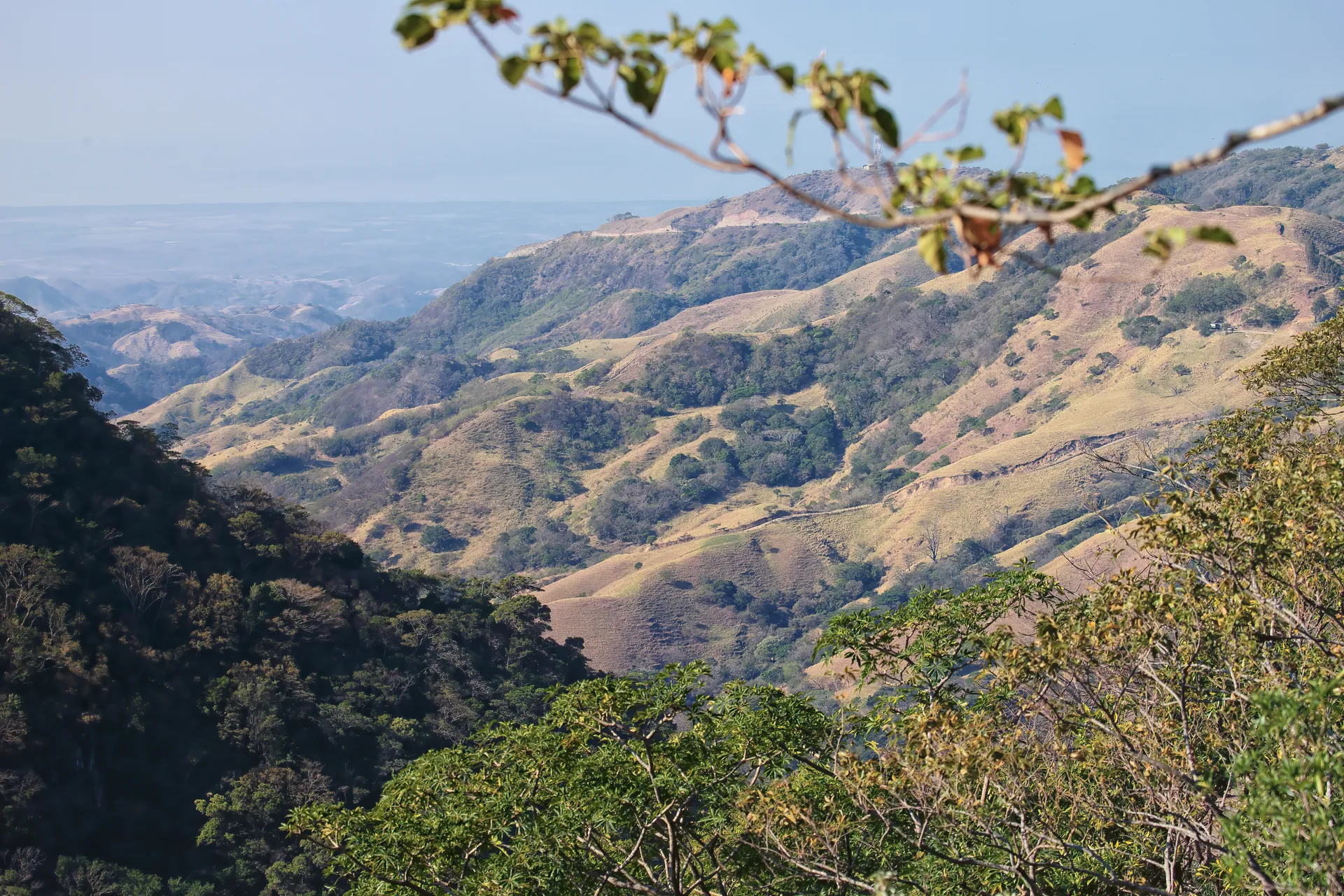
Monteverde is a cloud forest, so mist is the whole point and it never fully disappears. The dry season, roughly December through April, is the most reliable window, with more sunshine, easier road conditions, and prime wildlife viewing, though you should still expect cloud and wind at altitude. The green or wet season, from about May through November, brings lush growth, fewer crowds, and dramatic afternoon rain, with mornings often clearer if you start early. Year-round, remember you are at around 1,400 meters: it is noticeably cooler, windier, and damper than Costa Rica's beaches, so pack layers, a rain shell, and closed shoes whatever the month. Birders chasing the resplendent quetzal often favor the early dry-season transition when nesting activity peaks. The town sits on the Continental Divide, where the trade winds push Caribbean cloud over the ridge and down the Pacific side. Those winds blow hardest from December to February, the weeks when hanging bridges and ziplines sometimes pause and the mist arrives sideways as a fine drizzle.
- Dry season (about December to April): more sun, better roads, still misty.
- Green season (about May to November): lush, quieter, with afternoon rain.
- Cooler, windier, and damper than the lowlands all year at 1,400m.
- Pack layers, a rain jacket, and closed shoes in any season.
Pros and Cons of Monteverde
Monteverde's appeal is unusually clear-cut, which makes the trade-offs easy to weigh. On the upside, you get world-class cloud-forest nature, extraordinary wildlife, clean cool air, strong safety, and a warm eco-minded community with genuinely usable English thanks to its Quaker heritage and long tourism history. On the downside, this is a small mountain town with modest infrastructure, variable wifi, thin nightlife, damp misty weather, and winding, partly-unpaved access roads that make coming and going a project. It suits people who want to slow down and step into the forest, not those who need a dense city, a reliable heavy-work setup, or constant social buzz. Go in with the right expectations and the cons feel like fair rent for the setting.
- Pros: cloud-forest nature, wildlife, clean air, safety, friendly English-speaking community.
- Cons: variable wifi, thin nightlife, damp cool climate, rough access roads.
- Best treated as a nature-first slow-travel base, not a work hub.
Who Monteverde Is For
Monteverde is for the nature-and-wildlife slow traveler: the remote worker with a flexible schedule who would rather finish the day on a canopy bridge or listening for a quetzal than in a rooftop bar. It rewards people who value clean air, cool evenings, hiking, birding, coffee and cheese farms, and a small friendly community over big-city convenience. Volunteers, sabbatical takers, and couples or solo travelers on a longer wildlife-focused trip fit especially well. It is a poor match for anyone who depends on flawless connectivity, needs nightlife and a large social scene, or dislikes damp weather and long, winding drives. Come here to work lightly and live richly among the clouds, and Monteverde delivers something few nomad destinations can. The Children's Eternal Rainforest, Costa Rica's largest private reserve, was bought largely with money raised by schoolchildren abroad, and its Bajo del Tigre trail starts just outside Santa Elena. That makes it the easiest quiet forest walk to fold into a working week.
- Great for nature lovers, birders, hikers, and slow, wildlife-focused travelers.
- Well suited to volunteers, sabbaticals, and flexible-schedule remote workers.
- Not ideal for heavy-connectivity work, nightlife seekers, or big-city types.