Cost of Living in Sintra
Where this figure comes from. No cost survey covers Sintra, so the $1,400 a month above is our own estimate rather than a measurement. On 416 of our 999 city guides the figure is built from a published Numbeo basket, a one-bedroom rent in the centre plus one person's monthly costs without rent, converted to USD; this city is not one of them. How we source everything.
Sintra is one of the pricier bases around Lisbon, its fame, beauty and proximity to the capital keeping costs up, though it can be cheaper than central Lisbon itself. A comfortable single-person budget runs roughly $1,200 to $1,800 a month. A furnished one-bedroom in or near the town costs about $700 to $1,100, with the wider municipality and nearby towns offering better value. Portuguese food and everyday costs are reasonable. These are our editorial estimates in US dollars, with rent and the heavy tourist economy the main pressures on a budget; living slightly outside the historic core helps. The damp is a real cost here rather than a quirk of the microclimate. Houses in these hills hold moisture year-round, mould on a north-facing wall is common, and most long-stayers end up running a dehumidifier through the winter, which adds to an electricity bill that is already high by regional standards. Look for a flat that gets sun. The other thing to compare honestly is the commute: a monthly train pass into the capital costs very little, so the real comparison is this town's rent plus the pass against a flat in the city, and the gap is smaller than it looks.
- Furnished 1-bed in or near the town: roughly $700 to $1,100 a month
- Menu do dia (set lunch): roughly $10 to $15
- The famous local travesseiros and queijadas pastries: a couple of dollars
- Train to central Lisbon: a few dollars
Where to Work in Sintra
Sintra is a small, tourist-heavy heritage town rather than a nomad hub, so most remote workers work from home or from cafes rather than a coworking scene. Portugal's excellent fibre network means home internet is fast and cheap where available, though checking a specific rental's connection is wise. A MEO, NOS or Vodafone SIM adds inexpensive mobile data. Its great practical advantage is Lisbon: the capital's coworking spaces, community and airport are a short train ride away, so many nomads treat Sintra as a green, calm home base and dip into Lisbon when they want the buzz. It shares Portugal's time zone for easy European overlap. The town has a daily window when it is effectively unusable. From ten in the morning until the last coaches leave, the centre is full of people who arrived on the same train you would take, the cafes are queued and the streets are a slow shuffle, so the working day is best spent at home and the errands left to the early morning or the evening. Anyone who finds that claustrophobic should look at the villages on the coastal side of the hills, which are ten minutes away by bus, far quieter, and have the same fibre.
Getting Around Sintra
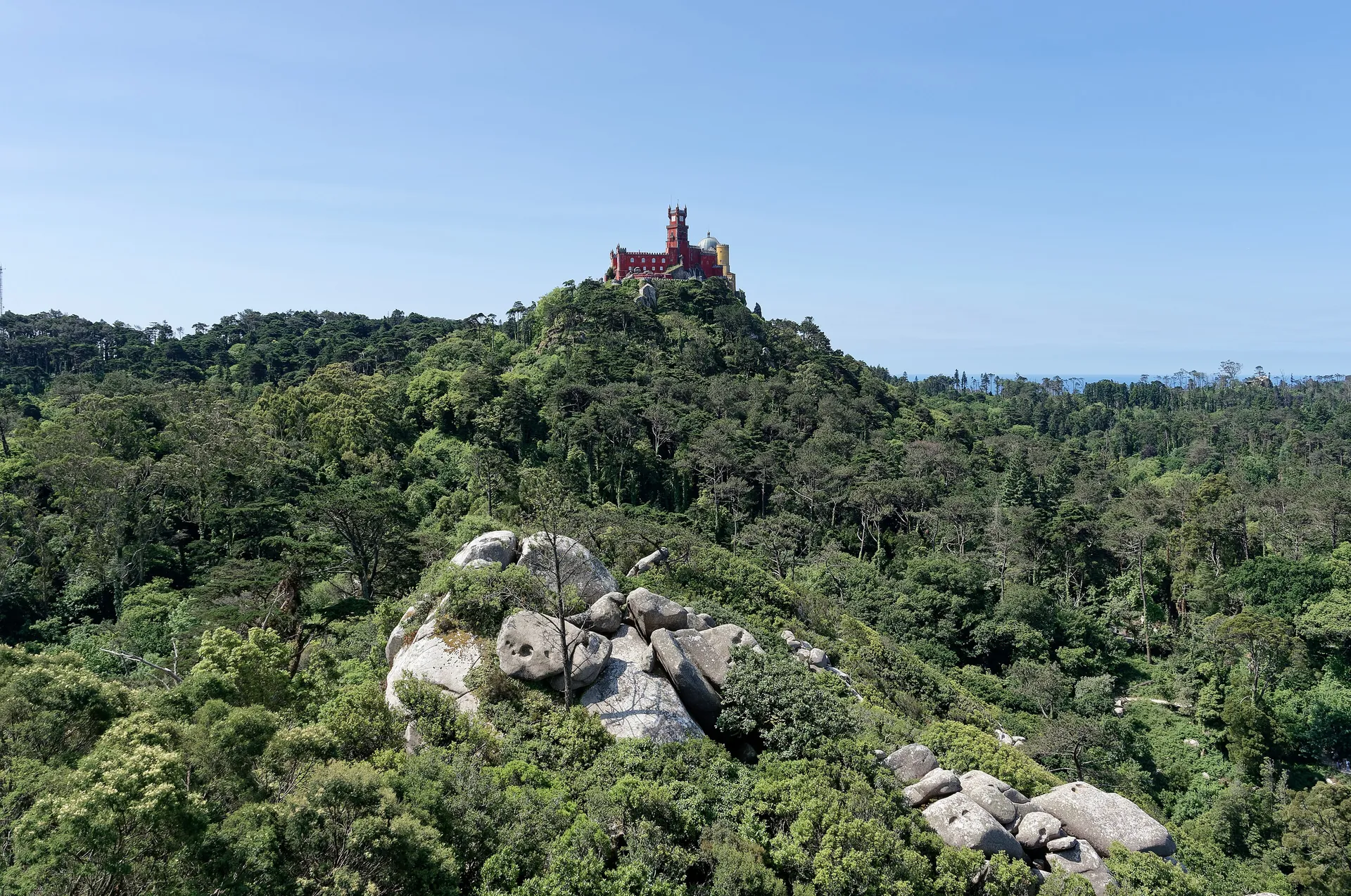
Sintra's town centre is walkable but hilly, and its famous palaces, the Pena Palace, the Moorish Castle and Quinta da Regaleira, sit up steep, forested slopes reached by the tourist bus loop, taxis or a stiff walk. The town gets extremely busy with day-trippers, so cars struggle and public transport or walking is usually easier. The real connection is the frequent suburban train to central Lisbon in about forty minutes, which makes commuting into the city simple. Buses reach the wild Atlantic coast and beaches at Cascais and Praia das Macas nearby, and Lisbon's airport is under an hour away. Driving here is the mistake almost every visitor makes once. The roads up to the palaces are single-track with two-way traffic and no parking at the top, the police close them when they fill, and the fine for leaving a car on a verge is enforced. Use the loop buses, which run continuously in season, or walk up through the park, which takes forty minutes and is far better than the bus. The train into the capital is crowded in both directions at commuting hours and empty in between, so a flexible start beats a fixed one.
Sorting transport? Book an airport transfer, or compare car rental on Auto Europe and QEEQ.
Visas for Sintra
Sintra is in Portugal and the Schengen Area, so most non-EU visitors can stay visa-free for up to 90 days in any 180-day period, while EU and EEA citizens face no limits. For a longer stay, Portugal's D8 digital nomad visa suits remote workers who can show income of roughly four times the Portuguese minimum wage, plus a local address, granting renewable residence. Anyone entering visa-free should treat the limit as hard, because the Entry/Exit System at Lisbon airport logs the exit as well as the entry and flags an overstay automatically. The visa itself is preceded by two pieces of paperwork, and both take longer than people expect. The tax number comes first: you can request it in person at a tax office, or from abroad through someone holding your power of attorney, and no fiscal representative is needed to get it. That only arises later, for non-EU residents with a tax relationship in Portugal who have not signed up for the tax authority's electronic notifications. And a local bank account, which the application effectively requires, is difficult to open before you have residence and residence is difficult to get before you have the account. Most people solve it with a specialist service, and the fee is worth budgeting for rather than resenting.
Best Time to Visit Sintra
Sintra has its own cooler, mistier microclimate, shaped by its forested hills and Atlantic exposure, so it is often several degrees cooler and damper than nearby Lisbon, with fog that lends the palaces their romantic air. The best times to visit are late spring and early autumn, roughly May to June and September, when the weather is warm and pleasant and the day-tripper crowds are thinner than in peak summer. Summer is the busiest season, mild but crowded. Winters are cool, green and often wet, atmospheric but damp. Aim for the shoulder months for the best balance of weather and calm. A practical booking note: the main palaces now sell timed-entry tickets that regularly sell out days ahead in season, so the spontaneous visit that the town is famous for is no longer available in summer. Book, or go in winter. And winter here is genuinely worth considering rather than merely tolerable, because the fog that gives the place its reputation settles most often in the cold months, the gardens are empty, and a grey November morning in the park is closer to what the romantics were describing than a bright August afternoon ever is.
Pros and Cons of Sintra
Sintra offers a fairytale green setting minutes from Lisbon, tempered by tourism and cost. The tourism figure is the one that decides whether this works. Several million people visit a town of a few thousand residents each year, almost all of them in a six-hour window, almost all of them in the same half-kilometre. That concentration is why the place can be simultaneously one of the most crowded spots in the country and completely silent, and why where you live decides everything. A house in the hills or in one of the villages toward the coast is quiet, green and lovely; a flat on the main street is untenable. Get that right and the argument for being here is strong: a temperate forest microclimate, Atlantic beaches twenty minutes away, a capital forty minutes by train, and a rent that is high for the country and low for what it buys. Get it wrong and you will spend a year queueing behind people on holiday.
- Pros: a magical landscape of palaces, castles and misty forests, a cool green microclimate, quick train access to Lisbon and its coworking, community and airport, genuine safety, widely spoken English, and easy reach of Atlantic beaches.
- Cons: heavy day-tripper tourism, higher costs than much of Portugal, a small resident nomad community, steep hills, a damp, misty climate, and limited nightlife, making it more a serene base than a scene in itself.
Who Sintra Is For
Sintra suits the nomad who wants a green, romantic and peaceful base with the buzz of a capital on tap. Anyone who loves forests, palaces, cool misty mornings and a quiet home to return to, while keeping Lisbon a short train ride away, will find it enchanting. It works well for those pursuing the D8 visa who prefer nature to city life, and for couples and slow travellers. It is a weaker fit for those who want a large on-the-ground nomad community, lively nightlife, or budget prices, all of which Lisbon or a cheaper town serve better. Base yourself just outside the tourist core, and enjoy the magic on your doorstep. The decision that matters is not whether to come but which address to take, and it is worth a week in a hotel to work that out before signing anything. Walk the neighbourhoods at eleven in the morning, when the town is at its worst, rather than at seven in the evening when it is at its best. Six months to a year suits this place better than a short stay, because the pleasure here is in the routine, the same walk in the park at the same hour through four different kinds of weather, and that takes time to build.