Cost of Living in Bled
Where this figure comes from. No cost survey covers Bled, so the $2,200 a month above is our own estimate rather than a measurement. On 416 of our 999 city guides the figure is built from a published Numbeo basket, a one-bedroom rent in the centre plus one person's monthly costs without rent, converted to USD; this city is not one of them. How we source everything.
Bled is beautiful but it carries a resort premium. Long-term rentals in central Bled run roughly $1,150-1,730/month ($1,080-1,620) for a modest one-bedroom apartment. If you base yourself in nearby villages like Bohinjska Bela, Lesce, or Radovljica, 10-20 minutes away by bus or bike, you can find similar flats for $805-1,040/month.
- Rent (central Bled, 1BR): $1,150-1,730/month
- Rent (nearby village, 1BR): $805-1,040/month
- Groceries: $290-345/month
- Eating out (mid-range, 3-4x/week): $230-320/month
- Coworking hot-desk: $230-405/month, or $63/day at Hotel Triglav
- Local bus pass: $35-40/month
- Utilities and internet (if not included): $115-175/month
- Total monthly range: $2,070-2,990/month living centrally, or $1,610-2,300/month based in a nearby village
Short-term Airbnb pricing is significantly higher, averaging $2,760-4,030/month for furnished flats during peak season. Commit to a monthly or longer lease through local agencies or platforms like ThinkSlovenia to get realistic rates.
Where to Work
Bled has two main coworking options. SubWork (subwork.xyz) is the dedicated coworking hub, located about 200 meters from Lake Bled. It has 28 desks, two meeting rooms, a cafe, gym, and outdoor space. The focus is partly on tech and web3 builders, but any remote worker is welcome. Monthly memberships are available; book through their site for current rates.
Hotel Triglav Bled runs a small coworking setup in its Wine Club, capped at three desks. It costs $63 per day or $980 per month, includes fast WiFi, coffee, breakfast access, and printing. It is limited on seats, so book ahead.
Cafe culture for working is present but inconsistent. A handful of cafes in the town center have WiFi and enough tables to set up a laptop, but they fill with tourists in summer and quiet down outside peak months. Most cafe connections are fine for video calls. Fiber internet is available in Bled proper, and accommodation with dedicated fiber is easy to find. The WiFi situation is reliable but not exceptional for a small alpine resort.
Getting Around
Bled town center is walkable in 15-20 minutes end to end. The lake path is flat and you can walk the full circuit in about 90 minutes. Many residents and visitors get around by bike, and rental bikes are widely available.
For getting further afield, Arriva buses connect Bled to Ljubljana roughly every 30-60 minutes. The journey to Ljubljana's main bus and train station takes about 1 hour 15 minutes and costs around $7-8 one way. A Bled-Jezero rail station sits about 100 meters from Hotel Triglav, with limited regional train service.
Getting to and from Ljubljana Airport (LJU) is straightforward. A direct Arriva bus runs from the airport to Bled bus station in about 1 hour and costs around $4.50-6 on weekdays. Shared GoOpti shuttles take 30-45 minutes and cost about $23-35. A private taxi or transfer runs $46-58. There is no need to rent a car for day-to-day life in Bled, but a car is useful if you want to explore the wider Julian Alps or Triglav National Park regularly.
Sorting transport? Book an airport transfer, or compare car rental on Auto Europe and QEEQ.
Visas and Staying Long-Term
Slovenia is an EU and Schengen member. Most Western passport holders, including US, Canadian, Australian, UK, and EU citizens, can enter visa-free. US, Canadian, and Australian citizens get 90 days in any 180-day period within the entire Schengen Area, not just Slovenia.
Slovenia launched a dedicated Digital Nomad Visa (temporary residence permit for digital nomads) on 21 November 2025. Key details:
- Open to non-EU and non-EEA citizens only
- You must be employed or self-employed for a company or clients based outside Slovenia
- Minimum income requirement: roughly $3,340-3,680/month (twice the average Slovenian net salary)
- Valid for up to one year, not renewable; you must wait at least six months before reapplying
- Valid health insurance covering Slovenia required for the full duration
- Processing time is typically 30-60 days; apply at a Slovenian consulate abroad or at an administrative unit inside Slovenia
EU and EEA citizens can stay and work freely without any special permit.
Best Time to Visit
The best window for remote work is May, June, and September. Temperatures are comfortable (15-25C / 59-77F), the lake is at its most photogenic, outdoor activities are fully accessible, and crowds are noticeably thinner than in peak summer. Cafes and coworking spaces are easier to get into and accommodations are cheaper.
July and August are peak tourist season. Expect crowded lakeside paths, higher accommodation prices, and occasional difficulty finding a quiet spot to work in town. Temperatures hit 28-32C (82-90F), which is pleasant for swimming but can feel stuffy indoors. Summer does bring the most sunshine, averaging around 8 hours per day.
October and November bring autumn color and fewer tourists, but also the wettest months of the year, with heavy rain common. Temperatures drop quickly to 5-15C (41-59F). Winter (December to February) is cold and quiet, with skiing nearby at Krvavec (about 30 minutes by car) and occasional snowfall in Bled itself. Some restaurants and cafes close or reduce hours in the low season, which can limit your options.
Pros and Cons
Pros
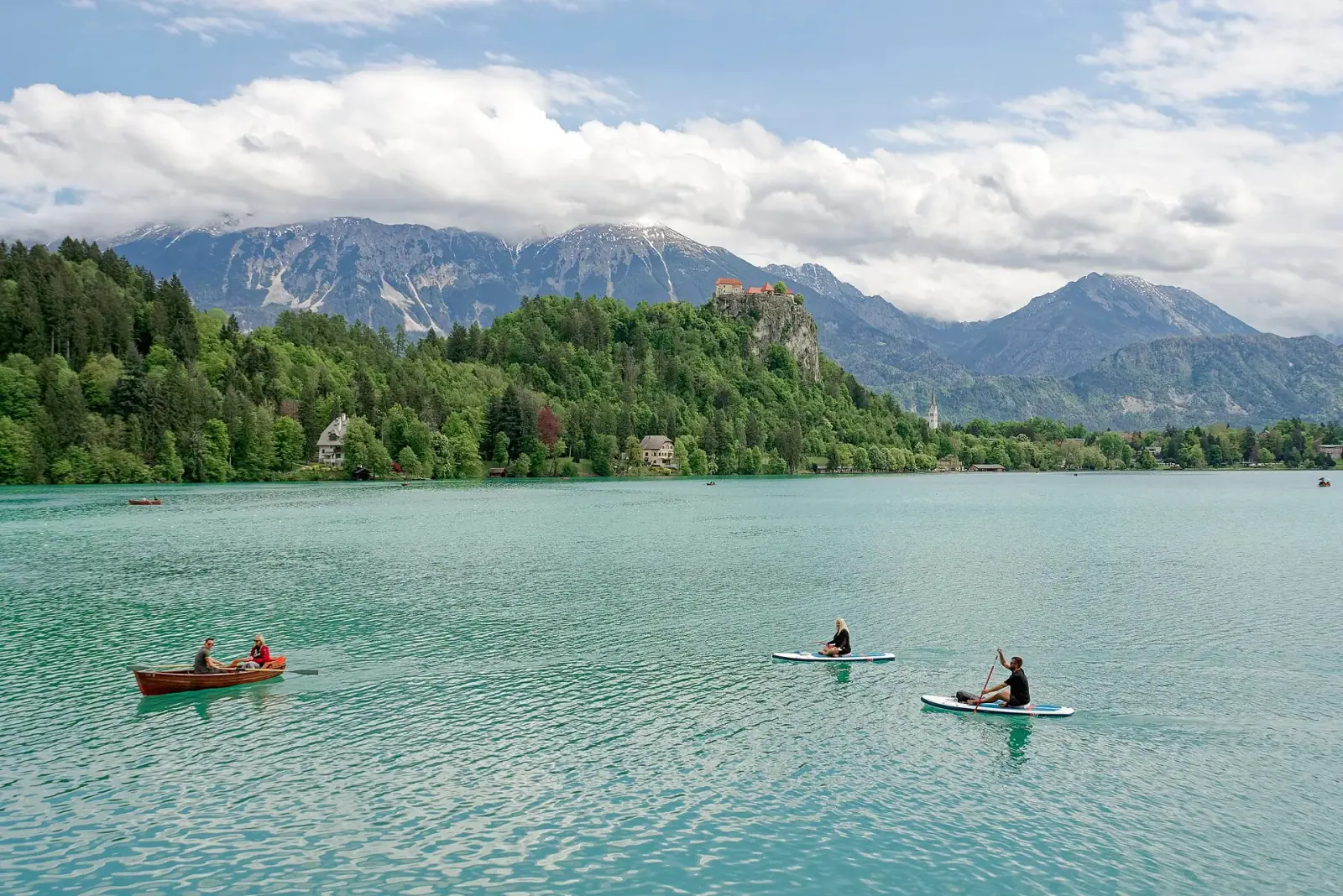
- Extraordinary natural setting: the lake, island church, and Triglav National Park right on your doorstep
- Very safe, low crime, and genuinely peaceful outside peak summer
- English widely spoken in hospitality and services
- Schengen location gives easy EU travel access
- Clean air and clean water; low pollution year-round
- Dedicated digital nomad visa now available for non-EU citizens
- Outdoor lifestyle: hiking, cycling, kayaking, and skiing all within easy reach
Cons
- Small town with limited coworking options; fewer than two dedicated spaces
- High resort pricing for accommodation, particularly in summer
- The nomad community is very small; most remote workers are passing through, not staying long
- Nightlife and social scene are minimal; better options require a bus to Ljubljana
- Heavy tourist traffic July through August can make the town feel overrun
- Car-dependent for many destinations beyond the immediate town center
Who Bled Is Best For
Bled suits you well if you prioritize nature and calm over community and nightlife. If your ideal workday ends with a hike to a viewpoint or a swim in an alpine lake, this place delivers consistently. It works particularly well for:
- Solo remote workers who are self-sufficient and motivated without a local nomad scene
- Couples or families looking for a safe, scenic, and low-stress base in central Europe
- People using the 90-day Schengen allowance who want one striking location rather than city-hopping
- Non-EU citizens who qualify for the new Slovenian Digital Nomad Visa and want a year in the Alps
Skip Bled if you depend on a buzzing coworking community, regular networking events, or a lively after-work social scene. Ljubljana, two hours away, covers all of that. Bled is also a poor fit if you are on a tight budget: the resort premium is real, and nearby villages require more planning to use as a base.