Cost of Living in Pucón
Where this figure comes from. No cost survey covers Pucón, so the $1,100 a month above is our own estimate rather than a measurement. On 416 of our 999 city guides the figure is built from a published Numbeo basket, a one-bedroom rent in the centre plus one person's monthly costs without rent, converted to USD; this city is not one of them. How we source everything.
Pucón is not a cheap Latin American base, and any honest guide has to say so upfront. Chile runs on the Chilean peso (CLP), and prices in this tourist town track closer to a mid-tier European ski village than to budget-friendly Southeast Asia or even much of the rest of Chile. A one-bedroom apartment in or near the centre typically runs somewhere in the USD 500 to 900 range depending on season, with prices spiking hard in January and February when Chilean and Argentine holidaymakers flood in. Outside high season, landlords are far more negotiable and monthly rentals can drop noticeably. Groceries at supermarkets like Unimarc or Eltit are reasonable for staples grown in Chile (bread, produce, wine) but imported goods and anything packaged carry a real markup. Eating out is where costs add up fastest: a casual almuerzo (set lunch) might be affordable, but the restaurants aimed at tourists along O'Higgins charge prices comparable to a US casual dining chain. Budget nomads can live modestly by cooking at home and renting shoulder-season, but anyone expecting Southeast Asia-level costs will be disappointed.
Where to Work in Pucón
Coworking infrastructure here is thin, reflecting the town's small permanent population and its identity as an adventure-tourism hub rather than a digital nomad hotspot. There are a handful of cafes with decent wifi and a small number of coworking-style spaces that cater to the trickle of remote workers passing through, but nothing like the dense coworking scenes of Medellin or Chiang Mai. Most remote workers end up working from their rental, from cafe tables along the main street, or from one of the few dedicated spaces when one exists and is open. Home wifi through providers like Movistar, GTD, or VTR is generally serviceable for video calls in town, though speeds can be inconsistent and outages happen, especially after storms roll in off the Andes. If your work depends on rock-solid connectivity for client calls, test your specific rental's wifi before committing to a long stay, and keep a mobile data plan as backup since Chilean cell coverage is genuinely strong even in this relatively remote region.
Getting Around Pucón
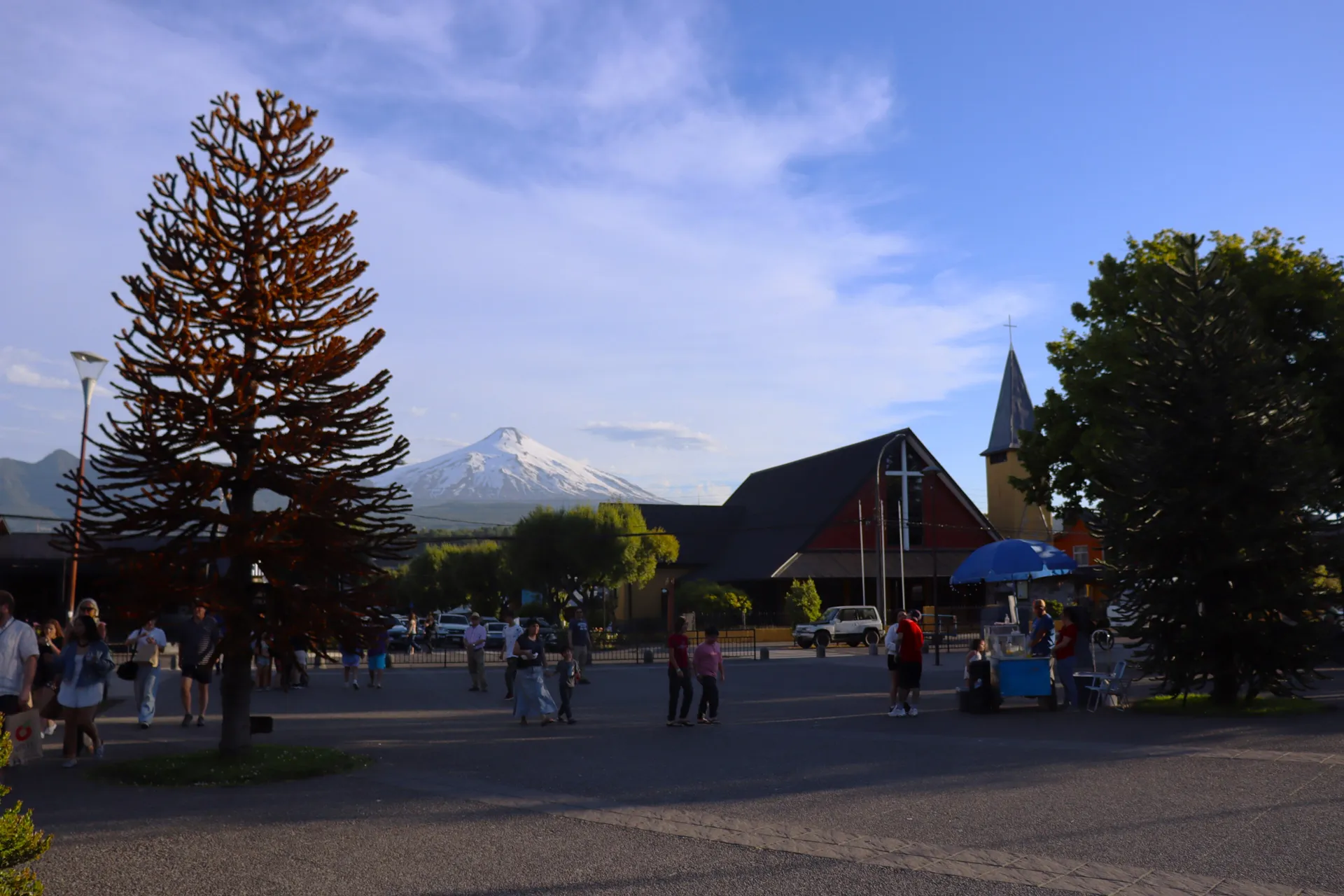
Pucón itself is compact and highly walkable: the town core is a simple grid a few blocks wide, running down to the black-sand shore of Lake Villarrica, and most restaurants, shops, and rentals sit within a 10 to 15 minute walk of the center. You won't need a car for daily life if you stay central. For getting here, long-distance buses are the main option: regular services connect Pucón to Temuco (about 1.5 to 2 hours, where the nearest airport is) and to Santiago (a long overnight haul of roughly 9 to 10 hours, run by companies like Tur Bus and JAC). Flying into Temuco and busing the last leg is the standard route for most visitors. Within the wider area, local buses (known as micros or colectivos) connect Pucón to nearby Villarrica and to Caburgua, but they run on limited schedules. For hot springs, national parks, and trailheads scattered around the lake district, renting a car or booking a tour van is genuinely the most practical option since public transit doesn't reach most of them.
Sorting transport? Book an airport transfer, or compare car rental on Auto Europe and QEEQ.
Visas for Pucón
Most Western passport holders, including US, EU, UK, Canadian, and Australian citizens, receive a 90-day tourist entry stamp on arrival in Chile, and this can typically be extended once for a fee if you want to stay longer without leaving the country. There is no dedicated short-term digital nomad visa in Chile at the time of writing, so most remote workers simply operate on tourist status, which is a legal gray area for actively working since the stamp technically permits tourism rather than employment, even remote employment for a foreign company. For longer stays, Chile does offer a temporary residency visa (visa de residencia temporaria) that can lead toward permanent residency, but the application process involves paperwork, income or contract documentation, and processing time best started well in advance through a Chilean consulate or after arrival. Border runs to Argentina (Pucón sits fairly close to Andean crossings) are sometimes used informally to reset tourist status, but immigration officials have grown less tolerant of obvious visa-run patterns in recent years, so treat this as a risk rather than a reliable strategy.
Best Time to Visit Pucón
Summer (December through February) is peak season: long daylight hours, the best weather for lake swimming, hiking, and rafting, and the busiest, most expensive, most crowded version of the town, with prices and foot traffic both surging around the holidays. Shoulder seasons, particularly March through May (autumn) and September through November (spring), offer a genuinely appealing tradeoff: fewer crowds, lower prices, still-good hiking and volcano-viewing weather, and a more relaxed pace. Winter (June through August) transforms Pucón into a ski town, with Volcan Villarrica's ski center drawing a different crowd, but it's also the wettest, greyest stretch of the year, since this is a temperate oceanic climate with real, sustained rainfall for a large part of the year, not just occasional showers. If you dislike rain, plan around it: expect grey, wet stretches especially from April through September. April is the quiet favourite of people who know the area: the summer crowds have gone, the beech forests of Huerquehue National Park turn red and gold, and hot springs such as Los Pozones and Termas Geometricas are at their best on cool evenings. The two weeks of Chilean winter school holidays in July are the off-season stretch to avoid, because they fill the cabins and the springs at the same time.
Pros and Cons of Pucón
Pros: genuinely spectacular nature right outside your door, with an active, snow-capped volcano looming over a clear lake, plus some of Chile's best hiking, hot springs, whitewater rafting, and skiing all within a short drive; a real sense of safety that's uncommon to find paired with this much adrenaline-sport access; a compact, walkable, low-stress town centre; and a strong outdoorsy expat and tourist community if that's the crowd you want to find. Cons: prices that undercut the "cheap Latin America" assumption, especially in summer; genuinely limited coworking and patchy wifi reliability outside a few known spots; a small town that can feel repetitive if you're not into hiking, rafting, or skiing; significant rainfall for large parts of the year; and the fact that Villarrica is an active volcano, meaning occasional ash advisories, trail closures, and a background awareness of volcanic risk that's worth taking seriously rather than dismissing as tourist trivia.
Who Pucón Is For
Pucón rewards remote workers who are genuinely drawn to an outdoor, adventure-sport lifestyle and are willing to pay a premium and accept thin coworking infrastructure in exchange for daily access to volcano hikes, hot springs, lake swims, and world-class rafting. It suits people on flexible schedules who can shift their stay to shoulder season for better value, and those who don't need a bustling nightlife or dense digital nomad community to feel at home. It's a poor fit for budget-focused nomads chasing rock-bottom costs, for anyone who needs dependable, high-speed wifi and abundant coworking options for demanding client work, or for people who'd rather avoid an environment with visible, if low-probability, volcanic activity nearby. Come for the mountains and the lake, not for the coworking scene or the savings. It is also one of the better places on the continent to learn to kayak, since the Trancura river runs both gentle and grade IV sections a short drive up the valley from Pucón and several schools teach multi-day courses through the summer. Couples where one partner works and the other wants full days outdoors do well here, because rafting, canyoning and guided hikes can be booked a day ahead from the agencies along O'Higgins.