Cost of Living in Banja Luka
Where this figure comes from. No cost survey covers Banja Luka, so the $700 a month above is our own estimate rather than a measurement. On 416 of our 999 city guides the figure is built from a published Numbeo basket, a one-bedroom rent in the centre plus one person's monthly costs without rent, converted to USD; this city is not one of them. How we source everything.
Budget around $700 a month, which is very low for Europe. A one-bedroom runs roughly $200 to $400, with the streets near the centre and the Vrbas at the top. Market produce is cheap and the region grows a great deal of its own food, with the produce markets genuinely good. Eating out is inexpensive: a full meal with drinks runs under fifteen dollars almost anywhere, and the grilled meat is the regional speciality. Utilities are moderate and heating runs through a proper continental winter. The convertible mark is pegged to the euro, which removes currency risk. Fibre runs about $15 to $25 a month and a coworking desk $70 to $130, both among the better value in Europe. District heating in the older blocks is billed by building rather than by use, so an inefficient block costs the same as a careful tenant, and it is worth asking which system a flat is on before signing. Rents in Borik and the outer neighbourhoods run a third below the centre for the same space. Health insurance for a non-resident is cheap here and private clinics are used routinely rather than exceptionally, which is worth budgeting as a small monthly line.
Where to Work in Banja Luka
Connectivity is adequate. Bosnia has extensive fibre at low prices in the cities, with comprehensive mobile coverage and generally reliable power, and Banja Luka is well served. There is a small coworking scene and a growing software outsourcing sector, which is one of the country's few genuine growth industries. The time zone is central European, so European work is straightforward. The practical friction is banking and administration rather than technology: Bosnia's divided governmental structure means procedures vary by entity and can be slow and opaque. Anyone opening a bank account should allow time and paperwork, since Bosnia's two entities and the district each run their own administration and the rules differ between them. Bosnia sits one hour ahead of GMT, giving a full European working day and a late-afternoon overlap with the American east coast. The outsourcing sector here works largely for German and Austrian clients, which is why the time zone and the language skills matter more locally than the cost does.
Getting Around Banja Luka
Banja Luka is flat along the Vrbas and easy to walk, with the centre, the fortress and the riverside all within twenty minutes of each other. Buses cover the rest cheaply and taxis are inexpensive. Bicycles work well. Banja Luka International Airport has very limited service, so Zagreb, about three hours by road, is the practical air connection, with Belgrade about five. Buses run to Sarajevo in around five hours on a slow mountain road. The Vrbas canyon upstream is where the rafting happens and is half an hour away. The Vrbas canyon road upstream towards Jajce is one of the better drives in the country, following the river through limestone gorges, and Jajce itself has a waterfall in the middle of the town. Rafting operators run from Karanovac, twenty minutes out. Zagreb Airport is the practical gateway and the bus takes about four hours including the border, which is the journey most arrivals actually make rather than flying into Banja Luka.
Sorting transport? Book an airport transfer, or compare car rental on Auto Europe and QEEQ.
Visas for Banja Luka
Bosnia and Herzegovina grants visa-free entry of ninety days in any one hundred and eighty to citizens of the European Union, the United Kingdom, the United States, Canada, Australia and a long list of others, which is generous and straightforward. Bosnia is not in the European Union or Schengen, so time here does not count against a Schengen allowance, which makes it a genuinely useful base for people managing that limit. There is no digital nomad visa. Longer stays require a temporary residence permit, applied for locally, and the process is slow. Bosnia is an EU candidate country and its visa arrangements are likely to change over the coming years, but for now the ninety days runs on its own clock, which is the single most useful thing about it for anyone managing a Schengen allowance across a year.
Best Time to Visit Banja Luka
May to September is the comfortable window, with July around twenty seven degrees and the Vrbas at its best for rafting and swimming. Spring and autumn are pleasant and short. Winter from December to February is cold, often around freezing with snow, and brings the region's serious air quality problem: coal and wood heating across the valley pushes particulate readings among the worst in Europe during still winter weeks, which is the single biggest health consideration here. Summer air is clean by comparison. The thing to watch is the particulate reading rather than the forecast, and the worst of it arrives in the windless spells rather than the coldest ones, which is not what most people expect. The Vrbas is meltwater-fed and runs highest in April and May, which is when the rafting is at its most serious and when the canyon is at its most impressive rather than merely pleasant. Kozara National Park an hour north is the nearest proper hiking and is thickly forested rather than alpine, which suits walking better than climbing.
Pros and Cons of Banja Luka
Banja Luka is a green, walkable riverside city on the Vrbas at very low cost, with the canyon and its rafting half an hour upstream, thermal springs nearby, and a ninety day visa-free allowance that does not touch a Schengen clock. The Kastel fortress and the rebuilt Ferhadija mosque are both central. Winter air quality here is genuinely bad, the flight connections are very limited, and the politics matter: Banja Luka is the seat of Republika Srpska, and the entity's relationship with the Bosnian state has been a source of recurring instability for thirty years now. The Ferhadija mosque was destroyed in 1993 and rebuilt from its original stones, many recovered from a rubbish tip and the river, and reopened in 2016, which is a piece of the city's recent history that is legible in the building itself. Thermal spas at Slatina and Laktasi are twenty minutes out and are used year-round.
Who Banja Luka Is For
European costs at a fraction of European prices without spending Schengen days, particularly for people working European hours who need somewhere to sit out the ninety day limit. It suits rafters, kayakers and anyone drawn to the Vrbas. It suits software people, given the local sector. The winter air in this valley turns poor enough to be worth a second thought for asthmatics, flights are few, and Bosnia's unresolved politics are present in daily conversation rather than confined to the news, which some people find interesting and others find wearing. The Vrbas canyon is what fills the hotels in spring. Rafting runs from the meltwater right through the summer, and in April the river is genuinely serious water rather than a scenic float down a gorge. The Dayton settlement is argued over more openly in Banja Luka than in any other Bosnian city, which makes the constitutional arrangement something a visitor runs into rather than reads about, because the politics are impossible to miss. Put it beside Sarajevo and Banja Luka is flatter, cheaper, considerably less atmospheric and has the better air in summer and the worse in winter.
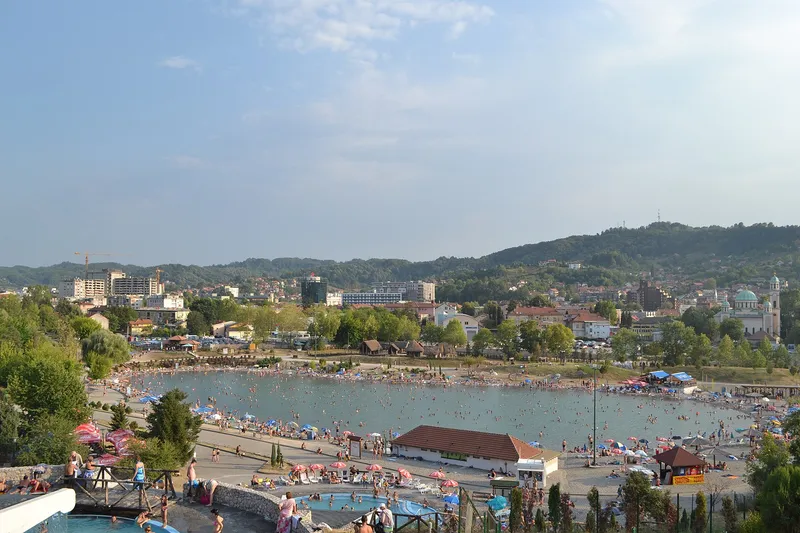
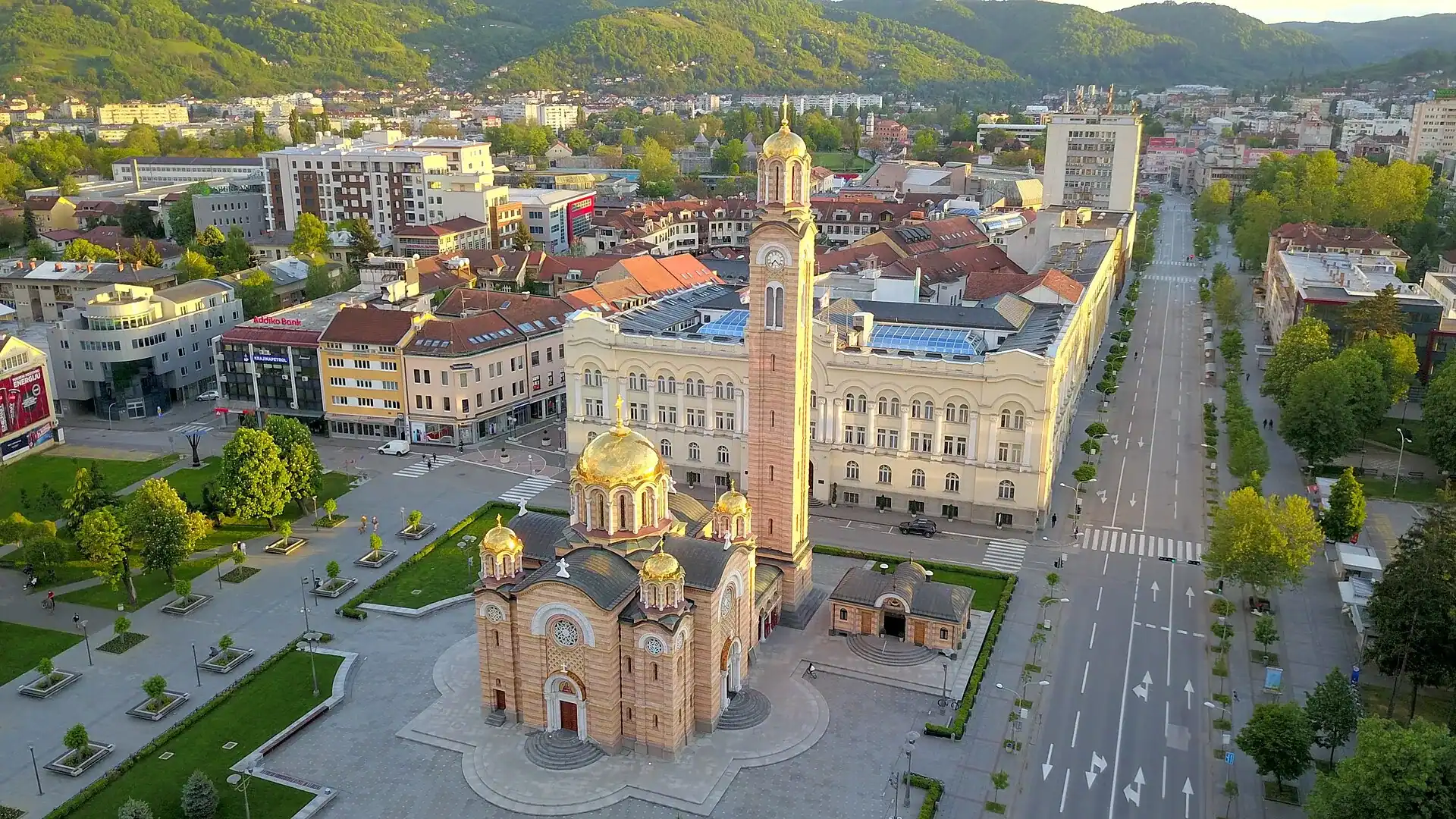 Photo: Tomas Damjanovic Banjaluka / Wikimedia Commons (CC BY-SA 4.0)