Cost of Living in Mindelo
Where this figure comes from. No cost survey covers Mindelo, so the $950 a month above is our own estimate rather than a measurement. On 416 of our 999 city guides the figure is built from a published Numbeo basket, a one-bedroom rent in the centre plus one person's monthly costs without rent, converted to USD; this city is not one of them. How we source everything.
Budget around $950 a month. A one-bedroom runs roughly $250 to $450, with the streets near the Praca Nova and the seafront at the top. Market produce is reasonable and the fish is excellent and cheap, though Sao Vicente is dry and grows little of its own food, so much arrives from Santo Antao across the channel or from the mainland. Imported goods carry a markup. Utilities are moderate and water is desalinated. Eating out is inexpensive and good, with grogue, the local cane spirit, cheap everywhere. The escudo is pegged to the euro. The escudo peg to the euro removes exchange risk for European earners and makes budgeting genuinely predictable, which is rarer than it sounds at this price level. Long stays are negotiated directly and monthly, and asking in Portuguese or Creole changes the number offered more than any other single factor. Remittances form a large share of the local economy, so the town is used to money arriving from outside and to the price distortions that follow, which shows in what a foreigner is quoted first.
Where to Work in Mindelo
Connectivity is reasonable. Cape Verde has submarine cable capacity and fibre reaches Mindelo at workable speeds, with mobile data from Alou (Cabo Verde Telecom) and Unitel T+ covering the island. Power is generally reliable. There is a small coworking presence and the country has actively courted remote workers with a formal visa, which has brought a modest but real community, mostly to Sal and Santa Maria rather than here. The time zone is one hour behind GMT, which gives an excellent European overlap and a workable American afternoon. Anyone comparing the islands should note that Sal and Boa Vista have the larger remote worker presence and the direct European charter flights, while Sao Vicente has the culture. The cafes around the Praca Nova are unhurried about a laptop on a table, and most people alternate between one of those and their own flat. The structural caution is inter-island logistics: anything that must arrive physically, a replacement machine, a bank card, routes through Praia or Sal first and takes longer than the distances suggest. Worth knowing too is that the creative economy here is not decorative, with studios, festivals and a recording tradition giving the town a professional layer unusual at this size.
Getting Around Mindelo
Mindelo is compact and walkable, laid out around Porto Grande bay with the main streets running back from the water. Shared minibuses, called hiaces, cover the rest of Sao Vicente cheaply. Taxis are inexpensive. The ferry to Santo Antao takes about an hour and is the reason most visitors come, since that island holds the best hiking in the archipelago. Cesaria Evora Airport is about seven kilometres out with connections to Lisbon, Praia and the other islands. Anyone hiking Santo Antao should take the morning ferry and stay over, since the Ribeira Grande valleys and the Cova crater need a full day and the last boat back is early. The inter-island ferries are the weak link and their reliability has been a national complaint for years, with cancellations and schedule changes common, so an itinerary that depends on a specific sailing needs a fallback. Flying between islands is quick and not expensive, and for anything time-critical it is the sensible choice. Within Sao Vicente the roads are good, and a hired car for a single day covers everything outside the town without difficulty.
Sorting transport? Book an airport transfer, or compare car rental on Auto Europe and QEEQ.
Visas for Mindelo
Cape Verde abolished visa requirements for citizens of the European Union, the United Kingdom, the United States and several other countries, who now register online through the EASE system and pay an airport security fee before travel, for stays up to thirty days. Since 1 July 2026, arriving without that registration doubles the fee at border control. Everyone else applies for a visa. The country also operates a formal Remote Working Programme, a six month renewable visa for remote workers who can show an average bank balance of at least about $1,730 over the last six months, or about $3,110 for a family, plus insurance, which is among the more straightforward such schemes anywhere. Anyone using the remote working visa should apply before travelling, since it is issued in advance rather than converted from a tourist entry after arrival. The remote working visa carries a tax position worth understanding: income earned from outside the country is not taxed locally under the scheme, which is what makes six months here financially straightforward rather than merely legal. Renewal is possible for a further six months. Mindelo sits on Sao Vicente, so anyone flying in through Sal or Praia clears immigration there and continues domestically, which matters because the international entry point and the island you actually want are rarely the same one.
Best Time to Visit Mindelo
November to June is the best window, warm at around twenty five degrees with steady trade winds and low humidity. The winds are strongest from December to March, which is why Sao Vicente and neighbouring Sal are serious kitesurfing and windsurfing destinations. August to October is warmer and marginally wetter, though Cape Verde is dry in every month and drought is a recurring national problem. The Baia das Gatas music festival in August and Mindelo's carnival in February are the two events that fill the town. Anyone coming for the wind should note that the strongest and steadiest months are December to March, which is also when the international kitesurfing events are held. Dust is the seasonal factor nobody mentions. The harmattan carries Saharan haze across the archipelago mainly between December and February, cutting visibility and settling on everything, and it coincides with the windiest and otherwise best months. Drought is a chronic national condition rather than an event, and water restrictions surface periodically. The August festival on the beach at Baia das Gatas draws the diaspora home, which makes flights and rooms scarce for a fortnight either side of it.
Pros and Cons of Mindelo
Mindelo is the cultural capital of Cape Verde and feels like it from the first evening: Cesaria Evora sang the morna here, live music runs most nights, the carnival is the biggest in the country, and the setting on Porto Grande bay under Monte Cara is genuinely striking from any angle. Add a formal remote work visa, a European time zone and low costs. Sao Vicente is also dry and largely barren, water is scarce, and the island runs out of new ground fairly quickly without the ferry across to Santo Antao next door. More Cape Verdeans live abroad than in the country, in Portugal, the Netherlands, France and New England, and that shapes the place profoundly: money, music and returning families all arrive from outside, and almost every household here has someone away. Serious illness means Praia or a flight to Lisbon, a longer chain than it looks on a map. The island's dryness is no passing inconvenience either, and desalination is what keeps Sao Vicente inhabited at all.
Who Mindelo Is For
Musicians and anyone drawn to Cape Verdean music, which is the genuine claim of the island, along with kitesurfers and hikers using it as the gateway to Santo Antao. It suits remote workers who want the formal visa and a European time zone at low cost. Anybody picturing lush landscape has the wrong island in the archipelago, because Sao Vicente is dry and bare and that is its whole character. Seventy thousand people also do not add up to a city, whatever the music scene suggests. Mindelo's claim rests largely on the morna. UNESCO added it to the intangible heritage list in 2019, and it is still played live here most nights of the week, in bars that are not putting on a show for anybody. Musicians, and anyone who arrived because of a record, are who this town rewards most, and the live scene is the reason to choose it over the islands where the charter flights land. Portuguese matters more here than it does there. It repays months rather than a fortnight, since the place reveals itself slowly and the ferry timetable discourages hurry in any case. Anyone whose priority is a beach holiday should go elsewhere in the archipelago and come here for the carnival.
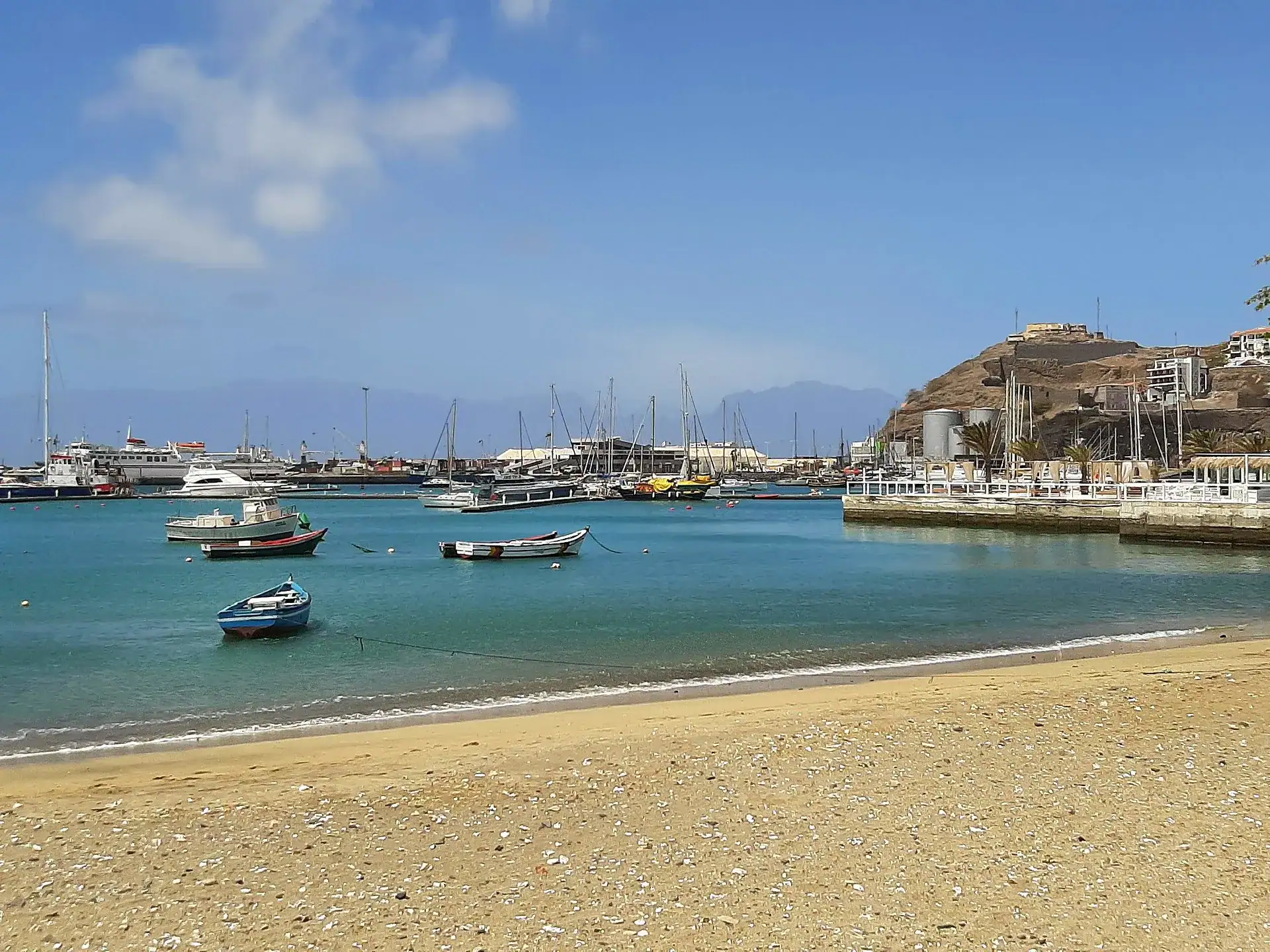 Photo: Popenguine05 / Wikimedia Commons (CC BY-SA 4.0)