Cost of Living in Praia
Where this figure comes from. No cost survey covers Praia, so the $1,400 a month above is our own estimate rather than a measurement. On 416 of our 999 city guides the figure is built from a published Numbeo basket, a one-bedroom rent in the centre plus one person's monthly costs without rent, converted to USD; this city is not one of them. How we source everything.
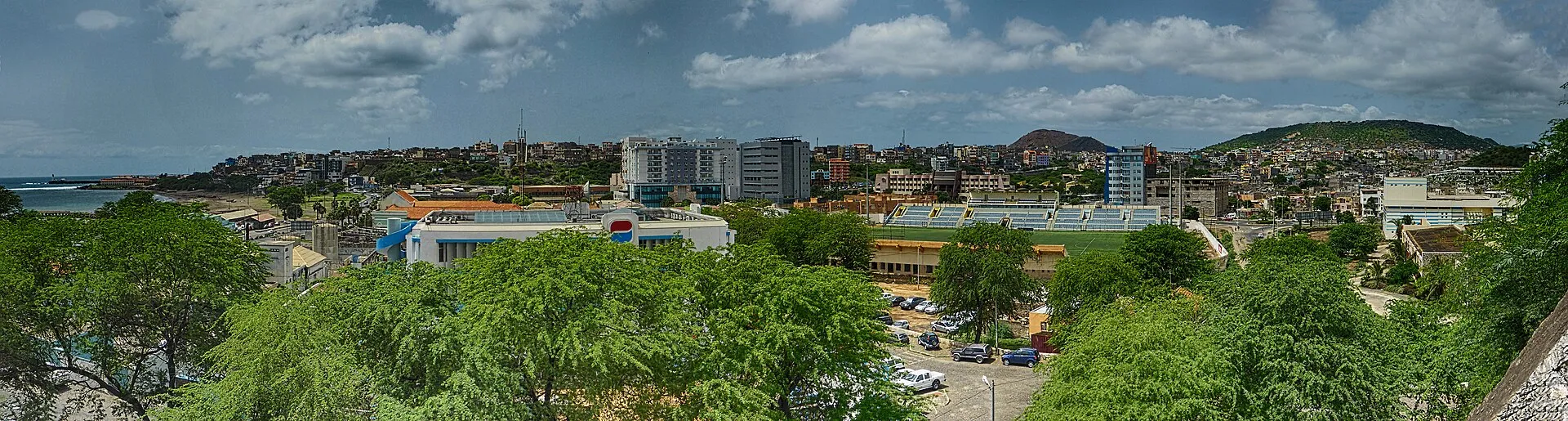
Praia is one of the more affordable capitals in the Atlantic world, though prices have crept up over the past few years as the city has grown. You will pay in Cape Verdean escudos (CVE); the rate sits around 96 to the US dollar.
Rent: A one-bedroom apartment on the Plateau or in Achada de Santo Antonio, the two central areas, runs $470-835 per month. Go further out to neighborhoods like Palmarejo Grande or Tira Chapeu and you can find similar sizes for $210-365. Furnished short-term lets cost more; expect a 20-30% premium versus an unfurnished lease.
Groceries: A solo cook who buys local produce, rice, dried fish, and eggs spends roughly $155-230 per month at the markets and smaller supermarkets. Imported goods at the Supermercado Sol or larger chains cost significantly more.
Eating out: A plate of the day (prato do dia) at a local snack bar is $3-5. Sit-down lunch or dinner at a mid-range restaurant runs $8.50-16 per person; nicer spots like 90 (Noventa) Bistro or Quintal da Musica will hit $21-37 per person with drinks.
Coworking hot-desk: A monthly hot desk costs about $115 at Prime Coworking and $141 at Workin' CV, or $110 a month at Workin' CV on stays of six months or more. Day passes are about $12.
Local transport: A single aluguer (shared minibus) ride is $0.50. A one-way taxi across the city runs $2-4 if you agree the fare before you get in.
Total monthly range: A solo nomad living modestly spends $1,200-1,510. A more comfortable lifestyle with air conditioning, regular restaurant meals, and occasional weekend trips to other islands lands at $1,620-1,980.
Where to Work
Praia has a small but functional coworking ecosystem. Workin' CV at 19 Rua Justino Lopes in the Plateau is the best-known option, with around 30 desks, a meeting room, and a fiber connection, open Monday to Friday from 8am to 6pm. Prime Coworking has two locations in Palmarejo with dedicated desks, private offices, and fiber. SoLuz on Rua Cesario Lacerda in the Plateau is smaller with an arts-forward atmosphere and meeting rooms.
Cafe-working culture is limited compared to, say, Lisbon or Dakar. Many cafes and snack bars do not have reliable public WiFi, and few are set up for laptop work for hours. Your best cafe bets are hotel lobbies or places adjacent to the coworking spaces. Plan to use a coworking desk as your primary setup rather than cafes.
The underlying infrastructure has improved substantially. Central Praia has fiber-optic broadband. 5G is only in pilot trials in 2026, at sites including Praia's technology park, with commercial rollout planned from 2027. Outages do happen, especially during the wet season when storms can cause disruptions. A local SIM card with a data plan from Alou (Cabo Verde Telecom, which absorbed CV Movel) or Unitel T+ is a worthwhile backup; monthly plans with a few gigabytes cost $5-16.
Getting Around
Praia is hilly. What looks like a short walk on a map can involve a steep climb in 28-30°C heat. The Plateau is reasonably walkable on its own flat top, but crossing between neighborhoods on foot is tiring rather than pleasant. Most nomads rely on a mix of aluguers and taxis.
Aluguers are shared minibuses that run loosely fixed routes through the city. They are cheap ($0.50 per ride) and used by almost everyone, but there are no apps or real-time maps: you learn the routes by asking locally. They stop running in the early evening.
Taxis do not have meters. Agree the fare before you get in: a cross-city ride from Palmarejo to the Plateau is around $2-3. Drivers at the airport will quote tourist prices; the ride from Nelson Mandela International Airport into central Praia should cost no more than $5-7.50. The airport is about 3 km from the Plateau and taxi rides take 10-15 minutes depending on traffic.
To reach other parts of Santiago Island such as the beach town of Tarrafal, aluguers depart from the Sucupira Market area and are the standard option. Inter-island flights are run by the state airline CVsky, which took over the domestic network on 29 March 2026, and ferries link the closer islands.
Sorting transport? Book an airport transfer, or compare car rental on Auto Europe and QEEQ.
Visas and Staying Long-Term
Citizens of the US, UK, EU, and most other Western countries can enter Cape Verde without a traditional visa and stay up to 30 days. As of January 2026, visa-on-arrival has been replaced with a pre-registration requirement: you must register through the EASE (Electronic Advance Security System) platform and pay the Airport Security Tax before you fly. Complete this 5-7 days before arrival. Skip it and, since 1 July 2026, you pay double the airport security tax at border control.
Cape Verde has a dedicated remote working program, the Cabo Verde Remote Working Program, which grants a renewable six-month residence to eligible applicants. The money test is a bank balance rather than a salary: an average balance of at least about $1,730 over the last six months, or about $3,110 for a family. Applicants also need health insurance, a clean criminal background check, and confirmed accommodation. The visa fee is $23, plus a $39 airport fee on arrival. It is currently open to citizens of Europe, North America, CPLP (Community of Portuguese Speaking Countries), and ECOWAS. A second six-month renewal is possible, making it viable for a full year's stay.
Best Time to Visit
Cape Verde has two seasons: a dry season from November to June, and a wet season from July to October. For remote work, the dry season window of November through May is the sweet spot. Temperatures sit in a comfortable 23-27°C range, humidity is low, and power and internet disruptions are less common.
July through October brings occasional heavy rainfall. The Harmattan belongs to the other end of the year: between roughly November and March it carries Saharan dust across the islands, and the dust (called bruma seca) can reduce air quality for days at a stretch and is genuinely unpleasant if you are sensitive to particulates. The wet season is also when infrastructure is most likely to be stressed.
December through February is peak tourist season, which means higher accommodation prices but also more events, live music, and activity in the city. March through May offers the best balance: good prices, comfortable weather, and a quieter pace.
Pros and Cons
- Moderate cost of living well below comparable European capitals
- Direct flights to Lisbon, Porto and Paris, plus seasonal routes to Amsterdam
- Atlantic climate with warm, mostly dry weather and year-round swimming
- Genuinely distinct culture: Cape Verdean Creole music (funaná, coladeira, morna), food, and daily life feel unlike anywhere else
- Safe relative to the broader West African region, with most crime confined to opportunistic petty theft
- Remote working visa available for long stays up to one year
- Portuguese and Creole dominate; English is limited outside of tourist-facing businesses, making daily errands harder
- Nomad community is small: you will not find a dense coworking scene or the social infrastructure of a Lisbon or Tbilisi
- WiFi outside dedicated coworking spaces is unreliable; cafe-working is not a realistic daily strategy
- Dust storms (bruma seca) in the dry months, roughly November to March, can be significant air quality events lasting several days
- Hilly terrain and limited public transit after dark makes getting around without taxis awkward
- Imported goods and electronics cost substantially more than in Europe or the US
Who Praia Is Best For
Praia works well for nomads who want an authentic, off-the-beaten-track base in the Atlantic with low costs, a distinct culture, and genuine warm-weather living rather than a resort experience. If you are drawn to Lusophone culture, want to explore West Africa with a relatively safe and stable foothold, or are specifically interested in Cape Verdean music and food, the city is genuinely rewarding.
It also suits people running fully async, low-bandwidth work who can operate comfortably from a dedicated desk at one of the coworking spaces, and who are happy spending evenings at small live music venues rather than a buzzing digital nomad social scene.
Skip Praia if you depend on reliable fast WiFi in cafes, want a large English-speaking nomad community, or need easy access to a wide range of specialist goods and services. Those looking for beach-resort infrastructure will find Sal Island or Boa Vista a better fit; Praia is a working capital city, not a resort town. Our digital nomad guide to Boa Vista and Sal covers the internet link back to Praia, monthly rents and the flights between the islands.