Cost of Living in Sousse
Where this figure comes from. No cost survey covers Sousse, so the $700 a month above is our own estimate rather than a measurement. On 416 of our 999 city guides the figure is built from a published Numbeo basket, a one-bedroom rent in the centre plus one person's monthly costs without rent, converted to USD; this city is not one of them. How we source everything.
Budget around $700 a month as a solo remote worker in Sousse, which makes coastal Mediterranean living unusually affordable. A one-bedroom apartment runs roughly $200 to $400, with seafront and medina-adjacent addresses at the upper end and the residential districts inland much cheaper. Food from the markets is very cheap and eating out in local restaurants costs a few dollars. Imported goods carry a premium and the dinar is a closed currency, which means you cannot obtain it before arrival and cannot easily convert it back. Summer accommodation prices rise with the European package season. Rents are usually agreed directly with an owner in cash, often for six or twelve months, and an agent is the exception rather than the rule, which keeps prices low and means the search happens on the ground rather than online. Utilities are cheap apart from summer air conditioning. Transport costs almost nothing: a louage between towns or a taxi across the city is small change against any European frame of reference. Private clinics are inexpensive and used routinely by people who would otherwise wait in the public system, and dentistry in particular draws medical tourists from Europe.
Where to Work in Sousse
Tunisian fixed broadband reaches Sousse with usable speeds in the central and newer districts, and mobile data is cheap and reasonably reliable. There is a small coworking scene, helped by Tunisia's substantial offshore services sector and a growing local startup community, though most of that is concentrated in Tunis two hours north. Speeds are behind European standards and reliability varies by building, so testing a specific connection before a longer lease matters. French is the working language of business here more often than English. Anyone whose work depends on stable upload bandwidth should treat Tunis as the fallback rather than assume Sousse will carry it. The time zone is the quiet advantage. Tunisia runs an hour ahead of London and level with most of continental Europe for much of the year, so a European working day needs no adjustment at all, which is rare at this price. Cafe culture is strong and a good deal of business is genuinely done in cafes, though they are noisy and predominantly male, and a woman working alone in one will draw more attention here than in Tunis. Power is generally stable and cuts are brief when they happen.
Getting Around Sousse
Sousse is compact and the medina, the seafront and the main commercial streets are walkable. A local light rail line, the Metro du Sahel, runs south to Monastir and its airport, and the mainline railway connects north to Tunis in about two hours. Louage shared taxis cover everything the trains do not, cheaply and frequently. Taxis within the city cost very little. Monastir's airport is twenty minutes away and Enfidha, which handles most charter traffic, about forty-five. A car is unnecessary for daily life and useful for the Sahel villages and Kairouan inland. Louages leave when they fill rather than to a timetable, from a designated station rather than a roadside stop, and knowing that one detail is the difference between the system being simple and being impenetrable. There is also a way out of the country that does not involve flying: ferries run from Tunis to Genoa, Marseille and Palermo over a day or so, and they carry cars, which makes an overland arrival from Europe genuinely practical. Driving here is assertive and lane discipline is loose, so a first-time visitor is better served by taxis.
Sorting transport? Book an airport transfer, or compare car rental on Auto Europe and QEEQ.
Visas for Sousse
Tunisia grants most Western nationals ninety days visa-free on arrival, which is generous and straightforward. There is no Tunisian digital nomad visa. Extensions beyond ninety days require an application to the police and are not routine, and overstaying carries a fine payable on departure. Longer stays are usually managed through a residence permit tied to work or study, which is bureaucratic. Tunisia sits outside the Schengen area, so time here does not count against a Schengen allowance, which makes it a practical winter base for people cycling through Europe. Anyone planning a long stay should also know that the dinar cannot legally be taken out of the country, so converting back before departure needs planning. In practice a good many long-stayers simply leave and return rather than apply for an extension, and a short hop to Italy, Malta or Turkey resets the ninety days. That is tolerated rather than guaranteed, and repeated same-day turnarounds attract questions at the border. If an overstay does happen, the fine is settled at the airport before check-in rather than at a police station, so allow extra time on the day of departure rather than arriving at the usual hour.
Best Time to Visit Sousse
April to June and September to October are the best months, with warm dry days, sea temperatures that are comfortable by late spring and none of the summer crowds. Summer from July to August is hot, regularly above thirty-two, humid on the coast and busy with European package tourists, which is when accommodation prices peak. Winter from December to February is mild by any northern standard, with highs around sixteen, and it is genuinely wet, with most of the year's modest rainfall arriving then. Buildings are not heated well, so winter indoors is cooler than the outside temperature suggests. Ramadan shapes a visitor's day more than the weather does. Restaurants outside the tourist strip close through daylight hours, the working day shortens, and the evenings become the liveliest part of the month; because the Islamic calendar shifts, those dates move roughly eleven days earlier each year. The other seasonal factor is the chili, a hot dry wind off the Sahara that can add ten degrees for a day or two at a time, mostly in late spring and early autumn. The sea stays warm well into October.
Pros and Cons of Sousse
Sousse offers a UNESCO-listed medina with a ribat you can climb, a long sand beach, and Mediterranean coastal living at prices that undercut anywhere in Europe. Tunisia's ninety-day visa-free entry and its position outside Schengen make it genuinely useful for a longer stay. English is limited and French is the practical second language, the tourist economy brings its share of hassle in the medina, cleanliness scores a 5 honestly, and Tunisia has had periods of political and security concern that are worth reading up on before anything is booked. Winter also brings the practical problem that Tunisian flats are built for heat rather than cold and are rarely heated properly. The security note deserves the specific rather than the euphemism. A gunman attacked a beach resort here in 2015, killing thirty-eight people, and it collapsed Tunisian tourism for years. Security at hotels and sites has been visibly heavy since and the country has not seen a comparable attack, but anyone booking should read current government advice themselves rather than take a website's word for it. On the ordinary side, medical and dental care is cheap and competent enough that Europeans travel here for it.
Who Sousse Is For
Cheap Mediterranean coast outside the Schengen clock, best with some French, and in a working North African city rather than a resort enclave. It works for winter stays, when Europe is grey and Sousse is mild. English runs out quickly here and French carries far more, no established nomad community has taken hold, and the commercial pressure inside the medina reads as character to some visitors and as an ordeal to others who would rather browse in peace. Language learners have the strongest case of anybody. Arabic and French are both in daily use here, neither is optional for getting past the surface, and immersion of that kind is difficult to arrange deliberately. Anyone comparing Tunisian bases should weigh Tunis for infrastructure and a professional scene, Hammamet for a softer resort version, and Sousse as the middle option with a real city attached to a real beach. Women travelling alone report Tunisia as manageable but persistent in a way that wears on some people and not others, and recent first-hand accounts are worth more than any rating here. It suits the traveller who wants somewhere still inexpensive that Europe has largely stopped noticing.
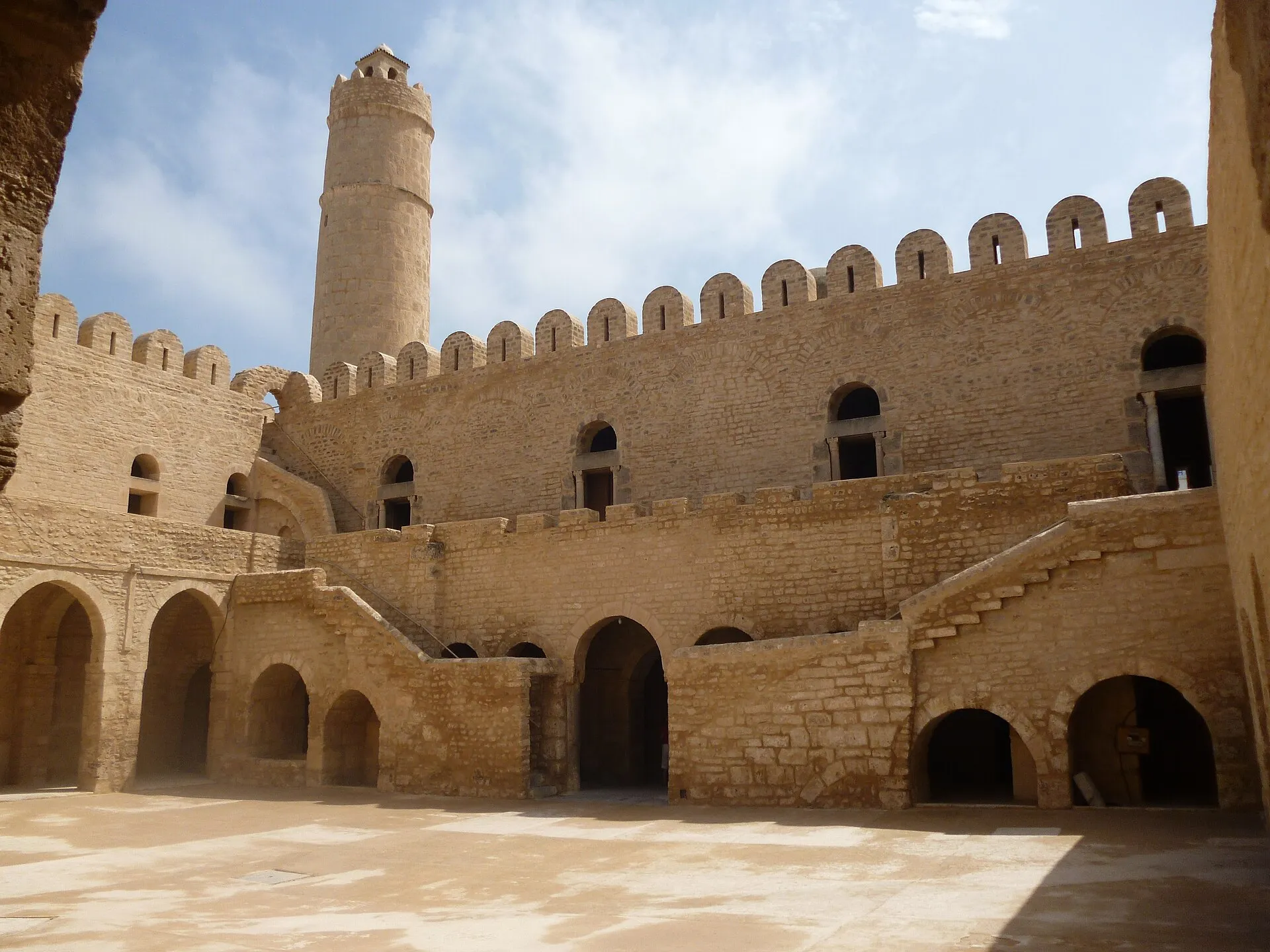 Photo: Christian Manhart / Wikimedia Commons (CC BY-SA 3.0 igo)