Cost of Living in Nouakchott
Where this figure comes from. No cost survey covers Nouakchott, so the $1,000 a month above is our own estimate rather than a measurement. On 416 of our 999 city guides the figure is built from a published Numbeo basket, a one-bedroom rent in the centre plus one person's monthly costs without rent, converted to USD; this city is not one of them. How we source everything.
Budget around $1,000 a month. A one-bedroom runs roughly $250 to $500, with Tevragh Zeina, the diplomatic and business quarter, at the top and the older districts considerably cheaper. Market produce is inexpensive and the fish landed at the Port de Peche is among the best value anywhere on the Atlantic coast, sold straight off the boats in the afternoon. Imported goods carry a heavy markup. Utilities are modest and power is generally available. Eating out is limited and cheap, mostly Mauritanian and Senegalese. The ouguiya was redenominated in 2018, so older prices need a factor of ten applied. Rent is commonly asked for three months or six at a time rather than monthly, and a foreigner without a local guarantor will usually be quoted the longer term. Banking is limited and card acceptance close to nonexistent outside a handful of hotels, so the practical arrangement is cash drawn in bulk and kept carefully. Mobile money has spread faster than the banks have, and topping up a phone is how a great many small payments get settled. Fuel is subsidised and the shared taxis price accordingly, which is why moving around costs so little.
Where to Work in Nouakchott
Connectivity is weak but improving. Mauritania has submarine cable capacity landing at Nouakchott and fibre reaches parts of the city, with speeds workable for ordinary remote work in the better districts. Mobile data from Mauritel, Mattel and Chinguitel covers the populated areas and is the usual fallback. Power is reasonably reliable in the centre. There is almost no coworking. Sand is a genuine equipment hazard here and gets into everything. The time zone is GMT with no daylight saving, which makes European and West African work straightforward. Anyone staying through the harmattan should also plan for dust, since it works into laptop fans and connectors and is a genuine cause of hardware failure here. Business runs in French and administration in Arabic, and the two are not interchangeable depending on which office you happen to be standing in. English turns up in the mining and fisheries sectors and almost nowhere else. The professional day starts early and stops through the middle of the afternoon in the hot months, which is worth matching rather than resisting, since very little gets answered between two and five in any case.
Getting Around Nouakchott
Shared taxis and minibuses cover Nouakchott cheaply and are the normal way to move, though the city is spread out and largely low-rise across a flat sandy plain, which makes walking unrewarding. A car helps considerably. Nouakchott-Oumtounsy International Airport opened in 2016 about twenty five kilometres north with connections to Paris, Casablanca, Istanbul, Dakar and Nouadhibou. The other route out is the iron ore train from Nouadhibou, which is among the longest trains in the world and carries passengers free on top of the ore. Anyone taking the ore train should know it runs about seven hundred kilometres, takes the better part of a day, and offers no shelter at all on the open wagons. Addresses are approximate and directions are given by landmark rather than by street, which matters more than it sounds as soon as something has to be delivered or a driver has to find you. Sand drifts across the tarmac after a windy night and the crews clear the main routes first, so the outer districts can be slow going in the morning. Fuel stations are frequent, and the coast road north is the one stretch in consistently good condition.
Sorting transport? Book an airport transfer, or compare car rental on Auto Europe and QEEQ.
Visas for Nouakchott
Mauritania issues visas on arrival at Nouakchott airport and at the main land borders for most nationalities, valid for thirty days and payable in euros in cash, which is the part people are unprepared for. Applying in advance at an embassy is also possible. A yellow fever certificate is required from travellers arriving from endemic countries. There is no remote work visa. Travel to the north and east of the country carries security advisories and the border regions with Mali should be checked carefully before any overland plan. Anyone arriving overland from Morocco should also allow several hours at the Guerguerat crossing, which involves a stretch of unmarked no man's land between the two posts.
Best Time to Visit Nouakchott
November to March is the only comfortable window, warm at around twenty eight degrees with cooler nights and the Atlantic breeze taking the edge off. April to October is very hot, regularly above forty degrees inland, and the harmattan carries Saharan dust across the city for weeks at a time. Rain is negligible in any month. The Banc d'Arguin National Park north of the city, a UNESCO site where the Sahara meets the Atlantic, is best in winter when the migratory birds are present in enormous numbers. Anyone visiting Chinguetti should aim for the cooler months as well, since the town sits deep in the Adrar and the manuscript libraries are family-run and open on request. The fishing fleet comes ashore in the late afternoon and the beach south of the port becomes a market for an hour, which is the one daily fixture everybody here plans around. Cooler nights arrive from November, and the difference between a December day and a June one is the difference between a place you can walk in and one you cannot.
Pros and Cons of Nouakchott
Mauritania holds a landscape and a set of experiences that nowhere else can match: the iron ore train, the Adrar's desert oases at Chinguetti and Ouadane with their medieval libraries, and the Banc d'Arguin where millions of migratory birds meet the edge of the desert. Costs are low and the Atlantic fish is exceptional. Nouakchott itself is a functional rather than an attractive city, connectivity is limited, the heat is severe for most of the year, and security advisories still cover much of the country outside the capital itself. Mauritania also only abolished slavery in law in 1981 and criminalised it in 2007, and the practice persists in forms that human rights organisations continue to document.
Who Nouakchott Is For
A working reason in mining, fisheries, development or diplomacy, or a traveller using the city as the base for the Adrar and the ore train. It suits French and Arabic speakers, since English is genuinely rare. Comfort was not part of how this city grew, connectivity is weak, and summer is not a season to negotiate with: the heat on the edge of the Sahara is the kind that decides what is possible each day rather than the kind that is merely endured. It also suits birdwatchers, since the Banc d'Arguin is one of the most important wintering sites on the East Atlantic flyway and holds millions of shorebirds each season. The foreign population is almost entirely institutional, meaning embassies, mining companies, fishing agreements and aid organisations, and a newcomer with none of those attachments finds the social world closes quickly at the edge of it. Anyone planning to move beyond the coast should take the current advice seriously rather than as boilerplate, since the advisories here distinguish sharply between regions and those distinctions have held. A fortnight in the desert with a base in the capital is a more honest plan than treating the country as somewhere to settle.
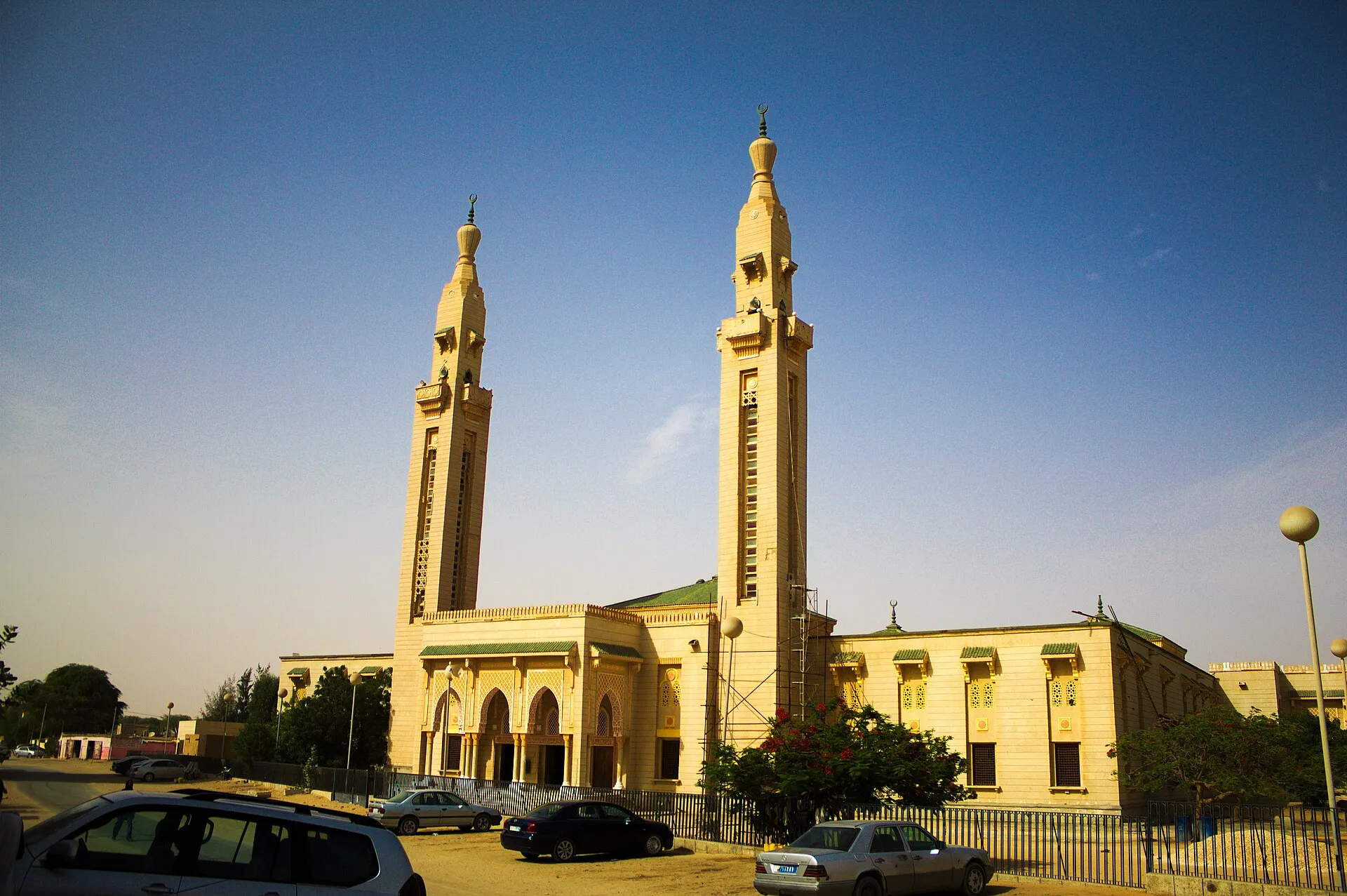 Photo: Ammar Hassan / Wikimedia Commons (CC BY 2.0)