Cost of Living in Kurashiki
Where this figure comes from. No cost survey covers Kurashiki, so the $1,400 a month above is our own estimate rather than a measurement. On 416 of our 999 city guides the figure is built from a published Numbeo basket, a one-bedroom rent in the centre plus one person's monthly costs without rent, converted to USD; this city is not one of them. How we source everything.
Kurashiki is not a budget destination. Japan overall has gotten pricier for visitors even as the yen (JPY) has stayed weak against the dollar, and a smaller Okayama-prefecture city does not mean cheap by Southeast Asia standards, it just means cheaper than Tokyo or Osaka. A single nomad renting a one-room apartment (1K or 1DK) near Kurashiki Station should budget roughly $410 to $600 a month for rent, more if you want something newer or closer to the Bikan quarter. Utilities, phone data, and a home internet line add another $95 to $125. Groceries are reasonable if you cook and shop at local supermarkets like Halows or Fresh Marushou, but eating out at tourist-facing restaurants in the historic quarter costs noticeably more than at ordinary neighborhood spots a few blocks away. A realistic all-in monthly budget for a single remote worker living modestly runs $1,200 to $1,640, and that is honest, not a marketing number.
Where to Work in Kurashiki
Kurashiki does not have a dedicated coworking scene like Fukuoka or Tokyo, so most remote workers piece together a rotation of chain cafes with reliable wifi and power outlets near Kurashiki Station: Starbucks, Doutor, and Tully's all have branches within a few minutes of the station concourse, and Ario Kurashiki mall gives you a food court fallback on slow days. Kurashiki Coffee-kan, a 1971 roastery in the Bikan quarter, is atmospheric for a short work session but gets crowded with tourists by mid-morning, so it suits reading and planning more than long focused blocks. Serious remote workers generally treat cafes as a supplement and work from their apartment for deep-focus hours, since home fiber internet in Japan is fast and cheap. There is no real coworking space in Kurashiki itself; if you need one, the nearest options are in Okayama city, a 15 to 20 minute train ride away.
Getting Around Kurashiki
Central Kurashiki, meaning the station area and the Bikan Historical Quarter, is compact and genuinely walkable, roughly a 10 to 15 minute walk between the two. A bicycle, rented or bought secondhand, covers the rest of the city comfortably and is how many locals get around. For anything farther, Okayama city is about 15 minutes away by JR Sanyo Line local train, and Okayama Station is a shinkansen (bullet train) hub connecting to Osaka, Hiroshima, and Fukuoka in under two hours. Kurashiki itself has no shinkansen stop, so any long-distance travel means transferring through Okayama first. Within the city, buses exist but run infrequently and are oriented around tourist sites rather than daily commuting, so most residents default to bike or on foot for anything under 3 kilometers and the train for everything else. Shikoku is reachable without a ferry: every Marine Liner on the line to Takamatsu stops at Kojima, within Kurashiki's own boundary, before crossing the Great Seto Bridge, and the whole run from the prefectural capital takes about 55 minutes, which puts a lunch of Sanuki udon within easy reach.
Sorting transport? Book an airport transfer, or compare car rental on Auto Europe and QEEQ.
Visas for Kurashiki
Most Western passport holders, including US, UK, EU, Canadian, and Australian citizens, can enter Japan visa-free for up to 90 days as a tourist, which covers a short work trip but is not a legal work authorization. Japan launched a digital-nomad visa in 2024 that allows remote workers earning above a set income threshold (ten million yen, about $63,080, a year) from a foreign employer or foreign clients to stay up to 6 months, though it is non-renewable within the same year and comes with private health insurance requirements. It is a real option but not a casual one, the paperwork is more involved than Southeast Asian nomad visas, and Kurashiki's city hall staff generally do not process these applications with the fluency you would find in Tokyo. Long-term options beyond that mean a standard work visa tied to a Japanese employer or a spousal visa; there is no simple path to residency through remote income alone.
Best Time to Visit Kurashiki
Spring, late March through April, is the standout season: cherry blossoms line the Bikan canal, temperatures are mild, and the historic quarter looks its best, though it is also the most crowded and hotel prices spike. Autumn, October and November, is a close second, cooler, clear, with good foliage and thinner crowds than spring. Summer (June through August) is genuinely tough: Kurashiki sits in a humid subtropical zone, June brings a rainy season, and July-August routinely hits 33 to 35 degrees Celsius with high humidity, uncomfortable for outdoor work or long walking days. Winter is mild by Japanese standards, rarely below freezing, and manageable if you do not mind shorter days and the occasional cold snap. For a nomad prioritizing comfort and productivity, aim for April-May or October-November and avoid committing to a long summer stay if you can help it. The rainy season here is more than an inconvenience. In July 2018 the Oda River broke its embankment in Mabi, a district in the north of the city, flooding about a quarter of it and killing 51 people, so anyone renting outside the historic core should check the address against the city's flood hazard map before signing.
Pros and Cons of Kurashiki
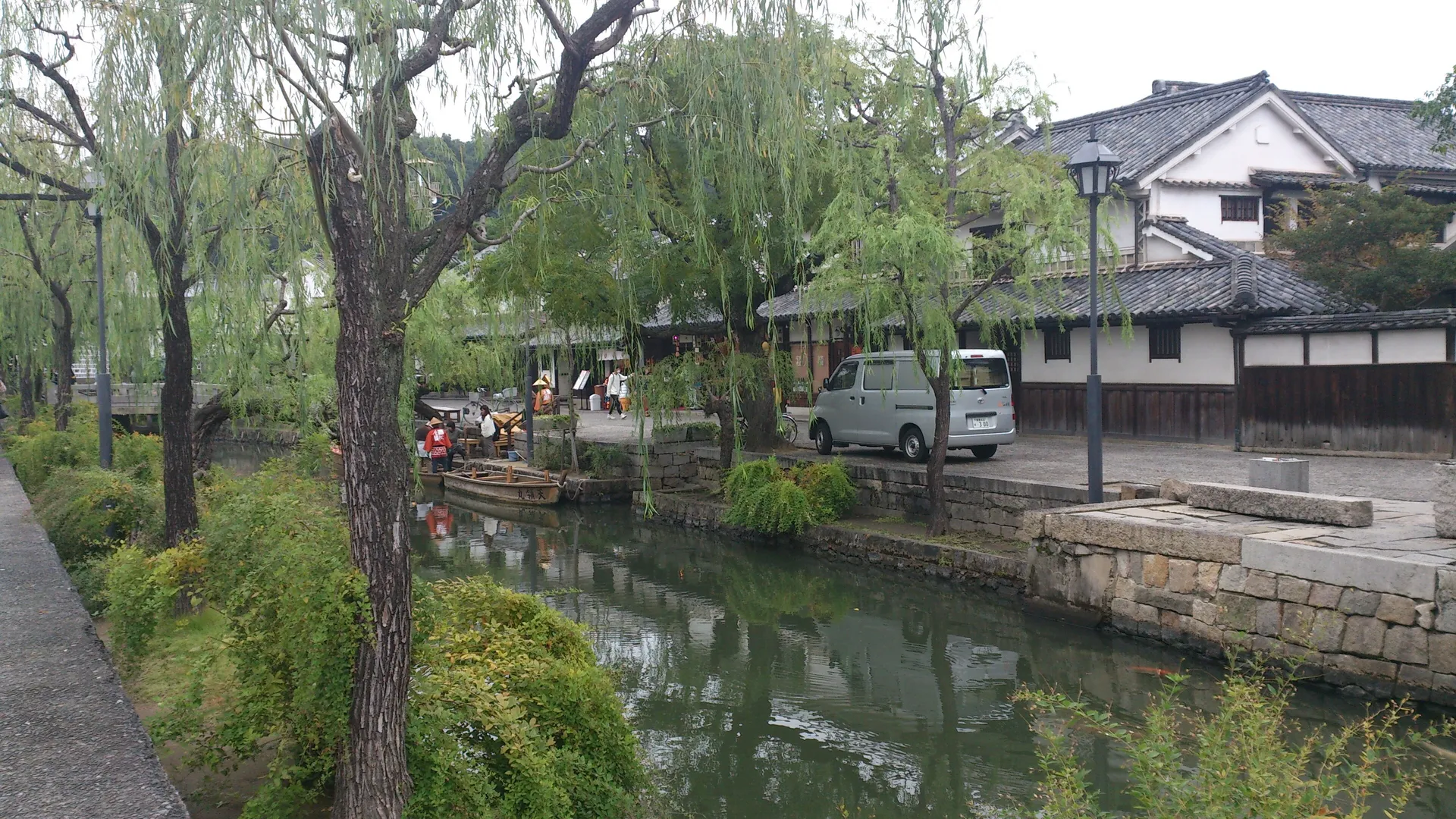
The upside is real: the Bikan Historical Quarter is one of the most photogenic preserved townscapes in Japan, with white-walled Edo-era rice storehouses and black-tiled merchant houses along a willow-lined canal, and the Ohara Museum of Art, Japan's first museum of Western art, sits right in the middle of it. The city is safe, clean, well-connected by train to Okayama and beyond, and cheaper than Tokyo or Kyoto while still offering real cultural depth. The downsides are equally real. English is limited outside tourist-facing businesses, so daily errands, clinic visits, and even utility setup require translation apps or patience. The nomad and expat community is small, there is no coworking infrastructure to speak of, and the Bikan quarter itself is thick with day-trippers and tour buses from mid-morning to late afternoon, though it empties out and turns genuinely quiet and atmospheric after the shops close in the evening. The canal also hides how large the city is: since merging with the port towns of Kojima and Tamashima in 1967, Kurashiki has grown to close to 480,000 people, so its hospitals, supermarkets and ordinary housing are those of a substantial regional city rather than a heritage town.
Who Kurashiki Is For
Kurashiki suits a remote worker who wants an authentic, unhurried slice of small-city Japan and does not need a built-in nomad community or coworking scene to feel productive. It works well for someone who has already spent time in Japan, has basic Japanese or is comfortable navigating with apps, and values quiet evenings and walkable, historic streets over nightlife or fast networking. It is a poor fit for a first-time nomad who wants English-speaking ease, an instant social scene, or a rock-bottom cost of living; those travelers are better served by Southeast Asia or by Japan's bigger hubs like Fukuoka or Osaka. Think of Kurashiki as a deliberate, slower base, closer to Okayama's convenience than Kyoto's overwhelm, for one to three months rather than a long-term default. Anyone who cares about clothing gets a second reason to come. Kojima, the city's coastal district, sewed the country's first domestic jeans in 1965 after a generation of making school uniforms, a trade in which it held about 70% of the national market by 1960, and its denim workshops still cut and sew there today.