Cost of Living in Trieste
Real market data
Source: Numbeo · August 2026
$1,730/moSolo nomad1-bed centre + living costs
$2,440/moCoupleshared 1-bed + costs
$1,570/moLean / localcheaper area + costs
- 1-bed rent, city centre$840€728
- 1-bed rent, outside centre$680€588
- Monthly costs excl. rent (1 person)$890€772
- Meal, inexpensive restaurant$25€22
- Monthly transit pass$44€39
- Buy price, per m² (centre)$3,780€3,284
Prices are from Numbeo (August 2026), converted to USD at $1 = €0.87 (01 Aug 2026). The monthly living-costs figure is our transparent one-person basket, groceries, a few meals out, utilities, phone, internet, transport and essentials, priced from those figures. Solo adds central rent; couple and lean are estimates from the same numbers.
Trieste sits in the mid-range for Italian cities: cheaper than Milan or Rome, pricier than Naples or Palermo. For a single remote worker, a realistic monthly budget runs $1,610-2,300 (roughly USD 1,550-2,200).
- Rent, central area (1BR): $805-980/month
- Rent, outer neighborhoods (Roiano, Barriera Nuova): $575-750/month
- Groceries for one person: $230-320/month; markets and supermarkets are well stocked
- Eating out, casual: $17-23 for a sit-down lunch, $29-46 for dinner; coffee at the bar costs under $2.50
- Coworking hot desk: from $86/month at dedicated spaces; day passes typically $17-29
- Local public transport pass: $44/month
- Internet (home fiber, 100+ Mbps): $29-35/month
Local wine is genuinely affordable, often under $6 a bottle in a shop. Dining out for seafood or regional specialties tips the budget upward quickly if you eat out daily.
Where to Work
Trieste has a small but functional coworking scene. Copernico Riva Gulli is the largest option, a 3,000 sqm space near Piazza Unita d'Italia with 200 workstations, meeting rooms, and a terrace; it is professionally run and suited to longer stays. Coworking Trieste Creative Studio on Piazza della Repubblica takes a more flexible, drop-in approach. LABY Coworking on Via Marco Tullio Cicerone is a smaller community space with strong reviews. sNodo Coworking, inside the Confcommercio building, offers shared desks and networking opportunities with local businesses. For one-day hot desks, Regus also operates a location near the port area.
Cafe-working is realistic but less embedded in the culture than in, say, Lisbon or Chiang Mai. A handful of spots welcome laptop users for an hour or two: Knulp on Via Madonna del Mare doubles as a bookshop and cultural space with reliable WiFi and a tolerance for longer stays. Historic grand cafes like Caffe San Marco have the atmosphere but can get busy and expect you to order regularly.
Home and rental fiber is the real story in Trieste: fiber connections are standard, so working from your apartment is comfortable and cheap. Coworking is more about community than connectivity.
Getting Around
The historic center is compact and highly walkable. Most daily needs, from grocery shops to cafes to the seafront promenade, are within a 15-minute walk of central accommodation. Trieste Trasporti runs an extensive bus network covering the city and Karst plateau outskirts; a single ride costs $1.50 and a monthly pass is $44.
The historic Tram de Opicina connects Piazza Oberdan to the hill village of Villa Opicina, though it has been closed for maintenance in recent years and its status should be confirmed before relying on it. Taxis are available but not cheap: a typical 3 km ride costs around $6.
The nearest airport is Trieste Airport (TRS) at Ronchi dei Legionari, approximately 40 km northwest of the city. Bus connections (Flixbus, Florentiabus) link the airport to Trieste's bus terminal in roughly 50 minutes; the fare is around $4.50-8. A taxi or rideshare runs $58-81. Venice Marco Polo (VCE) is about 2.5 hours away by train and has far more flight options for international travel. Ljubljana Airport (LJU) in Slovenia is another alternative, about 1.5 hours by car.
Sorting transport? Book an airport transfer, or compare car rental on Auto Europe and QEEQ.
Visas and Staying Long-Term
Italy is part of the Schengen Area, so citizens of the US, UK, Canada, Australia, and most other Western nations can enter and stay visa-free for up to 90 days within any 180-day period. This applies across the entire Schengen zone, not just Italy.
Italy introduced a formal Digital Nomad Visa (Type D) in 2024, now active for non-EU citizens. It is valid for one year and renewable. Key requirements: a minimum annual income of $28,540, a university degree or recognized professional qualification, at least six months of remote work experience, and private health insurance covering at least $34,530 in the Schengen area. That floor is three times Italy's income threshold for exemption from health charges, so it moves when that threshold does. The application is filed through the Italian consulate in your home country before you travel; processing typically takes 30-60 working days. Upon arrival you must register for a residence permit (permesso di soggiorno) at the local Questura within eight days. EU citizens have no restrictions on staying and working in Trieste.
Best Time to Visit
The sweet spots for remote work in Trieste are April through June and mid-September through October. Temperatures are mild (15-22 degrees Celsius), the city is not overcrowded, outdoor cafes are open, and daylight hours are generous. The Barcolana regatta in October draws a lively crowd and gives the city an energetic atmosphere.
Summer (July-August) is warm and occasionally humid, with temperatures reaching 30+ degrees Celsius. The city stays pleasant compared to southern Italy, and the Adriatic is swimmable, but coworking spaces fill up and accommodation prices peak.
Winter (December-February) brings the Bora, a fierce cold wind that funnels off the Karst plateau and can gust above 100 km/h. It is dramatic rather than dangerous, but walking outside during Bora days is genuinely unpleasant and some outdoor areas are cordoned off. Temperatures rarely drop below freezing for long, but the wind makes it feel colder. Cafes and indoor work spaces become especially appealing in this season.
Pros and Cons
Pros
- Very high safety: low crime, walkable at night, no rough areas in the center
- Fast and affordable home internet (fiber standard in most apartments)
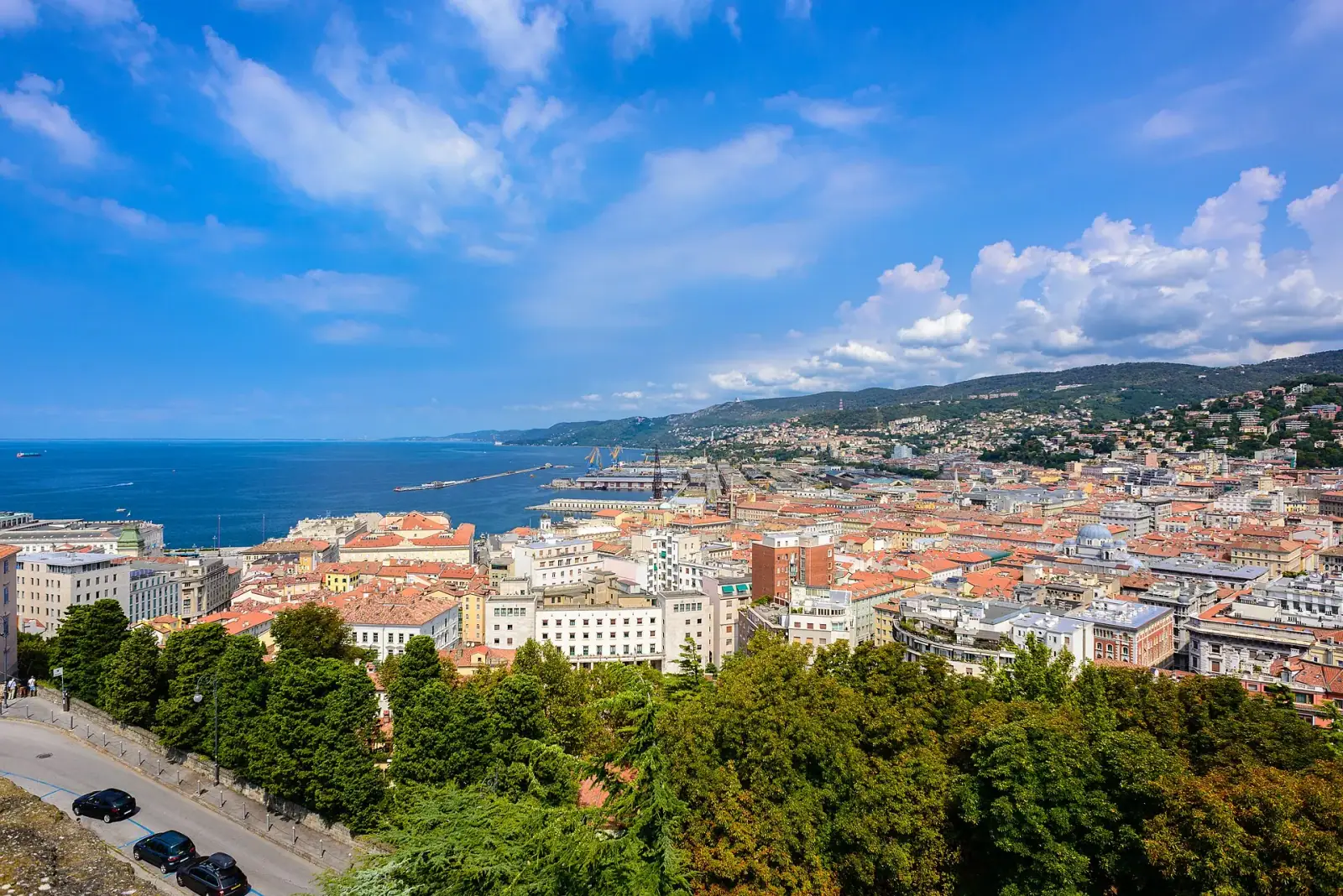
- Genuinely interesting city with Austro-Hungarian architecture and a strong cafe culture
- Excellent seafood, local wine, and Central European influenced food at reasonable prices
- Easy train access to Venice (2 hours), Ljubljana (1.5 hours), Vienna (6 hours), and beyond
- Many locals speak English, especially in the university district
- Lower cost than Rome, Milan, or Florence with a similar quality of life
- Beautiful coastal hiking and the Karst plateau for weekend escapes
Cons
- The Bora wind makes winters harsh and can disrupt outdoor plans for days at a time
- Limited flight routes from Trieste Airport; international travel usually requires Venice or Ljubljana
- Small nomad community: networking with other remote workers takes effort
- Nightlife is limited, centered on cafes and wine bars rather than clubs
- Italian bureaucracy applies fully here: permits and registration involve patience
- Limited variety of international groceries and cuisine compared to larger Italian cities
Who Trieste Is Best For
Trieste suits remote workers who want a cultured, European city with real character, reliable infrastructure, and a slower pace. If you read, write, or do focused deep work, the grand historic cafes and quiet public spaces create an ideal environment. Couples and solo travelers who enjoy coastal nature, hiking on the Karst, wine bars, and weekend trips to Slovenia or Croatia will get a lot out of a stay of one to three months.
History and architecture enthusiasts will find Trieste endlessly interesting: it looks more like Vienna or Prague than "classic Italy," which is precisely its appeal. EU citizens who want an affordable Italian base outside the tourist circuit should put Trieste high on their list.
Trieste is probably not the right call if you need a large, active nomad community for co-working and socializing, if you rely on regular international flights, or if you want a warm and sunny destination year-round. Solo nomads who need lively nightlife or frequent event-based networking will find the city somewhat quiet. Those who need frequent US connections will find the logistics genuinely inconvenient.