Cost of Living in Cáceres
Where this figure comes from. No cost survey covers Cáceres, so the $1,000 a month above is our own estimate rather than a measurement. On 416 of our 999 city guides the figure is built from a published Numbeo basket, a one-bedroom rent in the centre plus one person's monthly costs without rent, converted to USD; this city is not one of them. How we source everything.
Cáceres is one of Spain's more affordable provincial capitals, which is a large part of its appeal for nomads on a modest budget. Rent stays low compared with Madrid or Barcelona, groceries are cheap thanks to the region's strong food production, and a coffee or a menu del dia costs very little. Because the city is compact and walkable, you can skip a car and most transport expenses altogether. A comfortable single-person budget lands roughly between $900 and $1,300 a month, depending on flat size and how often you eat out. These figures are editorial estimates rather than precise quotes. A cost that applies to freelancers and to nobody else is the largest single figure in Spanish self-employment. Anyone registering as autonomo pays a monthly social security contribution regardless of what they earned that month, on a scale tied to declared income, and it is due whether the work came in or not. Reduced rates exist for the first years. It does not apply to someone invoicing from abroad on a remote-work visa, which is exactly why the distinction matters. Beyond that, the one seasonal bill here is air conditioning, and July and August make it unavoidable.
- Rent: a one-bedroom flat is the biggest cost, though far below big-city levels.
- Food: Iberian ham, torta del Casar cheese and local produce keep grocery bills low.
- Transport: the walkable centre means little need for buses or a car.
- Leisure: coffees, tapas and a menu del dia are all inexpensive here.
Where to Work in Cáceres
Cáceres is a quiet city rather than a coworking hub, so expect a small but workable scene rather than a dense network of desks. A handful of cafes around the Plaza Mayor and the Canovas area offer wifi and a relaxed atmosphere for a few hours of focused work, and the public library provides a calm, free alternative. Dedicated coworking spaces do exist, generally aimed at local freelancers and startups, so it is worth booking a day pass ahead. Many nomads simply work from their flat and use cafes for a change of scene. Fibre broadband is widely available, so a home setup is reliable and fast. Between June and September the working day here inverts. Afternoon temperatures reach the high thirties routinely and the low forties often enough, the shops close from two until five, and anyone with sense works early, disappears in the middle and comes back in the evening. The compensation is that the city is genuinely quiet: this is the least densely populated region in the country, there is no industry to speak of and no traffic worth the name, and the silence in a flat here at ten in the morning is something people from bigger places notice within a day.
Getting Around Cáceres
Cáceres is a walker's city, and that is the easiest and most pleasant way to get about. The monumental old town, the Plaza Mayor and the main shopping streets sit close together, so most daily errands are a short stroll. Cobbled lanes in the Ciudad Monumental reward comfortable shoes. City buses cover the wider residential districts and the university area for the odd longer trip, and taxis are affordable and easy to hail. For leaving town, the train and bus stations connect you to Madrid in roughly four hours and towards Lisbon in about three and a half by road, useful for weekend escapes. The railway deserves a blunt note. This region has the worst rail service in the country by a long margin, a fact that has produced protests and political promises for years; the line is partly single-track, the journeys are slow and cancellations are common enough to be planned around. Upgrades have been arriving in stages. Until they finish, the coach is often quicker and the car is quicker still. That matters more here than elsewhere because the things worth seeing in this region, the Roman theatre, the monasteries, the dehesa, the cherry valley, are scattered over a territory as big as a small country with nothing running between them.
Sorting transport? Book an airport transfer, or compare car rental on Auto Europe and QEEQ.
Visas for Cáceres
Cáceres sits within Spain and the Schengen Area, so the usual rules apply. Visitors from many countries can enter visa-free for up to ninety days in any one hundred and eighty day period, which suits a short stay. For a longer base, Spain offers a digital nomad visa aimed at remote workers employed by companies outside the country or serving mostly foreign clients, typically requiring proof of steady income, health cover and a clean record. It can lead to a renewable residence permit. The requirement that trips up more applications than the income figure is the insurance. It has to be a full private policy from an insurer authorised to operate in Spain, with no co-payments and no waiting periods, and a standard international travel policy is routinely rejected. Buy the right product rather than the cheapest one. The criminal record certificate also needs an apostille and, depending on the consulate, a sworn translation, and between them those two take longer than everything else combined. Start there and the remainder of the application is straightforward. Plenty of people bound for Cáceres land in Lisbon, where Portuguese officers open the Entry/Exit System record; the road over the frontier has no checkpoint, and days in Portugal spend the same allowance.
Best Time to Visit Cáceres
Cáceres has a Mediterranean climate with a strong continental streak, meaning very hot, dry summers and mild, gentle winters. July and August regularly turn fierce, with afternoon heat that pushes life indoors or into shade, so they are best avoided if you dislike high temperatures. Spring, from April to June, is the sweet spot: warm days, wildflowers, and white storks nesting on the old town towers. Autumn, from September into November, is similarly pleasant and quieter. Winters are cool rather than cold, with the odd grey, damp spell but plenty of clear days, making the city a comfortable off-season base for remote work. The calendar here has two dates worth a mark. A world music festival takes over the old town for several days each late spring, with stages in the monumental squares and the whole city given over to it, free to attend and genuinely one of the better events of its kind in Europe. Rooms go months ahead. And the valley an hour north fills with cherry blossom for about ten days at the turn of spring, a couple of million trees flowering at once, which is a short window and worth watching the forecast for rather than booking blind.
Pros and Cons of Cáceres
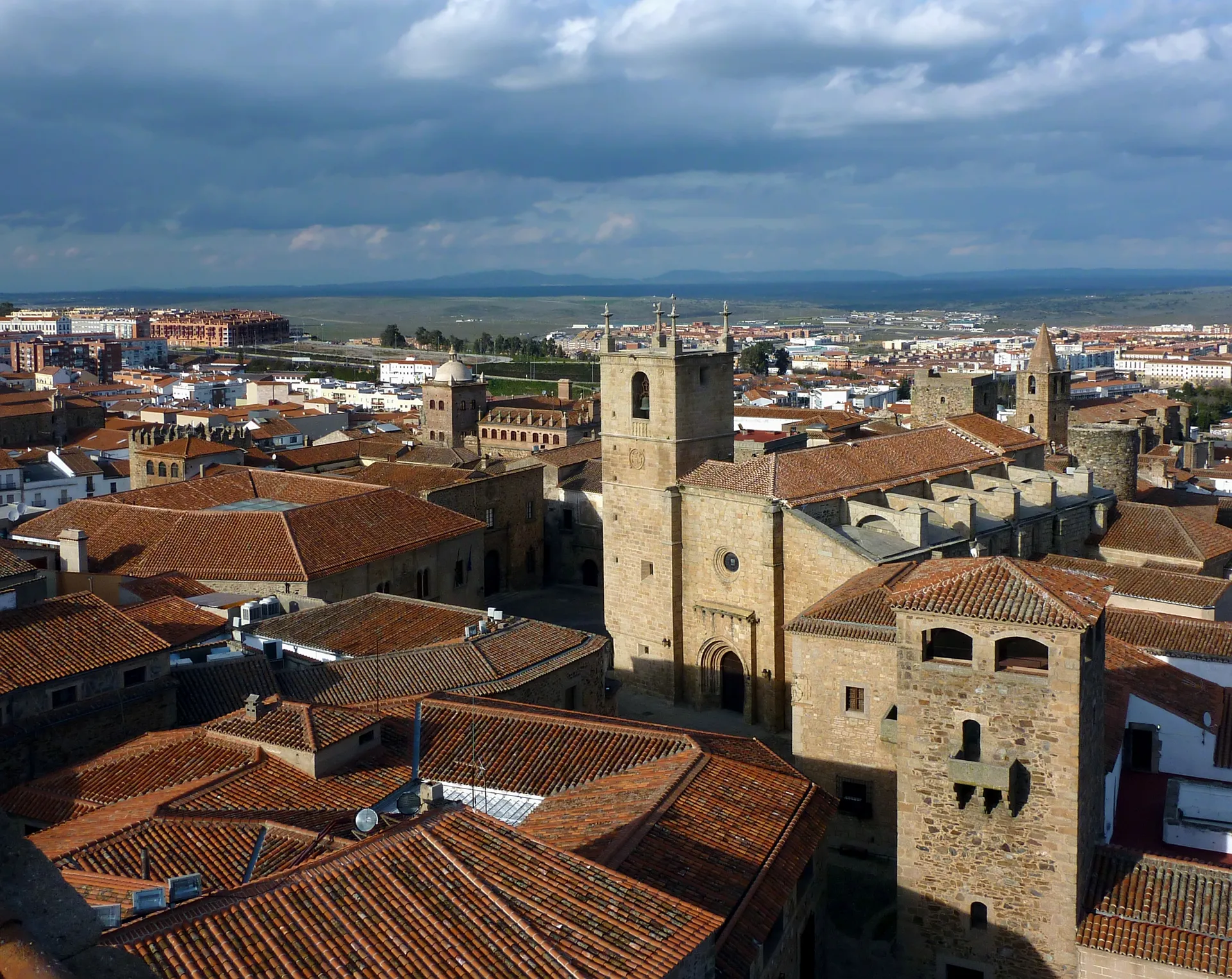
Cáceres rewards anyone who values calm, history and low costs over buzz and convenience. The golden-stone old town is genuinely spectacular, everyday life is cheap, and the pace is unhurried and safe. The trade-offs are real, though: the nomad community is tiny, English is not widely spoken, and nightlife and international amenities are limited. Summer heat can be punishing, and you are a fair distance from a major airport. For the right person these are minor niggles against a beautiful, affordable base; for others they are dealbreakers. Weigh the atmosphere you want against the practical gaps before you settle in. A structural fact explains most of that list. This is the poorest region in the country by income and among the emptiest in Europe by density, which is why the rents are what they are, why the old town was never redeveloped, and why there is no professional world here for an outsider to join. The beauty and the cheapness and the thinness are all the same fact seen from different sides. It also means the city is unusually welcoming to someone who stays, because a foreigner who learns the language and sticks around is a novelty rather than one of a crowd.
- Pros: strikingly preserved UNESCO old town, very low cost of living, excellent regional food, safe and walkable, mild winters.
- Cons: tiny nomad community, limited English, quiet nightlife, brutal summer heat, no major airport nearby.
Who Cáceres Is For
Cáceres suits the nomad who wants to live inside a living museum without paying tourist-city prices. If you are a self-directed remote worker who happily builds a routine around cafes, home working and long walks through medieval streets, you will thrive here. It is ideal for lovers of history, food and slow travel, for writers and makers who want few distractions, and for anyone stretching a modest budget. It is less suited to those who need a large expat crowd, a lively party scene or the easy English of a big hub. Come for beauty, affordability and quiet, and Cáceres will more than deliver. A realistic plan is six months from October, which covers the whole good half of the year and skips the summer entirely. Take a flat in the new town rather than in the monumental quarter; the old town is astonishing to walk through and nobody actually lives in it, which is the point. Anyone driving should know that a car transforms this base, because the region only makes sense with one and the rents here leave room for it. And accept that you will speak Spanish or you will speak to nobody.