Cost of Living in Segovia
Where this figure comes from. No cost survey covers Segovia, so the $1,200 a month above is our own estimate rather than a measurement. On 416 of our 999 city guides the figure is built from a published Numbeo basket, a one-bedroom rent in the centre plus one person's monthly costs without rent, converted to USD; this city is not one of them. How we source everything.
Segovia is noticeably gentler on the wallet than Madrid or Barcelona, which makes it appealing for nomads who want Spanish life without capital-city rents. A modest one-bedroom flat, casual meals, local transport, and a coworking desk can realistically sit within a monthly budget of roughly $1,000 to $1,400, depending on your habits and how often you splurge on the famous roast suckling pig. Groceries from neighbourhood markets are affordable, and the compact old town means you rarely need to spend on taxis. These figures are editorial estimates rather than exact quotes, so treat them as a sensible starting point. A local dynamic pushes rents in an odd direction. The high-speed line put the capital half an hour away, which turned this into a commuter town for people who work there and cannot afford to live there, so the flats near the station are priced for commuters rather than for the province. Look in the old town and the neighbourhoods below it instead, where the market is local. Heating is the other real line: this is a cold, exposed plateau and a January gas bill in a badly insulated flat can rival a week of rent, so ask about the certificate before signing.
- Rent (one-bedroom flat): roughly $600 to $850 a month
- Coworking desk or cafe working: around $90 to $150 a month
- Casual meal out: roughly $12 to $20 per person
- Monthly groceries and basics: around $220 to $300
Where to Work in Segovia
Segovia is a small city, so the working scene is intimate rather than sprawling. You will find a handful of coworking spaces and business centres scattered around the newer districts and near the station, plus plenty of quiet cafes in the Casco Historico where a cortado buys you a couple of comfortable hours. Public libraries offer calm, free desks, and many flats and short-term rentals now advertise reliable fibre connections. For heads-down focus, the streets around the Plaza Mayor are peaceful outside the lunch rush. If you crave a bigger tech community, Madrid is only half an hour away by train. The commuter link cuts both ways for a working day. A day of meetings in the capital is genuinely a day trip, out after breakfast and back for dinner, which almost no town of this scale can offer and which is, in the end, why people choose it. But the same line means the fast trains sell out at peak hours, so a same-day seat is not guaranteed and the fare moves about far more than a metro ticket does. On timing, the whole country still runs on a late clock: lunch at two, dinner at nine, and a working day that quietly stretches to fit.
Getting Around Segovia
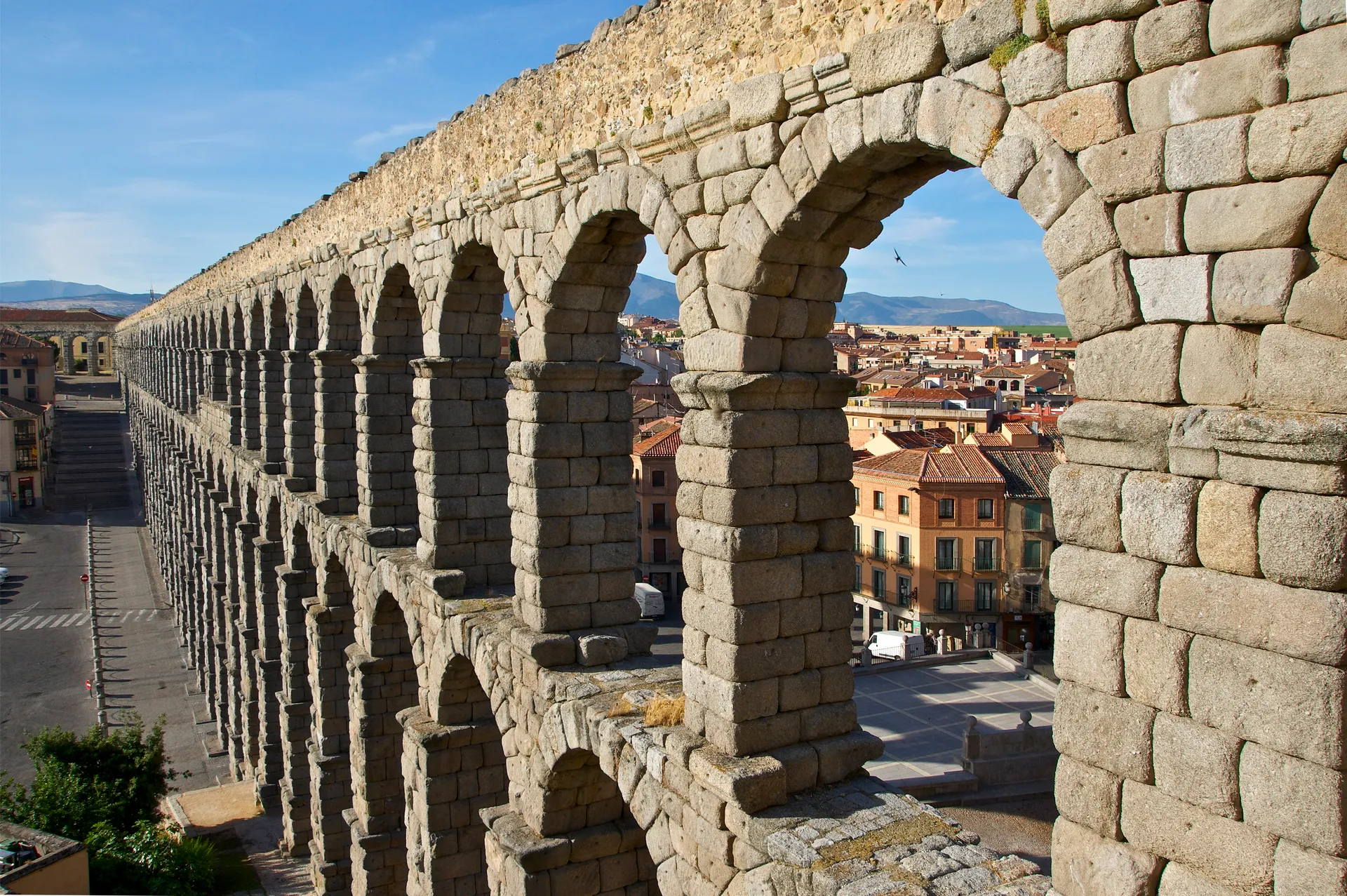
Segovia rewards walking above all else. The historic core sits on a compact rocky spur, and most landmarks, from the aqueduct to the Alcazar, are within a fifteen-minute stroll of one another. Be warned that the streets are hilly and cobbled, so comfortable shoes matter more than any app. A small network of urban buses links the old town with the AVE high-speed station at Segovia-Guiomar, which sits a short ride outside the centre. That same station connects you to central Madrid in about thirty minutes, making day trips in either direction genuinely effortless. A car is unnecessary unless you plan to explore the wider Castilian countryside. A warning about the station, because it catches people with tight connections. It sits several kilometres outside the town and the bus that links them is timed to the trains rather than running continuously, so a missed connection means a taxi or a wait. Build in twenty minutes. Within the old town, the aqueduct marks the boundary between the upper and lower halves, and the climb between them is steep enough that residents plan errands to avoid doing it twice. The wind on the plateau is the other thing nobody mentions: it comes off the sierra and it is genuinely cold nine months of the year.
Sorting transport? Book an airport transfer, or compare car rental on Auto Europe and QEEQ.
Visas for Segovia
Segovia sits in Spain, so the national rules apply. Spain launched a digital nomad visa under its startups law, aimed at remote workers and freelancers employed by companies based outside the country, and it can lead to a multi-year residence permit. You will typically need to show sufficient income, health cover, and proof of remote employment or clients. Spain is also part of the Schengen Area, so many visitors can enter for up to ninety days in any one-hundred-and-eighty-day window without a visa. The step nobody warns you about comes after the visa: registering at the town hall. That registration is what unlocks a public health card, a library card and a great deal else, it costs nothing, and it needs a rental contract or a landlord's letter, which is why the flat has to come before the paperwork rather than after. In a town this size the appointment is a week away rather than the months it takes in the capital, which is a genuine and underrated reason to do the administrative part of a move somewhere small. Leaving takes longer too: at Barajas, the airport nearly everyone uses for Segovia, non-EU passengers flying out of Schengen pass an Entry/Exit System exit check, so leave more slack between Segovia and the gate.
Best Time to Visit Segovia
Segovia has a continental climate, which means hot, dry summers and genuinely cold winters, with crisp air on its exposed plateau. Late spring, from May into June, and early autumn, in September and October, are the sweetest windows: mild days, comfortable evenings, and thinner crowds around the aqueduct. Summer brings warm sightseeing weather but also day-trippers and midday heat, so early starts help. Winter can be bracing, occasionally snowy, yet the Alcazar looks especially magical under a dusting of white, and restaurants are cosy. If you dislike temperature swings, aim squarely for the shoulder seasons for the most balanced experience. A local saying covers the climate better than a chart does: nine months of winter and three of hell. That is an exaggeration in both directions, but it captures a plateau at a thousand metres where the nights stay cold into early summer and the July afternoons reach the high thirties. Dress for a twenty-degree swing between two in the afternoon and ten at night in any month. On the calendar, the town's saint's day at midsummer fills the streets for a week, and the capital empties into towns like this one for the whole of August.
Pros and Cons of Segovia
Segovia offers a rare combination of world-class heritage and small-town calm, all within commuting distance of a major capital. That makes it a tempting base for nomads who value beauty, safety, and slower rhythms over big-city buzz. The trade-offs are real, though: the remote-work community is tiny, nightlife is limited, and everyday English is less common than in tourist megacities. Weigh what you need from daily life. If deep focus, history, and good food appeal more than networking events and late-night scenes, Segovia delivers handsomely. The deciding factor for most people turns out to be the train, which is close enough to make this a suburb of a capital and far enough that it never feels like one. That distance does real work. It means a specialist appointment, a concert, an airport or a client meeting is a half-day rather than a relocation, which removes most of the practical objections to living in a town of fifty thousand. What it cannot do is manufacture a peer group: the professional life of this place is public administration, tourism and the military academy, and there is no cluster of people doing what you do. Anyone who needs colleagues will find them on the other end of that train line rather than here.
- Pros: stunning UNESCO heritage and architecture, strong sense of safety, excellent traditional food, lower costs than Madrid, quick AVE link to the capital
- Cons: very small nomad community, quiet nightlife, cold winters and hot summers, limited everyday English, fewer dedicated coworking options
Who Segovia Is For
Segovia suits the nomad who treats a city as a place to live well rather than a place to be seen. It is ideal for writers, designers, and independent remote workers who want a beautiful, walkable, affordable base with history around every corner and a serious food culture. It rewards those happy with their own company or a small circle, and anyone who enjoys easy weekend hops to Madrid for bigger-city energy. It is less suited to party-seekers, heavy networkers, or those who need an English-speaking bubble. If you crave calm, culture, and roast suckling pig, Segovia is a joy. A realistic plan is a year rather than a season, taken from September, because the thing this town gives you is a routine and a routine takes a winter to build. Take a flat below the old town rather than inside it; the rent drops, the heating bill drops further, and the walk up is ten minutes. Anyone testing it should do so in February rather than in May, since May flatters everywhere and February is what you will actually be living through. And use the train deliberately, once a fortnight, rather than daily, or you will end up living in neither place.