Cost of Living in Kumamoto
Where this figure comes from. No cost survey covers Kumamoto, so the $1,400 a month above is our own estimate rather than a measurement. On 416 of our 999 city guides the figure is built from a published Numbeo basket, a one-bedroom rent in the centre plus one person's monthly costs without rent, converted to USD; this city is not one of them. How we source everything.
Budget around $1,400 a month as a solo remote worker in Kumamoto, which is good value for Japan and well below Tokyo, Osaka or Fukuoka. A one-bedroom apartment runs roughly $400 to $650, though Japanese rental practice adds key money, agency fees and a guarantor requirement that catch foreigners out and can mean several months' rent upfront. Groceries are moderate and eating out is exceptional value: a proper ramen or teishoku lunch costs a few dollars. Utilities are reasonable, with humid summers needing air conditioning. Transport within the city is cheap. Fibre runs about $35 to $50 a month. Kumamoto's cost base has been shifting since TSMC opened a semiconductor plant in the prefecture in 2024, which has pushed rents up around Kikuyo and brought a wave of new arrivals, so figures more than a year old understate parts of the market. Basashi, the raw horse meat the prefecture is known for, is a genuine local speciality rather than a curiosity.
Where to Work in Kumamoto
Kumamoto has a modest coworking presence, less developed than Fukuoka, about forty minutes away by Shinkansen, and most remote work happens from apartments. Japanese fixed broadband is among the fastest and most reliable in the world and is inexpensive relative to income, and mobile coverage is comprehensive. The practical obstacles are administrative rather than technical: setting up a home connection typically requires a residence card, a Japanese bank account and sometimes a guarantor, so short stays usually mean relying on a furnished apartment's existing line or a pocket wifi rental. A pocket wifi rental is the standard workaround for a stay of a few months and is cheap enough not to argue with. The TSMC investment is the most significant economic development in Kyushu in decades and has brought Taiwanese and international staff in numbers, which has quietly improved the English-language services available in a city that previously had few. Japan's nine-hour offset from GMT remains the structural constraint for European and American work.
Getting Around Kumamoto
Kumamoto has a tram network running through the centre past the castle, which is cheap and covers most of what a visitor needs, plus an extensive bus system. The centre around the castle and the Kamitori and Shimotori arcades is walkable. The Kyushu Shinkansen puts Fukuoka forty minutes north and Kagoshima fifty minutes south. Mount Aso and its caldera are about ninety minutes east by train or car, and Kurokawa Onsen requires a car or a bus. Kumamoto Airport has domestic connections. Cycling is practical in the flat city centre. Kumamoto's tram is one of the oldest surviving networks in Japan and was among the first to introduce low-floor cars. The prefecture's new semiconductor investment sits around Kikuyo near the airport, and the road and rail improvements built to serve it have changed journey times on that side of the city considerably. The earthquakes of 2016 broke the roads and the railway running east towards the caldera, and the line through that valley only reopened fully a few years ago after a long reconstruction. The castle repairs are still going and will be for years yet. Buses reach the rest of the prefecture and take longer over it than the distances suggest.
Sorting transport? Book an airport transfer, or compare car rental on Auto Europe and QEEQ.
Visas for Kumamoto
Japan grants most Western nationals ninety days visa-free on arrival, with some nationalities eligible for a further ninety-day extension. Japan introduced a six-month digital nomad status in 2024 for nationals of countries with the relevant tax and visa agreements, subject to a high income threshold and private health insurance, and it cannot be renewed back to back, so it suits a defined stay rather than a base. Longer residence runs through employment, study, the business manager visa or the highly skilled professional points system, all of which involve substantial documentation. The threshold is ten million yen, about $63,080, a year, and moves with the exchange rate, and private medical insurance covering the full stay is a condition rather than a recommendation. A spouse and children can accompany the holder on a matching permit.
Best Time to Visit Kumamoto
October and November are the best months, with warm dry days, clear air and the autumn colour on Aso. April is the second window, when the cherry blossom fills the castle grounds and the city is at its most photographed. Summer from June to September is hot and very humid, with the rainy season through June and July and typhoons possible into September, and Kyushu takes more direct hits than most of Japan. Winter is mild in the city, with highs around ten, though Aso above it gets snow and can close. The 2016 earthquakes damaged Kumamoto Castle severely and its restoration is a multi-decade project, with the keep reopened in 2021 and the surrounding walls still under reconstruction, so what is accessible changes year to year and is worth checking before a visit built around it. The grassland on the caldera floor is burned deliberately at the end of each winter to stop the forest taking it back, and the night the fires run along the hillsides is one of the stranger sights anywhere in the country.
Pros and Cons of Kumamoto
Kumamoto gives you a major Japanese city at a fraction of the big-three cost, with a spectacular reconstructed castle, one of the largest active volcanic calderas on earth ninety minutes away, and some of the best onsen in the country. Japanese safety, cleanliness and infrastructure are all as good as they get. English is limited, there is no foreign community at all, Japanese rental practice is genuinely difficult for a short-term foreign tenant, and the 2016 earthquake's effects on the castle and the region are still visible. Aso is also an active volcano with an exclusion zone that changes with its alert level, so access to the crater is never guaranteed. Kumamoto's water supply comes almost entirely from groundwater filtered through the Aso volcanic strata, which the city treats as a point of civic pride, and it is one of the few large Japanese cities that draws essentially all its drinking water from underground.
Who Kumamoto Is For
Living in Japan properly rather than in its international enclaves, which takes functional Japanese, or the intention to acquire it, and a liking for the mountains and onsen of Kyushu. Japan's digital nomad status and the longer residence routes both work here, and the point of choosing this city over Tokyo is the gap between what the two of them cost. Japanese carries daily life here and English does not, the international population is small, and Japanese rental practice makes a short frictionless let genuinely hard to arrange. Anybody wanting a night out on a serious scale is describing Fukuoka. Kyushu itself is a reason to be here rather than anywhere else in Japan. The island has a food culture distinct from the main island's and more hot springs than any other part of the country. Semiconductors have rearranged this prefecture in a decade. The TSMC plant and the supply chain that followed it have made Kumamoto one of the more consequential places in that industry outside Taiwan itself, which is not a sentence anybody wrote about it before.
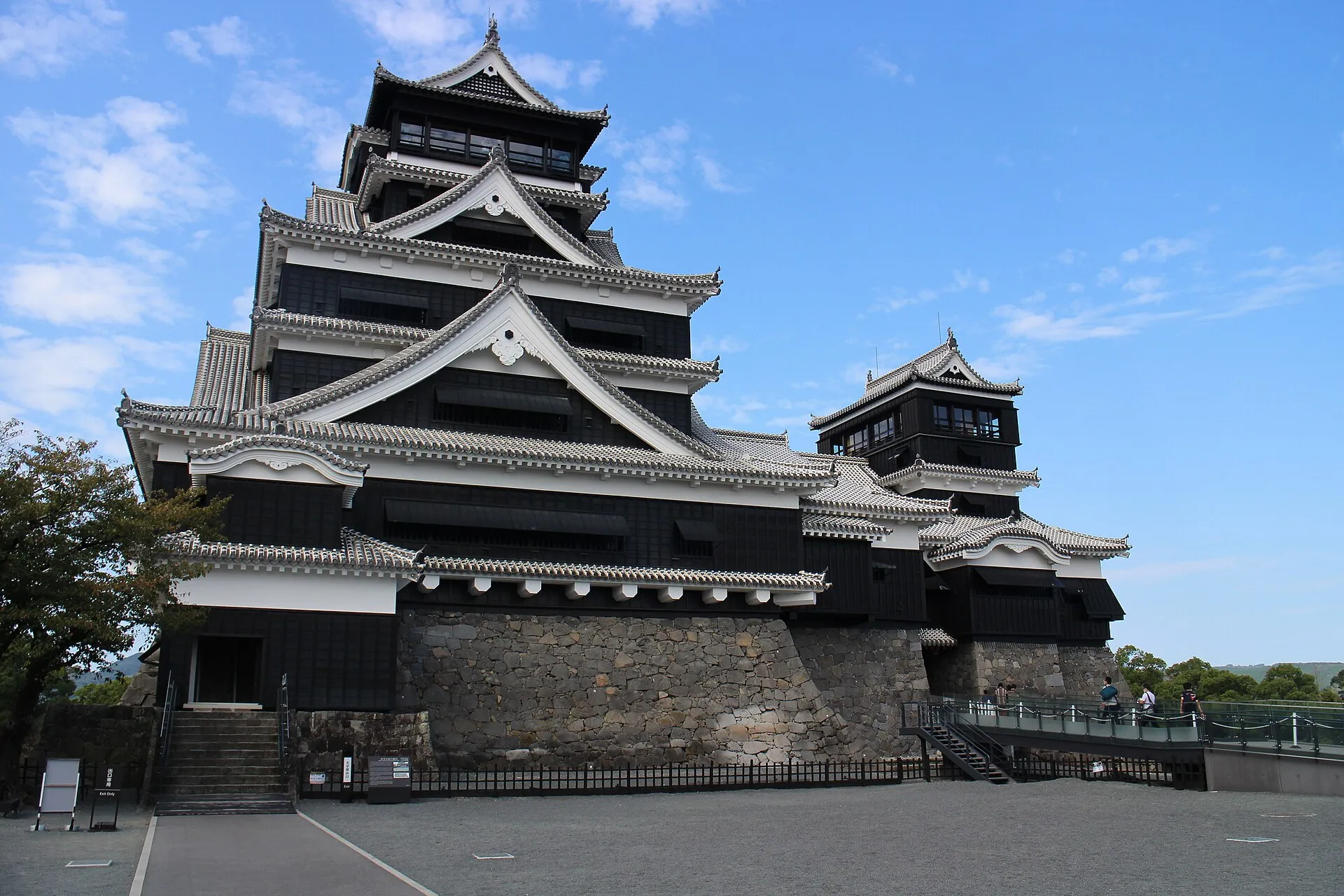 Photo: Suicasmo / Wikimedia Commons (CC BY-SA 4.0)