Cost of Living in Kagoshima
Where this figure comes from. No cost survey covers Kagoshima, so the $1,350 a month above is our own estimate rather than a measurement. On 416 of our 999 city guides the figure is built from a published Numbeo basket, a one-bedroom rent in the centre plus one person's monthly costs without rent, converted to USD; this city is not one of them. How we source everything.
Budget around $1,350 a month as a solo remote worker in Kagoshima, which is inexpensive for a Japanese city of six hundred thousand and well below anything on the Tokyo to Osaka corridor. A one-bedroom apartment runs roughly $400 to $700 depending on the district and the distance from the tram line. Food is very good value, built on Kurobuta pork, Satsuma sweet potato and the shochu that the prefecture produces more of than anywhere else in Japan. Onsen bathing is genuinely cheap here. This figure is our own estimate rather than measured data. A tram ride is a flat fare of about $1.30 and a day pass roughly $4, and the coworking desks that exist run $100 to $180 a month. A flat let here is emptier than the word unfurnished conveys: the light fittings, the curtain rails and often the cooking rings are the tenant's to supply, and the first week involves a trip to a home centre that nobody budgets for. Air conditioning units are usually fitted already. Second-hand shops are plentiful and cheap because the population is falling, so kitting out a flat costs far less here than the same exercise would in a bigger city.
Where to Work in Kagoshima
Kagoshima has a small coworking presence serving the prefectural economy and the university, and remote work otherwise happens from apartments and cafes around Tenmonkan, the central arcade district. Japanese internet is excellent and inexpensive relative to speed, with fibre widely available and comprehensive mobile coverage. The obstacle is administrative rather than technical: fixed contracts assume residency and a Japanese bank account, so short stays generally run on rented pocket wifi or a data SIM. English is limited, and the local dialect is difficult enough that other Japanese speakers struggle with it. Kagoshima prefecture has courted remote workers directly with short-stay residency schemes aimed at slowing depopulation, so the practical support is better than the size of the city suggests. The prefecture is where the country launches its rockets, from two sites on islands to the south, and the aerospace suppliers and tracking work that go with that are a real if small technical sector attached to the place. Shochu distilling is the larger one, with hundreds of producers across the prefecture and an industry body that certifies them. Neither is a client base for an outsider, but both explain why a city this far from the capital keeps engineers at all.
Getting Around Kagoshima
Kagoshima is built along a bay with the volcano directly opposite, and its tram network covers the central districts cheaply and frequently, which makes the city easy to move around without a car. The ferry to Sakurajima runs around the clock and takes fifteen minutes. The Kyushu Shinkansen puts Fukuoka about ninety minutes away and Osaka around four hours. Ferries leave for Yakushima and the Amami islands from the port, which is the reason many visitors come. Ash from the volcano falls on the city regularly and residents keep the bags the city provides for it. The tram runs two lines on a grassed track through the centre. Kagoshima-Chuo is the southern terminus of the Shinkansen, so nothing runs further south by rail. The boats to the southern islands come in two speeds: a jetfoil that reaches the nearest of them in a couple of hours, and an overnight car ferry that goes much further for much less, and which one you take shapes the whole plan. Cycling in the city is easy on the flat, but the ash makes a mess of a chain and a set of brakes, and anyone keeping a bike here learns to wash it far more often than they would elsewhere.
Sorting transport? Book an airport transfer, or compare car rental on Auto Europe and QEEQ.
Visas for Kagoshima
Japan's digital nomad visa, introduced in 2024, offers six months to citizens of countries with the relevant agreements who can demonstrate an annual income of ten million yen, about $63,080, a threshold fixed in yen and therefore moving with the exchange rate. The threshold is high and the permit cannot be renewed without a break, which limits its usefulness. The visa waiver remains the practical route for most: ninety days for citizens of roughly seventy countries, extendable to a hundred and eighty for a subset of them. Anything longer means a work, study or family category, all of which require a sponsor in Japan. Private health insurance covering the entire stay is a condition of the nomad status, and a spouse and children can accompany the holder on a matching permit.
Best Time to Visit Kagoshima
October to November and March to April are the best months, with mild dry weather and either autumn colour or blossom. Kagoshima is subtropical and its summers are hot and humid, running through July and August with the rainy season immediately before them in June. Typhoons reach this coast between roughly August and October and are a genuine planning factor rather than a remote possibility. Winter is mild, rarely near freezing, which makes it one of the more comfortable winters in Japan. Ash fall depends on the wind rather than the season. The Ohara festival in early November brings several thousand dancers onto the streets and is the largest event in southern Kyushu. The blossom front starts in the south and reaches this city before almost anywhere else on the main islands, which means a week here at the end of March and a week in the north in May will show you the same season twice over. The rains arrive early for the same reason, usually by the first days of June, and this prefecture takes more of them than most. Sweet potato and shochu tie the autumn together, with the distilleries opening for the new pressing.
Pros and Cons of Kagoshima
Kagoshima has an active volcano four kilometres across the bay that erupts hundreds of times a year and is simply part of daily life, an onsen culture including the sand baths at Ibusuki, Sengan-en garden, and ferries to Yakushima's ancient cedar forest. It is warm, cheap by Japanese standards and easy to move around by tram. The ash is real and coats cars and washing, typhoons hit this coast, English is scarce, and there is no foreign circle to fall into. The city is a long way from Tokyo in every sense. Sakurajima is monitored continuously and the city runs evacuation drills, so the volcano is a managed risk rather than an ignored one.
Who Kagoshima Is For
A warm, walkable Japanese city with hot springs, good food and an active volcano for a neighbour, on the understanding that you will be operating largely in Japanese. It is an excellent base for the southern islands, with Yakushima and Amami both reachable by ferry. Japanese runs everything here, and whatever foreign professional network exists in Kyushu is in Fukuoka rather than at the southern end of it. Anyone considering the formal nomad visa should check the income threshold first, since it excludes a large share of the people the scheme nominally targets. The ash is directional rather than constant: winter winds carry it over the city and summer winds take it out to sea.
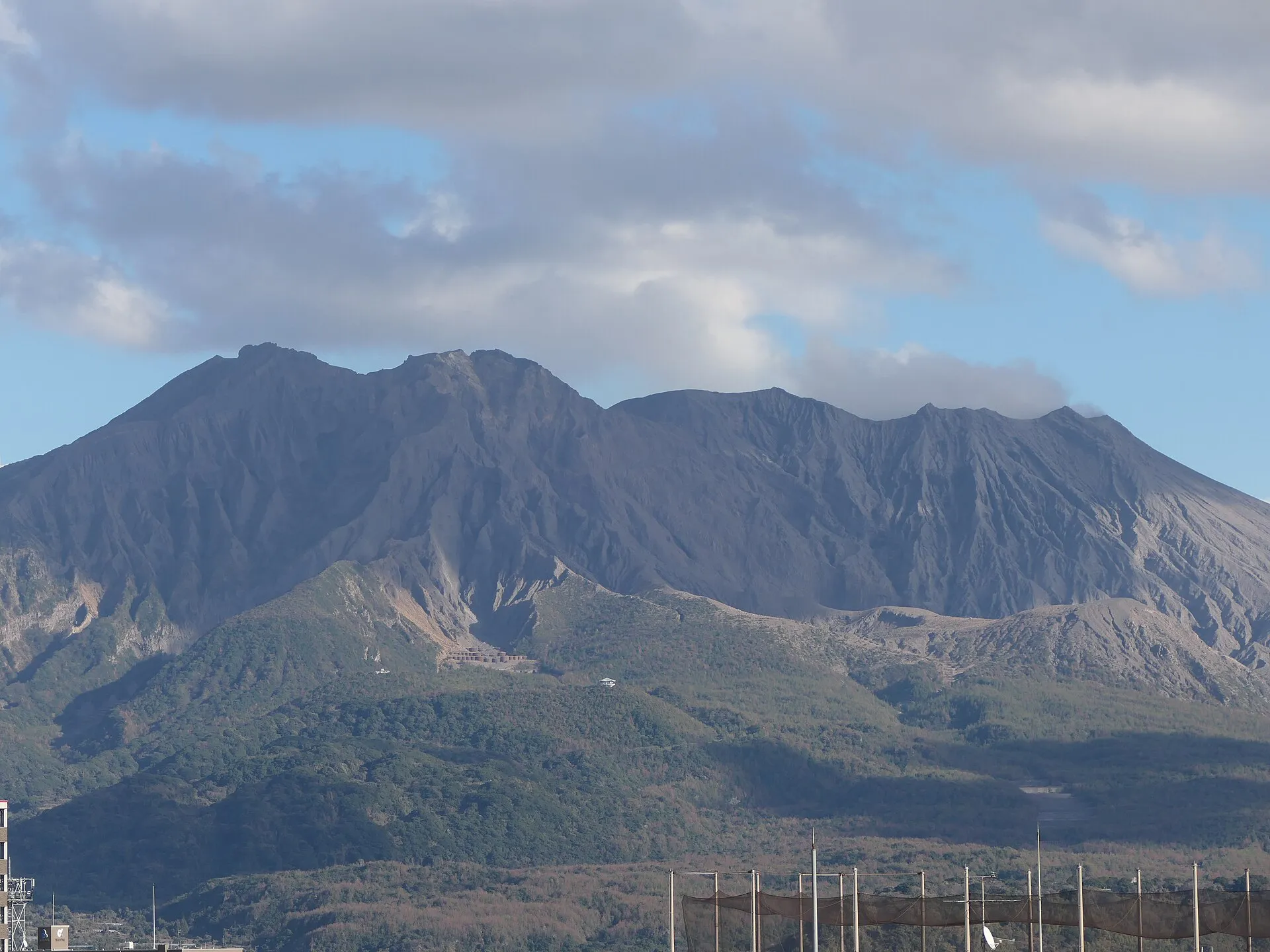 Photo: Hyppolyte de Saint-Rambert / Wikimedia Commons (CC BY 4.0)