Cost of Living in Santander
Where this figure comes from. No cost survey covers Santander, so the $1,600 a month above is our own estimate rather than a measurement. On 416 of our 999 city guides the figure is built from a published Numbeo basket, a one-bedroom rent in the centre plus one person's monthly costs without rent, converted to USD; this city is not one of them. How we source everything.
Budget roughly $1,600 a month as a solo remote worker in Santander, which is mid-range for Spain and reflects a compact city with a constrained peninsula and a strong summer season. A one-bedroom apartment near the centre or Sardinero runs about $650 to $900, and the districts inland drop that to $520 to $680. Summer rents rise sharply as Spanish holidaymakers arrive, so a year-round lease signed in autumn is worth the effort. Groceries land around $300 to $380. A menú del día is $13 to $17, a dinner of Cantabrian seafood with wine $30 to $45, and a caña about $2. A monthly transit pass is roughly $35. Utilities add $110 to $190. Since the housing law changed, the agency fee on a rental falls to the owner rather than to the tenant, which removed a charge that used to run to a month of rent. The deposit is a month by law and has to be lodged with a regional body rather than held by the landlord, so ask for the registration number. Long leases carry strong renewal rights for the tenant, which is why so many owners here would rather let by the week through the summer and leave the place shuttered once it ends.
Where to Work in Santander
Santander has a reasonable coworking supply for a city of 170,000, at roughly $130 to $220 a month, helped by the University of Cantabria and by Banco Santander's origins and continuing presence here. Cafes along Calle del Sol and around the Mercado del Este are comfortable with laptops. Spanish fibre is excellent: among the best and cheapest in Europe, widely available and fast, and mobile data is generous. The Menéndez Pelayo International University runs summer courses that bring an academic crowd through in July and August. English is more common than in inland Spanish cities of this size but Spanish remains the working language of daily life. Registering as self-employed means a monthly social security payment that since a reform a couple of years ago is banded by declared income rather than charged as one flat sum, with a reduced rate for the first year or two, and it is the first number to get straight before quoting a rate to anybody. Invoices to clients outside the country are treated differently from domestic ones for tax, which is another reason people pay somebody to handle it. The region runs on heavy industry and food processing more than on visitors.
Getting Around Santander
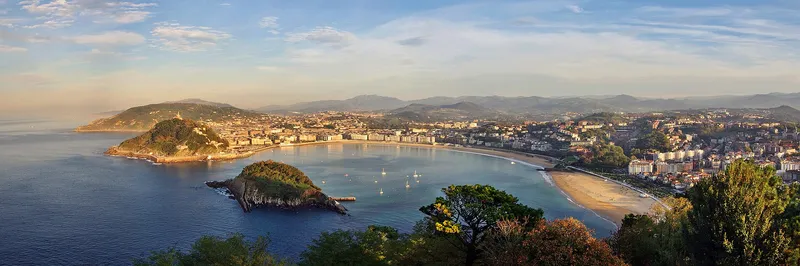
Santander sits on a peninsula between the bay and the open Atlantic, and the centre, the port and the Sardinero beaches are connected by a walkable seafront of a few kilometres, though the city is hilly behind it. Buses cover the rest, with a monthly pass around $35, and a funicular climbs to the Río de la Pila district. Most residents walk. The railway connects to Madrid in about four and a half hours and along the north coast to Bilbao and Oviedo on a slow but beautiful narrow-gauge line. Santander airport is 5km away with budget routes to several European cities, and Bilbao is an hour and a half by road with far more. Ferries cross to Portsmouth and Plymouth.
Sorting transport? Book an airport transfer, or compare car rental on Auto Europe and QEEQ.
Visas for Santander
Spain is in the European Union and the Schengen area, so EU and EEA citizens may live and work here after registering, and most other Western passports get 90 days in any 180. Spain's digital nomad visa, created by the 2023 startup law, is one of the better-designed schemes in Europe: it grants up to a year initially, renewable to a total of five, for non-EU remote workers earning above a threshold from mostly foreign clients or employers, and it opens access to a reduced non-resident tax rate for qualifying holders in the first years. Applications can be made from within Spain on a tourist entry, which is unusual and useful. A gestor is worth the fee. A foreigner identity number comes before everything else and is needed to sign a lease, open an account or pay tax. Registration at the town hall, which records who lives at which address, is what unlocks the health centre and a school place, and it is done with a lease and a utility bill. The scarcity of appointment slots for the residence card is the running complaint here, with people refreshing the booking system at odd hours or paying a service to do it on their behalf. Brittany Ferries passengers from Portsmouth and Plymouth meet the EU Entry/Exit System on Santander's own quay.
Best Time to Visit Santander
June to September is the season in Santander, and it is a genuinely different proposition from Mediterranean Spain: summer highs sit in the low twenties rather than the mid thirties, the Atlantic is bracing, and the city fills with Spaniards escaping the interior heat. July and August are busy and expensive. May, June and September are the sweet spot, warm and far quieter. The rest of the year is mild and wet: this is green Spain, and the Cantabrian coast catches Atlantic weather year-round, with rain possible in any month and a grey stretch from November to March. Winter is mild at around 13 degrees but persistently damp. The galerna is the one to know about: a sudden squall that arrives off the sea on a hot still afternoon, dropping the temperature and raising a sea state within minutes, and it has caught small boats out often enough to be treated with real respect here. Surfers get their best conditions once the season has turned and the visitors have gone, when the swell finally arrives properly and the city beaches stand empty. The week-long summer festival fills every bed in town and closes the seafront to traffic for the fireworks.
Pros and Cons of Santander
Santander offers something rare in Spain: a coastal city with cool summers, dramatic Atlantic beaches inside the city limits, and some of the best food in the country, at a cost well below Barcelona or Madrid. The Picos de Europa are ninety minutes south, ferries run to England, and Spain's digital nomad visa is among the most usable in Europe. Fibre is fast and cheap. Rain falls here in real quantity and the winter is long and grey, which is precisely what buys the green landscape all around it. The city is small and quiet outside summer, the international community is limited, and the great 1941 fire destroyed most of the old town, so the centre is handsome rather than historic.
Who Santander Is For
Spain without the heat and without the crowds, for people who would rather have surf, mountains and seafood than guaranteed sunshine. Anybody on the Spanish digital nomad visa who has looked past the obvious cities ends up considering this one. Surfers have the Cantabrian breaks and hikers have the Picos de Europa, both close enough to use on an ordinary weekend. The city is compact, safe and crossable on foot, which is what couples and families are usually after. Dry weather is not what the Cantabrian coast does, the foreign population is small, the town more or less hibernates between November and March, and northern Spain is not cheap by Spanish standards. Bilbao is an hour away and larger; Valencia and Málaga are the sunnier, busier alternatives.
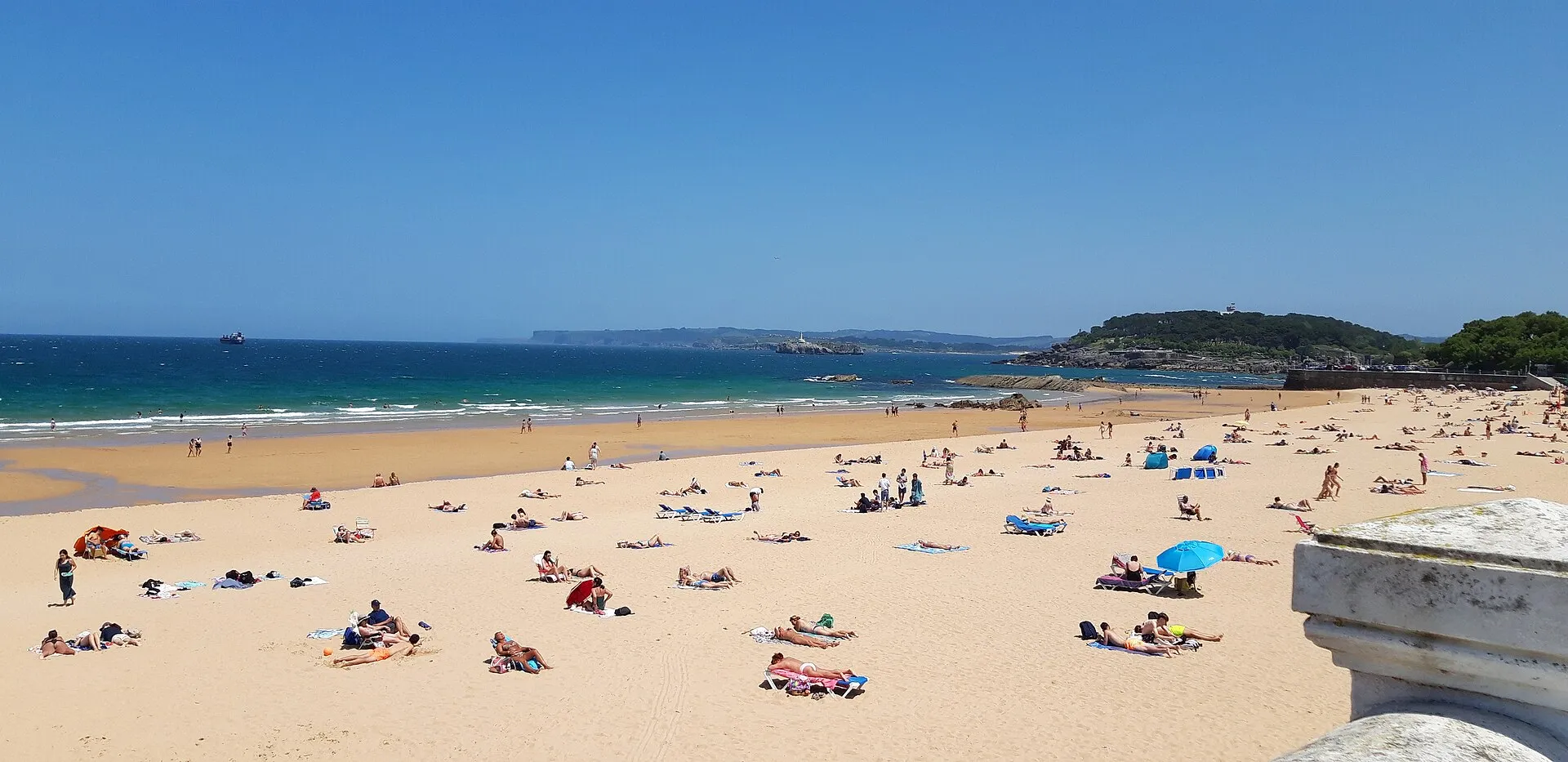 Photo: IS Wiki 70 / Wikimedia Commons (CC BY-SA 4.0)